
Tag: organic matcha Australia
Matcha in Pregnancy: 2026 Guide & Safety

Pregnancy has a way of turning ordinary habits into big questions.
A drink you barely thought about before can suddenly feel complicated. Your usual morning matcha latte, the one that helped you ease into the day, now comes with a mental checklist. Is the caffeine too high? Does quality matter more now? Should you stop completely, or is there a safe middle ground?
If that sounds familiar, you are not overthinking it. You are doing what many pregnant women do, trying to sort through mixed advice and make a calm, sensible choice.
Matcha in pregnancy does not need to be approached with fear. It does need a bit of context. The key questions are usually about caffeine, timing, quality, and how matcha fits into the wider picture of your diet and supplements.
Australian readers also face a slightly different problem. A lot of online advice is broad, overseas-focused, or vague on practical details. It may say “limit caffeine” without helping you work out what that means in a real kitchen, a real café, or a real workday.
That is where clear guidance helps. If you want a quick grounding in what matcha is before deciding whether it belongs in your pregnancy routine, this primer on what matcha powder is is a helpful place to start.
Your Daily Ritual and a Big Question
One woman might be standing in her kitchen, hand on the kettle, wondering whether to make her usual bowl of matcha or switch to plain hot water and lemon. Another might be ordering at a café, suddenly aware that she has no idea how much powder goes into a matcha latte. Someone else may already have stopped drinking coffee and is hoping matcha could be the gentler option.
These moments are small, but they carry a lot of emotion. Pregnancy can make you feel protective, tired, cautious, and overwhelmed, sometimes all before breakfast.
That is why matcha in pregnancy is rarely just about tea. It is about confidence. You want to know whether you can keep a comforting ritual without second-guessing yourself later.
Why this question comes up so often
Matcha sits in an unusual spot. It is tea, but it often feels stronger and more functional than a standard cup of green tea. People reach for it for calm focus, a steadier lift, or because they enjoy the taste and ritual.
Pregnancy changes the way you think about all of that. The same drink can suddenly raise questions like:
- How much caffeine is in one serve
- Whether “organic” or “ceremonial grade” matters
- If matcha affects iron or folate
- Whether a café-made matcha is different from one made at home
Those are all reasonable concerns.
A good pregnancy nutrition decision is not always “never”. Often, it is “how much, how often, and what kind”.
The reassuring part
For many women, the answer is not a blanket ban. It is usually about staying within caffeine guidance, choosing a high-quality product, and being smart about when you drink it.
That matters because fear-based advice often pushes people into all-or-nothing thinking. In practice, many individuals do better with clear boundaries they can use.
A safe choice might look like one small morning matcha made with a measured amount of powder. It might also look like deciding matcha is not worth the mental load right now and choosing a caffeine-free ritual instead. Both are valid.
The goal is not perfection. It is an informed choice that fits your body, your pregnancy, and your day.
Decoding Caffeine and Pregnancy The Australian Guidelines
The biggest reason people ask about matcha in pregnancy is caffeine. That is the right place to start.
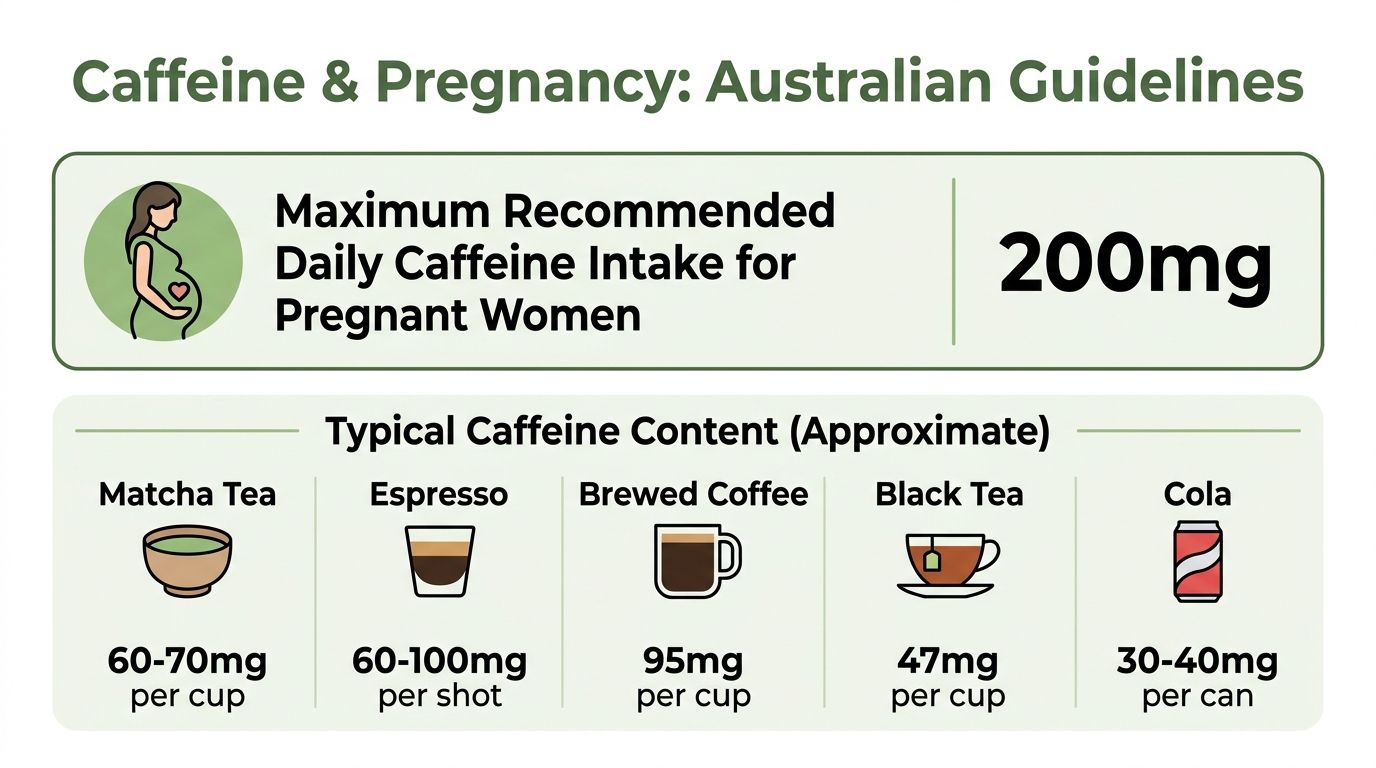
In Australia, the Royal Australian and New Zealand College of Obstetricians and Gynaecologists aligns with guidance recommending pregnant women keep caffeine intake under 200 mg per day. A standard 1 gram serving of matcha contains 30 to 35 mg of caffeine, and Australian research found women consuming over 200 mg of caffeine had 1.5 times higher odds of preterm birth (RANZCOG-aligned guidance and Australian research summary).
That daily limit is easiest to think of as a caffeine budget. Matcha can fit within that budget. The important part is knowing what else is in your day.
What those numbers mean in real life
A lot of confusion comes from serving sizes.
At home, one person’s “small scoop” may be another person’s heaped teaspoon. In cafés, drinks vary even more. Some are delicate and tea-forward. Others use enough powder to deliver a much stronger caffeine hit.
Here is a simple way to approach it:
| Drink situation | What to keep in mind |
|---|---|
| Small home serve | A measured amount of powder gives you more control |
| Large café latte | The caffeine can be higher if extra powder is used |
| Matcha plus coffee day | Your total daily intake matters more than one drink alone |
| Late afternoon matcha | Pregnancy can make caffeine feel stronger and linger longer |
The headline is reassuring. A modest serve of matcha is not automatically excessive. The issue is accidental stacking.
Why pregnancy changes the caffeine conversation
Pregnancy slows caffeine metabolism, especially later on. In plain language, your body clears caffeine more slowly than usual.
That is one reason some women notice they feel more alert, more fluttery, or more wakeful at night from a drink they used to tolerate easily. It also explains why a morning matcha generally makes more sense than a late-day one.
A practical way to use the 200 mg limit
Rather than asking, “Is matcha allowed?”, ask these questions:
- How much powder is in this drink?
- Have I had coffee, black tea, cola, chocolate, or kombucha today?
- Am I drinking it early enough that it will not affect sleep?
That turns general advice into something usable.
If you want matcha in pregnancy, the safest approach is to measure it, count it, and treat it as part of your full day’s caffeine intake.
Where readers often get tripped up
Many people hear two different figures for matcha caffeine and assume one must be wrong. Usually, they are just describing different serving sizes.
The lower figure relates to a smaller measured amount of powder. The higher figure often reflects a prepared cup, especially when more powder is used. That is why “one matcha” is not a precise unit.
A careful home-made serve gives you the most confidence. A café order may still fit just fine, but it is harder to estimate unless the venue can tell you how much powder they use.
The takeaway from the Australian guidelines
The Australian message is not “avoid all caffeine at all costs”. It is stay under the recommended daily limit and be deliberate.
For many women, that makes matcha a manageable option rather than an automatic no. True skill involves not guessing. It is measuring, moderating, and keeping the rest of the day in view.
The Good and the Cautious Benefits Versus Risks
A lot of pregnant women notice that matcha feels different from coffee. The lift can feel smoother, more like a steady lamp than a flicked-on spotlight. That difference is real for some people, but it does not cancel out the need for care.

What some women appreciate about matcha
Part of matcha’s appeal is its natural mix of caffeine and L-theanine. In simple terms, caffeine is the accelerator. L-theanine acts more like a steadying hand. That combination is why some women describe matcha as calmer or less jittery than coffee.
That can sound especially appealing in pregnancy, when energy is often low and sleep may already be patchy.
Matcha also contains catechins, including EGCg, which are antioxidant plant compounds found in green tea. This is one reason matcha is often seen as a more nutrient-dense tea choice than standard brewed green tea, because you are consuming the whole powdered leaf rather than just an infusion.
Why the upside still has limits
The helpful way to look at matcha is as a drink with both positives and trade-offs.
It may feel gentler than coffee for some women. It also still contains caffeine. It may offer antioxidant compounds. Those same compounds can become less helpful if they interfere with nutrient absorption at the wrong time.
That last point matters in pregnancy because iron and folate are not side issues. They are part of the daily foundation.
The nutrient timing issue
Catechins in tea can reduce the absorption of iron and may also affect folate uptake. A simple way to picture it is traffic at a narrow merge point. Your supplement and your tea are both trying to pass through at once, and the nutrients do not always get clear priority.
If you take a prenatal vitamin or you are already keeping an eye on iron, timing matters just as much as portion size.
A practical approach looks like this:
- Take your prenatal supplement with a meal.
- Leave a gap before having matcha.
- If your doctor or midwife has flagged low iron, be extra careful about having tea close to iron-rich meals or supplements.
The goal is not perfection. It is giving your body a fair chance to absorb what you are taking.
If matcha stays in your routine during pregnancy, keep it well separated from prenatal supplements and iron-focused meals.
Quality matters more in pregnancy
Pregnancy changes the question from “Do I like this tea?” to “How confident am I in this product?”
Tea plants can absorb substances from soil, so product quality matters. In Australia, that means looking past pretty packaging and asking better questions. Is it certified organic? Is the supplier transparent about origin? Do they provide testing information for contaminants such as lead? Brands positioned as premium should be ready to answer those questions clearly.
That is especially relevant for Australian readers comparing ceremonial matcha, café powders, and lower-cost online options. Quality markers are not marketing fluff here. They are part of sensible risk reduction.
A practical way to weigh benefits against risks
It helps to sort the issue into three buckets: dose, timing, and quality.
| Question | Why it matters |
|---|---|
| How much am I having? | A smaller serve keeps caffeine and catechin intake more moderate |
| When am I having it? | Good timing helps protect iron and folate intake |
| What quality is it? | Better sourcing and testing reduce concern about contaminants. Australia-specific advice becomes useful here. |
General wellness articles often stop at “drink less caffeine.” Australian guidance sits better in real life. Keep caffeine intake within the limit advised by local bodies such as RANZCOG, choose a product you can trust, and do not let your tea crowd out key nutrients.
For one woman, that may mean a small morning matcha made at home with a tested organic powder. For another, especially if iron is low or nausea makes meals difficult, pressing pause may feel simpler. Both choices can be thoughtful and well-informed.
How to Safely Enjoy Matcha When You Are Expecting
You are standing in your kitchen, half awake, reaching for the tin you use every morning. Then the pregnancy question arrives again: can this still be part of my routine, or is it safer to stop completely?
For many women, the middle ground works well. A small, measured serve of good-quality matcha, taken at the right time of day, is often the simplest way to enjoy it without turning your cup into a source of stress. In Australia, that practical approach matters because advice is not only about caffeine. It is also about product quality, clear labelling, and whether the powder comes from a supplier willing to talk openly about origin, organic certification, and contaminant testing.
Start with a measured serve
A measured serve gives you something pregnancy often takes away: predictability.
Matcha is powdered whole tea leaf, so strength can creep up quickly if you are free-pouring. A level ½ teaspoon, about 1 gram, is a sensible place to start for home preparation. If you want extra context on everyday portions, this guide on how many cups of matcha tea powder are safe per day explains serving sizes in a simple way.
Café drinks are where confusion often starts. One venue may use a light scoop. Another may use two heaped scoops in a large latte. If you are ordering out, it is reasonable to ask how much powder goes into the cup. That is not being fussy. It is the tea version of checking a recipe before you eat it.
Time it so it works with your body
Morning usually makes life easier.
Caffeine can linger longer in pregnancy, and matcha can feel stronger than expected if you drink it late or on an empty stomach. There is also the nutrient timing issue. Tea compounds can get in the way of iron absorption, which matters more in pregnancy than it did before.
A practical routine often looks like this:
- Have matcha earlier in the day
- Drink it with food if nausea is a problem
- Leave a gap before iron supplements or prenatal vitamins
- Keep later drinks caffeine free
That spacing works like giving each job its own lane. Your matcha stays in one lane. Your nutrition and supplements stay in another.
Keep the recipe plain and easy to read
Pregnancy is a good time to become a careful label reader.
Pure matcha powder is straightforward. Flavoured blends, café premixes, and sweetened sachets can be less clear because they may add sugar, extra caffeine sources, or ingredients that do not sit well when you are already dealing with nausea, reflux, or food aversions.
A simpler recipe is usually easier to tolerate:
- Pure matcha powder
- Hot water
- Milk if you want a latte
- Little or no sweetener
If you still want the taste but not the full strength, reduce the powder rather than making the cup larger. A weaker matcha often feels gentler without losing the ritual.
Choose quality the same way you would choose produce
During pregnancy, powder quality matters more than fancy branding.
Tea plants can absorb substances from the environment, so this is the stage of life to ask direct questions. Is it certified organic? Is the country of origin clear? Does the supplier provide batch or independent testing information, including screening for heavy metals such as lead? Premium brands in Australia should be ready to answer those questions plainly.
That point is especially useful if you are comparing online imports with established local sellers. A bright green colour and elegant packaging can look reassuring, but transparency is the better sign.
A simple home routine
If it helps to see the steps laid out, keep it very plain:
- Measure ½ teaspoon or about 1 gram of matcha
- Whisk with hot, not boiling, water
- Add milk if you like, keeping the serve modest
- Drink it with breakfast or a snack if your stomach is sensitive
- Wait before taking prenatal vitamins or iron
That routine keeps the drink familiar while reducing the common points of friction.
Here is a quick visual if you like seeing the prep in action before trying a lighter serve at home.
If nausea changes everything
Pregnancy can change taste fast. A drink you loved a month ago can suddenly taste grassy, metallic, or far too rich.
If that happens, try one small adjustment at a time:
- Use less powder
- Try an iced version
- Blend it into a mild smoothie
- Choose a latte instead of straight matcha
You do not need to force a wellness habit that no longer feels good. Pausing is also a reasonable choice.
Safe matcha in pregnancy usually looks very simple: a small serve, a trustworthy powder, an earlier cup, and good spacing from supplements.
A quick check before you make your cup
| Quick check | Yes or no |
|---|---|
| Did I measure the powder? | |
| Do I know how much other caffeine I am having today? | |
| Am I drinking this early enough to protect sleep? | |
| Have I left space around iron or prenatal supplements? | |
| Can I clearly verify the product's sourcing and testing? |
If you can answer yes to most of those, you are handling matcha in a calm, informed way.
What About Kombucha and Other Teas in Pregnancy
Once people start reviewing matcha, another question usually follows. What about kombucha, herbal teas, or the rest of the tea shelf?
The answer depends on what matters most to you. With matcha, the key issue is caffeine. With kombucha, the questions usually shift toward fermentation, trace alcohol, and whether the product is professionally made.
Kombucha compared with matcha
Matcha is easier to understand because it is a direct caffeine question.
Kombucha is a bit murkier for pregnant readers because fermentation can raise concerns about alcohol and microbial safety. That is why many women are more comfortable with professionally brewed products than homemade versions, especially during pregnancy.
If you are trying to compare your options, it helps to separate the questions:
| Drink | Main question in pregnancy |
|---|---|
| Matcha | How much caffeine is in my serve? |
| Kombucha | How was it brewed and is it a professionally made product? |
| Peppermint or ginger tea | Does it suit me and has my clinician suggested any limits? |
| Black tea | How much total caffeine am I adding? |
If you are also wondering about the caffeine side of kombucha, this guide on whether kombucha has caffeine can help clarify the basics.
Herbal teas are not one category
A lot of people say “herbal tea” as if that automatically means pregnancy-safe. It does not.
Some herbal teas are widely used as gentle options. Others are less straightforward and are better discussed with your midwife, GP, or obstetric care team. That is especially true if you are drinking them often, using concentrated blends, or choosing products marketed for detox, energy, or hormone balance.
A few practical habits help:
- Read the ingredients list, not just the front label
- Be cautious with multi-herb blends
- Favour simple teas over products with long wellness claims
- Ask your care provider if a specific herb keeps coming up in your routine
When kombucha feels less clear-cut
Some pregnant women decide kombucha is not worth the uncertainty. Others stick to professionally brewed options or avoid it unless their healthcare provider is comfortable with it.
That is a reasonable decision either way. The main thing is to avoid treating kombucha as interchangeable with tea just because both sit in the wellness drinks category.
The easiest decision framework
If you are choosing among drinks during pregnancy, use this order:
- Caffeine question
- Ingredient simplicity
- How the product was made
- How your own body is responding
That framework often leads people to a pretty sensible routine. A measured morning matcha if it suits them. Plenty of water. Simple caffeine-free teas later in the day. More caution around kombucha if they are unsure.
A Note for Our Australian Café Partners
If you run a café, this question will come up. A pregnant customer will ask whether your matcha is safe, whether it is strong, or whether you can make it lighter.
How you answer matters.
Australian consumers face a genuine information gap here. Many articles do not explain whether suppliers meet FSANZ expectations for contaminants such as lead, and they rarely help cafés talk clearly about sourcing, organic certification, or third-party testing. Cafés that can speak transparently about those quality markers give pregnant customers an extra level of confidence.
Trust starts with clear answers
Customers do not expect baristas to give medical advice. They do appreciate honest, informed answers.
Good examples include:
- “Our matcha contains caffeine, so if you’re pregnant it may help to check how it fits into your daily intake.”
- “We can make that half-strength if you’d prefer a lighter serve.”
- “We use pure matcha powder rather than a sugary premix.”
- “If you want a caffeine-free option, we can suggest one.”
That kind of language is calm and useful.
Small menu choices make a big difference
A café does not need a special pregnancy menu. It does need thoughtful options.
Consider these practical changes:
- List caffeine clearly on matcha drinks
- Offer half-strength matcha lattes
- Train staff to explain the difference between pure powder and sweetened blends
- Keep a caffeine-free alternative ready so the customer does not feel stuck
This is good hospitality, but it is also good business. Health-conscious customers remember venues that make them feel safe rather than awkward.
Pregnant customers are often not looking for certainty from a café. They are looking for clarity, honesty, and options.
Supplier transparency matters
For cafés, sourcing is not just a back-end issue. It shapes customer trust.
When your supplier can explain product quality, contaminant awareness, and compliance clearly, your staff can answer questions without fumbling through vague wellness language. That is especially valuable with matcha, where many customers assume all powders are roughly the same.
They are not.
A better customer experience
The venues that handle this well usually do three things:
- They know what they serve
- They share information without making claims
- They offer alternatives gracefully
That creates confidence for pregnant customers, new parents, and anyone trying to make a careful choice.
Your Pregnancy Matcha Questions Answered
Some questions keep coming up, especially once you move beyond the simple caffeine limit and start thinking about real-life situations.
Is matcha in pregnancy different in the third trimester
It can feel different because caffeine metabolism slows as pregnancy progresses. That means a drink you tolerated well earlier may feel stronger later.
If you are in the third trimester, be extra mindful about timing, portion size, and whether it affects sleep. A morning serve is generally easier to manage than an afternoon one.
Is ceremonial grade safer than culinary grade
People often use these terms loosely, so it helps to be careful.
“Ceremonial” and “culinary” mainly describe style and intended use, not a medical safety ranking. In pregnancy, the more useful question is whether the product is high quality, well sourced, and transparent about standards. Better-quality powders generally inspire more confidence than cheap bulk products with little sourcing information.
Can I drink matcha if I am taking prenatal vitamins
Possibly, but timing matters.
Sources commonly mention interference with iron and folate absorption, yet there is still a gap in Australian-specific clinical guidance. Australian prenatal formulations can differ from overseas products, so there is no one perfect universal schedule for everyone.
The practical takeaway is clear. Keep space between matcha and your prenatal supplement, and ask your own clinician if iron or folate is a particular focus in your pregnancy.
What if I have low iron
That is a good reason to be more cautious.
Because matcha can interfere with iron absorption, many women with low iron choose to separate it carefully from meals and supplements, reduce how often they drink it, or pause it altogether while they are actively treating iron deficiency. Your GP, midwife, or obstetric team can help you decide what makes sense for your situation.
Is one café matcha the same as one home matcha
Not always. This catches people out.
At home, you can measure the powder. In a café, the amount may vary depending on cup size, recipe, and the person making it. If you are trying to stay comfortably within your caffeine budget, a home-made serve is easier to track.
If you order out, it is fine to ask for a lighter serve.
What if matcha suddenly makes me feel nauseous
That can happen. Pregnancy changes taste, smell, and tolerance in very individual ways.
You do not need to push through just because matcha used to be part of your routine. Try a weaker drink, a cooler version, or stop for a while. If your body is saying no, listen.
What are some caffeine-free alternatives if I want the ritual
Sometimes the ritual is what you miss most, not the caffeine itself.
A few gentle replacements can help:
- Warm lemon water in your favourite mug
- Simple peppermint or ginger tea if they suit you
- Steamed milk with cinnamon
- A plain warm water ritual with a slow morning pause
The goal is to keep the comfort, even if the drink changes.
Should I ask my healthcare provider before drinking matcha
Yes, especially if:
- you have been advised to watch caffeine closely
- you have low iron
- you are taking prenatal supplements on a strict schedule
- you have pregnancy complications or a high-risk pregnancy
- you want advice suited to your trimester and symptoms
That is not a brush-off. It is the most sensible final step. Matcha in pregnancy can be straightforward, but your own care team knows your full picture in a way no general article can.
If you are looking for premium organic matcha and thoughtfully made wellness drinks from an Australian brand, explore Pep Tea. We share practical education on matcha, kombucha, and everyday tea rituals, and our range is designed for people who care about quality, clarity, and clean flavour.
Your Guide to the Best Latte Matcha Powder in 2026

Let's get one thing straight: ‘latte matcha powder’ isn’t an official category you’ll find on a shelf. It’s a term we use to describe a type and quality of matcha that’s just right for the job of making a creamy, brilliant latte.
Think of it like flour. You wouldn’t use heavy bread flour for a delicate sponge cake, and you shouldn’t be using a low-grade, bitter matcha for your daily latte. Getting this one detail right is the difference between a café-quality drink and a bitter, lumpy disappointment.
Your Guide to the Perfect Latte Matcha Powder
The right powder has a vibrant, almost electric green colour, a texture as fine as silk, and a flavour profile that’s smooth and balanced, not harsh. It’s the single most critical choice you’ll make.
And it’s a choice more and more Australians are making. Cafés across Sydney, Melbourne, and our own Hunter Valley have seen a huge jump in matcha latte sales, a clear signal that people are looking for drinks that feel both healthy and intentional. You can read more on the global shift towards matcha to understand the bigger picture.
As an Australian-owned family business built on authentic, organic matcha, we at PepTea want to show you how to choose wisely. It all comes down to a few key attributes.
What to Look For in a Latte Powder
When you’re choosing a matcha, you’re looking for characteristics that promise a smooth, velvety experience when mixed with milk. A great powder dissolves almost instantly, creating that beautiful mouthfeel without any grassy bitterness.
Here’s a quick guide to what separates the good from the bad.
Quick Guide to Choosing Matcha for Lattes
This table breaks down the essential attributes you need to look for. Think of it as your checklist for sourcing a matcha that will perform beautifully in a latte, whether at home or in your café.
| Attribute | Ideal for Lattes | Why It Matters for Your Drink |
|---|---|---|
| Colour | Vibrant, deep green | Indicates freshness and high chlorophyll; a dull or yellowish colour often means old or low-quality leaves. |
| Texture | Ultra-fine, silky powder | A fine grind (ideally stone-ground) ensures the powder dissolves completely, avoiding clumps and a gritty texture. |
| Aroma | Fresh, sweet, and vegetal | A good matcha should smell inviting and clean, never musty or stale. This hints at the flavour to come. |
| Origin | Sourced from Japan | Regions like Uji and Nishio are the heartland of quality matcha, with centuries of perfected cultivation and processing techniques. |
| Flavour Profile | Smooth, with a hint of sweetness and umami | The powder needs to be bold enough to not get lost in the milk, but smooth enough to not taste bitter. |
Ultimately, a brilliant latte matcha is all about that balance. You need a flavour that is robust enough to stand up to milk but delicate enough to remain smooth and pleasant on the palate.
The goal is to find a matcha with a flavour profile robust enough to stand up to milk but delicate enough to avoid bitterness. This balance is what defines a true 'latte grade' powder and turns a simple drink into a daily wellness ritual.
Our organic matcha range is stone-ground in Japan from the finest shade-grown leaves, specifically to deliver that perfect balance, every time.
In the next section, we’ll dive deeper into the specific grades of matcha and help you decide which one is right for your home or café.
Choosing Between Ceremonial and Culinary Grade Matcha
When you start looking for a good matcha, you’ll run into two main categories pretty quickly: Ceremonial and Culinary. Getting this choice right is the single biggest factor in whether your matcha latte ends up smooth, vibrant, and delicious—or just bitter and flat.
Think of it like choosing olive oil. You have that beautiful, cold-pressed extra virgin olive oil you’d use to dress a delicate salad, and then you have your everyday cooking oil. Both are essential, but using the right one for the job makes all the difference.
The Prestige of Ceremonial Grade
Ceremonial grade matcha is the absolute peak of quality. It’s what’s traditionally used in Japanese tea ceremonies, where it’s prepared with just hot water. This grade is made from the youngest, most tender tea leaves, picked during the very first harvest of the year. The leaves are then meticulously stone-ground into an impossibly fine, silky powder.
What sets this grade apart is its:
- Vibrant, jewel-toned green colour, a clear sign of high chlorophyll content and freshness.
- Delicate, subtly sweet flavour with deep umami notes and practically no bitterness.
- Extremely fine texture that whisks into a perfectly smooth, frothy drink.
You can absolutely make a latte with Ceremonial grade, and it will be luxuriously smooth. But its very delicate notes can sometimes get a bit lost when mixed with milk. It's an exceptional choice, but often there’s a more practical option for a daily latte.
The Versatility of Culinary Grade
Culinary grade matcha comes from leaves harvested later in the season. These more mature leaves give it a bolder, more robust flavour profile that can be a little more astringent. That strength is exactly what helps it stand up to other ingredients in baking, smoothies, and cooking.
But "culinary" is a huge umbrella term. Inside that category, you'll find a whole spectrum of quality. And this is where the real secret to a perfect latte is hiding.
The sweet spot for a latte is a high-quality culinary matcha, often called 'Premium Culinary' or 'Latte Grade'. It has the robust flavour needed to cut through milk, but with the smoothness of a better-quality grind, offering fantastic value.
For anyone who wants to go deeper on the specifics, we have a complete breakdown in our guide to the different grades of matcha.
Making Your Choice: A Quick Comparison
Ultimately, the right powder comes down to your personal taste, your budget, and what you’re making. Matcha lattes are booming in Australia, especially as a focus-boosting alternative to coffee. Many health-conscious Aussies are making the switch, finding that the L-theanine in matcha provides sustained energy without the coffee crash. You can learn more about matcha's rich traditions and modern appeal.
To make it even simpler, this decision-tree infographic gives you a clear path for picking the right matcha for your latte.

The visual guide really nails it: while Ceremonial Grade is fantastic for purists drinking it straight, a high-quality Culinary or 'Latte Grade' is the ideal, balanced choice for a delicious daily latte.
To put it all side-by-side, here’s a direct comparison to help you find the best latte matcha powder for your needs.
Comparing Matcha Grades for Your Latte
This table breaks down the key differences to help you select the perfect matcha powder for your daily latte, whether at home or in the café.
| Feature | Ceremonial Grade Matcha | Culinary Grade Matcha | Our Recommendation for Lattes |
|---|---|---|---|
| Leaf Source | First harvest, youngest leaves | Later harvest, mature leaves | Ceremonial for luxury, high-quality Culinary for daily enjoyment. |
| Colour | Vibrant, jewel-toned green | Duller, yellowish-green | Always look for a bright green to ensure quality and freshness. |
| Flavour Profile | Subtly sweet, umami, no bitterness | Robust, slightly bitter/astringent | A smooth, mellow flavour that beautifully complements milk. |
| Best Use | Drinking with water (traditional style) | Baking, smoothies, cooking | Premium Culinary or Ceremonial is perfect for lattes. |
| Price Point | Higher | More affordable | Invest in the best quality you can for a superior latte. |
Ultimately, a great latte starts with great matcha. At PepTea, we source premium organic Japanese matcha that’s perfect for lattes, ensuring you get that vibrant colour and smooth taste in every single cup.
How to Make the Perfect Matcha Latte at Home
Ready to skip the expensive café runs and become your own barista? Making a brilliant matcha latte at home isn't about complex techniques. It's a simple ritual that, once you nail the basics, becomes deeply satisfying. This isn't just about dumping powder in milk; it’s about a few key moves that guarantee a smooth, creamy, and vibrant result, every single time.
We'll walk you through the whole process, explaining not just what to do, but why each step is so critical for getting that flawless, café-quality finish.

The Essential Steps for a Flawless Hot Matcha Latte
Think of this as your core recipe. The real secret to a velvety, clump-free latte is creating a smooth matcha paste before you even think about the milk. This one technique is what separates a good latte from a great one.
What You'll Need:
- 1 teaspoon of high-quality latte matcha powder, like PepTea's organic range.
- 60ml of hot water (around 80°C, not boiling).
- 180-200ml of your milk of choice (dairy or plant-based).
- A small sieve, a bamboo whisk (chasen) or electric frother, and your favourite mug.
- Optional: A natural sweetener like honey or maple syrup.
Now, let's get into it.
Sift Your Matcha: This is the non-negotiable step for a smooth latte. Sift 1 teaspoon of matcha powder through a small sieve directly into your mug. This single action breaks up any tiny clumps and aerates the powder, making it a dream to dissolve.
Create the Paste: Pour the 60ml of hot water over the sifted matcha. Now, using your bamboo whisk or electric frother, whisk hard in a ‘W’ or ‘M’ pattern until a frothy paste forms. You shouldn't see any lumps or dry powder at all.
Sweeten (If You Want): If you're adding a sweetener, now’s the time. Stir your honey or maple syrup directly into the matcha paste until it fully dissolves. This ensures the sweetness is evenly mixed through the final drink, not just sitting at the bottom.
Froth Your Milk: Gently heat your milk on the stove or in the microwave until it’s warm—don't boil it. Use a milk frother to create a light, velvety foam. You're aiming for silky microfoam, not big, airy bubbles.
Combine and Serve: Pour the frothed milk into the mug over your matcha paste. A neat trick is to hold back the foam with a spoon, pour in the liquid milk, and then spoon the remaining foam on top. Give it a gentle stir and enjoy.
Why 80°C Water?
Boiling water (100°C) is matcha’s enemy. It scorches the delicate powder, instantly releasing a bitter, harsh flavour. 80°C is the sweet spot that coaxes out the beautiful umami and sweet notes without scalding them.
How to Make a Refreshing Iced Matcha Latte
On a warm Australian day, an iced matcha latte is just the ticket. The method is just as straightforward, with a couple of small changes to keep it perfectly chilled and refreshing.
The Method:
- Follow steps 1-3 from the hot latte recipe: sift the matcha, create a smooth paste with 60ml of hot water, and dissolve your sweetener into it.
- Fill a tall glass to the top with ice cubes.
- Pour your cold milk of choice directly over the ice.
- Gently pour the prepared matcha paste over the milk. You'll get a beautiful cascade of vibrant green through the white milk, which looks fantastic.
- Give it a good stir to combine everything before you take that first sip. It’s that simple.
Choosing the Best Milk for Your Latte
The milk you pick makes a huge difference to the final flavour and texture. There’s no single "best" option, but here's a quick rundown of how different milks play with your latte matcha powder.
Dairy Milk: Full-cream dairy milk is a classic for a reason. It froths like a dream and its natural creaminess delivers a rich latte that perfectly balances matcha’s earthy notes.
Oat Milk: This is the café favourite right now. Oat milk has a natural, subtle sweetness and a creamy body that froths exceptionally well. It's a brilliant dairy-free partner for matcha.
Almond Milk: A great choice if you prefer a lighter latte. The nutty flavour complements matcha nicely, though it doesn’t always froth as thickly as oat or dairy milk.
Soy Milk: Soy gives you a thick, creamy consistency and froths very reliably. Its flavour is more distinct, so just make sure you’re a fan of it before pairing it with your best matcha.
The best part of making lattes at home is the freedom to experiment. Try a few different milks and see what you like. When you start with a quality latte matcha powder, you’re already halfway to a perfect drink.
Achieving Café-Worthy Froth Without a Machine
That gorgeous, velvety microfoam from a café latte often feels like a luxury you can't possibly replicate at home. But here’s the secret: you don't need a pricey espresso machine to get that silky texture. The magic isn't in the equipment; it's all in the technique.
First, let's get clear on what we're actually aiming for. We want microfoam—millions of tiny, uniform bubbles that create a texture like liquid velvet. This is a world away from the big, airy bubbles you’d find on a classic cappuccino. Microfoam is what integrates perfectly with your latte matcha powder, giving you a consistently creamy drink right to the last sip.

Simple Tools for Superior Froth
The good news is you probably have something in your kitchen right now that can do the job. For those of us without professional gear, there are several surprisingly effective ways of frothing milk without a steam wand. These are our three favourite low-cost, high-impact methods.
1. The Handheld Electric Frother
This is our top pick for any home barista. It’s affordable, quick, and incredibly good at its job. These little battery-powered whisks are champions at whipping air into milk, creating a dense, stable foam in less than a minute.
- How to use it: Warm your milk to about 65°C. Dip the head of the frother just below the surface and switch it on. As the foam starts to build, slowly lower the frother deeper into the milk. This incorporates the foam and creates that silky microfoam texture. It’s a genuine game-changer.
2. The Traditional Bamboo Whisk (Chasen)
If you already use a chasen to make your matcha paste, you can absolutely use it for your milk too. It takes a bit more elbow grease, but it connects you to the traditional way of preparing matcha.
- How to use it: After warming your milk, pour it into a wide bowl (your matcha bowl is perfect) and whisk vigorously. Use a rapid 'W' or 'M' motion, just as you would for your matcha. This technique, which you can master with our guide on how to whisk matcha properly, folds air into the milk to create a light foam.
3. The Sealed Jar Method
No frother? No whisk? No problem at all. All you need is a clean jar with a lid that seals tightly.
- How to use it: Fill your jar about halfway with cold milk and seal it. Now, shake it like you mean it for 30-60 seconds. You'll see the foam build up quickly. Once you're done, take the lid off and microwave the jar for about 30 seconds to warm the milk and stabilise the foam.
Key Takeaway: The quality of your froth is just as important as the quality of your latte matcha powder. Silky microfoam elevates the entire experience, turning a homemade latte into a genuine café treat.
Tips for the Perfect Foam Every Time
Nailing the perfect foam is fast becoming a core skill for home baristas, especially in places with a strong café culture. In Victoria, for instance, searches for 'matcha latte' have soared, lining up with reports of increased sales from the specialty coffee community, proving more and more people want that premium experience at home.
To make sure your foam is flawless every single time:
- Start with cold milk: Cold milk always froths better. The proteins are more stable and can hold air more effectively.
- Don’t overheat: Pushing milk past 70°C will scald it, giving it a burnt taste and destroying its ability to foam well. Aim for around 65°C—warm to the touch, but not uncomfortably hot.
- Choose the right milk: Full-cream dairy and barista-style oat milk consistently produce the best, most stable foam. It all comes down to their higher protein and fat content.
With these simple techniques, you’ll be creating matcha lattes with a beautiful, creamy head of foam that can stand up against anything from your favourite local café.
Creative Recipes Beyond the Standard Latte
A quality latte matcha powder is too good to be kept in one cup. While a perfect matcha latte is a thing of beauty, the real fun begins when you invite that vibrant green powder into your kitchen. This is where it moves beyond a simple drink and becomes a genuine wellness ingredient.
Think of it as a superfood seasoning. That unique earthy, slightly sweet flavour plays surprisingly well with all sorts of ingredients—from fruits and oats to nuts and natural sweeteners. It’s a chance to get creative and give your favourite snacks a boost of colour, flavour, and clean energy.

Here are three simple, healthy recipes that go way beyond the standard latte. Each one is designed to be easy and nourishing, proving that good matcha is a cornerstone of a healthy, vibrant life.
Morning Boost Matcha Smoothie
Kickstart your day with a smoothie that actually energises and nourishes. This recipe combines the calm focus from matcha with fibre, vitamins, and healthy fats to keep you full and switched on until lunch. It’s also a brilliant way to sneak in some greens without even trying.
Ingredients:
- 1 cup of your preferred milk (almond or oat works beautifully)
- 1 frozen banana, for that creamy texture and natural sweetness
- 1 large handful of fresh spinach
- 1 tablespoon of chia seeds or almond butter for protein and healthy fats
- 1 teaspoon of a premium culinary matcha powder
- A few ice cubes
Method:
Just throw everything into a blender and blitz until it’s completely smooth and creamy. Pour it into a glass and drink it straight away for the best flavour and texture.
This smoothie is the perfect example of matcha's versatility. It provides the sustained energy of L-theanine and caffeine without the crash, making it a smarter choice than a sugary breakfast cereal or a simple coffee to power your morning.
No-Bake Matcha Energy Balls
Feeling that 3pm slump coming on? These no-bake energy balls are the answer. They’re packed with wholesome ingredients, take just minutes to whip up, and make the perfect grab-and-go snack that satisfies a sweet craving while delivering a gentle lift.
Ingredients:
- 1 cup of rolled oats
- ½ cup of desiccated coconut (plus extra for rolling)
- ½ cup of almond meal
- ¼ cup of pure maple syrup or honey
- 2 tablespoons of coconut oil, melted
- 1-2 teaspoons of latte matcha powder, depending on how bold you want the flavour
Method:
- In a large bowl, mix the rolled oats, desiccated coconut, and almond meal.
- Pour in the maple syrup, melted coconut oil, and matcha powder.
- Stir everything together until a sticky dough forms. If it feels a bit dry, add another splash of coconut oil; if it’s too wet, a bit more almond meal will fix it.
- Roll the mixture into bite-sized balls (about one tablespoon each).
- Toss each ball in the extra desiccated coconut to coat.
- Place them on a tray and pop them in the fridge for at least 30 minutes to firm up. They’ll keep in an airtight container in the fridge for up to a week.
Simple Matcha Icing for Healthy Treats
Elevate your favourite baked goods with this simple, vibrant, and surprisingly healthy matcha icing. It’s perfect for drizzling over muffins, cakes, or cookies, adding a beautiful pop of colour and a sophisticated, earthy flavour that cuts through sweetness perfectly.
Ingredients:
- 1 cup of icing sugar (or a powdered natural alternative like erythritol)
- 1 teaspoon of latte matcha powder
- 2-3 tablespoons of milk or water
Method:
- Sift the icing sugar and matcha powder into a bowl to get rid of any lumps. Don’t skip this step—it’s the secret to a silky-smooth finish.
- Add 2 tablespoons of milk or water and whisk until a smooth, thick but pourable icing comes together.
- If it’s too thick, add more liquid one teaspoon at a time until you get the consistency you’re after. Drizzle it over your favourite treats immediately.
Sourcing and Storing Matcha Powder in Australia
To get that delicious, vibrant latte every single time, you need to think about your latte matcha powder long before it hits the mug. Matcha is a delicate, living product. Its greatest enemies are light, air, and heat—all of which can quickly ruin its beautiful colour, smooth flavour, and potent antioxidant benefits.
Think of your precious powder like premium coffee beans or a fine spice. You wouldn’t leave them out on the counter in a clear jar, and the same rule absolutely applies here. Protecting it is key.
How to Store Your Matcha for Lasting Freshness
Proper storage is simple but completely non-negotiable. The whole goal is to keep it away from the elements that cause it to oxidise and lose its charm.
- Airtight and Opaque: Always store your matcha in an airtight container that light cannot get through. Most high-quality matcha, like what we offer at PepTea, comes in a small, sealed tin which is perfect for this.
- Cool and Dark: Find a cool, dark spot for your matcha tin. A pantry or cupboard is ideal. For long-term storage of an unopened tin, the fridge is an excellent option, but let it return to room temperature before opening to avoid condensation.
- Use It Up: Matcha is best enjoyed fresh. We recommend buying smaller quantities more often to ensure you’re always using a powder that’s at its peak. Aim to finish an opened tin within 4-6 weeks.
Storing your matcha correctly is just as important as buying good quality powder. An airtight, opaque container in a cool, dark place is your best defence against flavour loss and colour degradation.
What to Look for When Buying Matcha in Australia
Sourcing great matcha in Australia has become much easier, but it really pays to be a discerning customer. When you’re looking to buy, keep an eye out for these clear markers of quality.
First, check for organic certification. This ensures the tea was grown without synthetic pesticides, which is better for you and the environment. Second, confirm its Japanese origin. Regions like Uji and Nishio in Japan are world-renowned for their matcha expertise. Finally, look for recent harvest dates or a supplier you trust to manage their stock properly.
For businesses looking to bring high-quality matcha into the Australian market, understanding international logistics is also a key piece of the puzzle. You can research general methods for shipping from China to Australia to get a feel for the process.
At PepTea, we handle all that hard work for you. We’re committed to sourcing premium, stone-ground, certified organic Japanese matcha. Our direct relationships and focus on freshness mean the product you receive is always vibrant, flavourful, and packed with goodness. If you want to explore the difference quality makes, you can browse our full organic matcha tea range.
Common Questions About Latte Matcha Powder
As you get ready to dive into the world of matcha, it's completely normal to have a few questions. We hear them all the time from home baristas and café owners alike. Think of this as the final piece of the puzzle, clearing up those common queries so you can start making matcha lattes with total confidence.
How Much Caffeine Is in a Matcha Latte?
This is probably the number one question we get, especially from people looking to switch from coffee. A standard matcha latte, made with about one teaspoon of powder, lands somewhere between 30-70mg of caffeine. That’s quite a bit less than your average cup of coffee, which often starts at 95mg and goes up from there.
But the real story isn't just about the numbers. It's about how that caffeine feels. Matcha contains a unique amino acid called L-theanine, which works in harmony with the caffeine to create a feeling of calm, focused alertness. You get hours of sustained energy without the jitters or the dreaded afternoon crash that coffee can bring.
Why Is My Matcha Latte Clumpy or Bitter?
This is a classic frustration, but the fix is almost always surprisingly simple. If you're getting clumps, you've likely skipped the most important step: sifting. Always, always pass your latte matcha powder through a small, fine-mesh sieve before you add any liquid. It breaks up any static and makes for a perfectly smooth dissolve.
If bitterness is the problem, it usually points to one of two things:
- Your water is too hot. Never use boiling water (100°C). It literally scorches the delicate tea powder and brings out a harsh, unpleasant flavour. Aim for water around 80°C for a sweet, smooth result.
- The matcha quality isn't there. Older, lower-grade matcha will always have a more bitter profile. Investing in a good culinary or ceremonial grade powder, like the ones in the Pep Tea organic range, is the single best thing you can do for flavour.
Can I Sweeten My Matcha Latte?
Of course! While a truly great matcha has its own beautiful, natural sweetness, the goal is always to make a drink that you genuinely love. A little extra sweetness is absolutely fine.
We find that natural sweeteners work best. A small drizzle of pure maple syrup, a dollop of local honey, or even a pinch of stevia can complement the matcha's flavour beautifully. The trick is to mix your sweetener into the matcha paste before you add the frothed milk. This helps it dissolve completely, giving you a perfectly balanced flavour from the first sip to the last.
Is Drinking a Matcha Latte Every Day Healthy?
Yes, for most people, a daily matcha latte is a brilliant and healthy ritual. Matcha is a nutritional powerhouse, loaded with antioxidants—especially a catechin called EGCg, which is widely studied for its role in supporting metabolism and overall health.
It’s a fantastic way to up your antioxidant intake while enjoying the gentle, focus-enhancing effects of L-theanine. To keep it as healthy as possible, just make sure you're using a quality organic latte matcha powder and go easy on the added sugars.
We hope this guide has left you feeling inspired and ready to create your own beautiful matcha lattes. At PepTea, we're passionate about bringing you the finest organic ingredients to support your wellness journey.
Ready to taste the difference? Explore our premium range of Japanese organic matcha powder today.