
Tag: non alcoholic drinks
Top Healthy Soda Drinks in Australia 2026
The drinks fridge can feel like a quiz you did not study for.
You want something fizzy, refreshing, and a bit more exciting than plain water. But every can seems to promise something different. Low sugar. Natural. Gut-friendly. Botanical. Functional. Clean. Better-for-you. It is no wonder so many Australians stand there reading labels for far longer than they planned.
That confusion is why healthy soda drinks have become such a big topic. People are not just trying to cut back. They are trying to find drinks that fit how they want to live, whether that means less sugar, more natural ingredients, support for digestion, or a smarter alcohol-free option for home and café menus.
Some healthy soda drinks do live up to the name. Others are just regular soft drinks wearing wellness language. Knowing the difference matters.
The Search for Healthy Soda Drinks in Australia
A common scene goes like this. You pop into the supermarket for a few basics, wander past the beverage aisle, and spot a full shelf of colourful cans calling themselves healthier choices. One says it has botanicals. Another says it contains live cultures. A third shouts sugar-free in giant letters. You pick one up, turn it over, squint at the ingredients, and wonder if any of these drinks are good choices.
That moment says a lot about how Australian drinking habits are changing.
Sugary soft drinks are losing ground. In Australia, per capita sugary soft drink consumption has significantly declined over the past decade. At the same time, the healthy soda category grew 28% year-on-year in 2024 and captured 15% of the non-alcoholic beverage market, according to Mintel’s referenced market summary.
That shift makes sense. Australians still enjoy fizz. They just want more from it.
What people usually mean by healthy soda drinks
Most shoppers are not looking for a miracle drink. They are looking for a better swap.
They usually mean a fizzy drink that is:
- Lower in sugar than traditional soft drink
- Made with ingredients they recognise
- Less artificial in flavour and colour
- Possibly functional, with things like probiotics, tea compounds, herbs, or fruit-based ingredients
That sounds straightforward, but the category is broad. Kombucha sits in it. So do sparkling waters, modern low-sugar sodas, and newer tea-based sparkling drinks.
A healthy soda drink is not just “less bad”. The stronger options are built with a clear purpose, such as lower sugar, cleaner ingredients, or a functional benefit that makes sense.
Why the category feels so messy
The word “healthy” is not a regulated shortcut for quality. One brand may use it to mean low sugar. Another may use it to mean natural flavours. Another may use it to mean it contains a functional ingredient in small amounts.
That is where many people get stuck. Fizzy water with lemon essence is one thing. A live kombucha is another. A sweetened “better-for-you” cola is another again.
The good news is that once you know what to look for, the shelf gets much easier to read.
What Makes a Soda Drink Healthy
A healthy soda drink does not need to be perfect. It does need to be honest.
If you want a straightforward way to judge a drink, three markers help most. Start with sugar. Then check the ingredients. Then ask whether the drink offers any function beyond taste.
Start with sugar
Sugar is where the biggest difference usually sits between traditional soft drinks and better choices.
The Australian Dietary Guidelines recommend limiting free sugars, yet traditional soft drinks can contribute a significant number of calories daily. In contrast, a University of Sydney trial found that daily consumption of a low-sugar kombucha lowered fasting blood sugar by 12% over 8 weeks in prediabetic participants, according to the referenced source provided for this claim here.
That does not mean every low-sugar fizzy drink is automatically healthy. It does mean sugar deserves to be the first thing you check.
A drink can look fresh and modern on the front, but if it still relies on a heavy sugar load, it is not much of a step forward.
Look for clean, understandable ingredients
The second test is the ingredient list.
A stronger healthy soda drink tends to keep things relatively straightforward. Think brewed tea, fruit extracts, botanicals, juice in modest amounts, live cultures, or natural acids used for flavour and balance.
A weaker one often leans on a long list of flavour systems, colourings, and vague claims that sound wholesome without telling you much.
Ask what the drink is doing
Readers often get confused about this.
Not every healthy soda drink needs to deliver a functional benefit. Plain sparkling water can still be a good choice. But if a product presents itself as a wellness drink, it should give you a clear reason why.
That “why” usually falls into one of these buckets:
Supports sugar reduction
Some drinks help replace a regular soft drink habit with something lighter and less sweet.Offers a food-based function
Fermented drinks may contain live cultures. Tea-based drinks may bring plant compounds naturally found in tea.Fits a broader routine
A good healthy soda can work as an afternoon pick-me-up, an alcohol alternative, or a café option that feels grown-up rather than childish.
If the benefit is hard to explain in one plain sentence, the claim is probably doing more work than the drink itself.
A quick mental checklist
When you pick up a can or bottle, ask:
- Is the sugar level clearly lower than regular soft drink?
- Can I recognise most of the ingredients?
- Does the product make one clear, believable promise?
- Would I still drink it if the label design were less flashy?
Healthy does not have to mean joyless
This is worth saying because many people assume a “healthy” option must taste thin, medicinal, or disappointing.
It does not.
The best healthy soda drinks keep the pleasure of fizz. They just move away from the old formula of high sugar and artificial flavour. That can mean tart fermented notes, crisp citrus, ginger heat, herbal freshness, or the grassy brightness of green tea.
A healthy soda should feel like an upgrade, not a punishment.
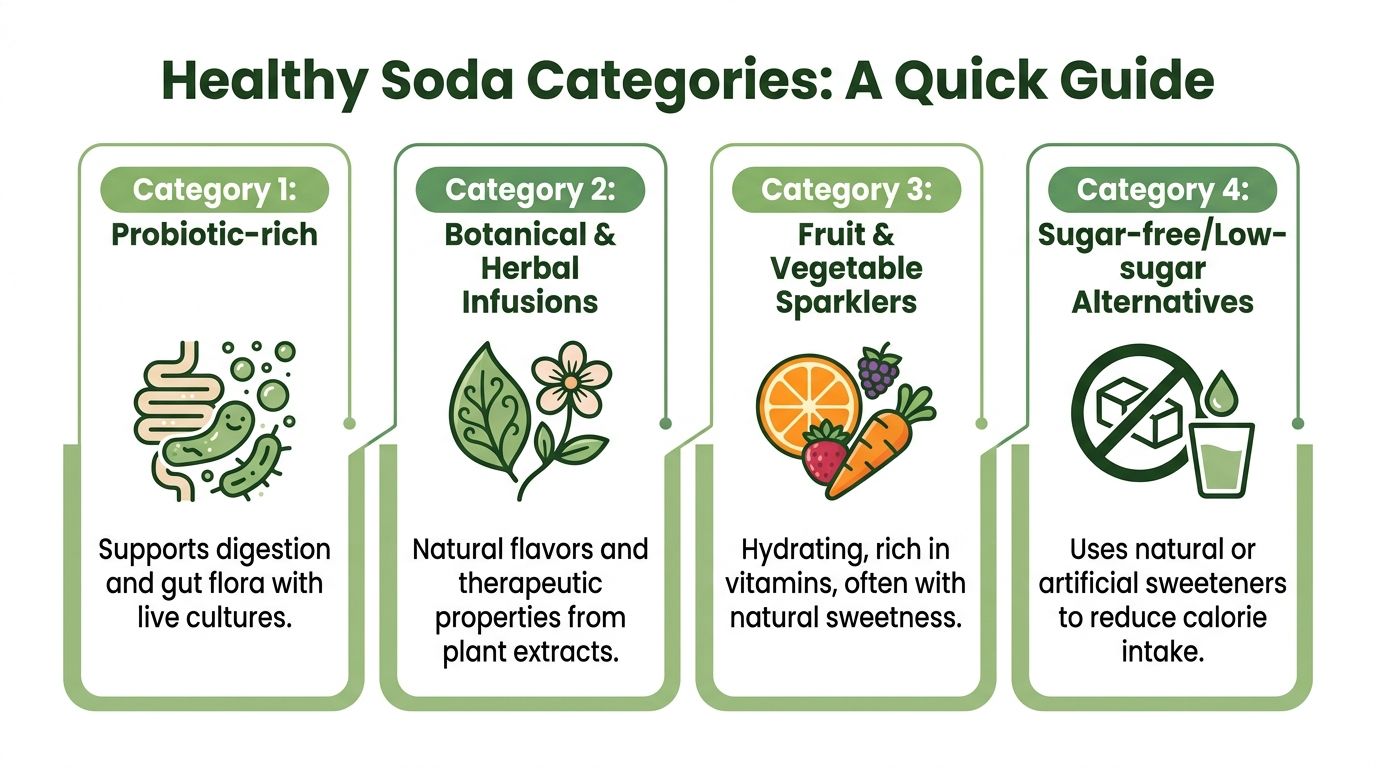
Exploring the Best Healthy Soda Categories
Not all healthy soda drinks are trying to do the same job. Some are for hydration. Some are for flavour. Some are chosen for gut health interest. Others are there to replace a sweet soft drink habit without feeling boring.
That is why categories matter more than hype.
Kombucha
Kombucha sits closest to the “functional fizz” idea many people have in mind.
It is a fermented tea drink, usually lightly tart, lightly sparkling, and more layered in flavour than standard soft drink. Depending on how it is brewed, it can lean gingery, citrusy, appley, floral, or tea-forward.
People often get tripped up by one question. Is all kombucha the same? Not at all.
Some are clean and dry. Some are sweet and juicy. Some are raw and alive. Some are more like soft drink with a kombucha label attached.
Best for: people who want a grown-up soft drink alternative, an alcohol-free option with character, or a fermented drink with live culture interest.
Sparkling water and naturally infused sparkling water
This category is the most basic.
Plain sparkling water gives you fizz without sweetness. Naturally infused sparkling waters add a hint of citrus, berry, cucumber, or botanical flavour. They work well for people who mostly want refreshment and a break from sugary drinks.
The main thing to remember is that these drinks are often the least complex. That is not a flaw. It is the point.
They are ideal when you want:
- Clean refreshment
- No heavy sweetness
- A mixer for meals or mocktails
- An easy fridge staple
Modern low-sugar sodas
This category tries to recreate the fun of classic soft drink with a lighter nutritional profile.
You will often see flavours inspired by cola, lemon squash, ginger beer, orange, or creamy soda styles. Some use alternative sweeteners. Some use fruit and botanicals. Some sit somewhere in the middle.
This is often the easiest entry point for people who still want a familiar soft drink feel.
The challenge is quality variation. One low-sugar soda may taste balanced and clean. Another may have a strange aftertaste or rely too heavily on sweetener technology rather than ingredients.
If you enjoy ginger-led flavours, this no sugar ginger beer style option shows how a classic soft drink profile can be reworked in a lighter direction without losing personality.
Matcha and tea-based sparklers
This is still a smaller corner of the category, but it is one of the most interesting.
Tea-based sparkling drinks can offer:
- More adult flavour profiles
- Natural bitterness or tannin for structure
- A more refined alternative to sweet soft drink
- A bridge between café culture and functional beverages
Matcha sparklers, in particular, appeal to people who want something energising but not heavy. The flavour is fresh, grassy, and slightly creamy when prepared well. For some people, it is an instant favourite. For others, it takes a sip or two to understand.
A side-by-side view
| Category | What it tastes like | Why people choose it | Best moment |
|---|---|---|---|
| Kombucha | Tart, layered, lightly fermented | Interested in live cultures and complex flavour | Lunch, mocktails, alcohol-free evening drink |
| Sparkling water | Crisp, clean, minimal | Wants fizz without sweetness | All day, hydration, meal pairing |
| Low-sugar soda | Familiar soft drink style | Cutting back without giving up classic soda feel | Afternoon treat, family fridge |
| Tea-based sparkler | Botanical, bright, more adult | Wants flavour plus a tea-based identity | Morning, café menu, mindful energy |
Which category suits you best
If you love traditional soft drink and want the easiest swap, start with low-sugar soda.
If you are over sweet drinks altogether, sparkling water may suit you better.
If you enjoy bolder flavour and are curious about fermentation, kombucha is often the most rewarding category.
If you already love green tea, iced tea, or café-style drinks, tea-based sparklers can feel like a natural next step.
The best healthy soda drink is the one you will enjoy often enough to replace the habit you are trying to move away from.
Health Benefits of Probiotics and Antioxidants
Two words come up constantly in this space: probiotics and antioxidants. They sound scientific, and they are, but the basic ideas are straightforward.
One is about the living ecosystem in your gut. The other is about plant compounds that help protect cells from everyday stress.
Probiotics and gut health
Your digestive system is home to a huge community of microbes. People often call it the gut microbiome.
A clear way to think about it is as a garden. Different microbes play different roles. Some help maintain balance. Some help break down parts of food. Some are associated with a healthier gut environment when they are present in the right mix.
A 2023 CSIRO study on Australian adults found that daily consumption of organic kombucha with more than 10^8 CFU/ml probiotics led to a 28% increase in beneficial Bifidobacterium in the gut and improved markers of colonic barrier integrity after four weeks, compared to regular soda, according to the source provided here.
That is useful because it moves kombucha beyond vague wellness language. It points to a measurable difference in the gut environment when a properly brewed product is used instead of a regular soft drink.
People often mix up probiotics and prebiotics, so if you want a plain-English explainer, this guide on what are prebiotics and probiotics is a handy starting point.
Why “live cultures” is not just marketing language
A live fermented drink is different from a flavoured fizzy drink that borrows the kombucha aesthetic.
What matters is whether the product still contains viable cultures in a meaningful way. That depends on how it was brewed, handled, and packaged.
For everyday drinkers, the practical takeaway is clear. If you want probiotic interest, choose drinks that take fermentation seriously and are clear about what is in the bottle.
A fermented drink is not automatically useful just because it tastes tangy. The brewing and culture quality matter.
Antioxidants and matcha
Antioxidants are compounds found in many plant foods and drinks. Tea is one of the best-known examples.
Their job is often described as helping the body deal with oxidative stress. If that phrase sounds abstract, think of it as everyday wear and tear that happens as part of normal life. Plant compounds can help your body manage that background load.
Matcha is especially interesting because you consume the whole powdered tea leaf rather than just drinking an infusion and discarding the leaves. That gives matcha its dense flavour, vivid green colour, and strong identity compared with many other tea drinks.
Why matcha feels different from many energy drinks
People often ask whether tea-based fizzy drinks are meant to “wake you up” the way a standard energy drink does.
Usually, that is not the appeal.
Matcha-based drinks are often chosen because they feel steadier and more grounded. The experience is less about a jolt and more about alertness with a smoother edge. The taste also tends to signal something very different from mainstream energy drinks. It feels cleaner, less syrupy, and more connected to actual tea.
The antioxidant side of matcha adds to that appeal. It gives the drink a genuine food-based identity rather than just a laboratory-style formula.
Where these benefits fit in real life
For many, healthy soda drinks are not the whole answer to wellness. They are one small lever.
They can help when you want to:
- Replace a daily soft drink habit
- Choose a more interesting alcohol-free option
- Build a café or home fridge around smarter choices
- Pick drinks with ingredients that make sense
That is the value of probiotics and antioxidants in this category. They turn fizz from an empty extra into something with a clearer role.
How to Read Drink Labels Like an Expert
Front-of-pack wording is designed to catch your eye, not to answer your questions.
If you want to judge healthy soda drinks properly, the back of the can does the talking. The ingredient list and nutrition panel tell you far more than words like natural, wellness, functional, or guilt-free ever will.
What to look for first
Start with the shortest route to clarity.
Sugar position on the panel
Look at the sugar content early, before you read the brand story. If a product is pitched as a healthy swap, the sugar number should support that claim.Recognisable ingredients
Brewed tea, fruit juice, herbs, spices, botanical extracts, live cultures, and sparkling water are easier to understand than a long chain of additives.Specificity
Clear wording is a good sign. If a drink says fermented tea, matcha, ginger juice, or live cultures, you know more than if it hides behind broad flavour language.
Ingredients that deserve a second look
Some ingredients are not automatically bad. They deserve attention.
Traditional colas contain phosphoric acid at 300 to 400mg/L, and a long-term University of Sydney study linked higher intake to 14% lower bone mineral density in adolescents. The same study noted 9% higher bone density in consumers of matcha-based drinks, which contain EGCg, according to the provided source here.
That does not mean one occasional cola is a crisis. It does mean ingredient type matters, especially if a drink is part of your regular routine.
A simple label-reading checklist
Look for these signs
Low sugar intent
The product should clearly fit a lower-sugar approach, not just a smaller serve trick.A believable product identity
If it is a kombucha, you should see signs of fermentation and culture. If it is a tea sparkler, tea should feel central.Less clutter
A shorter, cleaner list often makes it easier to understand what you are drinking.
Be cautious about these
Halo words without detail
“Natural flavours” is common, but on its own it does not tell you much.Health language doing all the work
If every claim sits on the front and very little substance appears on the back, be sceptical.Products that imitate wellness branding
Pastel cans and botanical illustrations can make a drink look cleaner than it really is.
The best label readers do one thing differently. They ignore the front until the back has earned their trust.
What about certifications and compliance
For shoppers, certifications can help signal manufacturing standards or ingredient choices, but they are not a replacement for reading the panel.
For businesses launching their own beverage, label compliance gets much more technical. If that side interests you, this guide on mastering supplement label requirements is useful for understanding how detailed product labelling can become in adjacent wellness categories.
A quick aisle test you can use today
Pick up two drinks that both call themselves healthy. Compare only three things:
- The sugar panel
- The first five ingredients
- Whether the product benefit is clear and believable
That comparison usually tells you enough to make a smarter choice without overthinking it.
Easy DIY Healthy Sodas and Mixers to Make at Home
Making your own healthy soda drinks at home is one of the easiest ways to understand the category properly.
You start noticing what each ingredient contributes. Fizz gives lift. Citrus adds brightness. Tea brings structure. Kombucha adds tang and complexity. Once you play with that balance, ready-to-drink labels make much more sense too.
For a quick visual guide and a bit of inspiration, this video is a good place to start.
Matcha sparkler
This one is clean, lively, and ideal when plain sparkling water feels too plain.
You’ll need
- Culinary-grade matcha
- Cold water
- Sparkling water
- Fresh lime
- Ice
- Optional mint leaves
How to make it
- Sift a small spoonful of matcha into a glass or shaker.
- Add a little cold water and mix until smooth.
- Fill a glass with ice.
- Pour in the matcha mixture.
- Top with sparkling water.
- Finish with a squeeze of lime.
The flavour should be brisk and refreshing, not overly bitter. If it tastes sharp, use a bit more water next time. If it feels too plain, add extra lime or a bruised mint leaf.
Kombucha mocktail
A good kombucha makes an excellent mixer because it already brings acidity, fizz, and depth.
You’ll need
- A ginger-forward or citrusy kombucha
- Lots of ice
- Fresh cucumber or lime
- A sprig of rosemary or mint
- Optional splash of chilled soda water
How to make it
- Fill a tall glass with ice.
- Add a few slices of cucumber or a wedge of lime.
- Pour in the kombucha slowly.
- Add soda water if you want a lighter finish.
- Garnish with rosemary or mint.
If you enjoy vinegar-based flavour profiles in this category, apple cider vinegar soda ideas can give you another direction to explore.
Homemade healthy soda drinks work best when you keep them straightforward. One fizz element, one hero flavour, one fresh accent.
Small tweaks that make a big difference
If you like sweeter drinks
Use naturally sweeter ingredients such as ripe citrus, a little fruit purée, or a softer kombucha flavour. Avoid throwing everything in at once.
If you want more complexity
Add herbs. Mint, basil, and rosemary all change the drink without making it heavy.
If you are serving guests
Use proper glassware and plenty of ice. Healthy soda drinks feel more satisfying when they look intentional.
A Guide for Australian Cafés and Retailers
Healthy soda drinks are not just a home-fridge trend. They make strong commercial sense for cafés, delis, health food stores, and hospitality venues building out non-alcoholic options.
Customers now expect more than one token alcohol-free drink and a fridge full of standard soft drinks. They want options that feel current, thoughtful, and worth paying for.
Why careful sourcing matters
This category rewards quality, but it also punishments shortcuts.
With Australian kombucha sales up 28% in 2025, buyers have more options to choose from. At the same time, a 2025 Choice Australia test found 60% of supermarket kombuchas fail to meet probiotic claims, according to the provided source here.
That matters for cafés and retailers because your staff may describe a product as “good for gut health” because the packaging suggests it. If the live culture side is weak, the product can disappoint informed customers.
Strong menu fits for healthy soda drinks
Healthy soda drinks work especially well in venues that already care about coffee, tea, brunch, or wellness-led food.
Good placements include:
- Fridge retail near takeaway coffee
- Non-alcoholic pairing menus
- Mocktail lists
- Afternoon café pick-me-ups
- Health food and premium grocer shelves
What staff should be able to explain
Your team does not need to sound like food scientists. They do need to explain the difference between categories in plain language.
A staff member should be comfortable saying:
- This one is fermented and more tart
- This one is tea-based
- This one is low sugar and refreshing
- This one works well as a mixer
That kind of clarity builds trust.
The fastest way to lose credibility in this category is to treat every fizzy wellness drink as interchangeable.
Building the range with intention
A smart range usually balances three roles:
- Easy entry products for mainstream customers
- Functional options for ingredient-conscious shoppers
- Premium adult flavours for hospitality and gifting
If you are reviewing your broader merchandising and menu growth approach, these strategies for growing retail sales offer useful retail thinking that can be applied beyond beverages too.
For Australian businesses, local supply, consistent quality, and clear product education often matter as much as flavour. A healthy soda drink sells best when the person stocking it understands what makes it different.
Your Next Sip Can Be a Healthy One
Healthy soda drinks are easier to choose once you stop listening to front-label buzzwords and start looking for substance. Lower sugar matters. Clear ingredients matter. Function matters when a brand claims it.
The best option is not the trendiest can. It is the drink that fits your taste, supports your routine, and makes replacing old habits feel easy. Whether you lean towards kombucha, sparkling water, low-sugar soda, or a matcha-based sparkler, a better fizzy drink is absolutely possible.
If you want a good place to start, explore Pep Tea for Australian-made organic kombucha and premium matcha. We focus on clean flavour, low-sugar choices, and real tea craft, so your next fizzy ritual can feel both enjoyable and well chosen.