
Tag: morning wellness drinks
7 Healthy Breakfast Beverages to Start Your Day

What's the first thing you drink in the morning, and does it help you start the day well? For many Australians, it's coffee or plain water, but healthy breakfast beverages can do more than wake you up. They can support hydration, sit neatly alongside breakfast, and make it easier to choose foods that leave you feeling steady rather than flat an hour later. Breakfast also tends to contribute a meaningful share of daily energy intake, and beverages often play a noticeable role in that morning routine. If you want a smarter first sip, the best choices are usually simple, low in sugar, and easy to match with food.
This guide goes beyond generic suggestions and looks at specific drink types, because each one does a different job. Matcha can provide calm focus, kombucha can add fermented tang, smoothies can help with fullness, and other options offer hydration or probiotic variety without making breakfast feel heavy. For a practical Australian example, you can find premium matcha with Allied Drinks Systems, and Pep Tea's matcha and caffeine guide is useful if you want to compare it with your usual morning cup. The goal is simple. Choose a drink that fits your routine, tastes good, and supports the way you want to feel through the morning.
1. Organic Matcha Green Tea for Calm, Focused Energy
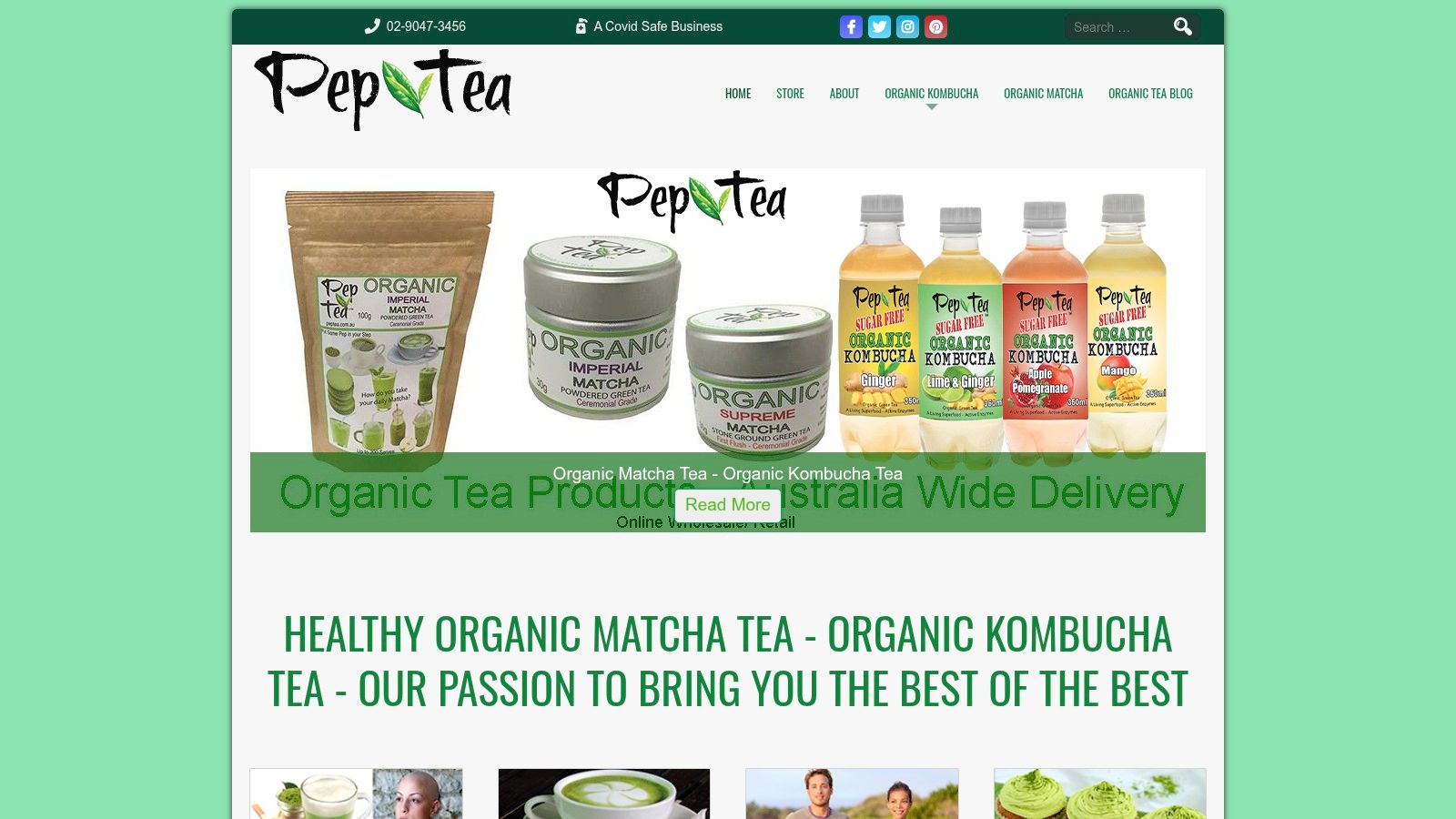
Matcha is a strong breakfast choice when you want energy without making your morning feel chaotic. It's a finely ground green tea powder, so you consume the whole leaf, not just an infusion. That's part of why premium matcha is so appealing for Australians who want a clean, functional start to the day.
A useful way to think about matcha is as a coffee alternative with a calmer edge. A peer-reviewed review of beverage guidance says caffeine intake should stay below 400 mg per day, and coffee or tea can fit well when you count any added milk or sugar (PMC review). For people who feel jittery after a long black, matcha is often easier to build into breakfast because it's usually taken with milk or water and doesn't need syrup to taste good.
How Aussies can use it in real life
Try it as a simple matcha latte, iced in summer or warm on cooler mornings. Pep Tea's guide on matcha and caffeine helps explain how it compares with a regular latte, which is handy if you're trying to manage your morning routine more deliberately (Pep Tea matcha caffeine guide).
Practical rule: if your breakfast drink needs three sugars to feel enjoyable, it's probably not doing your morning any favours.
For a quality option, Pep Tea's organic Japanese ceremonial-grade and culinary-grade matcha fits the kind of low-sugar, wellness-led breakfast habit many Australians are looking for. If you want a premium supplier outside the cafe cup, you can also find premium matcha with Allied Drinks Systems.
2. Sugar-Free Kombucha for Gut Health

Kombucha suits breakfast when you want something crisp, lightly tangy, and not too sweet. Its fermented tea base gives it a more purposeful feel than a soft drink or juice, which is part of why it has found a place in the broader move toward drinks with clear functional benefits. Market research on gut-health beverages points to steady consumer interest in probiotics and fermentation, and that helps explain why kombucha keeps showing up in morning routines (GMI gut health beverages market).
That interest is not just about flavour. People often choose kombucha because they want a drink that feels lighter than a sugary breakfast beverage and still offers a bit of complexity. The fizz gives it the same kind of wake-up effect you get from sparkling water, but the tea base and fermentation make it feel more layered.
Why sugar-free matters
Sugar control is the part that matters most here. A randomised trial in overweight and obese adults found glucose area-under-the-curve was higher for sugar-sweetened coffee than for water, reduced-energy orange juice, or low-fat milk, and the authors concluded that the lower-sugar options may be better for glucose control (PubMed trial). Kombucha is not a treatment, but the message is clear, the morning drink you choose can shape how much sugar you start the day with.
That is why a sugar-free organic kombucha can fit so neatly into a lower-sugar breakfast habit. Pep Tea's version, brewed in the Hunter Valley, NSW, gives you the tang and fizz without turning breakfast into a sugar hit. For a broader look at fermented drink options and how they fit into a healthy routine, Pep Tea's healthy probiotic drinks guide is a useful place to start.
If you like pairing breakfast drinks with a simple recipe idea, AloeCure's refreshing smoothie guide shows how a fresh, fruit-led drink can stay light while still feeling satisfying.
3. Protein-Rich Smoothies for Satiety

Some mornings need more than a drink. They need a drinkable breakfast that keeps you going until lunch. That's where a protein-rich smoothie earns its place, especially if you're heading to work, school drop-off, or the gym and don't have time for a full sit-down meal.
The key is balance. Australian breakfast guidance emphasises protein, fibre, and healthy fats, and advises pairing drinks with foods like yogurt, nuts, eggs, or whole grains rather than relying on juice or sweetened beverages alone (Alberta Health Services breakfast guide). A smoothie can fit that pattern if you build it around Greek yogurt, milk, soy milk, nut butter, chia seeds, or oats.
A simple make-at-home formula
- Start with protein: Use Greek yogurt, milk, soy milk, or a protein powder you already trust.
- Add fibre: Choose berries, oats, chia seeds, or spinach.
- Include healthy fat: Avocado, nut butter, or seeds help slow digestion.
- Keep sweetness in check: Use fruit for flavour before reaching for honey or syrups.
A good example is a berry smoothie with yogurt, chia, and milk, which feels more like breakfast than a sugary drink. If you want ideas for texture and flavour, AloeCure's smoothie guide shows how a smoothie can be turned into a satisfying morning option.
4. Nutrient-Dense Green Juice for a Vitamin Boost

Green juice has a clear place in the breakfast lineup, but it helps to be honest about what it is and what it isn't. It's a light, hydrating, vegetable-forward drink, not a full breakfast replacement. That makes it a sensible choice for people who want something fresh first thing in the morning, especially if they're planning to eat proper food soon after.
Because it's strained, green juice doesn't give you the same fullness as a smoothie. That matters in the Australian context, where balanced breakfast guidance keeps coming back to whole foods, protein, and fibre rather than liquids alone (BDA healthy breakfast guidance). If you drink green juice on its own, think of it as a supplement to breakfast, not breakfast itself.
Green juice works best when it complements a real meal. If you're still hungry an hour later, that's not a failure of the juice, it's a sign you needed more substance.
A practical version might include cucumber, spinach, celery, lemon, and a little green apple for taste. That gives you a bright morning drink without leaning too hard on sweetness. If you're in a cafe or grocery setting, it's also a good menu item for people who want something lighter than a smoothie but more interesting than plain water.
For Australian buyers, the most useful green juices are the ones with a short ingredient list and no added sugar. Keep it crisp, keep it clean, and pair it with breakfast, not instead of it.
5. Cultured Kefir for Probiotic Diversity
Kefir is one of those breakfast beverages that feels old-school in the best way. It's tangy, cultured, and easy to fit into ordinary routines, which makes it a practical choice for people who want a fermented dairy option with more character than plain milk. If you already eat muesli, oats, or fruit in the morning, kefir can sit alongside them without asking you to change your whole routine.
It also fits the growing interest in foods that do more than just taste nice. Fermented dairy drinks are often chosen for their live cultures and their place in a functional breakfast, and kefir suits that pattern without needing much fuss. That makes it a good option for people who want a drink with a job to do, not just something cold in a glass.
Easy ways to drink it
- Straight from the bottle: A small glass on its own is the simplest option.
- Blended into smoothies: Kefir adds tang and creaminess without much effort.
- Over muesli or oats: It turns breakfast into something richer and more filling.
If you want to make your own cultured drinks, Pep Tea's kefir grains Australia page is a useful place to start. For many households, that can turn kefir from an occasional fridge buy into a regular morning habit.
6. Hot Water with Lemon and Ginger for Gentle Hydration
Need a breakfast drink that feels light, warm, and easy to sip? Hot water with lemon and ginger keeps things simple. It is caffeine-free, gentle on the morning routine, and useful when you wake up feeling flat, have a sensitive stomach, or just want something mild before food.
The appeal is plain, it starts the day with fluid first. That matters because a glass of warm water can be easier to manage than a strong drink first thing, especially if your stomach likes a softer start. For readers comparing dairy free options for Queensland food, this kind of mug also fits neatly into a broader morning routine without adding milk, sugar, or extra richness.
A very simple morning mug
Use hot water, a squeeze of lemon, and a few slices of fresh ginger. Let it sit for a few minutes so the ginger can infuse, then sip it slowly while breakfast is cooking or after your first shower.
The flavour should stay light, not sharp. If you want a little more ginger warmth, add another thin slice next time rather than overloading the mug at the start. That way the drink stays easy to drink and keeps its calm, clearing feeling.
This isn't a meal replacement, and it should not be treated like one. It works more like a gentle bridge between sleep and breakfast, especially for mornings that begin badly with strong coffee on an empty stomach. A few days a week is enough to see whether this simpler habit suits you.
7. Golden Milk for a Cosy, Caffeine-Free Start
Golden milk works well when you want something warm, mild, and comforting without reaching for caffeine. It is usually made with milk and turmeric, then rounded out with ginger, cinnamon, or both. For Australian mornings, it suits a slower start, especially on cooler days when a café-style drink feels nicer than a plain glass of water.
Its appeal is partly about habit. Many people want a morning cup that feels soothing, but not sugary, and golden milk fills that role neatly. A homemade version made with unsweetened milk keeps the drink in breakfast territory rather than dessert territory, and the Harvard Nutrition Source notes the value of limiting added sugar, cream, and whole milk if weight management is a goal (Harvard Nutrition Source).
Build it cleanly
Use dairy milk or a plant milk, then stir in turmeric, a pinch of cinnamon, and a little ginger. If you want to match the needs of different households, there are plenty of dairy free options for Queensland food that work well here too. Some people add black pepper for flavour, but the point is to make a warm mug that feels balanced before the day gets busy.
Golden milk also works like a bridge between waking up and eating breakfast. It can take the edge off a rushed morning, but it should still sit alongside real food rather than replace it. Oats, toast, eggs, or fruit make a better match than treating the drink as a full meal by itself.
7-Point Comparison of Healthy Breakfast Beverages
| Beverage | Implementation Complexity 🔄 | Resource Requirements ⚡ | Expected Outcomes 📊 / ⭐ | Ideal Use Cases 💡 | Key Advantages ⭐ |
|---|---|---|---|---|---|
| Organic Matcha Green Tea for Calm, Focused Energy | 🔄🔄 Moderate, sift & whisk (ceremonial prep) | ⚡⚡ Low, matcha, hot water, whisk | Sustained calm alertness; antioxidant support, ⭐⭐⭐⭐ | Morning focus, coffee alternative, productive work sessions | L-theanine + caffeine balance; high antioxidants |
| Sugar-Free Kombucha for Gut Health | 🔄 Low, ready-to-drink or simple home brew | ⚡⚡ Low–Medium, bottled or SCOBY for brewing | Supports gut microbiome and digestion, ⭐⭐⭐ | Gut-support routine, refreshing low-sugar alternative | Live probiotics and organic acids; low sugar |
| Protein-Rich Smoothies for Satiety | 🔄🔄 Low, blend ingredients | ⚡⚡ Medium, blender, protein powder, perishables | High satiety; balanced macros and nutrients, ⭐⭐⭐⭐ | Breakfast replacement, post-workout, on-the-go meal | Keeps you full; customizable macronutrients |
| Nutrient-Dense Green Juice for a Vitamin Boost | 🔄🔄 Low–Medium, juicer or blending + strain | ⚡⚡ Medium, fresh produce, juicer/blender | Rapid micronutrient delivery; low fiber, ⭐⭐⭐ | Quick vitamin surge, hydration, light-calorie days | Concentrated vitamins and hydration |
| Cultured Kefir for Probiotic Diversity | 🔄 Low, drink straight or use in recipes | ⚡⚡ Low–Medium, store-bought or ferment at home | Broad probiotic diversity; calcium & protein, ⭐⭐⭐⭐ | Gut diversity, smoothie base, cereal topping | Wide range of probiotic strains; versatile use |
| Hot Water with Lemon & Ginger for Gentle Hydration | 🔄 Very low, steep slices in hot water | ⚡⚡⚡ Minimal, lemon, ginger, hot water | Gentle hydration; aids digestion; zero calories, ⭐⭐⭐ | Very gentle mornings, caffeine-free start, digestion prep | Extremely simple, comforting, low-cost |
| Golden Milk (Turmeric Latte) for Anti-Inflammatory Support | 🔄🔄 Low, warm and whisk spices into milk | ⚡⚡ Low, turmeric, milk (or substitute), spices | Anti-inflammatory support; warming ritual, ⭐⭐⭐ | Cozy caffeine-free mornings, anti-inflammatory routine | Curcumin benefits; comforting and nourishing |
Your Perfect Morning Beverage Awaits
A healthy breakfast beverage does not need to be complicated to be useful. The right choice can support hydration, help you keep sugar in check, and make the first part of your day feel more deliberate, whether that means the steady lift of matcha, the tang of kombucha, or a plain cup of hot water with lemon and ginger. The key is to pick a drink that fits your body, your schedule, and the breakfast you plan to eat.
Simple drinks are often the easiest to keep. Familiar options that are lower in sugar and easy to repeat tend to fit better into a morning routine, and health-minded buyers are increasingly looking for drinks with functional benefits and cleaner ingredient lists. That suits a practical Australian approach, where the beverage should support breakfast, not crowd it out.
Start with one small change if you want to improve your morning routine. Swap one sugary drink for a lower-sugar option, add protein to a smoothie, or choose a warm caffeine-free drink a few times a week. Over time, the drink you reach for first can become one of the easiest healthy habits in your day.
Pep Tea offers organic Japanese matcha and Australian-brewed sugar-free kombucha that fit neatly into that kind of routine. They give you a straightforward way to keep your morning drink honest, functional, and easy to enjoy.