
Tag: matcha powder vs tea bags
Matcha Tea Bags vs Powder: An Honest Australian Guide
Most advice on matcha tea bags vs powder gets the question wrong. People talk as if bags are just a cheaper, weaker version of powder, but that's too simple. In practice, you're usually choosing between a blended infusion and whole-leaf consumption, and that changes everything from flavour to caffeine to value.
If you buy smart in Australia, the label matters more than the marketing. A bag can say matcha and still contain only a tiny amount of actual matcha, while powder is the full leaf, whisked and consumed. That's why the better choice depends on what job you want it to do, not which format sounds more premium.
| Format | What you're really getting | Best for | Main trade-off |
|---|---|---|---|
| Matcha tea bags | Often a blend with only 1–2% matcha and other tea material | Fast cups, portion control, office use | Lower ingredient concentration |
| Matcha powder | 100% pure matcha consumed whole | Ritual, lattes, stronger matcha character | Higher price per cup |
Why the Tea Bag vs Powder Question Is Misleading
The wrong debate starts with a false ranking, tea bags below powder. The split is between packets that contain a little matcha in a bag and products that are entirely matcha powder, because product-ingredient reviews report many “matcha tea bags” contain only 1–2% matcha while powdered matcha is 100% pure matcha (ingredient review).
What the format actually does
Powder is whisked into water, then consumed in full. Tea bags are steeped and discarded. That difference changes how much of the leaf ends up in your cup, and it is why the powder format is consistently described as the more nutrient-dense option (format comparison).
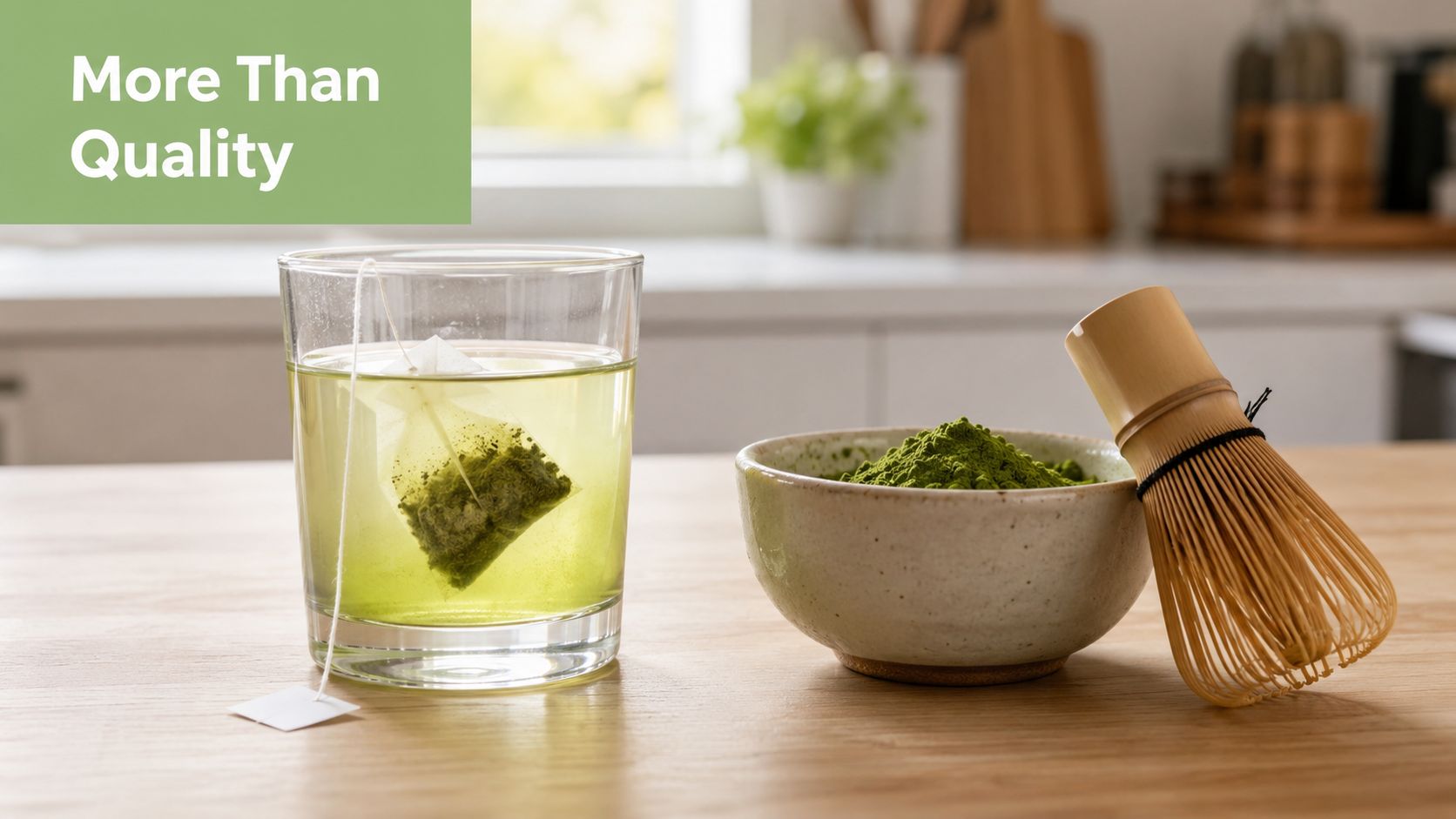
Australian shoppers need to read that difference plainly. If you want a true matcha experience, buy the whole leaf and whisk it. If you want a quick green tea drink with a matcha-style label, the bag can serve that job, but it is not the same product in the cup. For a plain explanation of the powder format, Pep Tea's matcha powder guide is a useful starting point.
Practical rule: read the ingredient panel before you read the front of the packet. The front often sells the idea, the panel tells you what is inside.
That is also why the choice should be tied to the job, not the prestige. A tea bag can suit office use, café back-up service, or a quick cup at home. Powder suits a morning ritual, a proper latte build, or anyone who wants the leaf rather than a trace amount of it. For readers comparing matcha for wellness and energy, matcha for wellness and energy is a relevant reference point.
Independent food-science research also shows that bagged green teas and some standard bagged products can perform well on antioxidant measures depending on the product, so format alone does not guarantee quality. What matters is the ingredient composition, not the marketing language on the box (comparison of bagged and powdered products).
Matcha Grades and What You Are Buying
Shelf labels use the word “matcha” very loosely, so Australian shoppers need to read the ingredient panel before they trust the front of the packet. Some products are true stone-ground matcha, others are diluted blends dressed up with green tea branding. For a plain guide to grading and sourcing, Pep Tea's guide to different grades of matcha is a useful starting point.
Ceremonial and culinary serve different jobs
Ceremonial-grade matcha is the smoother, more delicate style meant for drinking straight. Culinary-grade matcha is built for lattes, baking, and mixing into recipes. That split matters because a cup you whisk and drink on its own needs a different leaf profile from the powder you hide in milk or batter.
A bag that says matcha but contains only 1–2% matcha is not giving you a full matcha experience. It is a green tea blend with matcha branding. Buyers get tripped up because the front of the packet suggests purity while the ingredient list reveals the actual story.
What to check on the pack
Start with the ingredient list. A true matcha powder should read plainly as matcha, not a long blend padded out with other tea material.
Origin details matter too. Japanese regions such as Uji or Nishio usually give you more transparency about sourcing. For Australian buyers who want cleaner inputs, organic certification is another sensible filter. Colour and texture matter as well, because bright, fine powder usually points to a more deliberate product than dull, coarse material.
Buyer's rule: if the brand will not say what percentage of matcha is in the bag, treat it as a blended tea product.
That is why the powder-versus-bag question starts with honesty, not hype. Powder can be true matcha, while a bag can be a convenience format. They are not interchangeable just because both mention green tea. For a buying framework that keeps the purity question front and centre, this Australian matcha powder versus tea bag comparison is useful.
Antioxidants, Caffeine and L-Theanine by Format
The format choice matters because it changes how much of the leaf ends up in the cup. Matcha powder gives you the whole material, while tea bags steep only what sits inside the bag. That is why caffeine delivery, antioxidant intake, and L-theanine exposure usually favour powder when you compare the two formats on equal terms.
Caffeine is a serving question, not just a leaf question
One comparison source reports roughly 70 mg of caffeine per cup for matcha powder versus about 34 mg per cup for matcha tea bags, so powder can deliver about double the caffeine per serve (caffeine comparison). For Australians who want steady energy without guesswork, that is the number to watch.
The key point is not chasing the highest dose. The format changes the stimulant load, and that changes the cup. If you are brewing for morning focus, latte service, or a pre-workout routine, powder gives a stronger and more predictable matcha result.
Antioxidants and L-theanine follow the leaf
The same logic applies to the compounds people usually value in matcha. Powder uses the whole leaf, so the drinker gets more of what the leaf contains. Tea bags make an infusion, so the dose is lower by design.
For a broader wellness framing of matcha powder, matcha for wellness and energy is a useful companion read. Keep the comparison honest, though. Some bagged green teas can still perform well on antioxidant measures depending on the product, so a “matcha” label alone does not guarantee a stronger result.
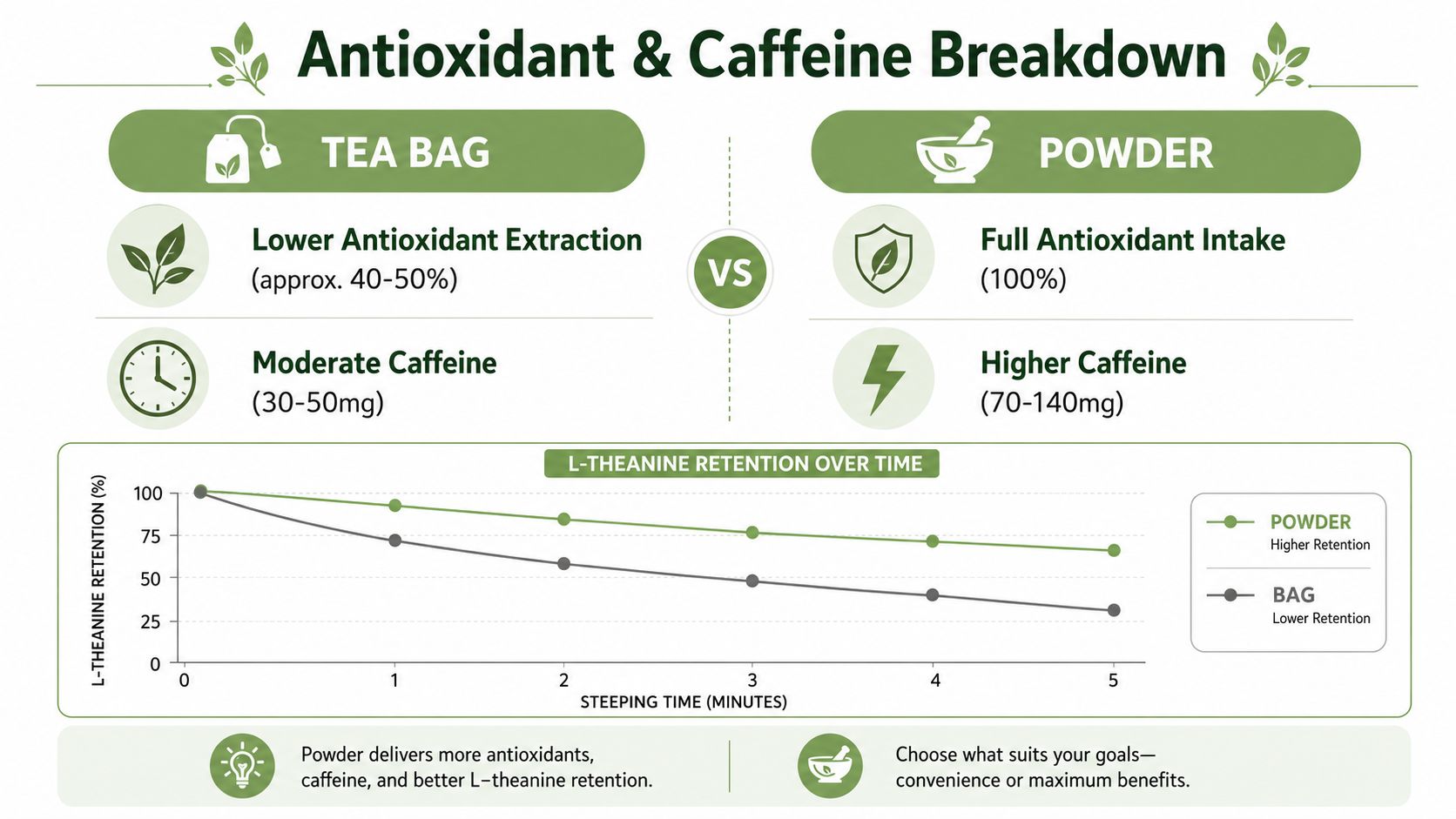
Bottom line: if your goal is clean energy, focus, and the fuller matcha profile, powder is the format that delivers the leaf.
Brewing Methods, Equipment and Everyday Use
Tea bags are dead simple. Drop one into a cup, pour hot water over it, wait a couple of minutes, and you're done. That speed is why they work in offices, hotels, and anywhere a staff member needs a consistent serve with almost no training.
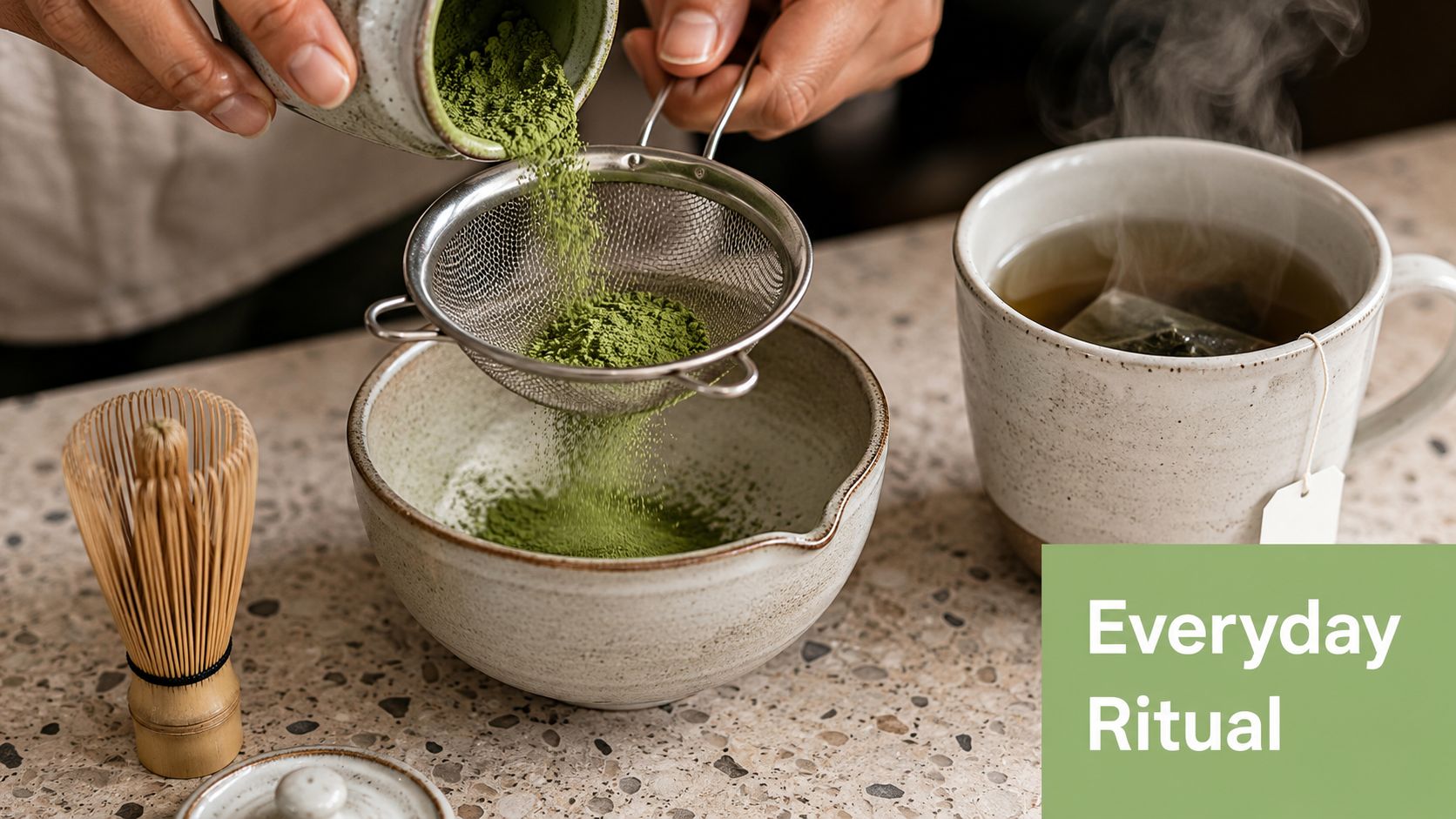
Matcha powder asks for a little more attention, but not much. Sift it, add water at around 80°C, and whisk it with a bamboo chasen until smooth. Once the motion becomes automatic, it's quick, and the result is more consistent than many expect. For a practical walk-through, Pep Tea's how-to-whisk-matcha guide covers the basics well.
The gear each format needs
Tea bags need almost nothing beyond a kettle and a cup. Powder usually benefits from a chasen, a small sifter, a chashaku scoop, and a bowl wide enough for whisking. That sounds fussy until you realise you're setting up a ritual drink, not just making hot water taste green.
You don't need café gear to make powder properly. You need a bowl, a whisk, and a few calm seconds.
That's why powder suits a slower morning or a weekend brew. Tea bags suit a rushed weekday or a shared office kitchen. In café service, powder also gives staff a better base for a latte because the dose can be pre-portioned and built into a repeatable workflow.
Latte service is where powder earns its keep
A latte made from powder has stronger matcha character and a cleaner visual finish. A tea bag is easier to manage, but it won't give the same depth. For cafés, that means powder usually makes more sense when the menu promises a proper matcha drink, while tea bags make sense for simple tea service or back-of-house speed.
Cost Per Cup, Cost Per Nutrient, and Value
Price is where the decision gets honest. ConsumerLab's pricing comparison found brewed tea from bagged green tea could cost as little as US$0.10 per serving, while a serving of matcha powder was about US$1.00 (pricing comparison). That gap is real, and it explains why tea bags keep winning in homes, offices, and cafés that count every cup.
The cheaper cup is not always the better value
If you only want a hot green drink, the bag wins on unit price. If you want actual matcha character, the powder earns its price by putting the whole leaf in the cup. That is the cleaner way to judge value, because a low-priced cup that misses the brief is still poor value.
ConsumerLab also found that getting 200 mg of EGCG from matcha cost over US$2, while it could cost as little as 27 cents from bagged brewed tea. That puts the economics in plain language. If your aim is a specific antioxidant dose, tea bags are the cheaper route. If your aim is full-powder matcha service, powder costs more because you are paying for the whole-leaf format, not just a green-flavoured drink.
Cost Comparison of Matcha Formats
| Format | Avg cost per serving | Cost per 200 mg EGCG | Typical use case |
|---|---|---|---|
| Bagged green tea | as little as US$0.10 | as little as US$0.27 | Low-cost daily cups, offices, bulk hospitality |
| Matcha powder | about US$1.00 | over US$2 | Ritual drinking, lattes, premium menu builds |
For households, that means powder belongs in a smaller, more intentional rotation. For cafés and retailers, it means powder should be priced as a premium drink input, not as a cheap tea bag substitute. The spend only makes sense when the menu or routine calls for the stronger matcha format.
Storage, Shelf Life and Environmental Footprint
Matcha powder is sensitive to air, light, and heat. Once a tin is open, it can lose colour, aroma, and intensity if it sits unrefrigerated and unsealed. Tea bags are usually more forgiving because the product is already portioned and often packed for stability, which suits pantry storage and casual use.
How to store each format properly
Keep matcha powder in a sealed tin or pouch, away from light and moisture, and use it regularly. A premium powder should be treated like a fresh ingredient, not a permanent pantry item.
Tea bags need less care, but packaging still matters. Look for resealable pouches, compostable bags where possible, and packaging that clearly avoids unnecessary plastic mesh. Australian buyers who care about waste should check whether the bag itself is compostable, not just the outer box.
Packaging trade-offs are real
Tea bags create more single-use material per cup, but they can be lower-impact if the bag and sachet are compostable. Powder usually creates less packaging waste overall, especially when it comes in a tin or refill pouch. Stone-grinding and shipping a fine powder takes more energy than a simple bagged format, so pretending powder is automatically greener would be sloppy.
Simple sustainability rule: choose the format you'll finish, then buy it in the least wasteful packaging you can verify.
That is the honest middle ground. If you drink matcha often, powder in a sealed tin makes sense. If you want the occasional cup and hate waste, a well-specified tea bag product can be the cleaner fit. The right answer depends on how fast you use it, not just how polished the label looks.
Which Format Suits Home Drinkers, Cafés and Retailers
Home drinkers should stop thinking in absolutes. A hybrid setup usually makes the most sense, with tea bags for quick weekday cups and a small tin of organic matcha powder for weekends, lattes, and the moments when you want the proper matcha ritual. That way you get speed without giving up the authentic experience.
Home drinkers
If you want convenience first, keep tea bags on hand. If you want a fuller matcha experience, buy powder and learn to whisk it properly. The decision rule is simple, bags for routine, powder for ritual.
Cafés and hospitality venues
Cafés need consistency, menu clarity, and a drink that matches the price on the board. Powder is the stronger default because it gives staff a repeatable serve, a better latte base, and a more premium story to tell the customer. Tea bags still have a place for fast service, office catering, and low-complexity tea offerings, but they shouldn't be passed off as the same thing as a true matcha drink.
Retailers and specialty grocers
Retail buyers should think about shelf life, label clarity, and customer intent. Stock tea bags for entry-level shoppers who want ease, then stock powder for buyers who already know they want the whole-leaf format. If you want one example of a powder-led range in Australia, Pep Tea carries organic matcha powder alongside its Hunter Valley-brewed kombucha, which gives retailers a clean functional-drink pairing without mixing formats.
Decision rule: if the drink needs to feel premium, build it around powder. If the job is speed and portion control, use bags.
Making the Right Choice for Your Cup
Pick the format that matches the outcome you want. If you want concentration, choose powder. If you want convenience, choose tea bags. If you want the cheapest route to a measured green-tea-style cup, bags usually win. If you want whole-leaf consumption, stronger flavour intensity, and the proper matcha ritual, powder is the answer.
The trade-offs are plain. Cost per cup favours bags. Cost per nutrient depends on what nutrient you're chasing, and whole-leaf consumption favours powder for the matcha experience. Steeped infusion and whisked powder are not interchangeable methods, so don't let a label talk you into treating them like the same product.
My one-question tiebreaker is this. What do you want the cup to do? If the answer is “get me through the morning fast,” tea bags are fine. If the answer is “give me proper matcha,” buy powder and don't settle for a diluted blend in a bag.
For Australian buyers, that's the honest line. Read the ingredient panel, ignore the prettiest part of the packet, and choose the format that fits your kitchen bench, café counter, or retail shelf.
Pep Tea makes it easy to choose with purpose, with organic matcha powder for proper whisked drinks and Hunter Valley-brewed kombucha for a different kind of clean, functional refreshment. If you want to compare formats, check the labels properly, and buy from an Australian tea specialist, visit Pep Tea and look through the range.