
Tag: matcha gift set
How to Choose a Matcha Tea Gift Set Worth Giving
The popular advice is to buy the prettiest box, add a card, and hope for the best. That's exactly how people end up giving stale powder in a lovely tin. A good gift is judged after the lid comes off, when your recipient sifts, whisks and tastes what's inside.
Buy for that moment, not the photograph. Check the powder, the proof behind the label and whether the tools help someone make a drink they'll repeat. If those three things are right, presentation becomes a bonus instead of a cover up.
Why a Matcha Tea Gift Set Suits Almost Anyone
A pretty box guarantees almost nothing. I've seen elegant sets hide dull, flat powder, and plain cartons contain excellent matcha that people used every morning for weeks. Judge a matcha tea gift set by what happens on the second and third use, not by the ribbon.
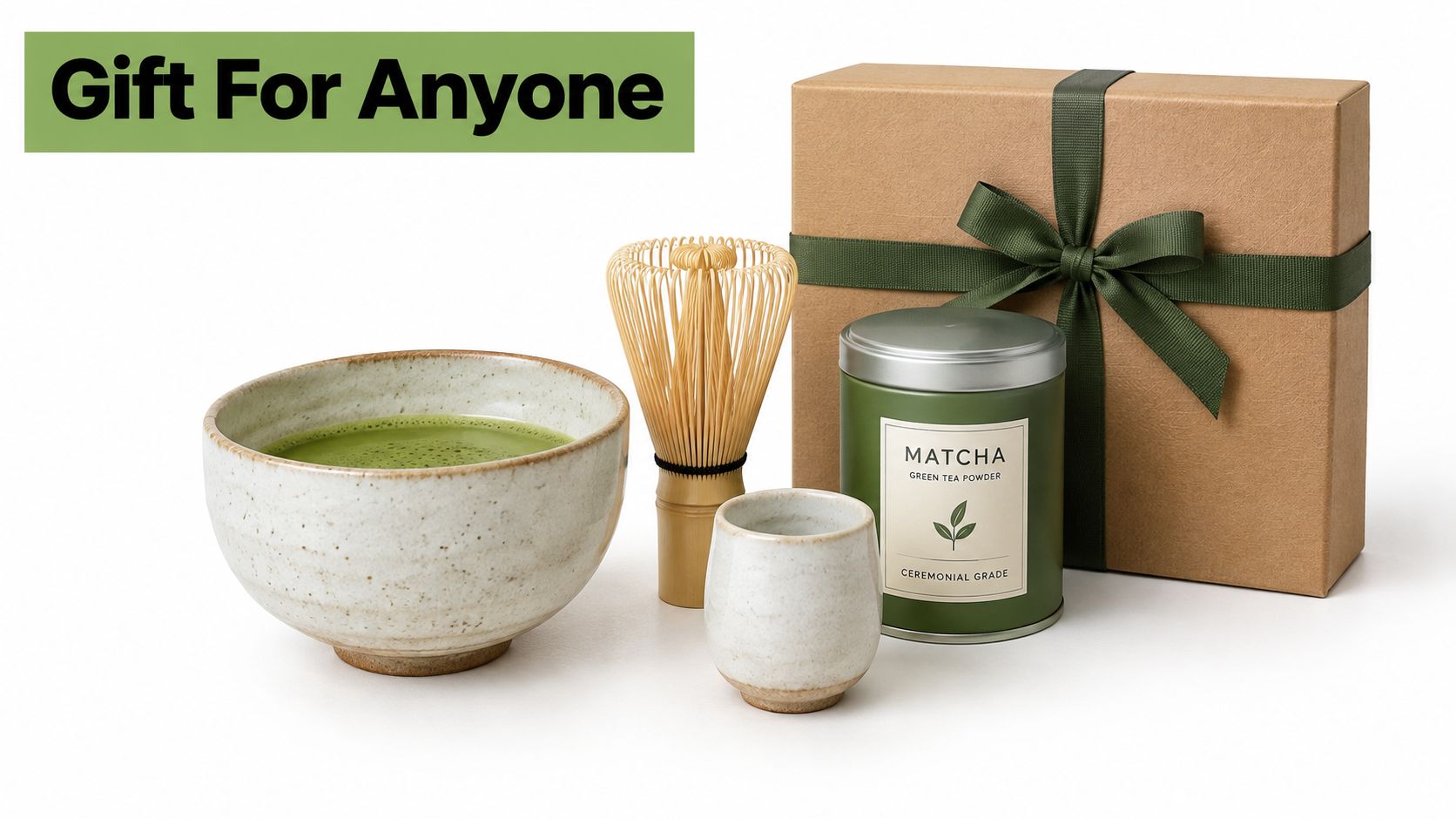
That focus suits Australian gifting because seasonal buyers already spend with intention. Roy Morgan research commissioned by the Australian Retailers Association forecast AUD 11.8 billion on Christmas presents in 2024, with 16.7 million Australians buying gifts and average expenditure of AUD 707 per shopper, as detailed in the Roy Morgan and Australian Retailers Association Christmas 2024 forecast. Those are national gifting figures, not matcha sales, but they show why a ready to give experience fits Christmas, birthdays and housewarmings. People aren't just buying an ingredient. They're buying a small ritual someone can start straight away.
Who it works for
A set bridges different relationships better than loose powder alone. A colleague who loves café lattes gets a way to make them at home, a friend who's never whisked matcha gets guidance instead of guesswork, and a home baker gets a new flavour and colour to play with. For that baker, it's the same logic behind thoughtful kitchen presents such as DBakerAid™ gifts for bread bakers, where usefulness after opening matters more than novelty.
- The curious beginner: needs small portions, simple tools and plain instructions.
- The daily drinker: cares about grade, origin and freshness above decoration.
- The cook or baker: needs a versatile powder that holds its flavour in milk, batter and icing.
- The hard to buy for relative: gets a consumable gift that doesn't demand cupboard space forever.
Give the experience, not homework. If the recipient needs to buy three extra items before the first cup, you've bought an incomplete gift.
Matcha also avoids the usual gift traps. It isn't sized like clothing, it doesn't duplicate a bottle of wine, and it can be used hot, iced or in food. That flexibility is its strength, provided you choose the right powder for the person.
Reading Powder Grade, Origin and Freshness
Ceremonial and culinary aren't good and bad labels. They're jobs. Pick the wrong job and even decent powder will disappoint, because your recipient will use it in a way that hides its strengths or exposes its bitterness.
Ceremonial style matcha is made for whisking with water. Texture, smoothness and a clean finish matter most because there's no milk or sugar to soften rough edges. Culinary style matcha is made to carry flavour through other ingredients. It's the sensible choice for lattes, smoothies, baking and savoury cooking, where a stronger character is useful.
If you're unsure, read the plain English comparison of different grades of matcha before you pay ceremonial prices for someone who only wants iced lattes. Spending more doesn't fix a mismatch. A baker won't thank you for a delicate drinking powder that disappears in a cake.
Origin and grinding tell you more than glow words
Look for country and, ideally, prefecture of origin, plus harvest or packing information. Stone ground describes a slow milling method that produces a very fine powder, but the phrase alone doesn't prove freshness. A glossy tin with no date is a warning sign, not a mark of luxury.
Freshness beats ceremony language every time. Matcha is ground leaf, and once exposed to air, light and heat its colour and aroma fade. Smaller sealed portions often suit occasional users better than one large bag they'll open repeatedly over months.
- Origin stated clearly: Japan, with a region named where possible, beats vague premium claims.
- Date you can check: packing or best before information should be easy to find.
- Portion size that fits habits: modest sealed packs protect flavour for weekend drinkers.
- Dual purpose potential: a powder that works whisked and in lattes survives changing tastes.
Supply is another reason to favour versatility. Japan exported 195,319 kilograms of green tea to Australia from January through August 2025, up 131% year over year, while tencha reached 8,235 yen per kilogram at a Kyoto auction in May 2025, 170% higher than a year earlier, according to the figures reported in SBS reporting on Australia's matcha boom. Use those numbers as context, not panic. They explain price moves and stock gaps, and they make a practical set with refillable storage and culinary uses more resilient than a fragile, single purpose novelty.
My rule: if the seller won't tell you where it's from or when it was packed, don't let the word ceremonial close the sale.
Checking the Organic Claim and Test Results
Organic is an agricultural claim, not a complete quality control claim. That's the sentence to remember in the shop. It tells you something important about how tea was grown, but it doesn't answer every question about testing, freshness or suitability for frequent use.
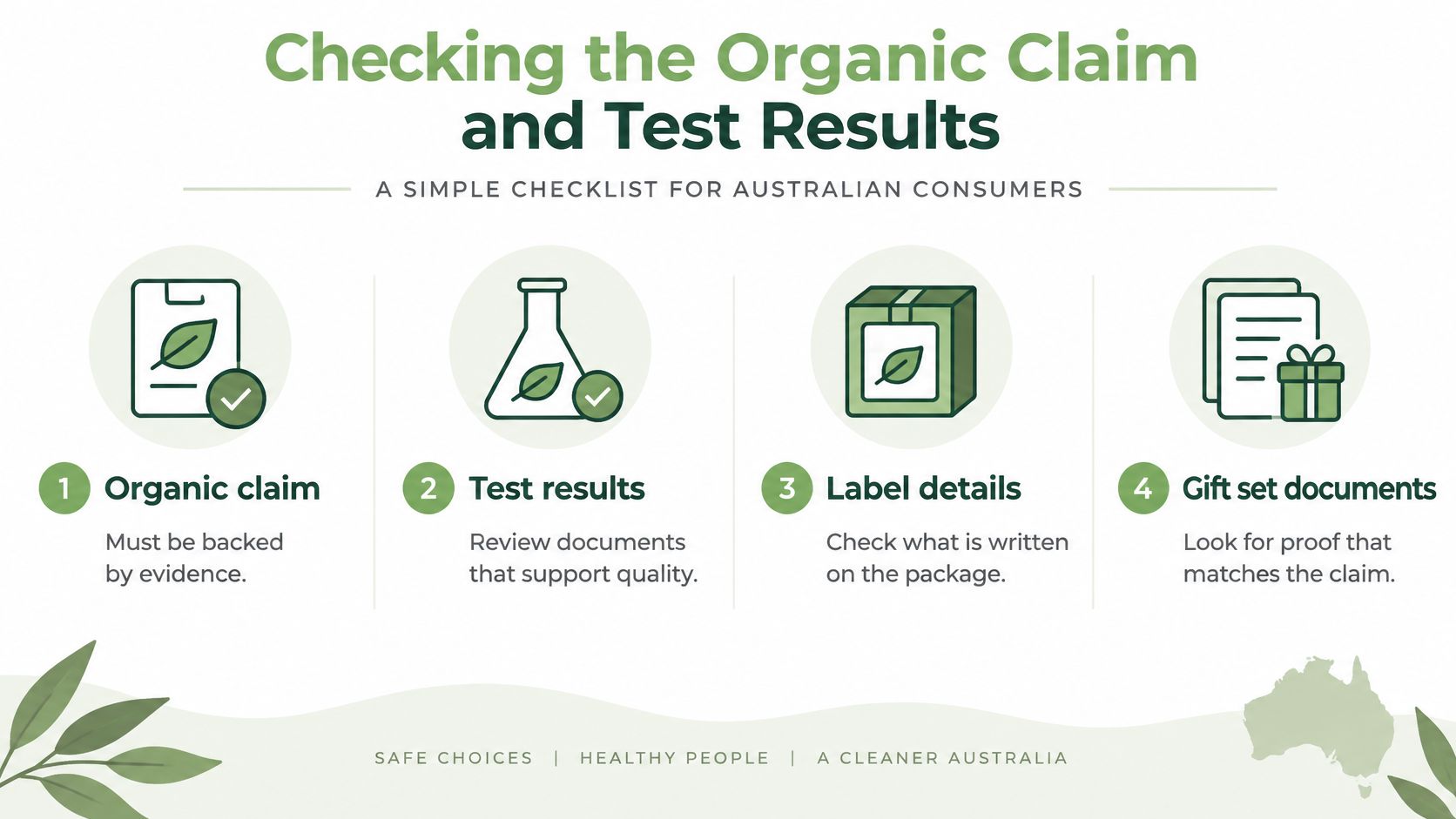
In Australia, businesses must be able to prove organic claims. The ACCC guidance on organic claims and certification requirements explains that domestic certification is voluntary, but certified organic statements must be genuine and certification marks must follow the certifier's requirements. A responsible seller should be able to show supplier certificates, scope documents and chain of custody records that match what's on the carton and website.
Check scope carefully. If only the tea is certified, the packaging shouldn't imply the whole box is organic. Bamboo whisks and ceramic bowls aren't the tea, and a clear seller will describe them separately. PepTea's general guide to pesticide free tea in Australia is useful background for separating farming claims from broader safety questions.
What organic doesn't settle
Matcha is the whole powdered leaf, not a filtered infusion, so contaminants present in the leaf can be consumed directly. Independent discussion of matcha testing makes the same point, noting that organic status alone does not guarantee freedom from lead or other contaminants, as outlined in Matcha Warehouse discussion of heavy metals in organic matcha. Don't read that as alarm. Read it as a shopping checklist.
Ask before you buy:
- Certifying organisation: who certified it, and is that body named on pack?
- Lot number: can this batch be traced to an importer and supplier?
- Test date and results: are heavy metal and pesticide results available for this lot?
- Serving guidance: does the insert state how much powder to use per serve?
- Claim alignment: does every organic statement match current documentation?
If a seller answers clearly, buy with confidence. If you get only words like pure, natural and premium, keep looking. An attractive set with no provenance is a risky gift for someone who may drink it daily.
Choosing a Set for Beginners or Enthusiasts
Start with the person, not the product tier. A beginner and an enthusiast can both love matcha, but they'll judge your gift by completely different things. One wants confidence. The other wants information.
For a beginner, choose a smaller, approachable portion and remove every barrier to the first cup. They need a basic whisk and scoop, a recipe card that states powder and water amounts, and permission to make lattes while they learn. Don't overwhelm them with fragile extras or a large tin that will stale while they're still deciding if they like it.
For an enthusiast, do the opposite. They'll read the grade, origin and harvest details before they look at the bowl. They'll notice whether a sifter is sturdy, whether a tin seals well for refills, and whether the powder suits drinking straight. Give them substance and skip the decorative filler.
Matching the Set to the Recipient
| Recipient | Set Focus | Accessories to Look For | Format to Prefer |
|---|---|---|---|
| First time drinker | Easy first success | Whisk, scoop, clear guide | Small sealed portions |
| Daily whisked tea drinker | Grade and freshness | Quality bowl, sifter, refillable tin | Drinking grade powder |
| Latte lover | Flavour through milk | Whisk or frother guidance, recipe card | Versatile or culinary grade |
| Home baker | Colour and flavour in food | Scoop, sifter, baking ideas | Culinary grade pack |
| Occasional user | Freshness over volume | Basic whisk, storage advice | Several small sealed packs |
The middle ground is often best for families and share houses. A versatile set lets one person whisk it straight, another make an iced latte, and someone else bake biscuits on the weekend. That shared use is practical, Australian and far more valuable than matching colours.
Ask one question before checkout: how will this person actually drink it on a Tuesday morning? Buy for that answer.
If you don't know, choose versatility over prestige. A set that works in water, milk and baking gives your recipient three chances to love it, instead of one narrow test they might fail through no fault of the tea.
Accessories Worth Including in the Box
Most accessory lists are padded. You need tools that change the drink in the cup, not objects that make the box look fuller. Start with the whisk, then decide what else earns its place.
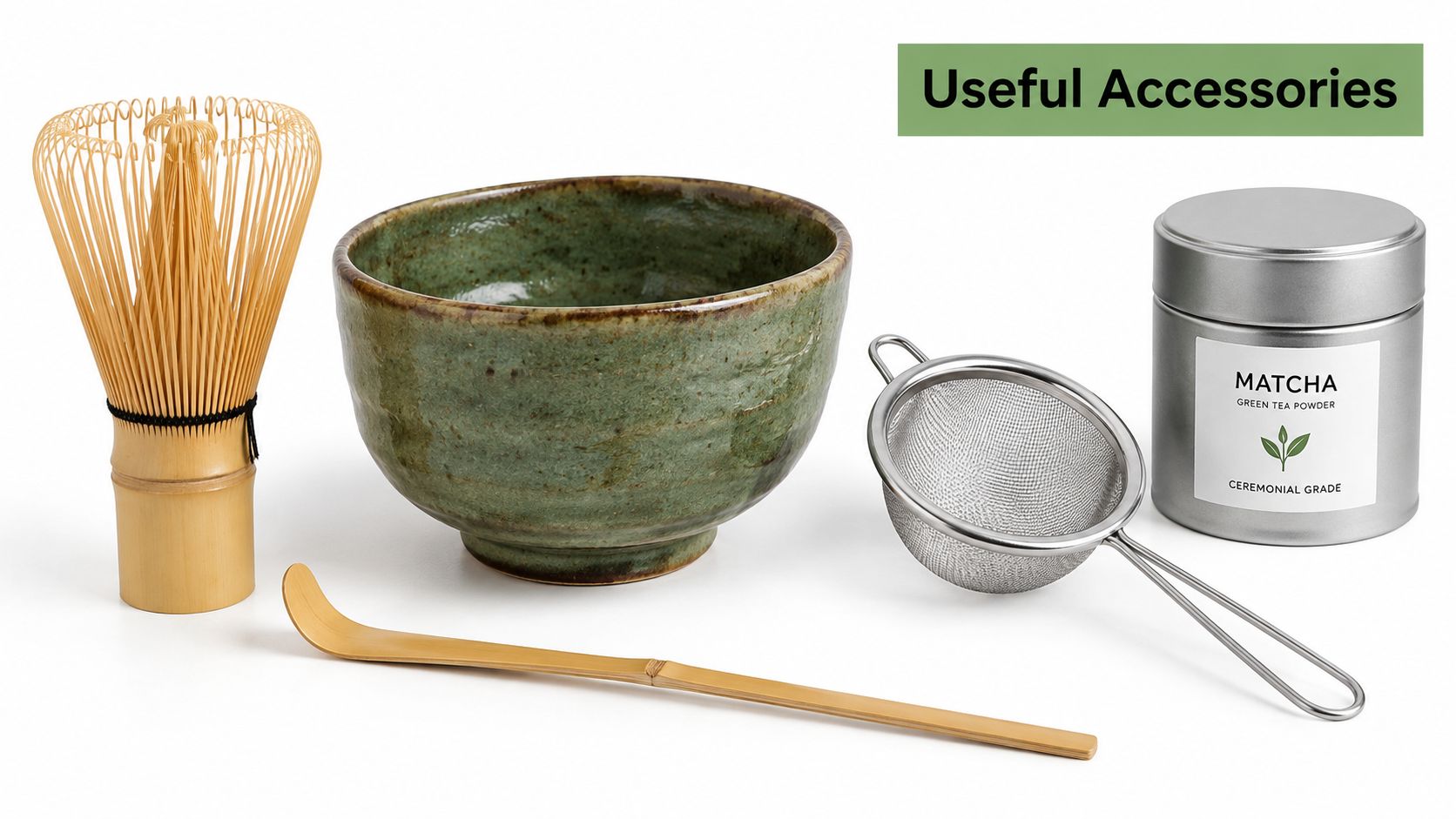
The bamboo whisk, or chasen, is essential for whisked matcha. Its many fine tines break up powder in water and help create a smooth, frothy surface that a spoon can't match. Look for care instructions in the box, because a whisk that's stored wet or crushed in a drawer won't last.
Next is the scoop, or chashaku. It looks simple, but it teaches consistent portions, which is how a beginner learns whether they prefer a lighter or stronger bowl. A sifter is the quiet achiever. It breaks clumps before water goes in, so the whisk can do its job instead of chasing lumps around the bowl.
The bowl, or chawan, matters for comfort rather than ceremony points. It should be wide enough to whisk without splashing and comfortable to hold with both hands. If your recipient already owns a suitable wide bowl or large mug, a set without another bowl may be better value. PepTea's overview of matcha tea accessories lists the core tools to compare when you're deciding what's essential and what's optional.
What to skip
Skip sets that add bulk without improving preparation. Extra decorative cloths, fragile novelty items and duplicate scoops don't fix stale powder. Pay for a sound whisk and sifter first, then a bowl if it's needed.
Watch how technique uses those basics before you judge a set by its contents list.
- Essential: bamboo whisk for texture and proper mixing.
- Highly useful: scoop for repeatable serves, sifter for a smooth result.
- Useful if missing at home: wide bowl with room to whisk.
- Optional: whisk stand for drying and storage, if bench space allows.
Also check how accessories are described. They're generally not the certified organic component, so honest packaging should keep that distinction clear. Practical and accurate beats abundant and vague, every time.
Using the Set for Lattes, Baking and Café Menus
On a weekday morning, the test is simple. Your recipient sifts powder, whisks it with hot water, adds warmed milk and has a café style latte before work. If the recipe card is clear and the powder has enough flavour to carry through milk, the set becomes a habit. If not, it becomes pantry decoration.
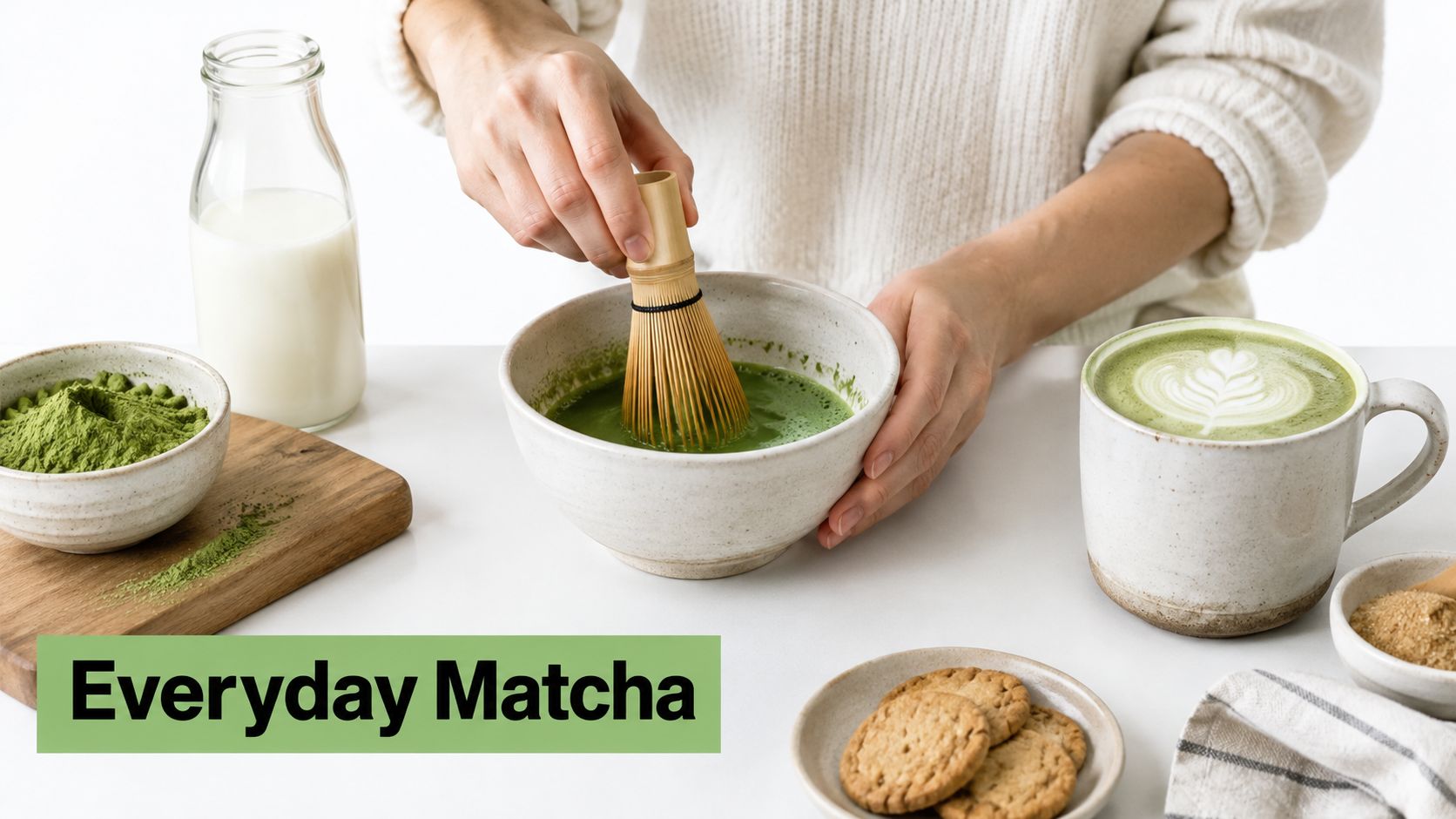
On the weekend, that same powder can go into a smoothie, shortbread, icing or a simple loaf. Culinary use isn't a lesser fate for matcha, it's often how Australian households get full value from a gift. The green colour looks striking in baking, and other ingredients soften bitterness that might challenge a new drinker whisking it straight.
For café and hospitality readers, a well built home set can double as a menu development starting point. You can trial a hot latte, an iced version and a baked item from one powder before committing to larger supply. Staff who are building broader drink skills may also find value in structured coffee training for hospitality career changers, since milk texture, temperature control and consistent dosing matter across both coffee and matcha service.
Dose decides caffeine, not cup size alone
Good guidance matters because matcha uses the whole leaf. Caffeine intake varies with the grams of powder used, not merely the volume of the finished cup, so an insert should state powder amount, water volume and servings per pack. FSANZ recognises tea as naturally caffeinated, and its FSANZ caffeine report distinguishes ordinary tea from formulated caffeinated beverages. Don't treat a latte blend, added caffeine sachet or matcha confectionery as identical to plain tea, because different formulations can carry different labelling obligations.
Avoid performance language at home and on menus. Words like high caffeine invite a different set of requirements and expectations. Plain preparation guidance is more helpful and more honest.
A set that teaches one hot drink, one cold drink and one food use will outlast a set that only teaches a ceremony.
That's why dual purpose formats are resilient. If premium drinking powder becomes expensive or temporarily hard to replace, a household or café can still use a versatile powder for lattes, desserts and specials without abandoning matcha altogether.
Packaging Details and Your Next Step
Good packaging protects the powder first and looks nice second. Reverse that order and you're paying for cardboard. Before you wrap anything, run through the details that decide whether the gift still tastes good when it's opened days or weeks later.
Look for a sealed inner pouch inside the tin or carton, not loose powder relying on a decorative lid alone. Check for a packing or best before date, the certifying organisation named where certification is claimed, and a card that gives preparation steps in grams and millilitres. Those details suit Christmas, birthdays and housewarmings because they let the recipient start without searching online mid recipe.
Online buying makes those checks easier if the product page is honest. Australia Post reported Australian households spent approximately AUD 64 billion online in 2023, as shown in the Australia Post 2024 eCommerce industry report. That figure covers online retail overall, not matcha specifically, but it underlines why clear photos of contents, shipping timelines and delivery cut offs matter during peak gifting.
Your final checklist
- Powder: grade matches how they'll use it, origin and date are stated.
- Proof: organic claims name a certifier and can be backed by documents.
- Testing: lot information and test results are available if you ask.
- Tools: whisk and scoop included, sifter preferred, no pointless filler.
- Format: portion size protects freshness for their drinking frequency.
- Guidance: serves, powder amount and water volume are printed clearly.
Pep Tea is one Australian option to compare when you're applying that checklist, with organic Japanese matcha sold alongside preparation guidance and accessories. Treat it the same way you'd treat any seller. Read the grade, check the claim, and choose the format that fits the recipient.
The three questions that matter: what is the powder, what proof supports the label, and will this person still enjoy using the set next month?
If you can answer all three with evidence, you've bought a gift worth giving. If you can't, keep shopping, no matter how beautiful the box looks on the shelf.
Explore organic Japanese matcha in drinking and culinary formats, plus the whisk, scoop and sifter combinations that turn powder into a gift someone can use straight away, at Pep Tea. Compare grades, check the product details against the checklist above, and choose a set that fits how your recipient will drink, bake and share it.