
Tag: matcha gift guide
Matcha Tea Gift Guide: How to Choose the Right One
You're holding two attractive tins of matcha, wondering which would suit your sister, who avoids coffee after lunch, and your dad, who rarely passes up a flat white. Neither tin tells you much about whether its contents will fit their day. A thoughtful matcha tea gift starts with the person's habits, not the packaging.
The useful questions are simple: do they want straight tea, a milky latte or something for baking? How comfortable are they with caffeine? And will they finish the powder while it still tastes fresh?
Start With the Person Who Will Drink It
Matcha is powdered tea leaf, which means the recipient drinks the powder rather than removing leaves after steeping. Caffeine comes with that serving, so switching from coffee to matcha doesn't mean switching to a caffeine-free drink.
A typical 250 mL matcha serving is commonly estimated at 60–75 mg of caffeine, but that's an approximation, not a guarantee for every product or recipe, as explained in this matcha caffeine guidance. Powder quantity matters more than the size of the mug.
For comparison, the Australian Institute of Sport's caffeine guidance lists green tea at approximately 30–50 mg per 250 mL, notes considerable variation in tea caffeine, and gives a healthy-adult benchmark of up to 400 mg daily from all sources. Pregnancy and breastfeeding guidance uses a lower 200 mg daily limit, rather than an allowance to add on top of existing drinks.
Matcha gift direction by recipient
The serving suggestions below are starting points for gift planning, not individual safety limits. Follow the product's measured preparation instructions and the recipient's own circumstances.
| Recipient | Caffeine point to consider | Suggested serve | Gift direction |
|---|---|---|---|
| Coffee drinker wanting an afternoon swap | Matcha adds to existing coffee intake unless it replaces a drink | A measured, label-directed serving | Medium tin with a whisk and recipe card |
| Evening drinker or poor sleeper | Don't assume matcha suits their evening routine | Earlier in the day, if they tolerate it | Small tin with a timing note |
| Pregnant or breastfeeding recipient | Count caffeine from every source | Only an amount agreed with their GP or midwife | Small tin, or a caffeine-free herbal tea instead |
| Teenager | Consider energy drinks, soft drinks and other caffeine | Don't set a routine serving without appropriate advice | Consider a non-caffeinated alternative |
| Caffeine-sensitive or anxious drinker | Even a modest serving may not suit them | Let the recipient decide whether to try it | Smallest pack, or a non-caffeinated gift |
| Latte lover or home barista | Multiple lattes mean multiple servings of powder | Measure each latte rather than free-pouring | Latte-suitable tin with a milk-frothing guide |
| Ceremonial enthusiast | A small bowl doesn't necessarily mean less caffeine | Follow the tin's whisked-tea directions | Ceremonial tin with bamboo whisk and bowl |
Practical rule: Consider the caffeine they already consume before choosing the gift. If you don't know their tolerance, choose a smaller tin with clear serving guidance.
This isn't medical advice. Pregnant or breastfeeding recipients should check with their GP or midwife before making matcha a daily habit.
Matcha Grades Explained for Gift Buyers
Choose the intended use first, then the grade. A ceremonial tin isn't automatically a better gift than a culinary pack if the recipient only wants to bake with it.
Australian reporting distinguishes ceremonial matcha, commonly associated with first-harvest leaves and prized for smooth texture, vivid colour and umami, from matcha intended for blending into milk or food. That distinction is described in this coverage of traditional tea ceremonies and modern matcha use.
The following comparison gives you a useful shopping framework.
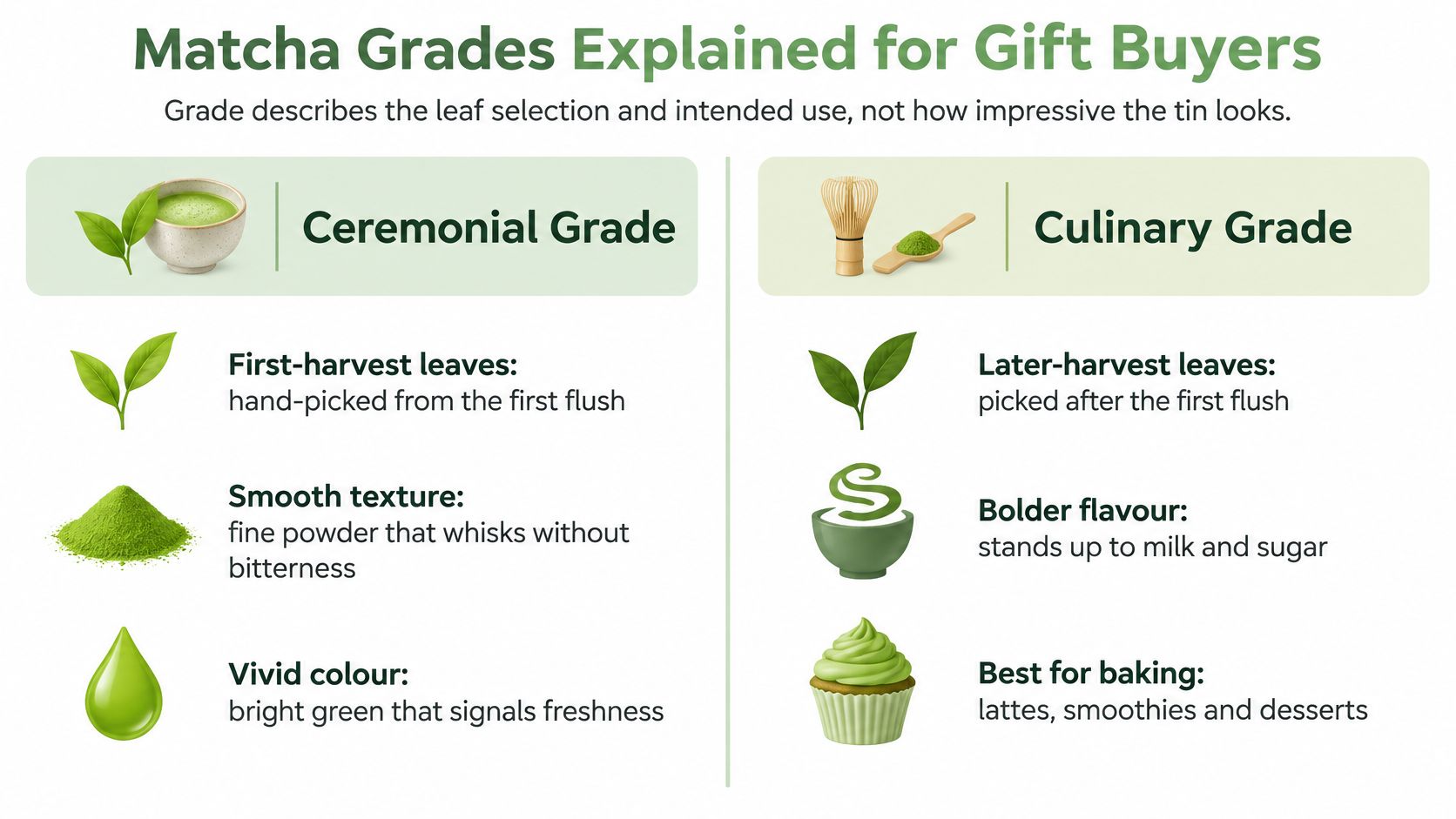
Matcha grades compared for gifting
Treat these flavour descriptions as expectations to check against the individual product, not promises attached to every grade name.
| Grade | Best for | Flavour and colour | How it is prepared | Gift fit |
|---|---|---|---|---|
| Ceremonial grade | Whisked straight tea and purists | Usually smooth, sweet-umami and vivid green | Whisked with hot water, without milk | Premium small tin with whisk |
| Latte or everyday premium grade | Lattes, iced drinks and sweetened drinks | Look for balanced flavour that remains noticeable in milk | Mixed with milk, with optional ice and sweetener | Medium tin with latte recipe card |
| Culinary grade | Baking, smoothies and ice cream | Often stronger and more bitter when tasted alone; colour varies | Blended into food or drinks | A suitably sized pack for bakers and cooks |
Someone who always adds honey and milk may not notice the subtler flavours you paid extra for in a ceremonial tin. Conversely, someone who drinks matcha straight may care intensely about those differences.
There's no need to police how they enjoy it. Ceremonial matcha can go into a latte; the question is whether that's the most useful way to spend your gift budget.
Compare the organic Japanese ceremonial and culinary options through the ceremonial versus culinary matcha guide, then read the individual product descriptions before buying. Don't assume every size or grade is available as a ready-made gift set.
Quality Checks to Make on the Label
A handsome box can hide an unclear product description. The label is your first quality check, especially when you can't inspect the powder before buying.
Use this visual checklist as a starting point, then look beyond the front-of-pack wording.
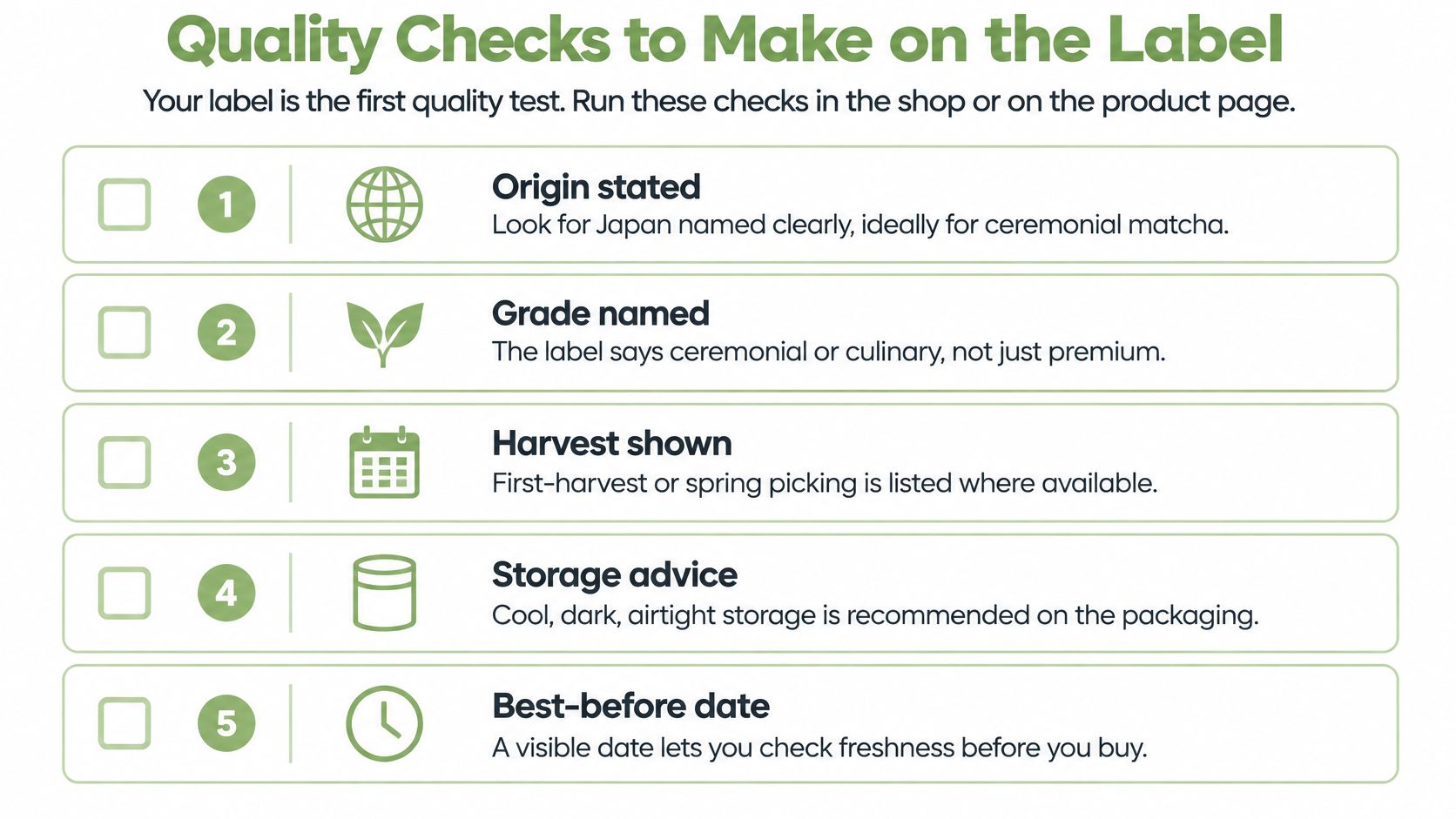
What to check before paying
- Origin and intended use. Look for Japan named clearly when buying Japanese matcha, alongside a description of whether it suits straight tea, lattes or cooking. A vague premium label isn't enough to make that decision.
- Organic certification. If organic production matters to you, look for a named certifying body and identifiable certification details, rather than relying on natural-looking packaging.
- Milling information. Stone-ground is useful product information, but it shouldn't replace clear origin, ingredients and freshness details.
- Ingredients. For plain matcha, look for matcha alone. Added sugar, flavouring or milk powder changes what you're buying, although those ingredients may be appropriate in a clearly labelled latte blend.
- Protective packaging. Choose an opaque, airtight, moisture-resistant container. A resealable lid should close properly rather than merely look decorative.
- Traceability and dates. Check for a lot number or best-before date and readable storage instructions. Ask the seller if those details aren't visible online.
Colour and aroma are additional clues once the tin is opened. Fresh-looking green powder and a grassy, sweet aroma are encouraging; dull colour, clumping and a flat smell warrant closer attention.
Don't turn appearance into a laboratory test, though. Colour alone can't prove grade, freshness or safety, and a best-before date doesn't describe how a tin was handled after opening.
Likewise, antioxidant language isn't a substitute for buying information. The Australian Dietary Guidelines summary cautions that tea and coffee aren't suitable for young children and that large amounts can cause unwanted stimulant effects in some people. A credible gift needs practical guidance, not promises about immunity, anxiety or crash-free energy.
Pack Size, Storage and Buying Timing
A daily latte drinker can work through a larger tin; someone who makes matcha now and then may leave most of it open for months. Start with how often the recipient drinks it and how much caffeine they already have in their routine. A premium pack only makes sense if its size and style suit the person who will use it.
Matcha pack sizes and the serves they hold
The estimates below divide each pack by a suggested 2 g portion. They're planning examples, not caffeine measurements or a promise that a particular size is in stock.
| Pack size | Approx. serves at 2 g | Best recipient | Gift note |
|---|---|---|---|
| 30 g tin | About 15 serves | First-time or occasional drinker | Lower commitment and less powder to finish |
| 50 g tin | About 25 serves | Weekly drinker or gift for a host | A middle-ground option |
| 100 g tin | About 50 serves | Daily latte drinker | Needs a realistic plan for use after opening |
| 1 kg bag | About 500 serves | Café, baker or heavy user | Only with suitable storage and regular use |
For an occasional drinker, choose the smallest suitable sealed pack, even if a larger size costs less per gram. The useful comparison is how quickly they can finish it, not just how much powder the package contains.
Once opened, matcha gradually loses flavour, so storage affects how much of the gift they can enjoy. Keep it sealed, cool and dark, follow the label's directions, and close the container promptly after each use. Avoid leaving the powder exposed while preparing other parts of a meal.
If the manufacturer recommends refrigeration, let the sealed tin come to room temperature before opening. This helps reduce condensation on the powder. The matcha storage guide explains practical storage steps.
A best-before date and the period of best flavour after opening are not the same. Rather than suggest a universal expiry period, add the purchase date to the gift card and point the recipient to the manufacturer's recommended use-after-opening window. That small note helps them judge when to open the pack and how soon to use it.
Accessories That Suit the Grade
Matcha's Japanese tea-ceremony roots connect preparation with hospitality and carefully considered movement, as described in this Australian account of matcha's cultural history. For gift buying, that's a reason to choose useful tools, not to fill a box.
These are the main pieces you'll encounter.
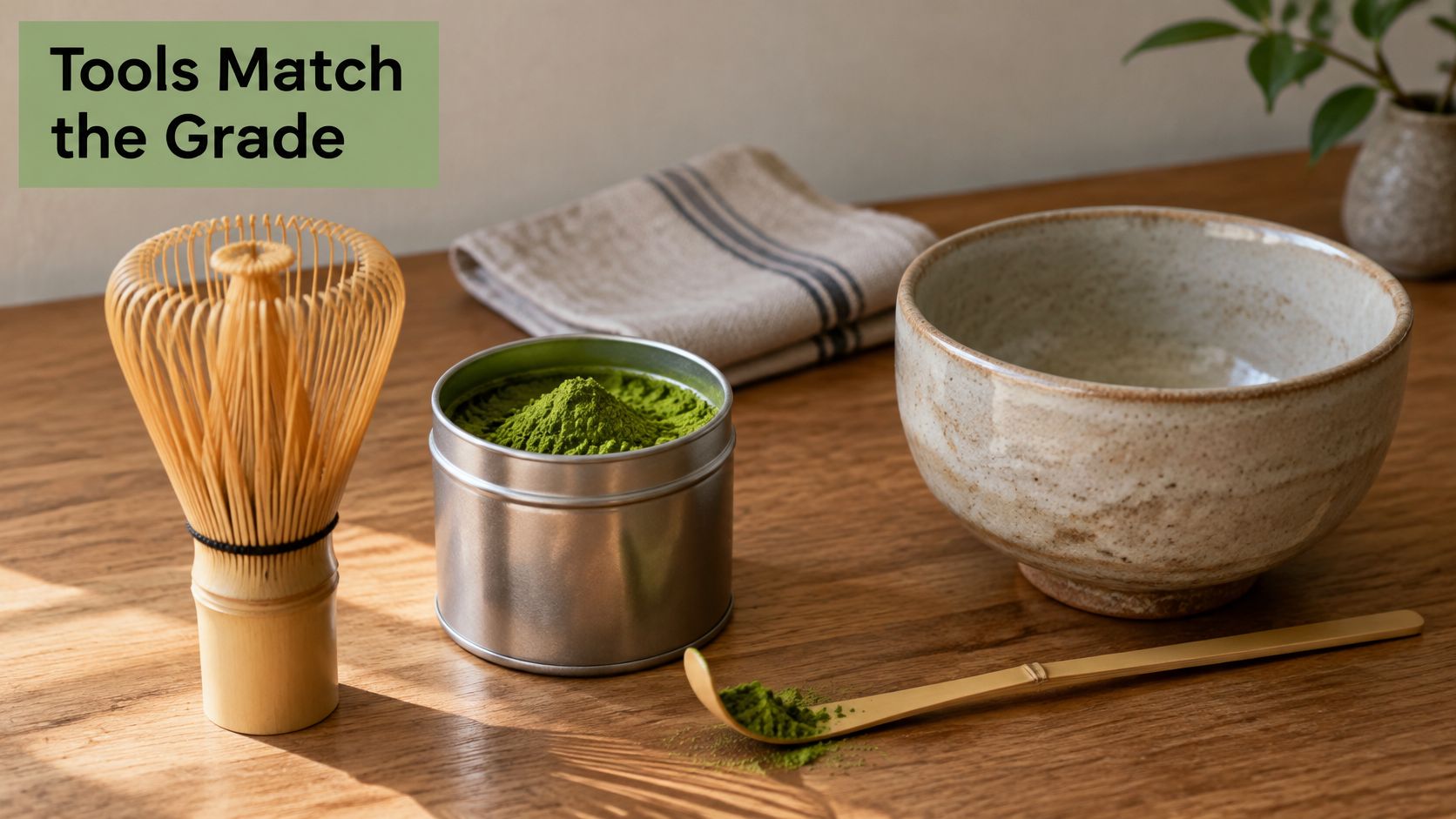
- Bamboo whisk, or chasen. Suits someone who wants to prepare whisked tea and build a fine foam.
- Bamboo scoop, or chashaku. Makes a thoughtful traditional addition, but don't assume a scoopful is a precise weight. Use scales when establishing the recipe.
- Fine sieve. Helps break up clumps before mixing, whether the powder is destined for tea or a latte.
- Wide bowl, or chawan. Worth adding for someone who'll whisk regularly and appreciate the space to move the whisk.
A whisk and bowl make sense beside ceremonial matcha. A baker may prefer a scoop and sieve, while an established home barista may already own everything they need.
For a closer look at preparation, this video can accompany the written method.
Buy the tool they'll use, not the tool that makes the box look complete.
Wrap the gift in plain paper and include a handwritten card. Before assembling a bundle, compare the components in this Australian matcha tea set guide with what the recipient already owns.
A Starter Method for the Card
The recipient shouldn't have to search for instructions before enjoying their gift. Include a short recipe, identify the powder quantity clearly and leave room for them to adjust the taste.
The quantities below are suggested starter recipes, not nutritional measurements or personalised caffeine advice. Follow the tin's directions if they differ.
For whisked matcha
- Sift 2 g of matcha into a wide bowl. Measure by weight rather than assuming a bamboo scoop holds that amount.
- Add approximately 70 mL of water at 70–80°C, rather than boiling water.
- Whisk briskly in a W motion for approximately 15–20 seconds, aiming for a fine foam.
- Enjoy straight away.
Keep the wording encouraging. The first bowl doesn't need a perfect layer of foam to be enjoyable, and the recipient can adjust the water quantity to suit their preference.
For a matcha latte
- Sift 2 g of matcha, then whisk with approximately 30 mL of hot water until smooth.
- Add approximately 220 mL of steamed milk, or use cold milk and ice.
- Taste before adding an optional sweetener.
For a baker, add a different note: use the culinary powder in a recipe designed for matcha rather than adding an unspecified amount to any mixture. That makes the gift easier to use without encouraging guesswork.
Card reminder: Milk and extra water change the drink's strength of flavour, but they don't remove the caffeine in the measured powder.
Refer back to the caffeine guidance when deciding whether to include a personal serving suggestion. Don't write a daily allowance for someone whose circumstances you don't know; pregnant or breastfeeding recipients should seek advice from their GP or midwife before daily use.
Gift Ideas for Each Occasion and Budget
A recipient who drinks matcha every day may finish a tin quickly, while someone who only makes the occasional latte may leave a large pack unused. Start with their habits, then choose the occasion's format and timing. The table offers planning suggestions, not delivery guarantees.
Matcha gift shape by occasion
| Occasion | Suggested gift shape | Lead time | Practical note |
|---|---|---|---|
| Christmas | 50 g tin with bamboo whisk | 3–4 weeks ahead | Allow for seasonal delivery delays |
| Mother's Day | Ceremonial tin with bowl | 2–3 weeks ahead | Choose this if she enjoys whisked tea |
| Birthday | 50 g latte-suitable tin with recipe card | 1–2 weeks ahead | Ask about their usual drink |
| Housewarming | 30 g tin and small scoop | 1–2 weeks ahead | Keep the gift practical and uncluttered |
| Thank-you for a host | 30 g tin with recipe card | About 1 week ahead | A personal note can replace elaborate wrapping |
| Corporate or client gift | Plain 50 g tins in a simple box | 4–6 weeks ahead | Check caffeine preferences and labelling |
| Café or baking colleague | 1 kg culinary or latte-suitable bag | 2–3 weeks ahead | Confirm demand and storage space first |
Match the contents to your budget
For a smaller gift, choose a 30 g tin and add a handwritten recipe card. This gives a new or occasional drinker a chance to try matcha without leaving them with more powder than they are likely to use. A 50 g tin suits someone who already drinks matcha regularly. Add a bamboo whisk if they make it in a bowl, or a recipe card if they prefer lattes.
For a more complete present, pair a suitable tin with a bowl and whisk, but only when the recipient wants to whisk matcha. A tool they will not use adds cost without adding much value. For a café or baking colleague with confirmed demand and room to store it, the 1 kg bag may be the practical choice; for a casual drinker, it is likely to be too much.
These options let you set a spending limit by choosing the tin size and adding only useful accessories, without relying on unconfirmed price bands. Check current listings and delivery costs before deciding your total. A modest gift matched to someone's usual drink can feel more personal than a larger hamper. For group gifts, ask about preferences rather than assuming everyone wants matcha.
Your Final Check Before You Buy
A good matcha tea gift should be easy to receive, understand and use. Before paying, make these final decisions in order.
- Confirm the timing. Use the occasion table as a planning guide, then check the seller's actual stock position and delivery estimate.
- Confirm suitability. Revisit the recipient's caffeine habits rather than choosing by appearance. Where pregnancy or breastfeeding is relevant, include a gentle reminder to check with a GP or midwife.
- Confirm the package. Make sure the best-before details are visible and the container closes securely. If you're ordering online and can't tell, ask before purchasing.
You don't need to buy every accessory or assemble a large bundle to show care. A small, well-chosen tin with a handwritten card often says more than a hamper full of things the recipient won't use.
Keep the final choice grounded in what you know about them. If you're still unsure, asking whether they prefer straight matcha, lattes or baking is more helpful than guessing what looks most impressive.
At Pep Tea, we offer organic Japanese matcha in ceremonial and culinary grades, with practical guides for lattes, preparation and gifting. We're Australian-owned and based in Warners Bay, NSW, so you can ask us about a suitable option before ordering. Visit Pep Tea to explore the range and pair your chosen tin with a recipe your recipient will enjoy.