
Tag: how to make matcha latte
Your Guide: What Does Matcha Latte Taste Like in 2026?

A matcha latte usually tastes creamy, smooth, and subtly sweet, with a distinctive green flavour that balances vegetal notes, umami, and mild bitterness. A common starting method is 1 teaspoon of matcha powder mixed with 2 tablespoons of water before adding milk, which helps keep the flavour full instead of washed out.
If you're staring at a bright green latte on a café menu and wondering whether it'll taste like grass, spinach, dessert, or some strange health drink, you're not alone. Matcha can be confusing at first because people often describe it with one vague word, usually “earthy”, and stop there.
That doesn't help much when you're deciding whether to order one.
Its taste is more interesting. A good matcha latte tastes layered. It has a fresh green character, a savoury depth, and a creamy finish from the milk. The exact balance changes with the matcha grade, the milk you choose, and how the drink is prepared. Once you understand those levers, the flavour stops feeling mysterious and starts feeling easy to control.
Your First Sip What to Expect from a Matcha Latte
You've probably seen matcha lattes everywhere in Australia. They show up in minimalist cafés, on brunch tables, and all over social feeds with that unmistakable jade-green colour. The look alone suggests something fresh and energising, but the taste often surprises first-time drinkers.
A well-made matcha latte doesn't taste like a standard cup of green tea with milk poured into it. It tastes fuller, softer, and more rounded. The first sip usually brings creaminess from the milk, then a fresh green flavour, followed by a gentle savoury note that lingers in a pleasing way.
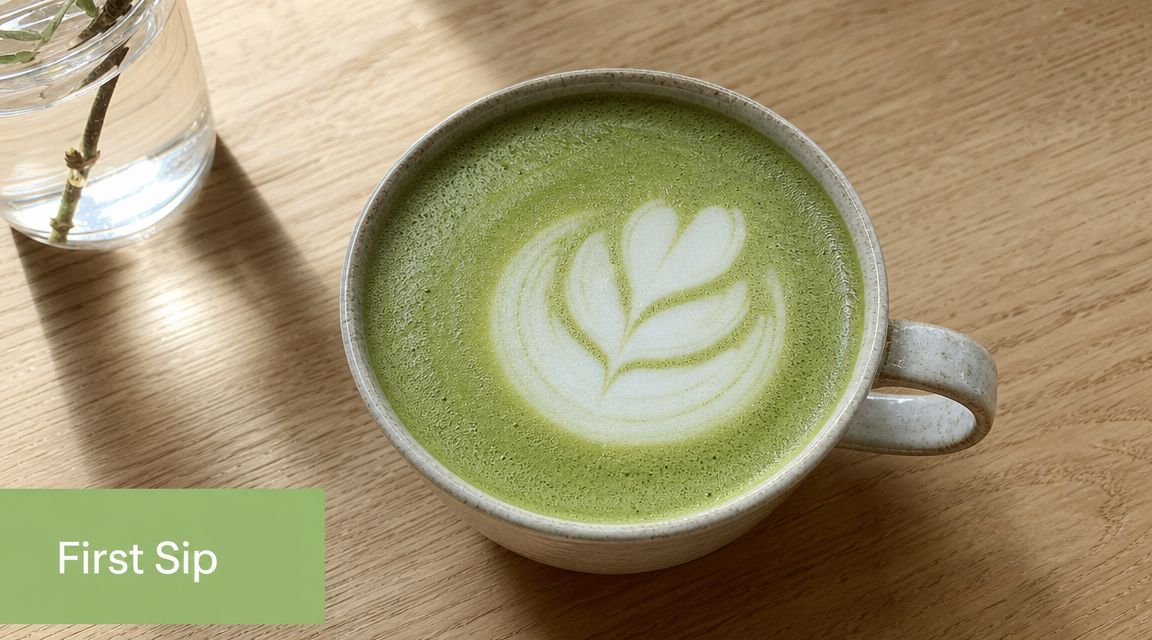
The easiest way to picture the flavour
If you've never had one before, think of it like this:
- Green and fresh. Not in a harsh salad way, but more like young greens or steamed edamame.
- Creamy and mellow. Milk smooths out the sharper edges.
- Lightly sweet. Even before extra sweetener, a good matcha latte can come across as naturally soft.
- A little savoury. This is the part people often don't expect, and it's what makes the drink interesting.
That savoury character is why matcha latte fans often describe the drink as comforting rather than sugary. It can feel café-worthy and soothing at the same time.
A matcha latte should taste green in a pleasant way, not like watered-down lawn clippings.
Why first impressions vary so much
Two people can order a matcha latte from different cafés and come away with completely different opinions. One gets a smooth, balanced drink and loves it. The other gets something thin, overly sweet, or bitter and decides matcha isn't for them.
Usually, the difference comes down to three things:
- The powder quality
- The milk and sweetener choices
- The mixing ratio
Those three choices shape almost everything you taste. That's why one matcha latte can feel silky and dessert-like, while another feels sharper and more brothy.
The Core Flavour Profile of a Matcha Latte
The clearest way to answer what does Matcha latte taste like is this: it's a balance of vegetal or grassy notes, umami, and milk-led creaminess with sweetness. That description is strongly supported by this matcha latte flavour guide from Nio Teas, which also notes a useful preparation method of 1 teaspoon of matcha powder with 2 tablespoons of water before milk is added.
Vegetal doesn't mean unpleasant
“Vegetal” can sound off-putting if you haven't tasted matcha before. People hear it and assume the drink must taste raw, bitter, or aggressively healthy.
In practice, that green note is often closer to:
- Steamed spinach
- Edamame
- Fresh-cut herbs
- Young spring greens
The key is softness. Good matcha tastes green, but not rough. It has a living, leafy quality that feels fresh rather than harsh.
Umami is the secret people struggle to name
If you've ever taken a sip and thought, “This tastes rich, but not sugary,” you were probably noticing umami.
Umami is the savoury taste that adds depth. In a matcha latte, it can feel lightly brothy, rounded, and almost creamy in its own right, even before the milk comes in. This is one reason matcha feels more complex than many other tea drinks.
Practical rule: If your matcha latte tastes only sweet, something is off. A good one still lets the tea taste like tea.
Milk changes the shape of the flavour
Milk doesn't erase matcha's taste. It reshapes it.
Instead of letting bitterness sit on top of your tongue, milk cushions it. Instead of making the drink taste sharp, it creates a smoother texture and brings forward any natural sweetness in the matcha. That's why the same powder can taste very different as a straight bowl of whisked matcha compared with a latte.
Here's a simple way to think about the three main flavour elements:
| Flavour note | What it feels like in the cup | What it adds |
|---|---|---|
| Vegetal or grassy | Fresh, green, leafy | Brightness and identity |
| Umami | Savoury, rounded, lightly brothy | Depth and richness |
| Milk sweetness | Creamy, soft, mellow | Balance and comfort |
Why the paste method matters
If you dump matcha straight into a large amount of milk, the flavour can seem weak and flat. Starting with a small amount of water creates a concentrated base first. That helps the tea stay present after milk is added.
That 1 teaspoon to 2 tablespoons starting ratio helps. It isn't just about texture. It protects flavour intensity, so your latte still tastes like matcha instead of vaguely green milk.
How Matcha Quality Shapes the Flavour
If you've ever wondered why one matcha latte tastes smooth and elegant while another tastes coarse or bitter, quality is usually the answer.
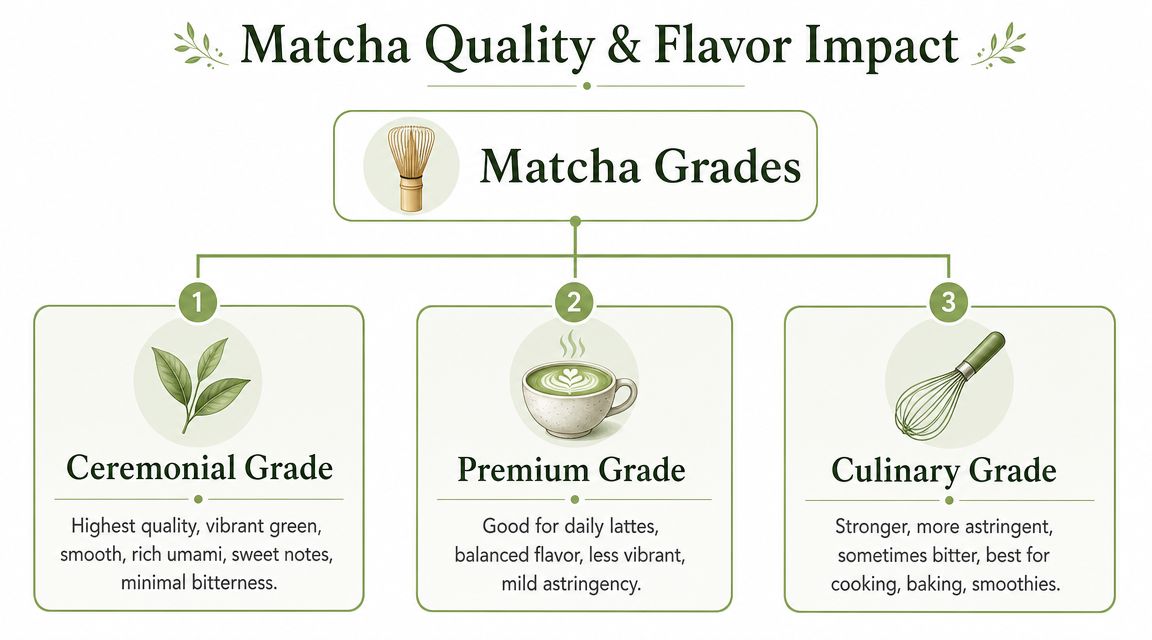
The core flavour of a matcha latte includes vegetal notes, umami, and mild bitterness. According to First Agri's matcha flavour explanation, high-quality ceremonial matcha can contain 3–4% L-theanine by weight, which contributes to the savoury umami character that makes premium matcha feel softer and more refined.
What higher quality tastes like
Higher-quality matcha usually tastes:
- Smoother
- Less bitter
- More naturally sweet
- More savoury and rounded
That doesn't mean it tastes sugary. It means the flavour arrives in a more polished way. You notice green freshness and umami first, not a rough astringent edge.
Texture matters too. Finer powder disperses more evenly, so the drink feels silkier in the mouth. That changes your perception of flavour just as much as the taste compounds do.
What lower quality tastes like
Lower-grade matcha can still work in recipes, smoothies, and baking, but in a latte it often comes across as:
- More assertive
- More astringent
- More bitter
- Less nuanced
This can be useful if you want matcha to punch through lots of other ingredients. But if your goal is a café-style latte with a soft finish, lower quality powder often makes that harder.
Ceremonial and culinary in practical terms
The labels can get a bit messy in the market, but for everyday drinkers the practical distinction is simple:
Ceremonial-style matcha is usually chosen when the matcha itself is meant to shine. It tends to be brighter, gentler, and richer in umami.
Culinary-style matcha is usually chosen when the powder needs to stand up to other strong ingredients like chocolate, banana, syrups, or baking fats.
If you're comparing products and want a grounded buying framework, this guide to explore Jade Leaf Matcha pros and cons can help you think through how different matcha options perform in real use.
For a broader look at styles and uses, Pep Tea also has a helpful guide on different grades of matcha.
Better matcha doesn't just taste “nicer”. It changes which notes dominate. You get more umami and softness, and less blunt bitterness.
The Art of Customisation Milk Sweeteners and Ratios
Matcha can be quite fun. Once you understand the base flavour, you can tune the drink to suit your palate instead of taking whatever the café gives you.
A matcha latte isn't fixed. It's adjustable. Milk choice changes body and sweetness. Sweetener changes emphasis. Ratio changes intensity. Small tweaks make a surprisingly big difference to the final cup.
How different milks change the drink
Some milks pull matcha toward dessert. Others keep it lighter and greener. None is universally “best”. The right one depends on whether you want more creaminess, more tea character, or more restraint.
| Milk Type | Flavour Impact | Texture | Best For |
|---|---|---|---|
| Dairy milk | Softens the green notes and adds a classic mellow sweetness | Rich and rounded | A traditional café-style latte |
| Oat milk | Brings out natural sweetness and can make matcha feel softer | Creamy and plush | People who like a smooth, comforting cup |
| Almond milk | Adds a subtle nutty edge and keeps the drink lighter | Thinner to medium | Drinkers who want matcha to stay more noticeable |
| Soy milk | Can add body without too much heaviness | Creamy and stable | A balanced plant-based option |
| Coconut milk | Adds a distinct tropical note that can compete with matcha | Fuller and sometimes heavy | Flavoured variations rather than a pure matcha profile |
The easiest way to choose your milk
If you're unsure where to begin, use this quick guide:
- Want the matcha to stand out? Choose almond or soy.
- Want a softer, sweeter-feeling latte? Choose oat.
- Want a classic café finish? Choose dairy.
- Want the cleanest expression of the tea? Avoid highly flavoured milks.
A strongly flavoured milk can blur the point of matcha. Vanilla-heavy or very sweet blends often cover the savoury depth that makes the drink special.
Sweeteners can help or hijack
A little sweetener can make matcha feel welcoming, especially if you're new to it. Too much, and you flatten the flavour into generic sweetness.
Common choices each push the drink in a slightly different direction:
- Honey adds floral warmth and a rounded finish.
- Maple syrup adds deeper sweetness and a cosy note.
- Plain sugar sweetens without much added flavour.
- Stevia can work well if you want sweetness without sugar, though the aftertaste depends on the product.
If you're trying a sugar-free option, products like Afida stevia stick wraps can be useful for testing very small adjustments without overcommitting.
Add sweetener slowly. It's easier to build sweetness than to rescue a latte that no longer tastes like matcha.
Ratios decide whether the drink feels bold or vague
This is the part many home brewers underestimate. Even good powder can taste underwhelming if you use too much milk for the amount of matcha.
A few practical cues help:
- If it tastes weak, there's too much milk for the amount of matcha.
- If it tastes muddy, the powder may not have been mixed properly before the milk went in.
- If it tastes intense but pleasant, you've likely hit a good balance.
- If it tastes aggressive, reduce the matcha slightly or switch to a softer milk.
The concentrated paste method helps here too. It gives the tea a head start, so it doesn't disappear into the milk.
If you want a home method you can tweak and repeat, this guide on how to create your Matcha green tea latte recipe at home is a practical place to start.
Three flavour styles you can build on purpose
Rather than guessing, decide what kind of latte you want:
Soft and creamy
Choose oat or dairy milk, use only a light touch of sweetener, and keep the matcha smooth rather than forceful.
Fresh and green
Use a lighter milk, little to no sweetener, and let the vegetal side stay clear.
Rich and café-like
Use a high-quality matcha, enough milk for body, and just enough sweetness to round the edges without hiding the tea.
That's the answer to what a Matcha latte tastes like. It can taste different on purpose, depending on the choices you make.
Matcha Latte vs Coffee Chai and Green Tea
A matcha latte makes more sense when you compare it to drinks you already know.
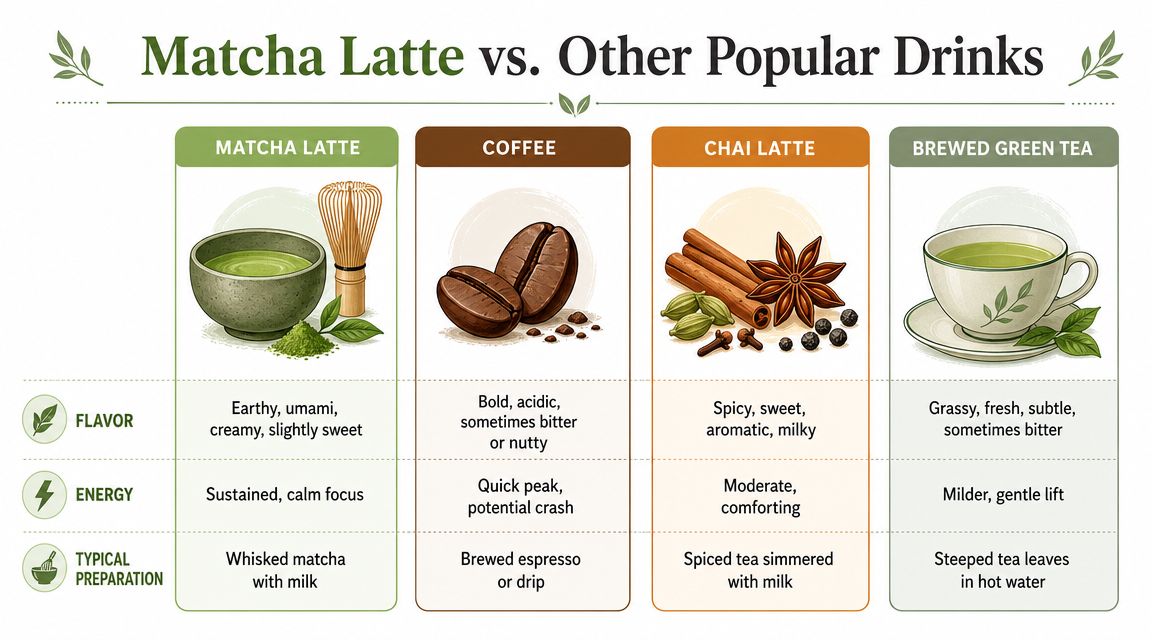
For many Australians, the taste is shaped by how it feels alongside coffee. Matcha is often described as giving a gentler energy effect because its caffeine is paired with L-theanine, and one guide notes that a typical serving contains about half the caffeine of a coffee. That pairing helps explain why many people experience matcha as smoother and less sharp than coffee, as noted in this matcha taste guide from Aki Matcha.
Matcha latte versus coffee
Coffee usually leads with roast, bitterness, and sometimes acidity. Matcha leads with green freshness, savoury depth, and creaminess.
If coffee hits your palate with a sharper edge, matcha tends to spread more gently. Even when it's strong, it rarely tastes like espresso. It has presence, but of a different kind.
Matcha latte versus chai latte
These two drinks can look similar on a menu because both are often served milky and warm. Flavour-wise, they live in completely different worlds.
Chai tastes spiced, aromatic, and warming. You expect cinnamon, cardamom, ginger, and sweetness. Matcha isn't spicy at all. It's cleaner, greener, and more savoury.
If you enjoy both drinks and want to see how they meet in one cup, this article on mastering your matcha chai latte offers a useful crossover approach.
Matcha latte versus brewed green tea
This comparison catches people out most often. A matcha latte does not taste like standard green tea with milk.
Brewed green tea is usually lighter, more delicate, and more transparent in flavour. A matcha latte feels thicker, fuller, and more concentrated because the tea itself is present as fine powder in the drink rather than steeped and removed.
Here's a quick snapshot:
- Coffee feels bolder and sharper
- Chai latte feels spicier and sweeter
- Brewed green tea feels lighter and more delicate
- Matcha latte feels creamier, greener, and more savoury
If you want a milky café drink without coffee's roasted bitterness or chai's spice, matcha sits in a very appealing middle ground.
Perfecting Your Latte Troubleshooting Common Issues
Making matcha at home is simple once you know what tends to go wrong. Most disappointing cups come down to a few repeat mistakes, and each one has a straightforward fix.
If your latte is lumpy
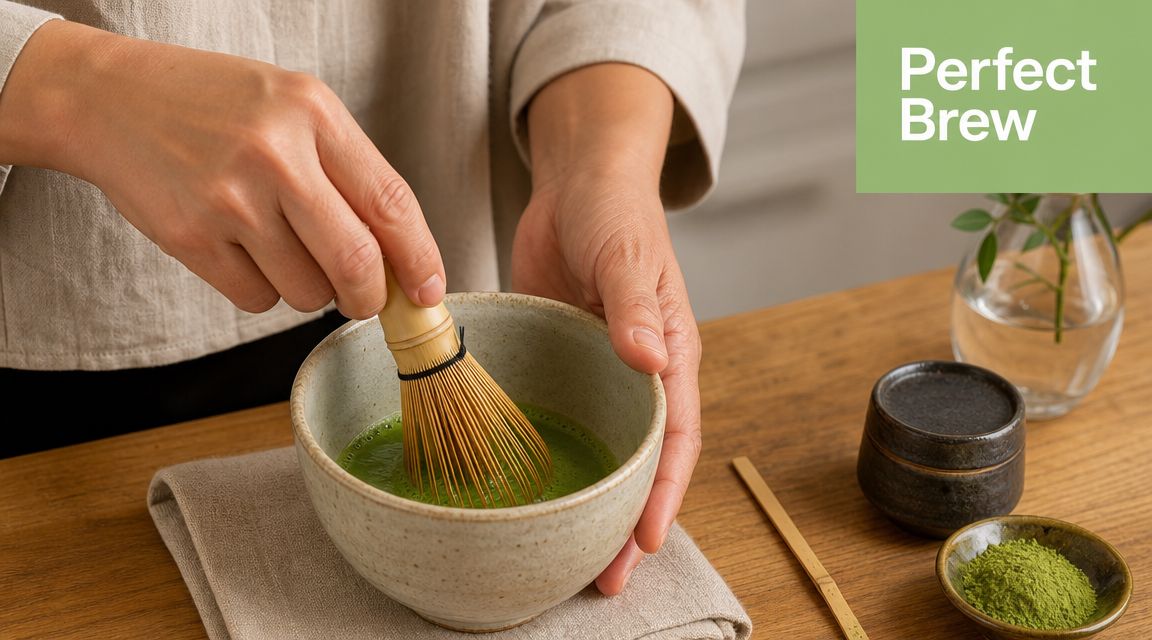
Lumps usually mean the powder wasn't broken up before mixing. Matcha is very fine, so it clings together easily.
Try this:
- Sift first if you can
- Make a paste with a small amount of water before adding milk
- Whisk thoroughly so the powder disperses evenly
If you want to improve your technique, Pep Tea's guide on how to whisk matcha is worth bookmarking.
If it tastes bitter
Bitterness can come from powder quality, but preparation often plays a role too. If the tea tastes rough, check whether you've made the drink too concentrated for your preference, or whether your matcha has a more assertive profile.
The easiest fixes are:
- Use a smoother-quality matcha
- Pair it with a creamier milk
- Add only a small amount of sweetener if needed
A little bitterness is normal. Harsh bitterness that overwhelms everything else usually means the balance is off.
If it tastes weak
Weak matcha latte almost always means too much milk or too little matcha presence in the base.
Check these points:
- Build the concentrate first instead of stirring powder straight into a full mug of milk
- Reduce the milk slightly if the tea flavour is disappearing
- Choose a less dominant milk if your current one is covering the matcha
This walkthrough shows the process in action:
If it tastes too sweet or too flat
This often happens when people try to “fix” matcha by adding more and more sweetener. Instead of improving the drink, that can bury the savoury and green notes that give it character.
Keep the sweetness low enough that you can still recognise the tea.
When your latte is working, you should taste creaminess and sweetness first, then notice the green and umami character underneath. That layered effect is what makes a good matcha latte feel satisfying rather than one-note.
If you're ready to taste the difference for yourself, Pep Tea offers premium organic matcha and practical guides to help you make a smoother, better-balanced cup at home. Explore the range, experiment with your preferred milk and ratio, and find the matcha latte style that tastes right for you.