
Tag: healthy teas
Yerba Mate vs Matcha: Caffeine, Benefits, and Taste Compared
It's 3pm, your inbox is full, and you're standing at the café counter deciding between the bright green bowl and the earthy gourd. That choice feels simple until you realise it isn't really about taste, it's about how you want the next few hours to feel. Yerba mate vs matcha is a better question when you frame it around your actual day, your sleep, and the kind of energy you can live with.
| Attribute | Yerba Mate | Matcha |
|---|---|---|
| Plant | Ilex paraguariensis leaf | Shade-grown Camellia sinensis leaf |
| Form | Loose leaf infusion | Stone-ground powder |
| Typical drinking style | Shared, refilled, sipped over time | Measured, whisked, usually one serving |
| Flavour | Earthy, smoky, bitter, herbal | Grassy, umami, slightly sweet |
| Best fit | Social ritual, longer sipping | Focused work, controlled dose |
Why These Two Teas Keep Getting Compared
The comparison keeps coming up because both drinks sit in the same decision space. You're not choosing between a soft drink and tea, you're choosing between two caffeinated rituals that feel cleaner than coffee and more deliberate than a can of anything. In Australia, that matters at the desk, on the school run, and in the late afternoon when you still need to function but don't want your sleep ruined.

The real question behind the comparison
Yerba mate is a South American leaf infusion, usually brewed and topped up through the day. Matcha is Japanese powdered green tea, whisked so the whole leaf ends up in the cup. That difference alone changes texture, dose, ritual, and how your body tends to experience the drink.
A decent comparison has to go beyond “which one is healthier”. It needs to ask which one fits focused work, which one suits a social afternoon, which one is easier to keep inside your caffeine limit, and which one you'll enjoy enough to drink regularly. For Australian buyers, the market reality matters too, matcha has a far stronger import signal, with Australia importing 2,020 tonnes of green tea in 2023–24, worth A$45.2 million at an average import price of A$22.38/kg according to ABARES, while yerba mate remains much more niche in national trade summaries. ABARES green tea import data and market context
Practical rule: if you want a one-cup, measured dose, matcha is the cleaner choice. If you want a drink you can keep returning to, yerba mate makes more sense.
For café owners and home drinkers alike, that distinction is useful because it changes menu design, pricing, and preparation. A good coffee buyer thinks like this already, and the same logic applies here. If you want the espresso-like analogue in tea form, this useful guide on ground espresso for home brewing is a handy reminder that dose, grind, and extraction shape the final cup just as much in coffee as they do in tea.
For people buying in Australia, the mate category is still relatively niche, which is why you'll see matcha more often in specialty cafés and retail ranges. That doesn't make mate irrelevant, it just means the choice is less about trend and more about fit. If you want a more detailed local overview of mate as a product category, see Pep Tea's mate drink Australia page.
Origins, Plant, and How Each Tea Is Made
Two drinks, two completely different production logics
Yerba mate comes from Ilex paraguariensis, a South American holly plant with a long-established drinking culture. Matcha comes from Camellia sinensis, the same tea species behind green tea, but grown and processed very differently. Yerba mate is usually air-dried and often smoked, then steeped in a gourd and drunk through a bombilla. Matcha is shade-grown, steamed, deveined, and stone-ground into a fine powder that's whisked into water.
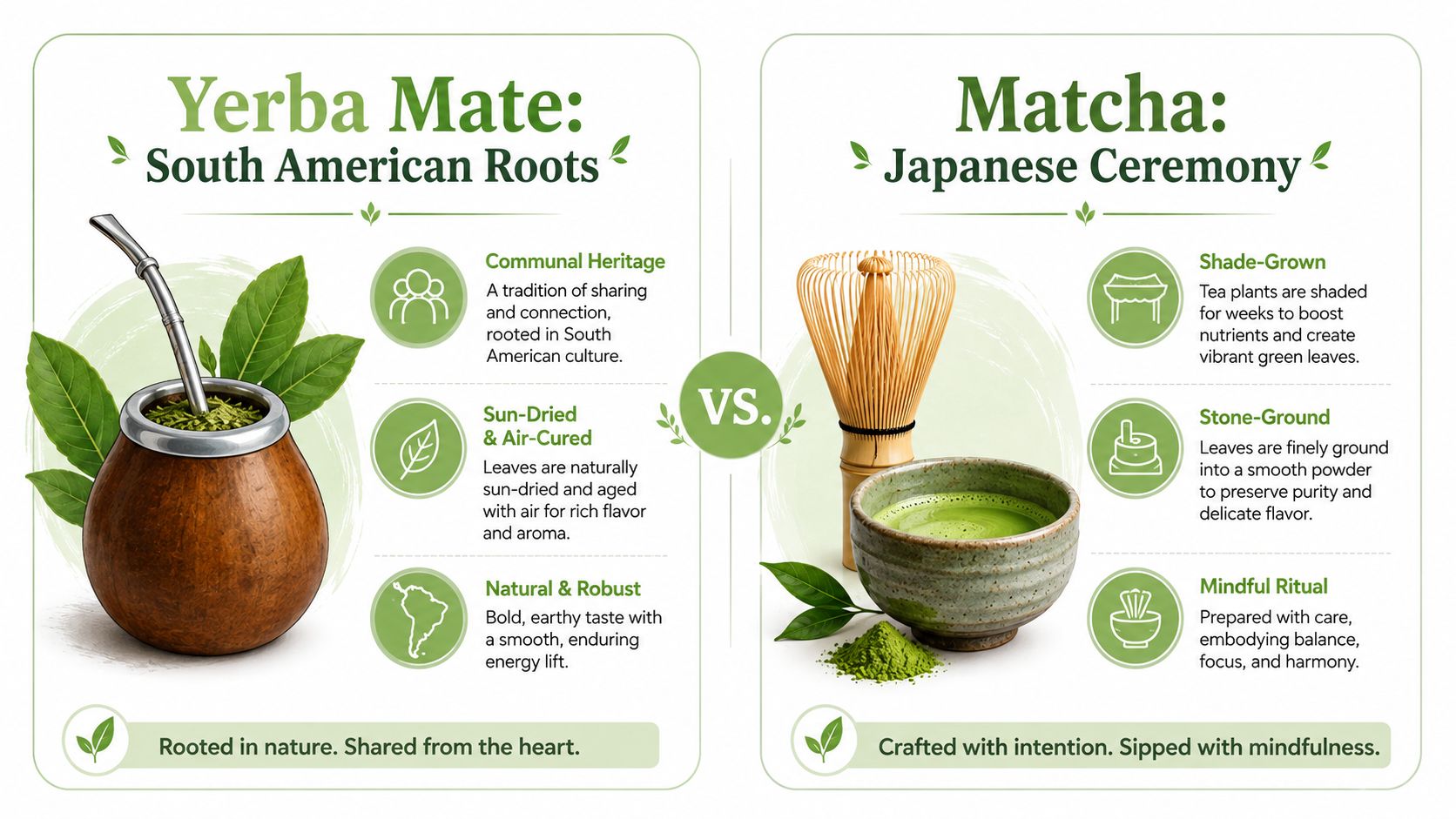
That difference matters because it changes what ends up in your cup. With mate, you're extracting flavour from leaves through repeated infusions. With matcha, you're consuming the powdered leaf itself, so the whole dose is present from the start. That's why matcha often tastes denser, brighter, and more concentrated, while mate feels more drawn out and evolving over time.
Why the processing shapes flavour
Steaming preserves the green colour and gives matcha its grassy, umami-heavy profile. Traditional mate drying tends to push the flavour toward earthier, smokier, and more bitter notes. Neither is a flaw; they are the result of different traditions with different goals.
The ritual follows the plant. Yerba mate is made to be shared or refilled. Matcha is made to be measured and whisked. If you've ever watched a café team pull together a quick iced matcha versus a hot mate service, you can see the contrast immediately. One feels precise and contained. The other feels open-ended and communal.
Here's the easiest way to think about it. Matcha behaves like a specialty ingredient. Mate behaves like a drinking session. That's why one fits dessert menus, lattes, and baking, while the other works well as a social beverage or a slow afternoon companion. They're both green, but they're not interchangeable green powders.
If you want an Australian market lens, that same trade pattern above tells you the story. Matcha is already the more established specialty buy. Mate is still the more distinctive, less common choice.
Caffeine and L-Theanine Compared
The dose is the point
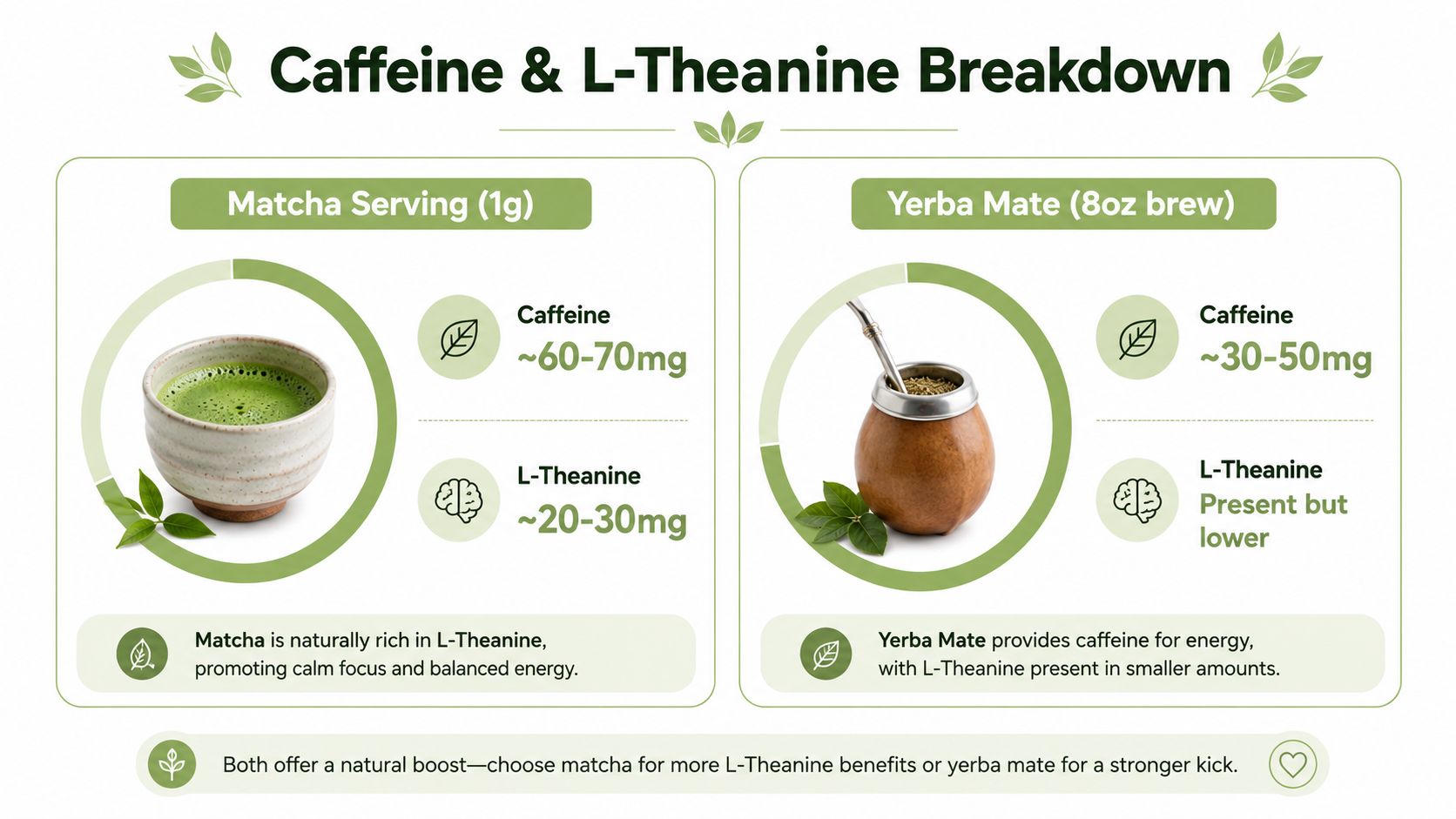
A matcha serve usually lands at about 60–70 mg of caffeine, while brewed yerba mate often sits around 30–50 mg per 8 oz in widely cited comparisons. Matcha and yerba mate caffeine benchmark That is the starting point, not the whole story. Matcha is usually measured as a single portion, so the dose is clear. Yerba mate is often topped up over a longer session, which makes it easy to drink far more than you intended.
Why the energy feels different
Matcha brings L-theanine with its caffeine, and that is why the effect feels smoother and more controlled in the cup. Whole-leaf use gives matcha a clearer calm-focus profile, which is exactly why it works so well for concentrated desk work. Yerba mate can still feel steady, but it usually reads as more driving and less restrained.
The National Health and Medical Research Council advises no more than 400 mg of caffeine per day for adults, and 200 mg per day for pregnant and breastfeeding women. NHMRC caffeine guidance As noted above, the NHMRC ceiling is 400 mg per day. That matters in a normal Australian day, because a few refills, a large café order, or a second green drink after lunch can push you close to your limit fast.
Caffeine rule of thumb: if you need something at 2pm and still want to sleep later, one measured matcha is easier to control than an open-ended mate session.
Which one fits the workday
For long desk work, matcha is the better tool. It gives you a more predictable dose, a cleaner finish line, and less risk of drifting into late-afternoon overstimulation. For a long afternoon that includes conversation, errands, or time outside, yerba mate makes more sense because the ritual can keep going without every refill feeling like a fresh hit.
If you want a drink you can measure, matcha wins again. That matters for pregnant drinkers, caffeine-sensitive Australians, and anyone trying to keep sleep intact after an early-afternoon cup. If you want more on beverage caffeine in green tea forms, Pep Tea's caffeine content in green tea guide is a useful reference.
A café buyer should read the two drinks the same way. Matcha suits a fixed serve, fast prep, and tight portion control. Yerba mate suits a slower service style, larger vessels, and customers who want to sit with the drink instead of finishing it and moving on. For operators planning iced drinks, the guide to iced coffee for Oklahoma facilities is a useful reminder that cold caffeine drinks live or die on portion control and service speed.
Bottom line: matcha is the better call for controlled afternoon focus. Yerba mate is the better call when you want a longer caffeine curve and a more social pace.
Antioxidants, Polyphenols, and Real Health Effects
What each drink genuinely brings
Matcha is known for its catechins, especially EGCg, because shade growth and whole-leaf consumption concentrate the compounds in the cup. Yerba mate brings a different antioxidant profile, with chlorogenic acids and caffeoylquinic acids among its meaningful polyphenols. Neither drink is a miracle cure, and anyone claiming otherwise is overselling it.
The sensible view is simpler. Both drinks can be part of a wellness routine because they contribute antioxidants and deliver a functional lift. Matcha is the more concentrated tea if you want catechin-heavy green tea benefits. Mate is the more distinctive choice if you prefer its polyphenol mix and its slower social drinking style.
Wellness claims need discipline
A lot of marketing gets sloppy here. Australian food labelling rules require that a beverage marketed as “probiotic” must contain live microorganisms at the end of shelf life and be backed by evidence of benefit for the stated strain and dose under the FSANZ Code. That matters because it separates genuine fermentation from vague gut-health language. A label saying “good bacteria” isn't the same thing as a properly fermented product with compliant claims. FSANZ probiotic and labelling context
If a drink sounds medically bold but the label can't support the claim, treat the promise with suspicion.
That matters in this comparison because people often lump mate, matcha, and kombucha together as “health drinks”. They're not the same. Matcha and mate are tea-based caffeine sources with different polyphenols. Properly fermented kombucha is a separate category with a different regulatory and microbiological reality.
For a deeper look at green tea's antioxidant profile, Pep Tea's antioxidant tea benefits guide is the right place to go. The practical takeaway here is straightforward. Matcha is the better option if you want a more concentrated green-tea antioxidant profile. Mate is still a legitimate antioxidant beverage, just with a different chemistry and a more social cup.
Taste, Texture, and the Drinking Ritual
Flavour is why people stick with one drink
Matcha tastes vegetal, umami, and slightly sweet when it is decent quality and whisked properly. The mouthfeel is smoother and almost creamy, especially in a bowl or a well-made latte. Yerba mate is earthier, smokier, more herbal, and often more bitter, with a drier, full-bodied finish that many people either love immediately or learn to appreciate.
| Attribute | Yerba Mate | Matcha |
|---|---|---|
| First impression | Bold, earthy, bitter | Fresh, grassy, umami |
| Texture | Light infusion | Smooth, creamy, dense |
| Finish | Dry and full-bodied | Soft, rounded, lingering |
| Ritual | Shared, refilled gourd | Whisked bowl or latte |
| Best use | Social sipping, cold brew | Lattes, baking, focused drinks |
Ritual changes the pace
Mate changes the drinking session more than the sip itself. One gourd can stay on the table for a long time, and the shared refill pattern changes the whole social mood. Matcha feels more individual and self-contained. You whisk it, drink it, and move on.
That difference matters in daily life. A café guest who wants something meditative and photogenic will usually be happier with matcha. A person who wants to talk, sit outside, and keep the drink in rotation for an hour or two will often prefer mate. The beverage shapes tempo as much as flavour.
Matcha also works as the more versatile base. You can foam it into a latte, blend it into a smoothie, or use it in baking. Mate holds up well in cold brew and can be a strong menu item in its own right, especially when a customer wants something a little more rugged and less dessert-like.
Sensory shortcut: if you like green flavours, fine texture, and a cleaner finish, choose matcha. If you like bitterness, smoke, and a drink that feels more rustic, mate is your drink.
How to Brew Each Tea Properly at Home and in a Café
Brewing mate: temperature and technique
Mate turns harsh fast if you treat it like black tea. Keep the water around 70 to 80°C, never boiling, or the cup goes bitter and thin at the same time. In a traditional gourd, tilt the leaves to one side, add a little cool water first, then pour gently so the leaf bed is not shocked. A French press works well in a café because it gives staff control over the steep and keeps service tidy.
Cold mate has a real place on a café menu. It suits batch prep and summer drinks, but only if the flavour stays balanced. Go too heavy on the leaf or too hot on the water and the drink turns sharp. Mate should taste dry and full-bodied, not scorched.
Brewing matcha: whisking and water
Matcha needs proper whisking, not guesswork. Ceremonial service uses a chasen and a bowl, while cafés often rely on a shaker, frother, or whisk for iced matcha and lattes. The water should be hot, but not scalding, because overheated water makes the powder taste flat and bitter. Milk needs the same care, because scorched milk buries the tea.
The gear matters, but only up to a point. A basic bamboo whisk, a kettle with temperature control, and a good tin of matcha are enough to start. Mate asks for a gourd, a bombilla, and the leaf itself. For café operators, matcha usually gives the stronger presentation. Mate usually wins on simplicity and a brew method that is easy to repeat.
Buy by the cup, not by the label. Good matcha should taste clean, not muddy. Good mate should feel full-bodied, not burnt.
If you want a clean reference point for premium matcha quality, PepTea's organic matcha range is a solid benchmark.
Who Should Choose Yerba Mate and Who Should Choose Matcha
Matcha suits the measured moments
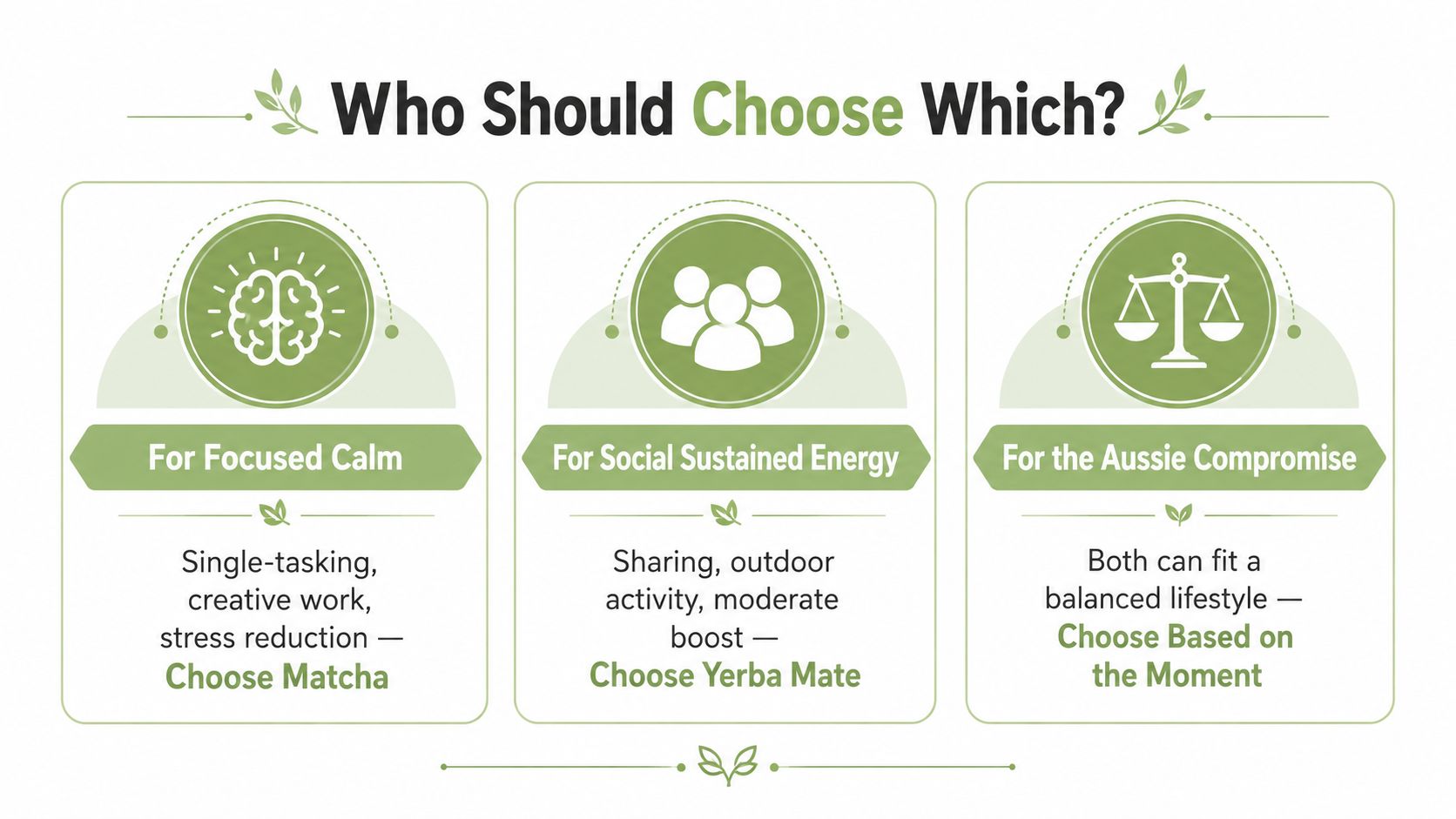
Matcha is the better choice if you want a single dose of clean focus, especially for desk work, creative sessions, and afternoons when you need control. It's also the stronger pick for bakers and home baristas because it does more than one job. Pregnant or caffeine-sensitive drinkers usually do better with the drink they can measure precisely, and that points to matcha.
Mate suits the social moments
Yerba mate is the better pick for long shared afternoons, outdoor activity, and anyone who likes a more full-bodied, earthy flavour. It's the drink you keep passing around, not the drink you rush through. If the goal is conversation, ritual, and a lower per-cup caffeine hit you can sip over time, mate has the edge.
For café menus, matcha is the better photogenic, premium add-on. Mate is the better conversation piece and a stronger fit when you want a more distinctive, less sweet drink. If sleep matters, default to matcha earlier in the day and keep an eye on the total number of serves. If ritual and conversation matter, mate is hard to beat.
My plain answer: matcha wins for control. Yerba mate wins for atmosphere.
Pep Tea focuses on premium organic matcha and sugar-free organic kombucha for Australians who want clean energy, better habits, and drinks that actually fit real life. If you're deciding between yerba mate vs matcha, start with the matcha range at Pep Tea, then look at the kombucha line for a second functional drink that suits the same wellness-minded routine.