
Tag: gluten free pancakes
Matcha Pancakes Recipe: Fluffy & Flavourful
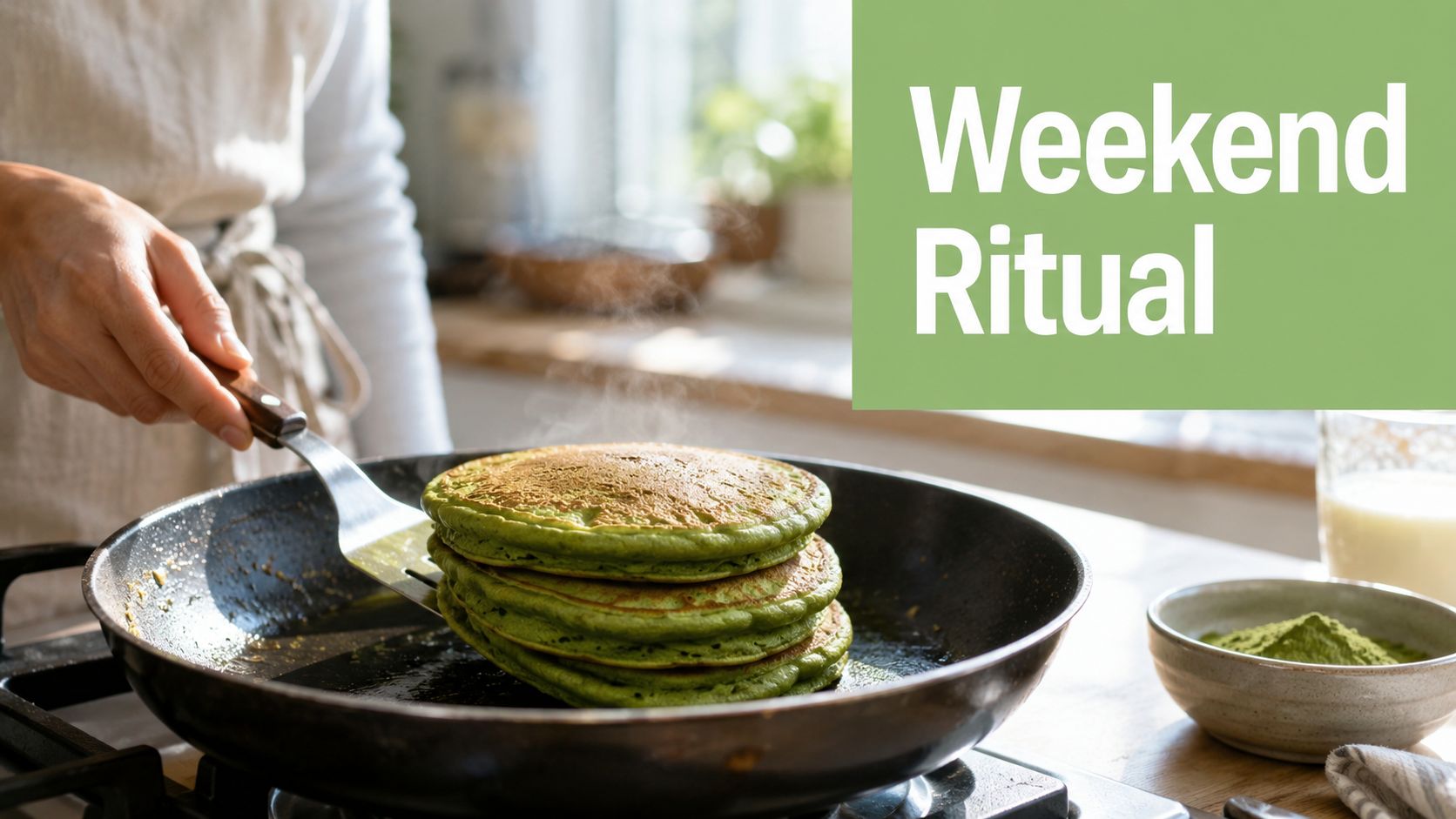
Saturday morning, the pan is warm, the kitchen smells faintly grassy and sweet, and the first vibrant green pancake is ready to flip. A good matcha pancakes recipe looks simple, but the decisions made before the whisk comes out matter: the matcha grade affects colour and bitterness, the flour controls tenderness, and the pan determines whether the stack cooks through without turning brown.
I've tested this style of batter in ceramic, cast-iron and non-stick pans, using ceremonial, premium and culinary matcha grades. The reliable workflow is straightforward: choose the powder with the finished dish in mind, sift carefully, mix lightly, rest the batter, and cook by surface cues rather than the clock. The same approach works for a relaxed home breakfast, a vegan or gluten-free adaptation, or a café plate designed around controlled portions and complementary toppings.
Why matcha belongs on the breakfast plate
Matcha has moved well beyond specialist tea shops in Australia. One independent report estimates the Australian category grew at a 14.94% CAGR from 2020 to 2024, while another analysis places recent annual consumption growth at 12–16% and estimates that more than 90% of domestic volume is imported. Foodservice is estimated to account for 45–50% of volume, with household use at 35–40%, which helps explain why matcha now appears in café drinks, baked goods and home breakfast recipes. (Australian matcha market analysis)
ABC News described matcha in Australia as having shifted from a niche product to a mainstream staple, with demand accelerating through café-style iced matcha drinks. The powdered tea tradition itself dates back to 12th-century Japanese monks, who popularised whisking powdered tea into hot water as part of Zen meditation. (ABC News report on matcha in Australia)
Practical rule: Decide whether you're making a subtle, fluffy breakfast stack or a bold café-style plate before choosing the matcha. The powder isn't a finishing detail. It shapes the whole result.
If you enjoy comparing pancake formats, Rip Van's stroopwafel pancake method is useful for thinking about texture, fillings and griddle timing. For this recipe, though, the goal is a soft crumb that lets the matcha taste clean rather than burying it under sugar.
Ingredients and Why Each One Matters
A dependable batter starts with ingredients chosen for their jobs, not just collected from a list. The matcha provides colour, aroma and bitterness, while flour, dairy, eggs and leavening determine whether that flavour arrives in a tender pancake or a dense green disc.
Matcha grade sets the ceiling
Ceremonial-grade matcha gives the brightest jade colour and a clean, rounded umami character. It works beautifully when the pancakes are lightly sweetened or served with restrained toppings, but its higher price makes it difficult to justify for a large breakfast batch.
Premium culinary-grade matcha is usually the practical middle ground. It has enough colour and flavour to remain recognisable after cooking without asking you to use a precious drinking-grade powder in a batter. A lower-grade blend can look dull, taste aggressively bitter and leave the stack muddy rather than fresh.
| Matcha Grade | Colour Result | Flavour Profile | Best Use | Price Band |
|---|---|---|---|---|
| Ceremonial | Bright jade | Clean, delicate umami | Refined home or café plating | Higher |
| Premium culinary | Fresh green | Balanced, slightly earthy | Everyday pancakes and baking | Mid-range |
| Lower-grade blend | Dull green | More bitter, muddy | Budget cooking where colour matters less | Lower |
Sift the matcha with the flour and raising agents. If you're comparing grades before buying, this guide to ceremonial versus culinary matcha explains why drinking and baking powders behave differently. An organic matcha green tea powder is another option to consider when you want a clearly identified powder for kitchen use.
Build tenderness without losing structure
Plain flour gives the batter enough structure to rise while keeping the centre soft. A very strong flour can make the pancake chewy if you mix aggressively, while oat flour alone tends to produce a fragile stack. Almond flour brings richness, but it can brown quickly and compete with matcha's green colour.
Whole milk gives the most rounded texture and helps the surface brown gently. Buttermilk or plain yoghurt adds acidity and a tighter crumb, which can be pleasant, although too much can make the pancake feel heavy. Eggs provide structure, emulsification and colour, while baking powder supplies the lift. Keep the raising agents balanced rather than adding extra in the hope of getting a taller stack, because excessive leavening can leave a metallic aftertaste and a coarse interior.
For sweetness, maple syrup and honey soften matcha's bitterness while adding their own flavour. White sugar keeps the colour cleaner, coconut sugar darkens the batter slightly, and monk fruit can reduce sweetness without adding much bulk. Any liquid sweetener needs to be balanced with the milk so the batter doesn't become loose.
Mixing and Cooking the Batter
Start by sifting the flour, matcha, baking powder and salt into a large bowl. A fine matcha tea sifter breaks up powder clumps and spreads the raising agent evenly, so the cooked pancakes do not contain bitter green pockets.
Whisk the eggs, milk, melted butter or oil, sweetener and vanilla separately. For a smoother green colour, whisk the matcha into a little of the milk first, then combine it with the remaining wet ingredients. Pour the wet mixture into the dry ingredients and stir until the large dry patches disappear. Small lumps are fine. Continued mixing develops more gluten and can leave the pancakes dense.
Leave the batter to rest briefly. Australian guidance for matcha pancakes recommends sifting, gentle mixing, a short rest, medium heat, a roughly 1/4-cup portion, and flipping once bubbles or dry edges appear. (Australian matcha pancake method) This workflow also gives you room to adjust consistency for different matcha grades or dairy-free milks before cooking the full batch.
Cook by surface cues, not the clock
Heat a non-stick pan, cast-iron skillet or griddle over medium-low heat. Brush it with a thin film of butter or neutral oil, then pour enough batter for a pancake roughly ten centimetres across. Non-stick cookware is the easiest option for home batches. Cast iron retains heat well but may create darker hot spots, while a heavy griddle gives more even browning when you are plating several pancakes for brunch.
The edges should look set, with small bubbles appearing and opening across the surface. Check the underside before flipping. It should be green-golden rather than dark brown. Flip once and cook until the centre springs back lightly under gentle pressure.
Transfer cooked pancakes to a warm tray. Avoid packing them tightly in the pan or stacking them while very hot, because trapped steam softens the surfaces. The sifter solves powder distribution, but careful stirring and controlled heat still determine fluffiness.
Dietary Variations That Work
A useful dietary swap replaces an ingredient's job. Vegan batter still needs acidity, structure and fat. Gluten-free batter needs enough flexibility to hold together, while lower-sugar batter needs balance so matcha remains rounded rather than harsh.
| Variation | Replace | With | Texture Impact |
|---|---|---|---|
| Vegan | Dairy milk and butter | Soy milk with apple cider vinegar, plus neutral oil | Tender, with slightly less dairy richness |
| Vegan | Egg | Aquafaba | Holds structure, though the crumb is a little lighter |
| Gluten-free | Plain flour | A 1:1 cup-for-cup blend with xanthan already included | Similar lift and shape |
| Lower-sugar | White sugar | The same weight of coconut sugar or monk fruit | Coconut sugar darkens colour, monk fruit keeps the batter lighter |
Vegan pancakes
Soy milk and apple cider vinegar create buttermilk-style acidity that supports the leavening. Aquafaba replaces the egg and helps the pancakes hold together. Neutral oil takes the place of melted butter without adding dairy flavour or noticeably dulling the green colour.
Plant milks differ in thickness, so inspect the batter after its rest. If it has tightened too much, add a small splash of milk. Stir only enough to combine, since vigorous mixing can make the cooked texture heavier.
Gluten-free pancakes
Choose a 1:1 gluten-free flour blend with xanthan gum already included. It gives the batter enough flexibility to lift and flip without breaking. Oat flour alone often crumbles, while almond flour can brown before the centre has cooked through.
Lower-sugar pancakes
Coconut sugar can replace white sugar at the same weight, producing a deeper colour and caramel note. Monk fruit keeps the batter and finished stack lighter. Erythritol may leave a cooling aftertaste that competes with earthy matcha, especially when toppings are restrained.
Matcha grade affects the final appearance after a swap. Ceremonial-grade powder generally keeps its colour better, while culinary-grade powder may look duller with plant milk or darker sweeteners. Keep the resting time consistent across versions, then adjust thickness gently before cooking the full batch. This approach keeps the recipe practical for a dairy-free home breakfast, a gluten-free table, or a café brunch menu where colour and clean flavour matter.
Serving, Toppings and Drink Pairings
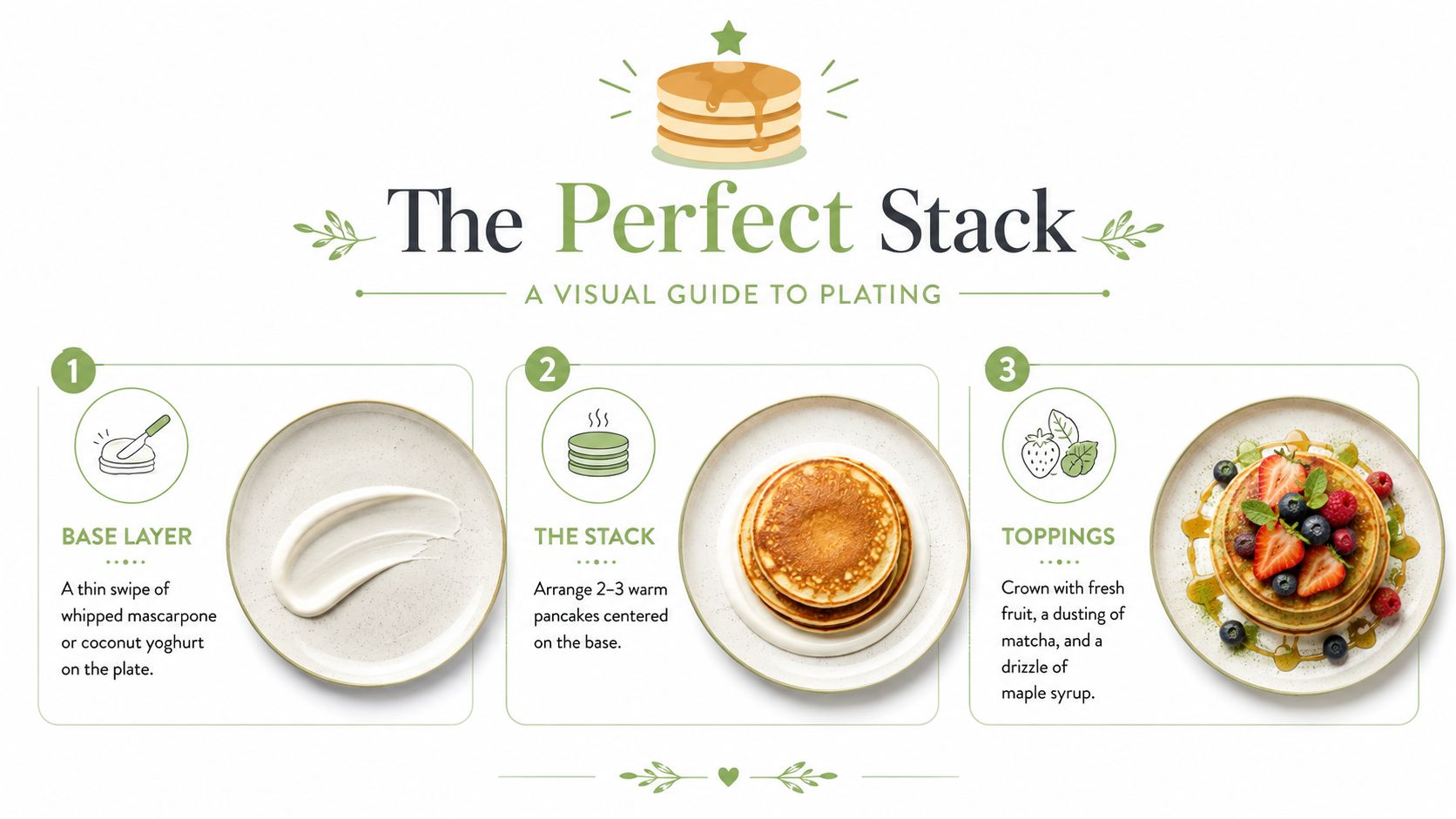
Treat the stack as the centrepiece. A thin swipe of mascarpone or coconut yoghurt anchors the plate, and toppings should sharpen the matcha rather than drown it. Arrange the warm pancakes over the yoghurt, then build the finish around contrast in colour, acidity and texture.
Fresh berries bring acidity and colour. Citrus segments add brightness, while toasted black or white sesame provides a gentle nutty edge. A light drizzle of honey or maple suits most plates, and a restrained dusting of matcha reinforces the aroma. Heavy syrup flattens the tea flavour, leaving the dish closer to a conventional sweet pancake with green colouring.
Drinks that keep the plate balanced
An iced PepTea matcha repeats the green tea character without introducing a competing flavour. A hot PepTea matcha latte fits a slower weekend breakfast, particularly with citrus or berries instead of a heavily sweet topping.
Kombucha offers a sharper contrast. Ginger, lemon or yuzu styles cut through the pancake's richness, and their acidity can make earthy matcha taste brighter. Pep Tea's Australian-brewed organic kombucha is made in the Hunter Valley, NSW. Its sugar-free range includes Ginger, Lime & Ginger and Mango. Serve it chilled in a small glass, allowing it to refresh the palate between bites.
For a café brunch menu, keep the stack visually controlled, use a warm plate and finish with a small pinch of salt. That restraint matters more with delicate ceremonial-grade matcha, while a stronger culinary-grade batch can handle bolder fruit or citrus. At home, a shorter stack with fruit and yoghurt is easier to eat and lets everyone adjust sweetness at the table.
Troubleshooting Common Pancake Problems
A disappointing stack usually points to heat or handling rather than a failed recipe. Matcha makes those mistakes easier to see, but the fixes are familiar.
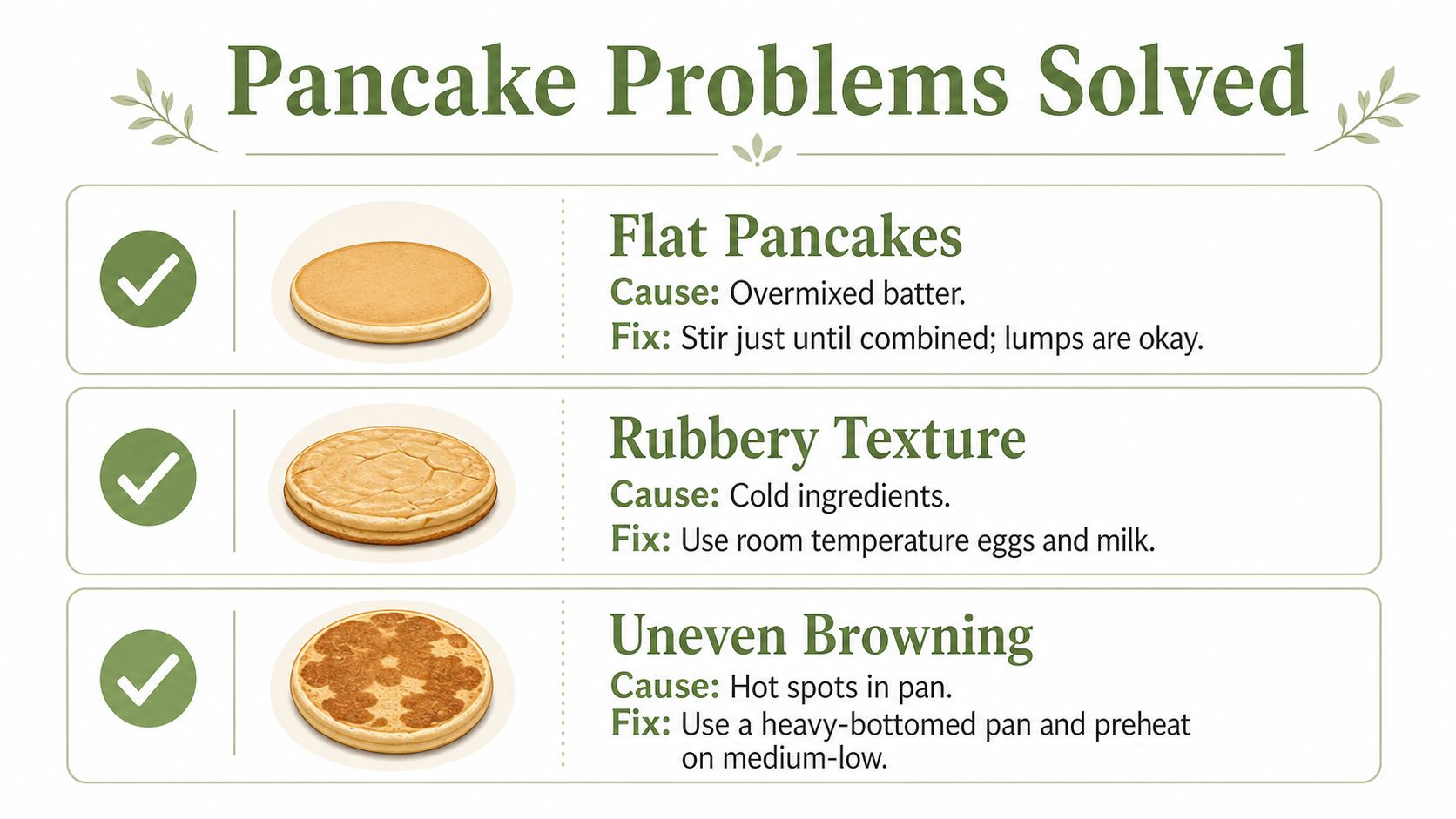
- Flat pancakes: Overmixed batter develops too much gluten. Stir until just combined, accept small lumps, then rest the batter for about ten minutes.
- Rubbery texture: Cold eggs and milk can make the batter uneven and slow to rise. Bring them to room temperature before mixing.
- Pale surfaces: The pan is probably not holding enough heat. Use medium-low heat, test it with a splash of water, and allow the first side to cook longer.
- Bitter flavour: High heat drives bitterness and darkens the powder. Whisk the matcha in at the end of the wet-mixture stage and avoid cooking over a high flame.
- Sticking: Use a well-seasoned pan and add butter between batches rather than flooding the pan at the start. Wait for visible bubbles before attempting the flip.
- Brown-green colour: Oxidation and excessive heat are usually responsible. Fold the matcha in last, cook gently and serve the pancakes promptly.
Don't flip because a timer says you should. Flip when the edges have set, the surface bubbles have opened and the pancake releases with a confident slide. That cue is more reliable across ceramic, cast iron and non-stick surfaces.
Storage, Reheating and Quick Nutrition Notes
Cool the pancakes on a wire rack so steam can escape instead of making the undersides wet. Once cool, store them in a sealed container in the fridge for up to three days, or freeze them with parchment separators for up to two months.
The toaster gives a single pancake the best balance of crisp edges and soft centre. For a whole stack, a low oven at 150°C warms the pancakes evenly. A microwave works when you're in a hurry, especially if you cover the pancake with a damp paper towel, but it can soften the crumb and dull the green colour.
| Method | Time | Texture Result | Best For |
|---|---|---|---|
| Toaster | Short | Lightly crisp outside, tender centre | One or two pancakes |
| Oven at 150°C | Gentle warming | Even and soft | A full stack |
| Microwave with damp paper towel | Very quick | Softest, sometimes slightly chewy | Speed over surface texture |
Matcha contributes caffeine because the powdered leaf is consumed rather than steeped and discarded. A peer-reviewed review reports published matcha caffeine concentrations ranging from 18.9 to 44.4 mg per gram, while an Australian matcha FAQ gives a common range of 19 to 44 mg per gram and describes a standard usucha serving as about 2 g, or roughly 38 to 88 mg of caffeine. (Peer-reviewed matcha review) (Australian matcha FAQ)
Because the exact amount in a pancake depends on the powder and recipe quantity, don't treat the stack as caffeine-free. FSANZ identifies caffeine as a regulated substance in the food supply, and its guidance notes that the Food Standards Code restricts caffeine in certain products to a maximum of 320 mg per litre. (FSANZ caffeine guidance)
I won't invent calorie, protein or carbohydrate figures without the exact flour, milk, fat, sweetener and serving size. For practical planning, treat the recipe as a breakfast containing flour-based carbohydrates, egg-derived protein and matcha caffeine, then adjust toppings according to whether you're aiming for a light home meal or a more substantial café plate. For matcha storage guidance, use Pep Tea's matcha shelf-life guide.
Pep Tea offers organic Japanese matcha suited to drinking and culinary use, alongside Australian-brewed organic kombucha from the Hunter Valley, NSW. Visit Pep Tea to choose a matcha for your next pancake batch and explore sugar-free kombucha pairings for a bright, balanced breakfast.