
Tag: chasen australia
Best Matcha Whisk Australia: Your Guide to a Perfect Brew

You've probably had this happen. You buy a good-looking tin of matcha, heat the water carefully, stir it with a spoon or frother, and still end up with a drink that's clumpy on top, gritty underneath, and a bit more bitter than the café version you were hoping for.
That frustration usually isn't about enthusiasm. It's about the tool.
For many Australians getting into matcha at home, the powder gets all the attention while the whisk gets treated like an optional extra. It isn't. If you want smooth texture, fine foam, and that rounded, creamy feel that makes matcha so satisfying, the whisk matters just as much as the bowl and the tea itself.
That's why a proper guide to Matcha Whisk Australia shoppers can use needs to go beyond generic advice. Australian buyers face a few very real questions. Which whisk is worth buying locally? What should you look for in bamboo? How do you stop it drying out and cracking in our climate? And if you run a café, how do you make quality feel consistent from cup to cup?
The Secret to Perfect Matcha Is in the Whisk
A lot of first-time matcha drinkers assume the difference between a flat home-made cup and a silky café bowl comes down to expensive powder alone. Sometimes it does. Often, though, the missing piece is the chasen, the traditional bamboo matcha whisk.
If you've been stirring matcha with a teaspoon, shaking it in a jar, or blitzing it with a kitchen frother, you've probably seen the same pattern. The powder doesn't fully disperse. The top looks bubbly rather than creamy. The taste lands sharper than expected. You're drinking matcha, but not the version the tea was designed to become.
That matters more now because matcha isn't a niche drink in Australia anymore. The Australian matcha tea market recorded a 14.94% compound annual growth rate from 2020 to 2024, with the market reaching US$35.4 million in 2024. That growth reflects a broader shift towards healthier, premium beverages.
Why the whisk changes everything
A proper bamboo whisk doesn't just mix powder and water. It suspends the matcha evenly, breaks up tiny clumps, and introduces air in a controlled way. That's what gives you the light froth and smoother mouthfeel people associate with a well-made bowl.
Without that whisking action, the drink often tastes harsher than it should.
A good bowl of matcha should feel soft and lively, not chalky and aggressive.
A familiar Australian scenario
Think about the home cook in Adelaide making a morning matcha before work, or the latte lover in Brisbane trying to recreate their favourite café order on a Sunday. They're not short on interest. They're short on practical guidance.
That's where the chasen comes in. Once you understand what it does and how to choose one for Australian conditions, matcha gets a lot easier. And a lot more enjoyable.
Understanding the Traditional Matcha Whisk or Chasen
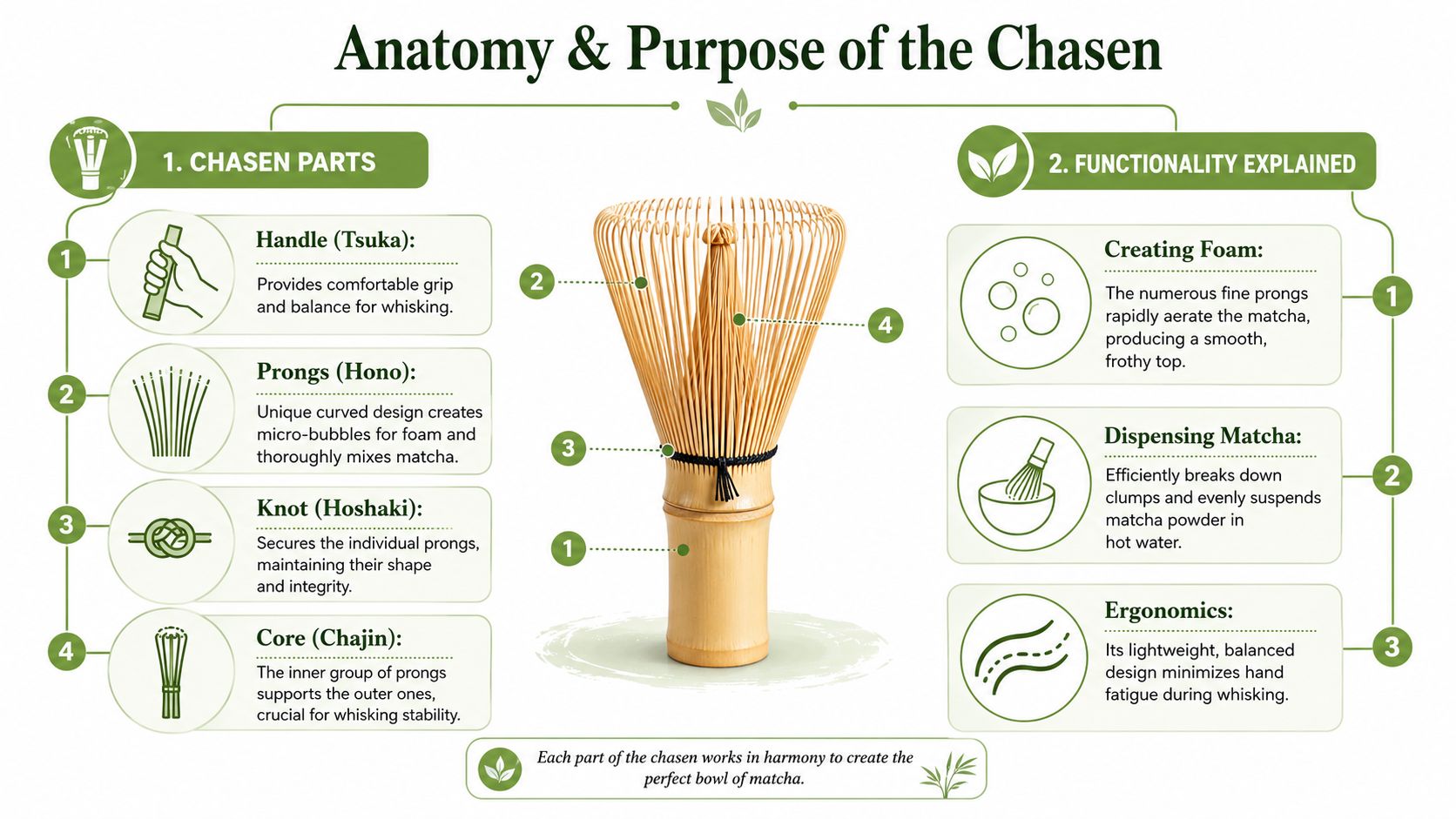
The chasen is a purpose-built tool. It isn't a decorative extra and it isn't interchangeable with every whisk-shaped gadget in your kitchen. Traditional versions are made from a single piece of bamboo, carefully cut and shaped into a cluster of fine tines.
At first glance, it looks delicate. In use, it's surprisingly intelligent design.
What the parts do
A chasen has a few key parts working together:
- Handle helps you grip the whisk lightly without squeezing too hard.
- Outer tines do most of the aerating and surface agitation.
- Inner tines support the structure and help move the liquid evenly.
- Central knot keeps the carved sections organised and stable.
This shape is why matcha preparation looks different from ordinary stirring. You're not trying to beat cream or whip egg whites. You're trying to create a fine suspension of tea particles in water.
Why tine count matters
A high-quality bamboo chasen features 64 to 100 precisely shaved tines with an optimal spring effect. That design is critical for effective aeration and for creating nano-foam, which helps prevent bitterness by properly emulsifying polyphenols.
That last part confuses a lot of beginners, so here's the plain-English version. Better whisking doesn't magically change your matcha into a different product. It helps the tea disperse more evenly, which improves texture and softens the drinking experience.
Why bamboo works better than rigid alternatives
Bamboo has a natural flexibility that matters during whisking. The tines should spring back slightly as they move through the liquid. If they're too stiff, they don't glide well. If they're too thin or badly cut, they snap early.
That's also why a real chasen behaves differently from a metal balloon whisk or silicone tool. Those may mix liquid, but they don't create the same microfoam or fine texture.
Practical rule: If your matcha whisk feels more like a kitchen utensil than a tea tool, it probably won't give you the result you want.
The real job of a chasen
The chasen does three jobs at once:
- Breaks up clumps so dry powder doesn't sit on the surface.
- Suspends the tea so each sip tastes balanced.
- Creates foam that adds body and visual lift.
That combination is why matcha prepared with a proper whisk feels calmer, smoother, and more complete. If you're serious about matcha in an Australian home kitchen or café, this is the tool that makes the ritual work.
How to Choose the Right Matcha Whisk in Australia
Buying a chasen sounds simple until you start shopping. Then you'll see bamboo whisks with different tine counts, different finishes, different prices, and plenty of listings that tell you almost nothing useful.
The best choice depends on how you drink matcha. A person making a quiet morning bowl of ceremonial-grade tea has different needs from someone preparing iced lattes most days.
Start with the whisk itself
When you compare options, check the basics first:
- Tine shape: Look for evenly cut, curved prongs rather than rough, blunt ends.
- Spring and flexibility: The whisk should feel light and responsive, not brittle.
- Material quality: Natural bamboo should look clean and well-finished, not splintered.
- Intended use: Some whisks suit thinner matcha better, while others handle thicker preparation styles more comfortably.
If you're new to matcha, a versatile bamboo whisk is usually the safest place to begin.
Matcha whisk vs alternatives comparison
| Tool | Foam Quality | Authenticity | Best For | Price Range (AUD) |
|---|---|---|---|---|
| Bamboo chasen | Fine, creamy foam with proper technique | Traditional | Ceremonial matcha, home ritual, café-quality texture | Varies by maker and build quality |
| Electric frother | Fast, but foam is often larger and less refined | Low | Quick matcha lattes and busy mornings | Varies |
| Metal kitchen whisk | Limited for matcha | Low | Emergency use only | Varies |
| Silicone whisk | Gentle mixing, less effective for classic foam | Low | Casual latte prep | Varies |
A traditional chasen wins on texture and drinking experience. An electric frother can still be useful for lattes, especially if speed matters more than ritual, but it won't feel or perform quite the same way in a bowl of ceremonial matcha.
Buying locally or ordering from overseas
Australian shoppers usually weigh two routes. Local specialist stores are easier for shipping, returns, and product support. Overseas ordering can offer a wider range, but delivery times and product consistency can be harder to judge from a screen.
If you want a bundled beginner option, a matcha tea set in Australia can make sense because it removes the guesswork around matching bowl, whisk, and basic accessories.
Here's what to watch for either way:
- Clear product photos: You want to see the tines properly, not just packaging.
- Specific descriptions: Vague listings usually hide poor craftsmanship.
- Australian conditions: This matters more than many buyers realise. A whisk that travels and then sits in a dry kitchen still needs proper care.
- Use case honesty: A decent seller should help you choose between ceremonial prep and everyday latte use.
Don't buy on looks alone
Some whisks look attractive online but feel lifeless in the hand. Others are packed in polished gift boxes yet arrive with tines that are too stiff or too fragile. A good chasen should be functional first.
If your goal is proper matcha, buy the whisk that gives you control, not the one with the prettiest listing.
Master the Art of Whisking Matcha
Choosing a whisk is only half the job. Significant improvement happens when your technique catches up.
Many people whisk matcha like they're stirring soup. That's why the foam stays flat or disappears quickly. The movement should be light, quick, and focused near the surface.
Step one matters more than people think
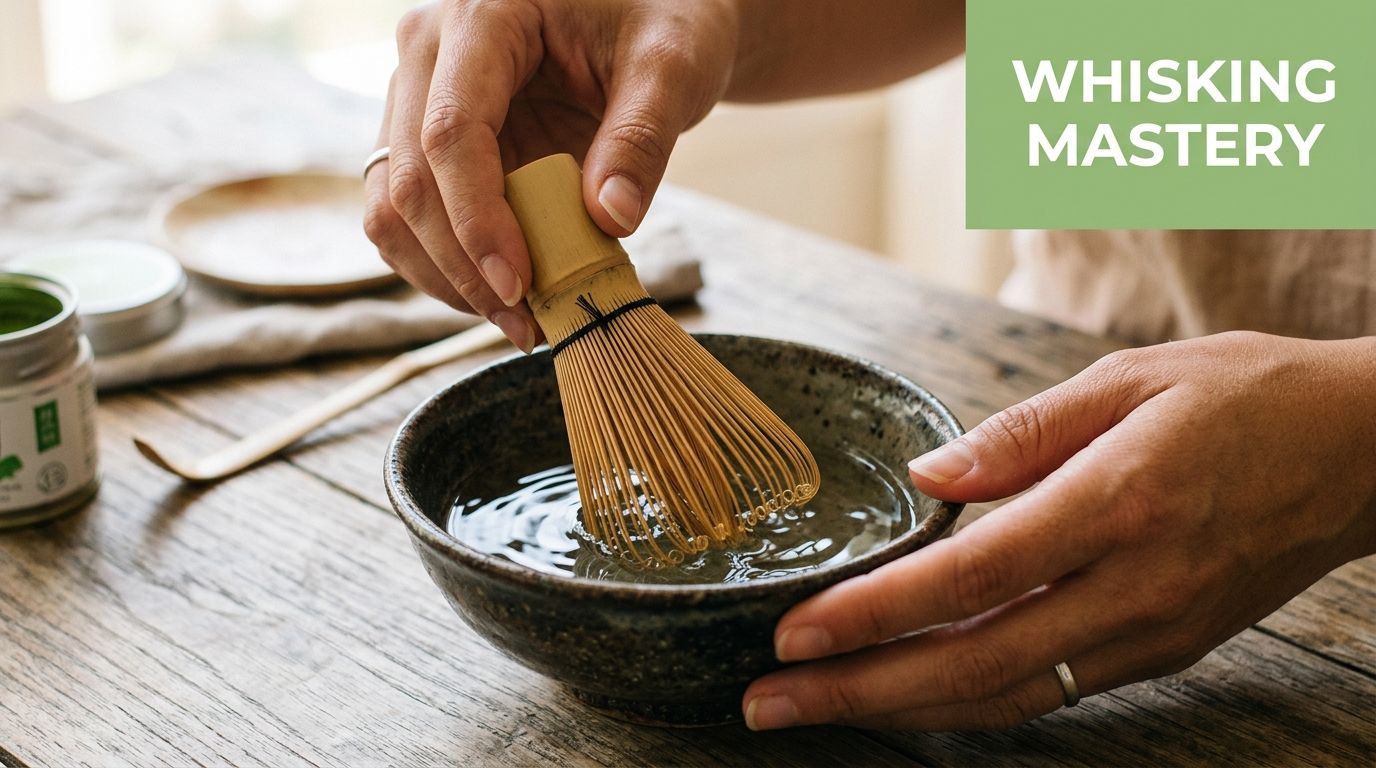
A bamboo chasen should be preconditioned in warm water at about 80°C for 3 to 5 minutes. This softens the tines, improves flexibility, and helps prevent fracture during the rapid W-shaped whisking motion used to create dense microfoam.
Don't skip that because you're in a rush. Dry bamboo is far more likely to split under pressure.
A simple whisking method that works
Use this sequence when you're learning:
Warm the bowl first
Swirl a little warm water through your bowl, then empty it. This takes the chill off the ceramic.Add your sifted matcha
Sifting helps remove clumps before they become a problem in the bowl.Make a loose paste
Add a small amount of warm water and gently work the powder into a smooth base.Whisk in a W motion
Once more water is added, move the chasen quickly in a loose W or zigzag pattern near the surface. Don't stir in circles.Finish lightly
When a fine foam forms, ease off and lift the whisk gently.
What good whisking looks like
You're aiming for a surface that looks soft and even, with tiny bubbles rather than a few large ones. The texture should feel smooth when you drink it, not grainy.
If you want to watch the movement before trying it, this short demonstration is a useful visual guide.
Matcha, water, and practice
The whisk can only do so much if the tea itself is poor quality. If you're comparing different ceremonial options for practice bowls, AQEEK ceremonial grade matcha is one example of a product worth studying for texture and preparation style.
For a more detailed walkthrough with visuals and technique notes, Pep Tea also has a practical guide on how to whisk matcha.
Keep the whisk tips active near the top of the liquid. If you press hard into the bottom of the bowl, you'll mix the tea but lose the foam.
Proper Care to Make Your Matcha Whisk Last
A chasen is small, but it asks for respect. If you treat it like a dry cupboard tool, it won't last long, especially in many Australian homes where indoor air can be harsh on bamboo.
That's the part generic matcha advice often misses. The whisk doesn't just need cleaning. It needs the right storage conditions.
Why Australian homes can be hard on bamboo
According to ABC reporting on Australia's matcha boom and supply pressure, a common failure point for matcha whisks in Australia is tine breakage due to the arid climate and low indoor humidity, and standard guides often miss the need for high-moisture storage to stop bamboo becoming brittle.
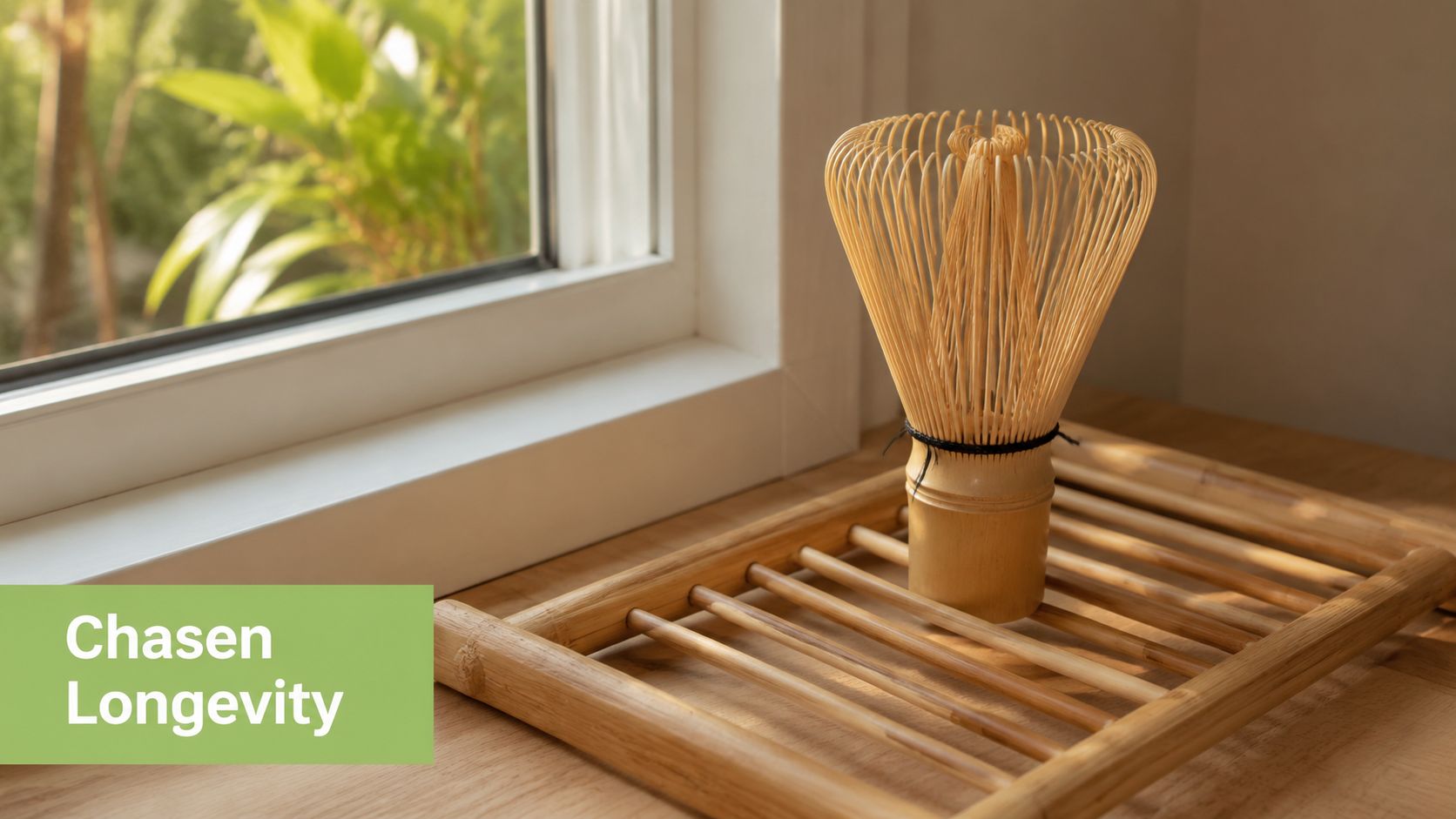
That rings true for a lot of kitchens. If your whisk sits beside a sunny window, near a heater, or in a very dry cupboard, the bamboo can lose flexibility faster than you'd expect.
A care routine worth following
After each use, keep it simple:
Rinse with warm water only
Soap can linger in the bamboo and affect future bowls.Shake off excess water gently
Don't slam it against the sink or squeeze the tines.Let it dry properly
Airflow matters. Damp, cramped storage can distort the shape.Store with moisture awareness
In dry Australian conditions, avoid leaving it in places that pull more moisture from the bamboo.
Why a whisk stand helps
A whisk stand isn't just a neat accessory. It supports the shape of the tines as they dry and helps the whisk keep its open form. That means better airflow, a more consistent profile, and less stress on the bamboo over time.
If you use matcha regularly, a matcha whisk stand is a practical companion rather than a decorative extra.
Signs your whisk needs replacing
A whisk won't last forever. Replace it when:
- Several tines have snapped
- The shape stays collapsed after drying
- Whisking no longer creates good foam
- The bamboo shows obvious cracking
Bamboo performs well when it's used and cared for like a tea tool, not forgotten in a drawer like cutlery.
The goal isn't to keep a chasen forever. It's to help it age well enough to keep giving you smooth, satisfying bowls for as long as possible.
A Guide for Australian Cafés and Hospitality
For cafés, the whisk isn't just about tradition. It's part of product consistency.
When a customer pays for a premium matcha drink, they notice the finish. They might not name the tool, but they'll notice whether the latte looks silky, whether the tea is blended evenly, and whether the texture feels deliberate rather than rushed.
In Sydney and Melbourne cafés, matcha lattes are priced between US$6 and US$8, with pricing pressure linked to a global shortage that became acute in Australia in 2024. That makes preparation quality commercially relevant. If matcha is a premium menu item, the method has to support the price.
What matters in service
A café team should think about:
Durability in daily use
Fast service puts more stress on bamboo than occasional home use.Staff training
A good whisk still needs correct movement and handling.Menu fit
Ceremonial bowls, hot lattes, and iced drinks may call for slightly different workflows.Supplier reliability
Consistency matters when stock conditions are already tight.

For hospitality operators, that usually means buying tools and tea from suppliers who understand Australian service conditions, not just traditional presentation. It also means keeping backup whisks on hand and replacing worn ones before customer experience drops.
If your venue is expanding its non-alcoholic or wellness-focused menu, matcha can be a strong fit. The tool quality behind it needs to match the menu positioning.
Your Matcha Whisk Questions Answered
Can I use a metal kitchen whisk for matcha
You can, but it's a compromise. A metal whisk may mix the liquid, yet it doesn't create the same refined foam or texture as a bamboo chasen. If you care about proper mouthfeel, use the right tool.
Is an electric frother bad for matcha
Not necessarily. It's useful for quick lattes. It just produces a different result from a chasen, especially if you're preparing ceremonial-style matcha in a bowl.
How do I know if my whisk is good quality
Check the bamboo finish, the evenness of the tines, and how the whisk feels after soaking. A quality whisk should open slightly, move lightly, and recover its shape well with proper drying.
Why does my whisk keep breaking
In Australia, dry indoor air is often part of the problem. If the bamboo loses too much moisture, the tines become brittle. Pre-soaking before use and storing thoughtfully can make a real difference.
Is an expensive chasen always better
Not always. Price can reflect craftsmanship, materials, and import costs, but the best whisk for you is the one that suits your matcha habits and is cared for properly.
Do I need a whisk stand
You don't strictly need one, but it helps preserve the shape of the whisk and supports more even drying. If you drink matcha often, it's a smart addition.
Can I use the same whisk for matcha lattes and ceremonial matcha
Yes, many people do. Just rinse it well after use and handle it gently. If you prepare matcha often, you may eventually prefer separate tools for different routines.
If you're building a better matcha routine at home or sourcing for a café, Pep Tea is a useful place to explore premium organic matcha, practical accessories, and Australian-focused guidance. We're based in NSW and focus on authentic, approachable tea education, so you can make cleaner, smoother matcha with confidence.