
Tag: antioxidant tea Australia
Blue Matcha Powder Benefits: What the Evidence Actually Says
Blue matcha powder benefits get talked about as if blue matcha were just another version of green matcha. It isn't. In Australia, the blue drink in cafés is usually butterfly pea flower powder, and that distinction changes how you should read every wellness claim that follows.
That matters because blue matcha's appeal is mostly colour, caffeine-free use, and novelty, while the better-established evidence sits with true matcha and green tea compounds. Australian tea drinkers are seeing more niche, wellness-led drinks because tea is still a major everyday category, with the Australian Bureau of Statistics reporting Australians consumed around 36,000 tonnes of tea in 2023–24. But if you're asking what blue matcha powder benefits are real, the honest answer starts with knowing what's in the cup.
What Blue Matcha Is and Why It Matters
Searching for blue matcha powder benefits often starts with the assumption that it's a type of matcha. The cleaner way to read it is simpler. Blue matcha is usually butterfly pea flower powder, not powdered tea leaves, and it comes from a different plant family altogether. True matcha is ground green tea, which means the ingredients, the compounds, and the likely effects are not the same.
The ingredient behind the blue colour
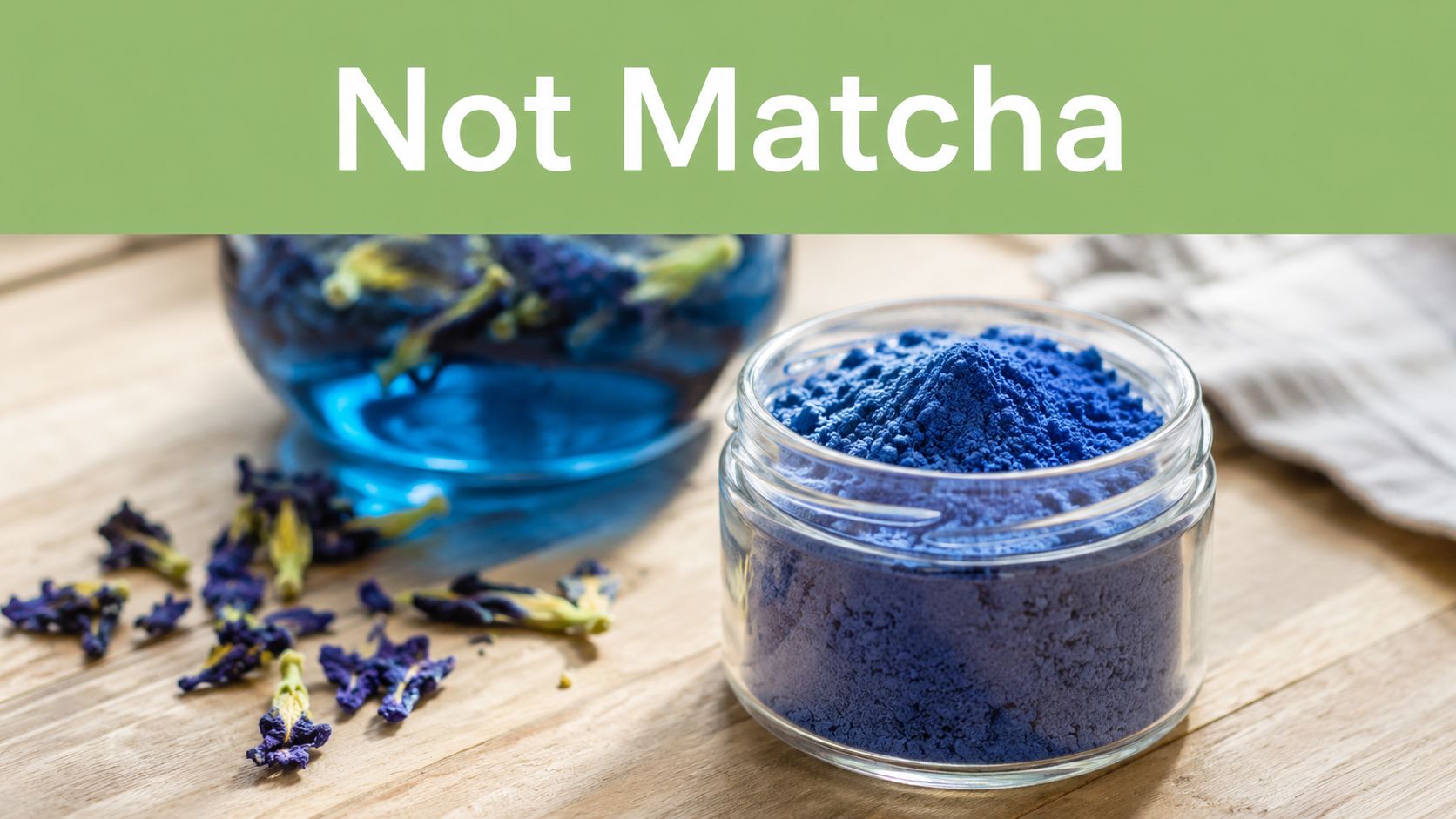
Butterfly pea flower powder is used because it makes drinks a vivid blue, then shifts towards purple when acidic ingredients like lemon or lime are added. That colour change is a big part of its appeal in Australian cafés, especially in iced drinks and lattes. It also explains why blue matcha has travelled through social media much faster than it has through nutrition research.
The plant is best treated as a beverage ingredient, not a proven wellness product. If you want the basic matcha definition first, see what matcha powder is. Independent Australian commentary notes there is “not much research on the benefits of blue matcha” and says butterfly pea is mainly valued for its colour and novelty, even though it does contain antioxidants (Marie Claire Australia). That is a very different starting point from green matcha, where the evidence base is much deeper.
Practical rule: if a blue drink is sold as “matcha”, check the label. If it is butterfly pea flower, you are looking at a colour-forward herbal ingredient, not classic matcha.
Why the distinction changes the benefit claim
Blue matcha is naturally caffeine-free, so it plays a different role in a routine than true matcha. Green matcha contains caffeine and L-theanine, which is why it is used for alertness and focus. A Cleveland Clinic review describes blue matcha as butterfly pea flower and notes that cardiometabolic claims are still largely based on preclinical data rather than proven human outcomes (Cleveland Clinic).
That does not make blue matcha useless. It just means the honest benefits are narrower than the marketing often suggests. It works as a visually distinctive, caffeine-free drink base, with a long list of popular claims and a comparatively short list of human trials.
Blue Matcha vs Green Matcha
A lot of people asking about blue matcha powder benefits are really choosing between a colourful evening drink and a traditional matcha ritual. The two can look similar on a café menu, but they do different jobs in the cup and in the body.
Side by side in plain language
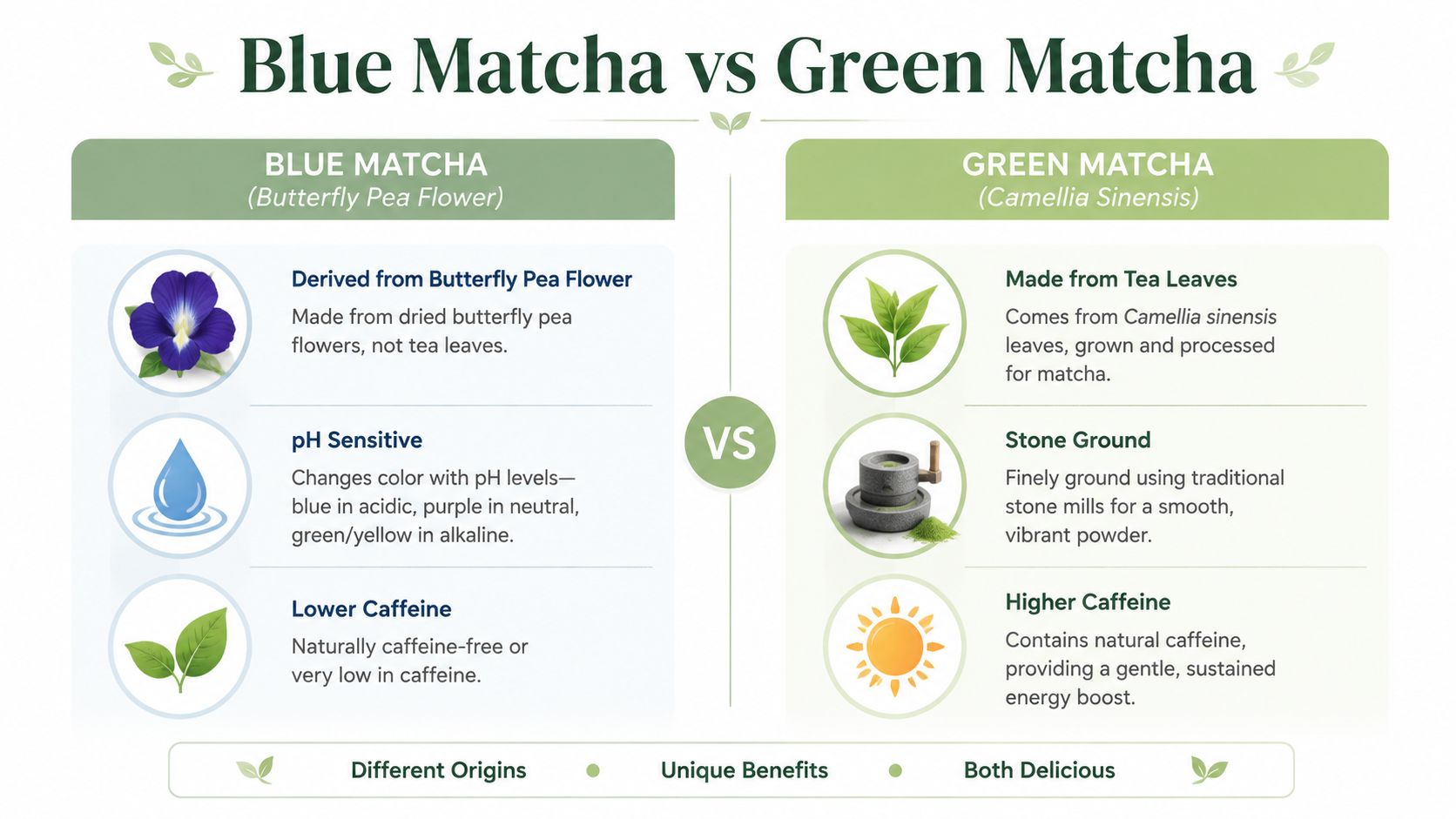
Blue matcha, meaning butterfly pea flower powder, is caffeine-free and built around anthocyanins, the pigments that create its blue colour. Green matcha comes from tea leaves and is built around catechins and L-theanine, which is why it has a much stronger reputation for focus and sustained energy. Everyday Health also makes the basic botanical distinction clear, blue matcha is not true matcha, and the main antioxidant families differ (Everyday Health).
For Australian drinkers, the choice is practical rather than trendy. Blue matcha suits an evening cup or any routine where you want to avoid stimulants. Green matcha fits a morning cup far better if you want alertness and a steadier energy lift.
Blue Matcha vs Green Matcha at a Glance
| Criterion | Blue Matcha (Butterfly Pea) | Green Matcha |
|---|---|---|
| Plant source | Butterfly pea flower | Tea leaves |
| Caffeine | Caffeine-free | Contains caffeine |
| Main antioxidant family | Anthocyanins | Catechins and polyphenols |
| Colour behaviour | Turns purple with acid | Stays green |
| Best use case | Evening drinks, visual lattes, caffeine-free routines | Morning rituals, focus, traditional matcha use |
Blue matcha and green matcha sit in different parts of a tea routine. Blue matcha is the colour-forward, caffeine-free option. Green matcha is the tea preparation people reach for when they want the more established matcha experience, with all the familiar ritual around whisking, flavour, and function.
Australia's broader tea culture helps explain why both appear on café menus. There is room for wellness-led drinks and for traditional tea preparations, but that does not make the products interchangeable. For readers comparing functional beverage options, Pep Tea's guide to the difference between matcha, green tea and green tea helps anchor that distinction in the tea category.
The Benefits and Where the Evidence Stops
Blue matcha powder benefits are real in a few narrow ways, but the evidence stops sooner than most product pages admit. The sensible way to read the claims is by evidence tier, not by hype. That keeps you from treating a colourful herbal powder like a clinically tested functional tea.
What looks promising
Butterfly pea flower's most credible angle is its anthocyanin content, which gives it antioxidant activity. That is why people often connect it with anti-inflammatory or cell-protective benefits. The evidence around blue matcha still sits well below the research base for true matcha, so the usual claims need a careful read rather than a glossy one.
Anthocyanins are the same broad class of plant compounds that make some berries and flowers vividly coloured. In a tea cup, they explain the blue shade, and they also explain why the product is discussed in the same breath as antioxidant support. For a broader tea-side view of that topic, Pep Tea's guide to antioxidant tea benefits helps place butterfly pea in context without confusing it with matcha leaf chemistry.
What stays unproven in humans
Most claims around blue matcha for memory, stress, sleep, skin, hair, digestion, and metabolism are still weakly supported or mostly extrapolated from laboratory or animal work. A consumer health review notes that many benefits are marketed beyond the human evidence base, and that the product is not well studied in clinical settings (Nutrition to Fit). Another mainstream summary also warns against overstating benefits because the human data are limited (Gut Love).
By contrast, true matcha has a much stronger research footing. Harvard Health reports that a meta-analysis in the European Journal of Nutrition found green-tea catechins can help lower blood pressure and LDL cholesterol, while L-theanine is associated with improved concentration and alertness (Harvard Health). A 2023 critical review in Nutrients found randomized clinical trials showing matcha decreases stress and slightly enhances attention and memory, while broader cardiovascular or anticancer claims still need more evidence (Nutrients, 2023).
Bottom line: blue matcha may offer antioxidant activity and a pleasant caffeine-free ritual, but the stronger human evidence belongs to true matcha.
A simple evidence rating
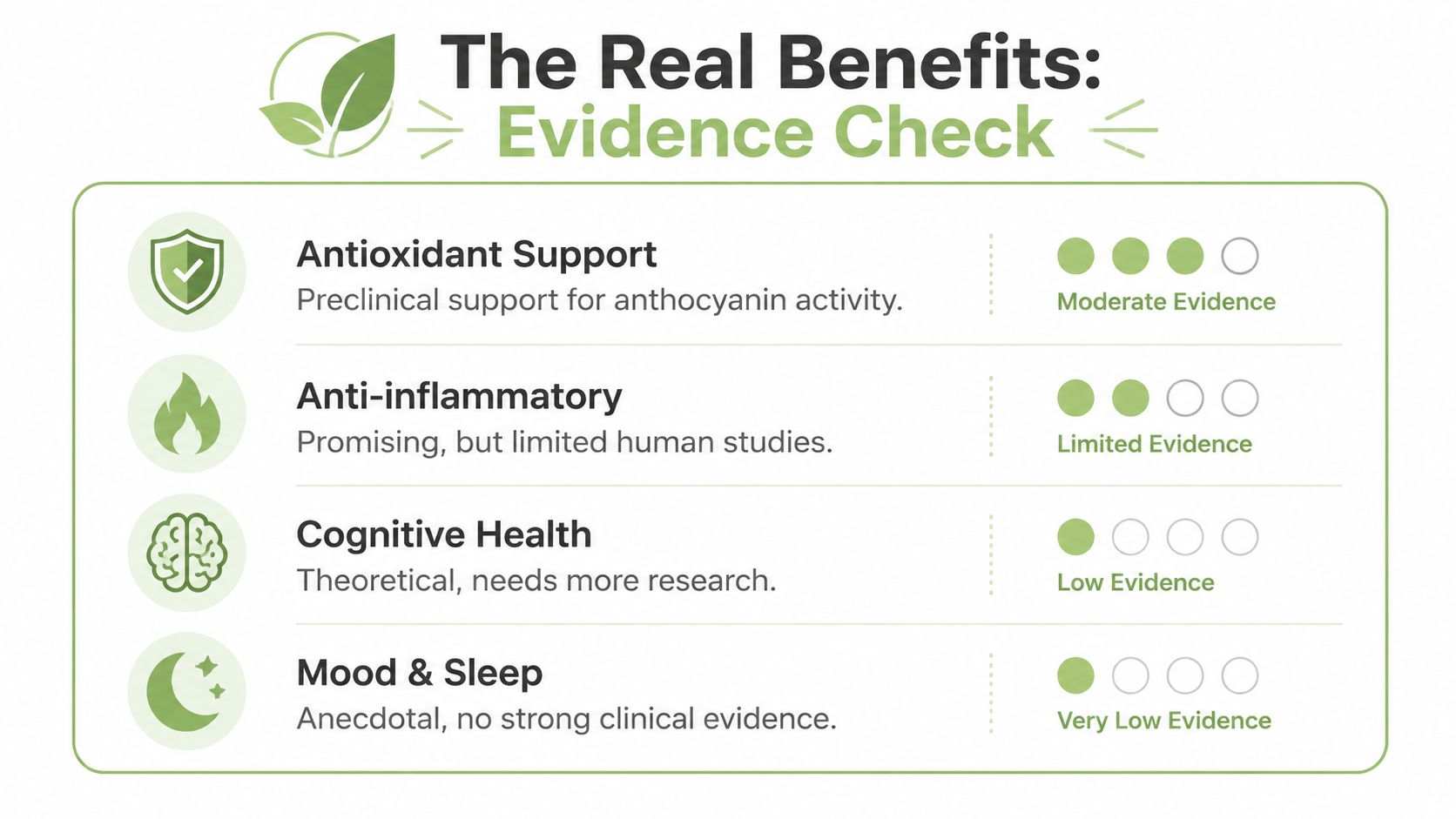
- Antioxidant support. Plausible, mostly based on anthocyanin content and lab-level findings.
- Anti-inflammatory claims. Promising, but human proof is limited.
- Cognitive effects. Mostly theoretical for blue matcha, stronger for green matcha.
- Mood and sleep. Often claimed, but not firmly established clinically for butterfly pea flower.
- Heart and metabolic benefits. Early-stage only for blue matcha, with better human support for green matcha.
A quick rule helps here. If a claim depends on cell studies, animal studies, or general antioxidant theory, treat it as a lead rather than a conclusion. If a claim has human trial support, it can sit higher on the evidence ladder, though it still may not tell you much about everyday use in a home kitchen.
How to Use Blue Matcha at Home
Blue matcha works best when you treat it like a delicate powder, not a hard-working coffee substitute. A gentle starting point is half a teaspoon per cup, then adjust to taste if you want a deeper colour or stronger flavour. Use hot water, but don't let it boil, because very high heat can dull the colour and the plant compounds you're trying to preserve.
A simple method that actually works
Whisk the powder into a small splash of hot water first, then top up with milk or cold water depending on the drink you want. If you add citrus, expect the colour to shift from blue to purple. That's not a fault, it's the anthocyanins reacting to acid.
Practical rule: if you want the brightest blue, keep the drink away from lemon and lime until you're ready for the colour change.
Three easy ways to use it
- Blue matcha latte. Whisk half a teaspoon into hot water, then add warm oat milk or dairy milk. A little honey or vanilla can soften the earthy note.
- Iced butterfly pea lemonade. Mix the powder with cold water first, then add lemon juice at the end for the purple shift. It's a simple café-style summer drink.
- Blue matcha smoothie. Blend butterfly pea powder with banana, mango, coconut water, and ice. The fruit keeps the flavour friendly and the colour stays striking.
If you're making drinks for guests, the colour shift can be part of the experience. In an Australian kitchen, it's an easy way to make a non-alcoholic drink look special without needing syrups or food colouring.
Keep the flavour profile in mind. Butterfly pea flower is usually mild, so it pairs better with milk, fruit, or citrus than with strong bitter ingredients.
For anyone trying blue matcha for the first time, that's the appeal. It's easy to build into a latte, a cold drink, or a mocktail-style serve without much technique.
Sourcing, Quality and Storage Checklist
Blue matcha powder benefits depend partly on what's in the bag. A clean, well-sourced powder gives you butterfly pea flower's colour and plant compounds. A poor-quality one can be dull, gritty, or mixed with fillers that add little beyond bulk.
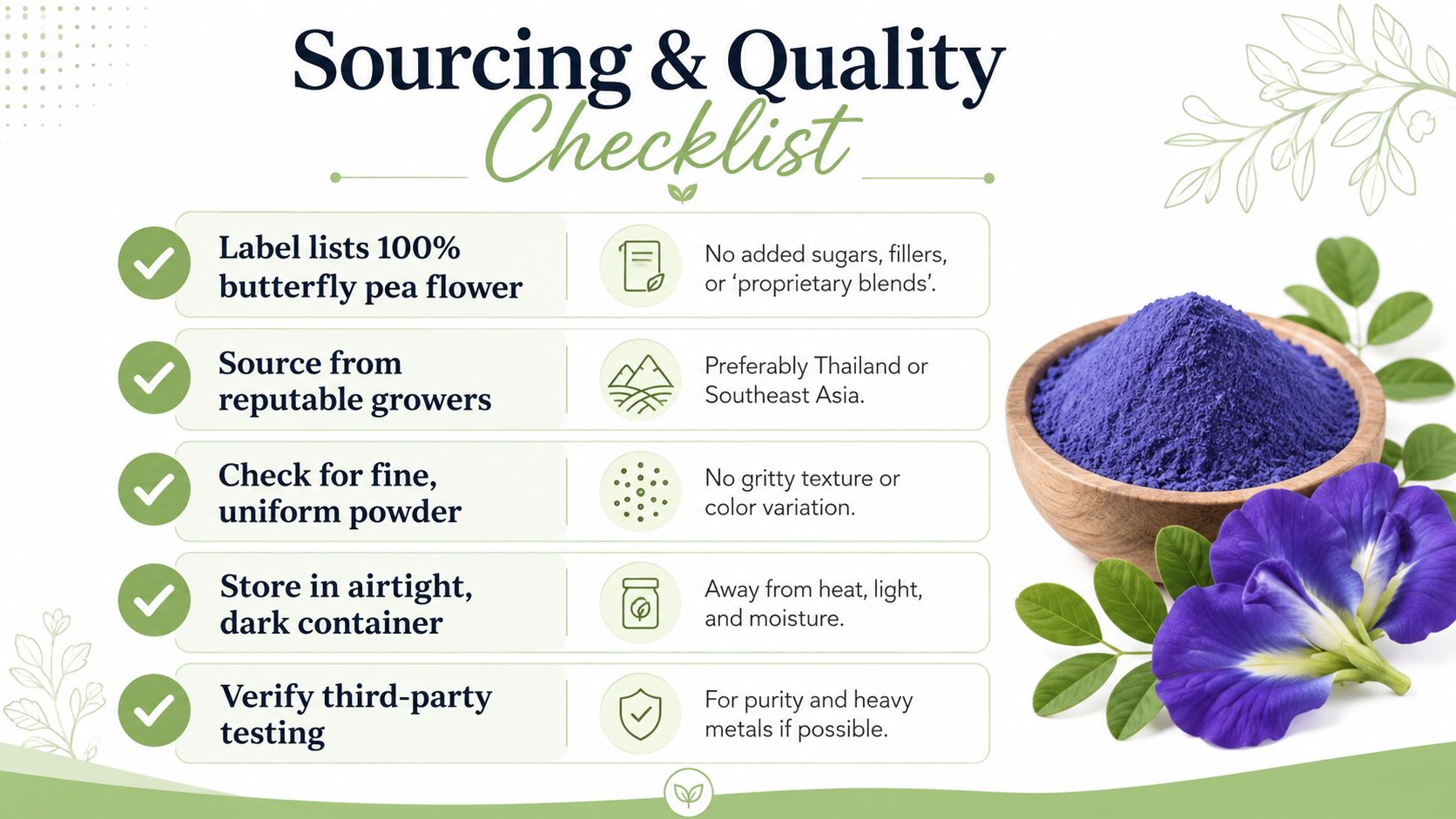
What to look for on the label
The first check is simple. The ingredient list should say 100% butterfly pea flower, or Clitoria ternatea, with no added sugars, fillers, or mystery blends. A fine, uniform powder usually mixes more evenly in drinks than a coarse or speckled one.
Packaging matters too. Look for a container that protects the powder from light and moisture, because both can dull the colour. Organic certification is worth considering where available, but the main priority is clear sourcing and a clean ingredient list.
How to spot a weak product
Cheap products can lean on food colouring, starch, or vague branding instead of actual flower powder. If the colour looks unusually flat, grey-green, or artificially bright, that's a warning sign. The same goes for a gritty mouthfeel after mixing, which often points to poor milling or fillers.
- Check the ingredient panel: it should name butterfly pea flower directly.
- Assess the texture: fine and even is better than dusty clumps or grit.
- Read the packaging: sealed, dark, and moisture-resistant is the goal.
- Look for sourcing details: reputable growers are more transparent about origin.
- Ask about testing: third-party testing for purity is a good sign if it's available.
How to store it once opened
Keep the powder in an airtight container, away from heat, light, and moisture. A pantry cupboard is usually better than a windowsill or a humid shelf above the kettle. If the powder starts to lose colour quickly, storage has probably been too loose.
For cafés and home kitchens alike, this is the practical question. If the powder has lost freshness before it reaches the cup, the benefits people imagine from the drink are already compromised.
Safety, Dosage and Who Should Be Cautious
There isn't an established clinical dose for butterfly pea flower, so it makes sense to stay conservative. A sensible household range is half to one teaspoon per serving, and keeping it to one to two cups per day is a cautious routine for most adults. That's a practical kitchen guide, not a medical prescription.
Who should be careful
Pregnant and breastfeeding people should be cautious because safety data are insufficient. People with iron concerns may also want to think twice about timing, since anthocyanin-rich foods can bind dietary iron. Anyone taking anticoagulant or blood pressure medication should check with a healthcare professional before making blue matcha a daily habit.
Allergic reactions are uncommon, but they can happen. If a drink causes itching, swelling, digestive upset, or any unusual response, stop using it. That's especially important if you're trying a new powder from an unfamiliar brand.
If you're sensitive to stimulants, blue matcha can make an easy evening drink, but keep it clearly separate from caffeinated matcha. Mixing the two without thinking can undo the reason you switched in the first place.
A cautious way to introduce it
Start with a small serve and use it on a day when you're not adding other new supplements or drinks. That makes it easier to spot whether the powder suits you. If you use it in a latte, remember that the milk or acidity in the recipe can change how it behaves, even if the powder itself is fine.
Blue matcha isn't a problem drink, but it's also not a product to treat casually just because it looks gentle. The evidence is still limited, so the safest approach is modest use, clean sourcing, and realistic expectations.
Smart Ways to Fit Blue Matcha Into Your Routine
Blue matcha makes most sense as a caffeine-free evening ritual, a visual café-style drink, or a way to add variety to a tea routine. It's not the drink I'd reach for if the goal is proven focus or alertness. For that, true matcha has the stronger evidence and the clearer role.
Use it for the right job
If you want a night-time latte that won't interfere with sleep, blue matcha fits well. If you want something for a mocktail, a brunch menu, or a summer iced drink, the colour shift is part of the value. If you want evidence-backed support for calm focus, a high-quality organic ceremonial matcha is the more defensible choice.
That's why many Australian households do better with both rather than one pretending to be the other. Blue matcha can be the playful, caffeine-free option. Green matcha can stay in the role of the morning staple.
A simple decision check
- Choose blue matcha if you want colour, novelty, and no caffeine.
- Choose green matcha if you want the better-researched tea with caffeine and L-theanine.
- Choose both if you want a morning and evening routine that does different jobs.
Pep Tea's range includes organic matcha and Australian-brewed sugar-free kombucha, which suits readers who want the evidence-backed tea side of the routine alongside other low-sugar drinks. Blue matcha still has a place, but it works best as a complement, not a substitute.
If you've been wondering whether blue matcha powder benefits are worth chasing, the honest answer is yes, but only in the right frame. It's a colourful, caffeine-free ingredient with some plausible antioxidant value, not a clinical equivalent of matcha. Use it for the ritual you enjoy, and keep your expectations tied to the evidence, not the café trend.
If you want tea that's backed by real matcha research, explore Pep Tea's organic matcha and sugar-free kombucha ranges at Pep Tea. We focus on clean, carefully sourced drinks that fit everyday routines, whether you're after calm focus in the morning or a lower-sugar option later in the day.