
7 Healthy Caffeine Alternatives for Energy and Calm
Replacing coffee isn't one decision, because people want different things from their daily drink. You might be looking for calm focus, a coffee-like morning ritual, a pre-exercise lift, a sugar-free refreshment, or a caffeine-free option for the evening. The best healthy caffeine alternatives depend on the feeling and routine you want to support.
This guide compares seven practical choices, from organic matcha and kombucha to roasted dandelion blends, brewed cacao and mushroom cacao. “Stimulant intensity” is used as a practical guide, not a medical measurement. Individual tolerance varies, and ingredients, serving size, timing and label instructions all matter. If you're managing pregnancy, medication, a medical condition or strong caffeine sensitivity, check with a qualified health professional.
Australia already has a strong tea culture. Roy Morgan data published through the Australian National University found that 9.8 million Australians aged 14 and over, about half the population, drank tea in an average week during the 12 months to June 2016. The comparison below focuses on caffeine level, flavour, preparation effort, best use and practical cautions. For readers concerned about caffeine and hormonal symptoms, this caffeine and hot flashes guide offers useful additional context.
1. Pep Tea
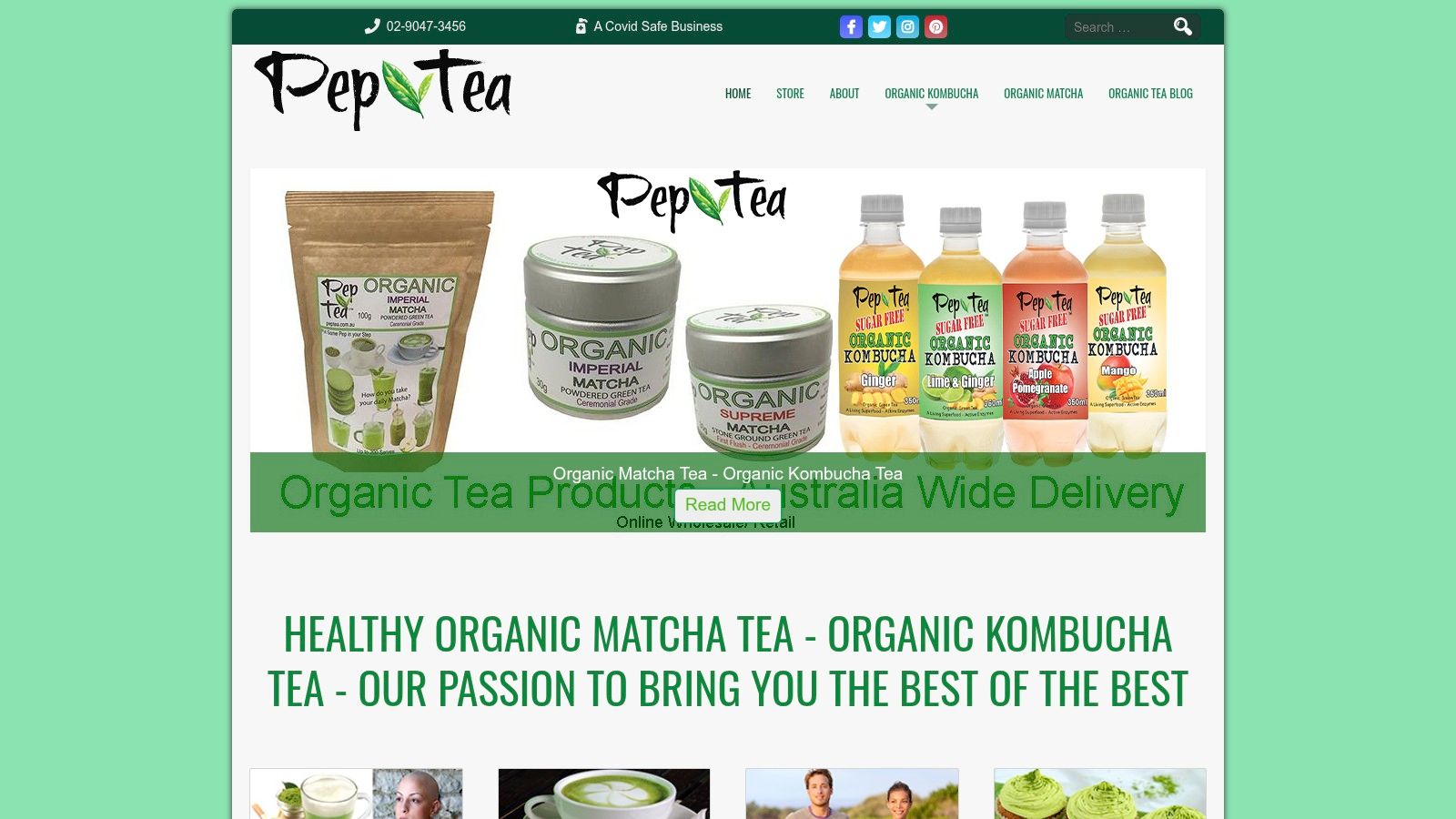
Pep Tea is the most versatile choice here because it covers two different routines, smooth energy from organic Japanese matcha and refreshing, fermented hydration from Australian-brewed kombucha. That makes it useful for a home morning ritual, an iced afternoon drink, or a café menu that needs premium non-alcoholic options without relying on sugary soft drinks.
Pep Tea's matcha is stone-ground from organically grown Japanese tea. Because you consume the finely ground leaf rather than only an infusion, matcha has a full, grassy flavour and contains naturally occurring L-theanine and catechins, including EGCg. Those compounds don't make matcha risk-free or medically proven to improve every aspect of wellness, but they help explain why many people experience it as a steadier, calmer lift than a sharper coffee hit. Matcha generally sits in the moderate stimulant category, so it isn't the right choice for a caffeine-free evening.
Practical rule: Start with a modest amount, whisk it thoroughly, and assess your response before making matcha a stronger daily drink.
For a simple cup, sift matcha into a bowl, add a small amount of warm water, whisk until smooth, then add more water or your preferred milk. Ceremonial-grade matcha suits drinking on its own, while culinary-grade matcha works well in iced lattes, smoothies, baking and desserts. Pep Tea's educational resources also cover storage, recipes and practical ways to use matcha beyond a traditional bowl.
Kombucha for a different kind of refreshment
Pep Tea's kombucha is raw, living and brewed in the Hunter Valley, NSW, in a purpose-built HACCP-accredited facility. The sugar-free range uses organic green tea, fermentation and live cultures, with flavours including Ginger, Lime & Ginger and Mango. It's naturally sharp, lightly sparkling and ready to drink chilled, or to use as a mixer for a non-alcoholic café serve.
Kombucha can contain live bacteria and yeast, but CHOICE's discussion of kombucha evidence notes that human clinical evidence for broad claimed benefits remains limited. “Probiotic-rich” should therefore describe the presence of live cultures, not promise a guaranteed gut-health outcome. Pep Tea's guide to whether kombucha contains caffeine is useful when choosing a product for your own tolerance, and labels remain the final check.
Pros
- Organic sourcing: Pep Tea focuses on certified-organic matcha and kombucha.
- Two routines in one range: Matcha supports a focused daytime ritual, while kombucha offers a cold fermented refreshment.
- Hospitality support: Cafés and retailers can use the products in lattes, mocktails, recipes and ready-to-serve menus.
- Education: Guides cover matcha storage, fermentation basics, SCOBY care and recipe ideas.
Cons
- Pricing requires an enquiry: Public retail and wholesale pricing isn't consistently displayed.
- Flavour needs a little adjustment: Matcha's vegetal taste and kombucha's acidity may be unfamiliar at first.
- Caffeine varies by product: Check the specific label, especially if you're sensitive.
2. Teeccino
Teeccino is for the person who misses the coffee ritual, not necessarily the caffeine. Its roasted herbal blends combine ingredients such as chicory, carob, barley, dates, figs and ramón seeds to create a dark, nutty drink that can be brewed in a drip machine, French press or refillable pod. It's designed to be caffeine-free and coffee-like, making it a natural fit for a morning mug or an afternoon replacement.
The brand offers a broad range of dark and medium roast flavours in grounds and tea-bag formats. Some blends have organic or gluten-free positioning, but those features vary by product, so the individual packet matters more than the brand name. The stimulant intensity is none from caffeine, although the warm roasted flavour and familiar preparation can still feel energising as a routine.
Why it suits coffee drinkers
Teeccino gives you control over texture and strength. Brew it like plunger coffee for a fuller cup, use a drip method for a cleaner result, or choose tea bags when you want less equipment. A splash of milk can soften the roasted bitterness, while a latte preparation makes the drink feel closer to a café order.
Chicory contains inulin, a type of fibre that some people tolerate well and others find difficult. People managing digestive sensitivities, particularly those avoiding FODMAPs, should check the ingredients and start cautiously. Many blends also contain barley, which means they aren't suitable for people avoiding gluten unless the specific product is clearly labelled otherwise.
For Australians, availability is more practical through third-party retailers than direct local distribution. Before ordering, check shipping, blend ingredients and whether the format suits your equipment. The product can be a useful addition to a broader natural energy drinks Australia guide, particularly for readers who want a coffee-style experience without caffeine.
Best use: A slow morning ritual, office plunger or evening decaf-style drink when you still want roasted flavour.
Potential drawback: It won't taste exactly like espresso, and chicory or gluten-containing ingredients may rule out some blends.

3. Kintra Foods Roasted Dandelion Blend
Kintra Foods' roasted dandelion and chicory blend is one of the easiest choices for Australians who want a caffeine-free coffee ritual with local availability. It comes in filter bags, jars and larger pouches, with a fine grind designed for café-style preparation. You can brew it in a percolator, plunger or coffee machine, depending on the format you buy.
The drink has a toasted, earthy profile rather than the sharp bitterness of coffee. That distinction matters. It may satisfy the habit of grinding, brewing and serving a warm dark drink, but people seeking a true espresso flavour may need time to adjust. The stimulant intensity is caffeine-free, so it works better for evening routines than matcha or brewed cacao.
A practical café option
The fine grind is particularly useful for cafés that want to offer a dandelion latte without buying another complicated system. Steam milk separately, combine it with the brewed blend and adjust the ratio until the roasted flavour sits comfortably beneath the milk. At home, filter bags make the simplest entry point, while the larger formats suit frequent use or hospitality service.
Kintra describes the blend as preservative-free, lactose-free and gluten-free. It contains chicory, however, so the absence of gluten doesn't automatically make it suitable for people avoiding inulin or FODMAP ingredients. Always read the current pack, especially if you're serving customers with allergies or dietary requirements.
Best use: A caffeine-free morning latte, workplace drink or café menu addition.
Intensity: None from caffeine. The sensory effect comes from warmth, aroma and a familiar coffee-style ritual.
Main trade-off: The roasted dandelion and chicory profile is distinct, and it won't reproduce every quality of coffee. Its Australian ownership and production, plus broad supermarket and health-store availability, make it a convenient choice for local shoppers.
4. Bonvit Roasted Dandelion Blend
Bonvit's roasted dandelion and chicory blend takes a similar idea and makes it practical for shoppers who want affordability, easy sourcing and multiple preparation formats. It's available in medium and fine grinds, with pack sizes ranging from smaller household options to larger formats suitable for regular service. The fine grind can be used for espresso-style preparation or a milk-based latte.
The blend is marketed as caffeine-free, gluten-free and lactose-free, and it carries Vegan Australia Certification. Those labels help narrow the search, but they don't remove the need to check the ingredients. Chicory and dandelion create a recognisable roasted flavour and may not suit people who want a dark, smoky coffee substitute with no earthy notes.
Matching the grind to the routine
Choose a filter or medium-style format when you want a straightforward brewed cup. A fine grind makes more sense for a café or home barista who wants to build a latte around the drink. Add steamed dairy or plant milk, then taste before adding sweetener. The natural roasted flavour can work well with cinnamon or cacao, but you don't need sugar to make it function as a daily beverage.
Bonvit is a zero-caffeine option, so it belongs at the gentle end of the stimulant scale. It may replace the sensory cues of coffee, but it won't recreate caffeine's physiological stimulation. That difference is helpful when your priority is reducing caffeine rather than finding an identical energy effect.
Pros
- Easy to find: It's widely stocked online and in Australian stores.
- Flexible formats: Medium and fine grinds support different preparation styles.
- Café friendly: Larger packs and fine grind options suit hospitality menus.
- Dietary labels: Vegan Australia Certification, gluten-free and lactose-free positioning help with initial screening.
Cons
- Distinct flavour: Dandelion and chicory taste more earthy than coffee.
- Stock varies: Retailers may carry only selected grinds or pack sizes.
- Digestive caution: Chicory's inulin content may not suit everyone.
5. Dandy Blend
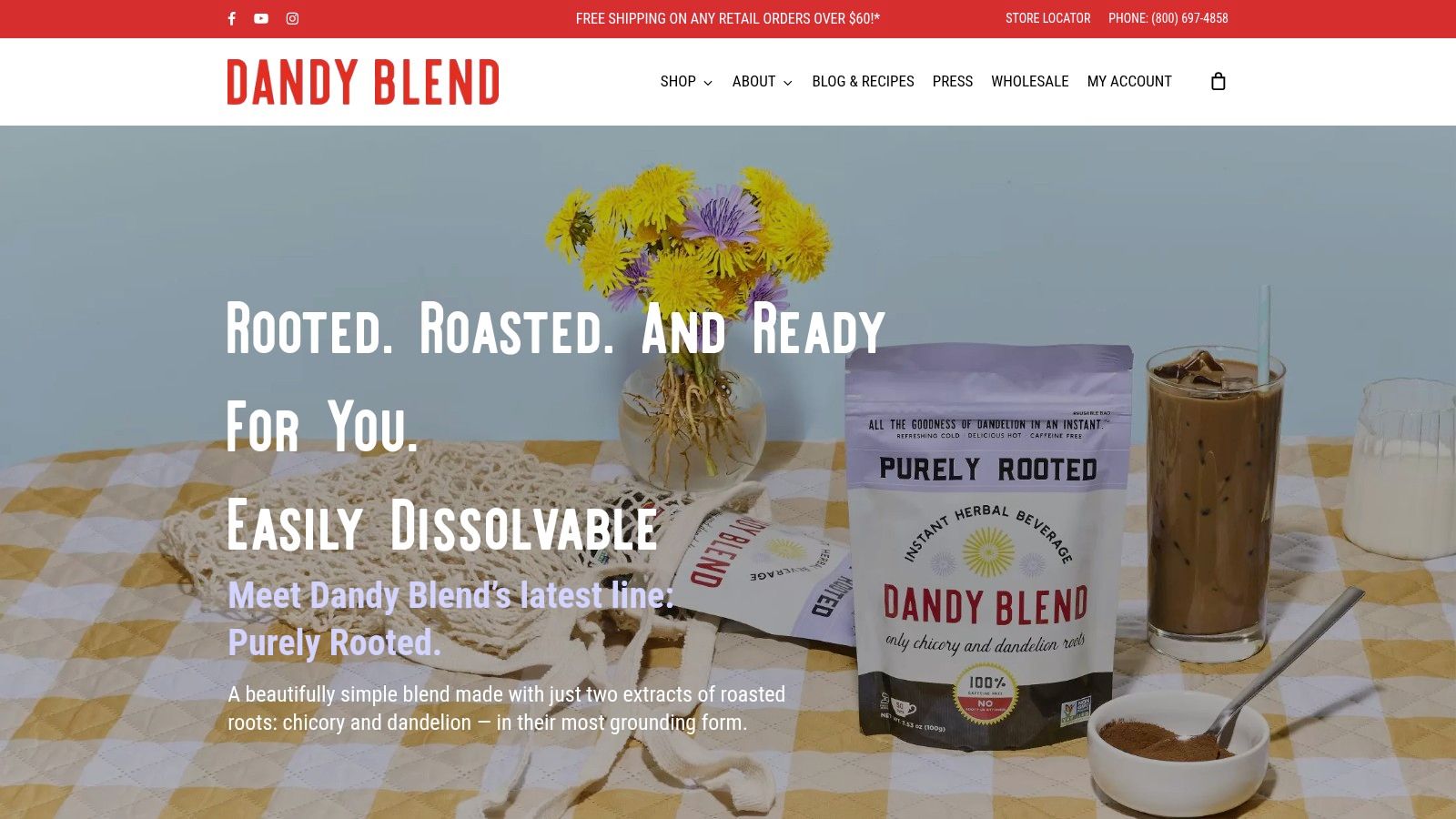
Dandy Blend is built around one advantage, speed. It's an instant roasted herbal powder that dissolves in hot water, so you don't need a grinder, plunger, coffee machine or steeping time. That makes it particularly suitable for travel, an office drawer, a quick morning latte or a café that needs a fast caffeine-free base.
Its roasted ingredients include dandelion, chicory, beets, rye and barley. The drink is designed to mimic coffee aroma and taste, with several bag sizes, single-serve sachets and an organic line available. The stimulant intensity is caffeine-free, but the preparation can still preserve the psychological comfort of a coffee break.
The convenience trade-off
Add the powder to hot water, stir, then add milk if you want a latte. You can adjust strength without changing brewing equipment, which is useful when different people want different cup sizes. Cold preparation is also possible, although a hot drink usually integrates the powder more smoothly.
The most important caution is gluten. Because the formula contains rye and barley, it isn't suitable for people with coeliac disease or strict gluten-free requirements. It also contains chicory, so anyone sensitive to inulin should check the label and consider a cautious trial. Australian availability can be inconsistent, and international online ordering may involve shipping delays or retailer differences.
Best use: Travel, office routines and rapid café service.
Best for: People who want coffee-like flavour but don't want to brew.
Not ideal for: Anyone who needs a gluten-free formula, dislikes roasted herbal notes or wants a locally stocked product with simple supermarket access.
The instant format also makes it easy to experiment. Try a small amount in a milk-based drink first, then adjust the concentration rather than sweetening heavily to cover unfamiliar flavour.
6. Crio Bru Brewed Cacao
Crio Bru is for people who want a gentle lift and a brewed ritual, but don't want the full intensity of coffee. It uses roasted, ground cacao brewed like coffee in a French press, drip machine or pour-over setup. The result is chocolate-forward, aromatic and lightly roasty, with a flavour closer to unsweetened cacao than a conventional mocha.
The product information lists approximately 10 mg of caffeine per 8-ounce cup, a figure that should be checked against the current product label and cited product details at Crio Bru's website. That is a low level compared with many caffeinated drinks, but it means Crio Bru is not caffeine-free. It also contains theobromine, another naturally occurring cacao compound, which contributes to its distinctive, gentler stimulation.
Brewing and serving ideas
Use it much like coffee grounds. A French press creates a fuller, heavier cup, while pour-over preparation produces a cleaner chocolate profile. You can drink it black, add milk, or use it as a base for a cacao latte. Some single-origin and flavoured roasts make it easier to choose between fruitier, darker or more dessert-like notes.
The preparation effort is moderate because you still need brewing equipment and time. In return, you get a drink that feels more substantial than herbal tea and less coffee-like than a dandelion blend. It may suit a late-morning ritual better than an evening one, particularly for people who respond strongly to even small amounts of caffeine.
Read the label before treating “low caffeine” as “no caffeine.”
Availability in Australia can be limited, and international retailers may be the most practical source. Consider delivery conditions, product freshness and serving guidance before ordering. If you want a chocolate drink with no caffeine at all, choose a clearly labelled caffeine-free cacao or herbal formula instead.
7. Teelixir Mushroom Cacao Latte
Teelixir Mushroom Cacao Latte is designed for an evening wind-down, not a coffee imitation. The Australian blend combines organic cacao and rose with a 10:1 reishi fruiting-body extract. It's caffeine-free, has no added sugar according to the product description, and can be prepared hot, iced or as a café latte base.
The flavour is chocolate-led, with an earthy mushroom note that some people enjoy and others find challenging. That makes it a better fit for drinkers who like cacao, botanical flavours or functional beverage menus than for someone trying to recreate a dark roast. The stimulant intensity is zero from caffeine, so the experience comes from warmth, flavour and the ritual of making something deliberately calming.
A flexible home and hospitality formula
For a hot latte, whisk the powder into a small amount of warm water before adding steamed milk. An iced version works with chilled milk and plenty of ice, while cafés can use the blend as a distinctive non-coffee menu option. Teelixir offers formats ranging from sample sizes to a 1 kg pouch, which supports both home experimentation and hospitality service.
The product has third-party testing information and transparent ingredient details, but “mushroom” should not be treated as a guarantee of a health outcome. Reishi may interact with some medicines, and people who are pregnant, managing a condition or taking regular medication should ask a health professional before using functional mushroom products. Product labels can change, so check the current directions and allergen information.
Pros
- Caffeine-free: Suitable for an evening beverage routine.
- Australian brand: Local production and bulk options suit households and cafés.
- Versatile preparation: Serve it hot, iced or as a latte.
- No added sugar: Helpful for people reducing sweetened drinks, subject to the current label.
Cons
- Earthy flavour: Mushroom notes won't appeal to every palate.
- Not coffee-like: Cacao provides comfort, but not a roasted coffee replica.
- Ingredient considerations: Reishi and other functional ingredients deserve careful label reading.
This kind of drink fits naturally alongside broader natural focus enhancers, although a caffeine-free evening beverage should be chosen for the routine it supports rather than promised effects.
Comparison of 7 Healthy Caffeine Alternatives
| Item | 🔄 Implementation complexity | ⚡ Resources & availability | ⭐📊 Expected outcomes (quality & impact) | 💡 Ideal use cases / tips |
|---|---|---|---|---|
| Pep Tea | Moderate, small‑batch, HACCP kombucha & certified organic matcha production | Good B2B distribution; certified organic sourcing; wholesale pricing via enquiry | High, antioxidant-rich matcha (calm sustained energy) and probiotic, sugar‑free kombucha ⭐📊 | Cafés, hospitality menus, specialty grocers, health‑focused consumers; use as mixer or menu feature |
| Teeccino | Low, roasted herbal blends produced at scale; simple brewing | Wide product range; often available via third‑party retailers (limited direct AU shipping) ⚡ | Effective, convincing caffeine‑free coffee substitute with broad flavor options ⭐📊 | Home brews, drip/French press, variety seekers; choose blends for desired roast profile |
| Kintra Foods Roasted Dandelion Blend | Low, mass production with café grind options | High availability across Australian supermarkets and health stores | Good, caffeine‑free, latte‑ready option; coffee‑like but distinct flavor ⭐📊 | Supermarkets and cafés wanting easy-to-stock caffeine‑free lattes; use fine grind for espresso machines |
| Bonvit Roasted Dandelion Blend | Low, standard retail production, multiple pack sizes | Very good, widely stocked nationwide and affordably priced ⚡ | Reliable, affordable caffeine‑free substitute; flavour differs from dark coffee ⭐📊 | Cost‑conscious cafés and shoppers; bulk packs for high‑volume use |
| Dandy Blend | Low prep complexity, instant powder (no brewing required) | Variable, not always stocked locally; often bought via international e‑commerce | Fast & convenient, instant coffee‑like cup, caffeine‑free; contains gluten grains ⚡📊 | Travel, office or quick café service; use sachets for single‑serve convenience |
| Crio Bru Brewed Cacao | Low, brew like coffee (press/drip); requires cacao sourcing | Limited AU availability; usually via international retailers | Gentle lift, low caffeine, high theobromine; chocolate‑forward, low acidity ⭐📊 | Chocolate lovers or those who want a gentle stimulant; brew like coffee for latte bases |
| Teelixir Mushroom Cacao Latte | Moderate, formulated with concentrated mushroom extracts and testing | Good AU availability; certified organic, bulk sizes and third‑party tested | Calming, caffeine‑free, mushroom + cacao blend for relaxation and flavour ⭐📊 | Evening drinks, cafés offering functional hot‑chocolate/latte options; dose transparently for servings |
Choose Your Caffeine Alternative by Routine
The right choice becomes clearer when you start with the moment you're trying to improve. Matcha is the strongest fit for a focused daytime drink, especially when you want a tea ritual with a smoother feel. Kombucha works when you want cold refreshment, acidity and gentle carbonation rather than a hot mug. Roasted dandelion blends and Teeccino are more useful when the coffee ritual matters most, while brewed cacao sits between caffeine-free comfort and a low-stimulant lift.
For Australian shoppers, local access also changes the decision. Kintra Foods and Bonvit offer practical roasted alternatives that are easier to find in local retail channels. Pep Tea combines Japanese organic matcha with Australian-brewed kombucha from the Hunter Valley, giving cafés and households two different beverage formats from one specialist supplier. Teelixir adds an Australian caffeine-free cacao option for evening menus, while Teeccino, Dandy Blend and Crio Bru may require more careful retailer and shipping checks.
A simple decision guide
Treat the table as a starting point, not a promise about how your body will respond. Caffeine sensitivity varies, and even a low-caffeine product can feel too stimulating for some people. If you're reducing coffee, tapering gradually may feel more comfortable than changing everything overnight, particularly if you regularly experience headaches or fatigue when you miss your usual drink.
Ingredient checks matter just as much. Chicory-based products contain inulin, which may not suit people avoiding FODMAPs or managing digestive sensitivity. Teeccino, Dandy Blend and some similar roasted formulas contain barley or rye, so they aren't suitable for coeliacs or strict gluten-free diets unless the individual product clearly states otherwise. Kombucha can contain live cultures, but limited human clinical evidence means you should avoid turning “probiotic-rich” into a guaranteed gut-health claim. With matcha and kombucha, check the product label for caffeine information and serving guidance.
Choose one alternative that matches your routine, not five products that create another decision every morning.
Try one option for a week and keep the preparation simple. Use matcha at the time you'd normally reach for coffee, pour kombucha over ice when you want a cold afternoon drink, or prepare a roasted blend in the same mug and milk style you already enjoy. If the flavour feels unfamiliar, adjust temperature, dilution and milk before adding sugar. For an evening drink, choose a clearly caffeine-free product and give yourself enough time to notice how it fits your sleep routine.
Australia's beverage market supports more than one definition of a healthy caffeine alternative. Roy Morgan's Australian tea data shows that tea is already well established, while market research from Grand View Research describes strong projected growth for Australian kombucha through 2033, with the figures presented as estimates rather than guarantees. Grand View Research's Australian matcha outlook also describes an import-dependent category with growing matcha consumption and ready-to-drink interest. These trends give cafés, retailers and households more room to choose drinks by experience, sugar level, caffeine exposure and preparation style.
For a focused start, explore Pep Tea's organic matcha and try it as a whisked bowl, iced latte or recipe ingredient. For a cold, sugar-free option, compare the kombucha flavours and use them in a simple mocktail with citrus, herbs and ice. The best swap is the one you'll enjoy preparing often, can source reliably and can adjust safely to your own tolerance.
Pep Tea offers premium organic Japanese matcha for calm, focused routines and raw, sugar-free organic kombucha brewed in the Hunter Valley for refreshing everyday drinks and café menus. Visit Pep Tea to explore the range, find practical recipes and enquire about Australian wholesale supply.