
Shade-Grown Green Tea: Flavour, Science and Matcha
If shade-grown green tea tastes smoother and looks greener, does that automatically make it healthier? It's an easy leap to make, especially when a matcha label mentions antioxidants, L-theanine and premium growing methods together.
Shading is a farming decision you can taste, but it isn't a proven health advantage. Understanding that distinction makes it easier to appreciate a good tea, choose matcha for your favourite drink and recognise when a health claim goes beyond the evidence.
What Shade-Grown Green Tea Is and Why Growers Cover It
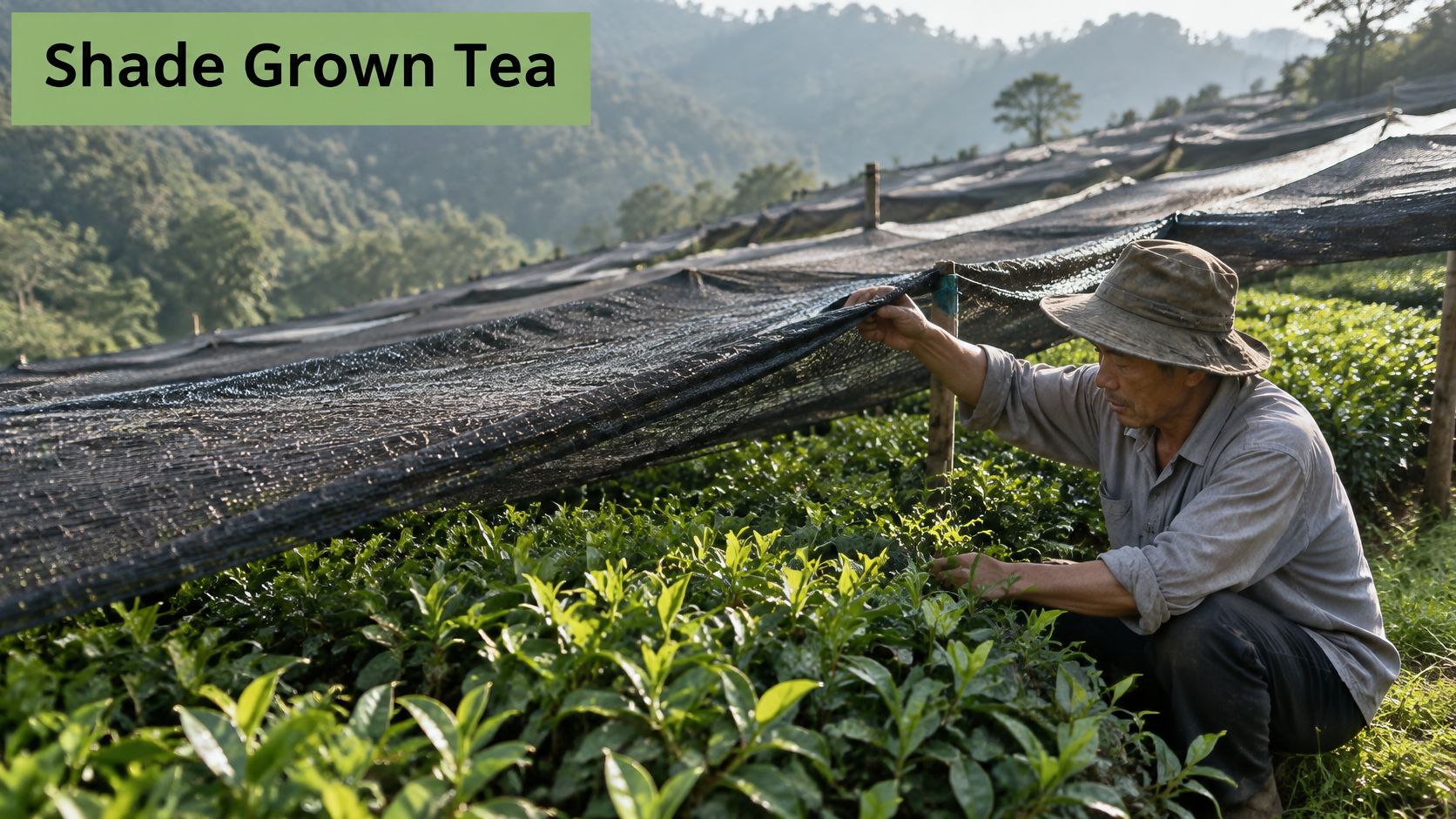
A tea bush sits beneath dark shade cloth, its tender shoots sheltered from direct sunshine. The grower adjusts the cover while the leaves are still growing, changing their light conditions before they're picked.
That's shade-grown green tea: tea grown under cover for part of its growing period, usually during the final few weeks before harvest. Rather than treating the finished tea, growers change the conditions in which the leaf develops.
The covering is a practical part of cultivation, as this plantation scene shows.
Why less sunshine changes the leaf
With less light available, the plant tends to produce more chlorophyll, the green pigment it uses to capture light. Matcha plantations are shaded from the sun for the last few weeks of growth to increase chlorophyll content.
The leaf's amino-acid balance also shifts. For the drinker, that can mean a tea with more savoury depth, a sweeter impression and less obvious bitterness than a comparable sun-grown tea.
The practice is best known through Japanese teas such as gyokuro and matcha. However, those names don't describe exactly the same thing: shading tells you how the plant grew, while matcha also describes how the harvested leaf becomes a powder.
Growing method isn't processing method
Sun-grown and shade-grown leaves can both become green tea. Growers make the shading decision in the field; producers then make separate decisions about picking, steaming, drying and finishing.
That distinction helps when comparing products. A green tea bag isn't matcha before grinding, and a shaded leaf doesn't automatically become matcha. Our guide to the difference between matcha green tea and green tea explains those product differences.
The main changes to keep in mind are:
- Colour: Shaded leaves commonly develop a deeper green.
- Amino acids: Their balance can favour sweetness and savoury flavour.
- Caffeine and theanine: Their relationship can shift, without making the tea caffeine-free.
How Much Light Is Removed and What the NSW Research Found
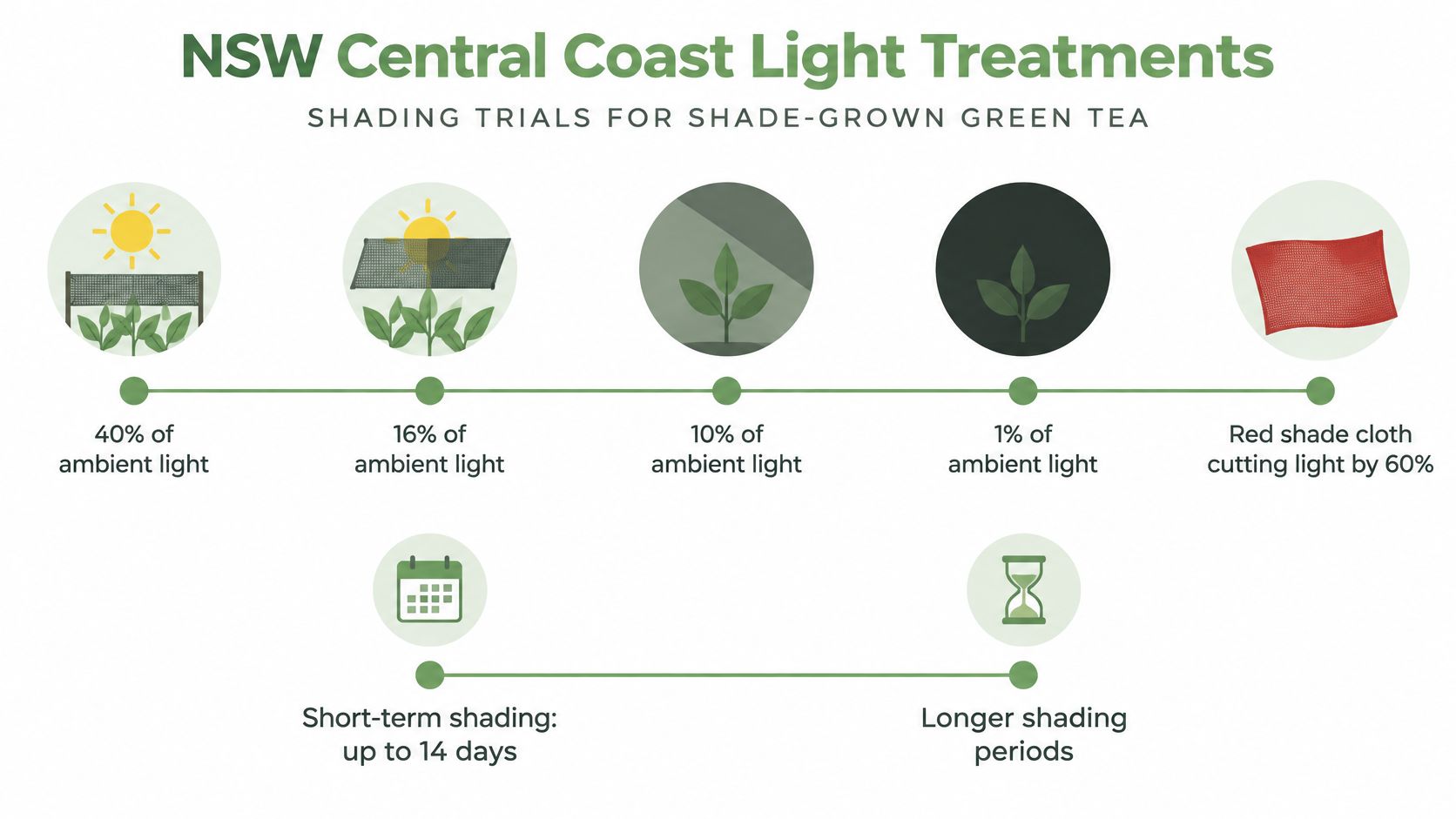
How dark does the shade need to be to change the result? An Australian gyokuro-style tea study compared several light levels, from 40% down to 1% of ambient light, and also tested red shade cloth. The strongest quality and commercial-value scores came from tea grown at 1% of ambient light for up to two weeks before harvest, according to the Australian Gyokuro-style tea study.
| Treatment | Light reaching plants | Duration | Reported result |
|---|---|---|---|
| 40% of ambient light | 40%, a 60% reduction | Up to 14 days | No separate result reported for this treatment |
| 16% of ambient light | 16%, an 84% reduction | Up to 14 days | No separate result reported for this treatment |
| 10% of ambient light | 10%, a 90% reduction | Up to 14 days | No separate result reported for this treatment |
| 1% of ambient light | 1%, about a 99% reduction | Up to 14 days before harvest | Highest quality and commercial-value scores |
| Red shade cloth | 40%, a 60% reduction | Up to 14 days | No separate result reported for this treatment |
Ambient light means the light available around the plants without experimental shading. The percentage reaching the leaves and the percentage blocked describe opposite sides of the same measurement. For example, 1% reaching the plants means very deep shade.
What the strongest result means
Researchers linked the strongest result particularly to changes in theanine and caffeine, including a higher theanine-to-caffeine ratio associated with greater umami and potentially less bitterness. That is a quality finding from a specific trial, not a universal recipe for matcha. Cultivar, growing conditions and harvest timing still matter.
The Australian growing conditions also differ from Japan's. Central Coast sites receive more annual sunshine than traditional Japanese tea-growing regions, so growers may need more intensive shading to produce Gyokuro-like characteristics.
Reading a shading claim: Check whether the percentage means light blocked or light reaching the plants. A low percentage reaching the leaves indicates deep shade.
The Australian growing context
The NSW Central Coast green-tea thesis describes an approximately 0.8-hectare pilot plantation established at Somersby Field Station near Gosford in 1998. It included Japanese cultivars such as Yabukita and Sayamakaori. The project received support from the NSW Department of Primary Industries and Kunitaro Co. Ltd. Longer experiments included 7 to 11 weeks at 10% ambient light, with changes reported in stem theanine and caffeine.
Stem measurements describe the plant material examined, not necessarily a finished retail powder or prepared drink. The research provides an Australian example of experiments with shaded tea, while local research alone does not establish where a particular matcha product was grown.
What Shading Does to Flavour, Colour and Compounds
How shading moves each compound and the cup
| Compound | Direction under shading | Likely effect on the cup |
|---|---|---|
| Chlorophyll | Increases | Deeper green colour, often accompanying fresh, grassy characteristics |
| L-theanine | Often increases | Smoother, savoury umami and a gentler sensory character |
| Caffeine | Can be lower relative to theanine, not necessarily lower in absolute amount | Less bitterness relative to umami |
| Catechins | No single consistent direction across studies and conditions | Astringency and bitterness |
| Free amino acids | Generally increase | Savoury depth and sweetness |
Consider a side-by-side tasting using a shaded loose-leaf tea and a sun-grown loose-leaf tea. Keep the amount of leaf, water temperature and brewing time alike so preparation doesn't overwhelm the comparison.
The shaded cup may feel rounder, with a savoury finish rather than a sharp, drying edge. That's a useful starting point, not a promise that every shaded tea will taste sweeter than every sun-grown tea.
Umami, bitterness and astringency aren't interchangeable
Umami is savoury depth, the mouth-filling quality you might recognise in a light broth. In tea, amino acids including L-theanine contribute to that impression.
Bitterness is a taste. Astringency is the drying or puckering sensation you feel across your mouth after a sip.
A tea can be pleasantly brisk without being harsh, just as a savoury tea can still contain bitterness. The goal isn't necessarily to eliminate either quality, but to find a balance you enjoy.
A smoother-tasting tea isn't automatically a lower-caffeine tea. Flavour reflects the balance between compounds, not a reliable caffeine measurement.
This is why the theanine-to-caffeine relationship needs careful wording. A higher ratio can mean more theanine relative to caffeine without proving that the caffeine concentration fell.
What colour can and can't tell you
Chlorophyll helps explain the jade-like green associated with shaded leaves and matcha powder. You can see that colour in the dry powder and in a freshly whisked bowl.
However, chlorophyll isn't a complete explanation for grassy flavour. Aroma and taste arise from many compounds, while age, processing and preparation also affect what you notice.
Catechins are another place where simple explanations fall short. They contribute bitterness and astringency, but their response to shading can't be reduced to a universal rule that shaded tea always contains less.
Use the table as a tasting guide, not a laboratory certificate:
- Notice the opening sip: Is it savoury, grassy, bright or bitter?
- Check the mouthfeel: Does the tea feel rounded or leave a drying finish?
- Taste the finish: Look for lingering sweetness rather than expecting added-sugar sweetness.
- Trust your preference: A lively sun-grown tea may suit you better than a savoury shaded one.
The balance matters more than a single compound. A good label helps explain the tea, but your palate makes the final decision.
How Shade-Grown Leaves Become Matcha
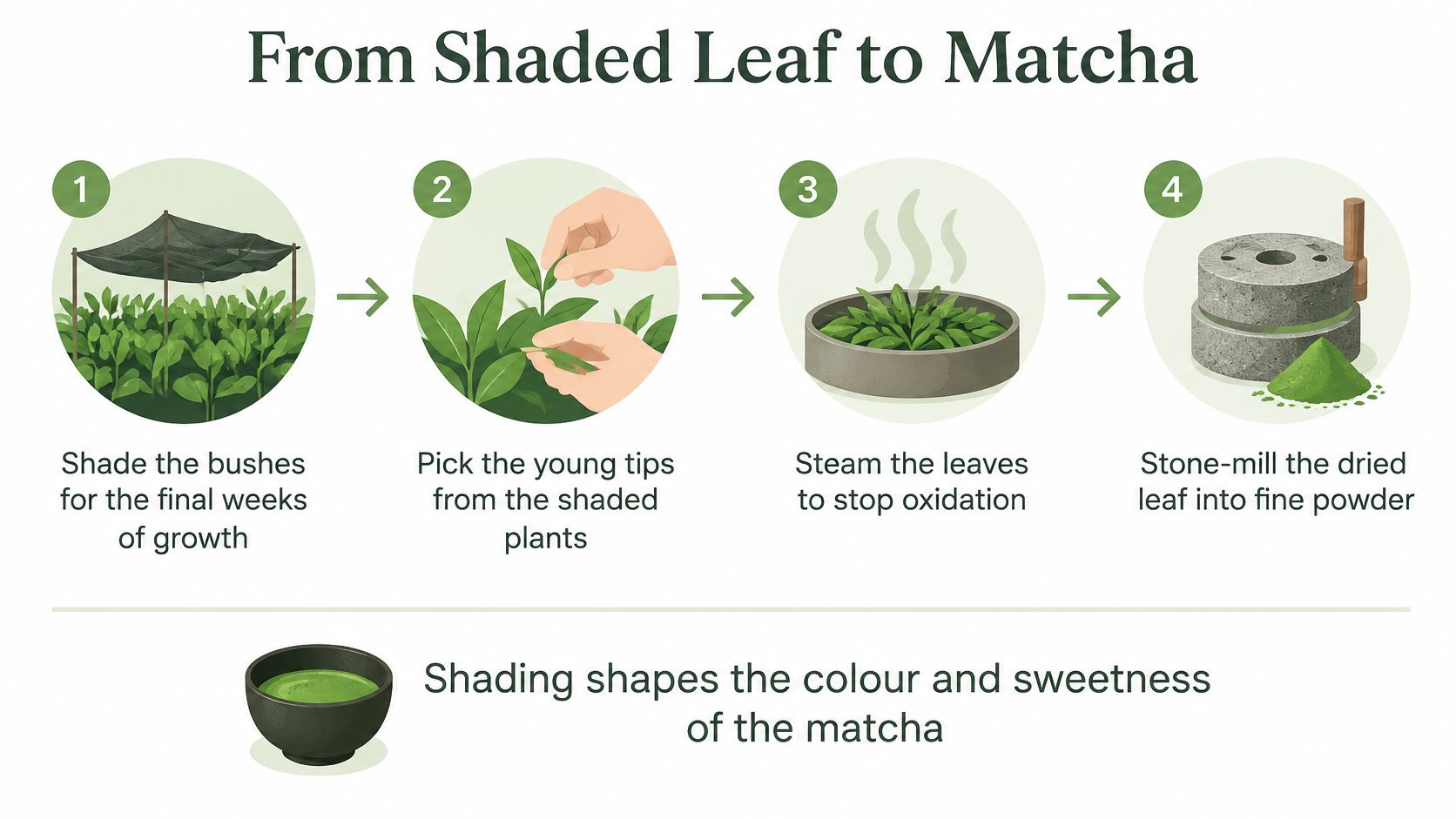
How does a leaf from a shaded tea bush become the fine powder whisked into a bowl? The process links growing, preparation and milling, with each stage shaping what reaches the cup.
From young shoot to fine powder
Shade the bushes for the final weeks of growth. Growers reduce direct sunlight while the leaves develop, affecting their colour and flavour potential.
Pick young tips from the shaded plants. Young leaves are picked from the tips of shade-grown tea plants, then ground into a very fine powder.
Steam and dry the leaves. Steaming stops oxidation from changing the leaf after picking. Drying prepares it for further processing.
Remove stems and veins. Producers separate these firmer parts from the leaf material intended for milling.
Stone-grind the prepared leaf. Fine milling creates powder that disperses through water rather than brewing as an intact leaf.
Pack the powder in protective containers. Packaging helps preserve the fresh character developed during growing and processing.
Matcha isn't strained out before drinking, so you consume the entire powdered tea leaf. With infused green tea, water extracts some constituents, then the leaves or tea bag are removed.
Why the powder changes the drink
Compare a matcha latte with a cup of sun-grown green tea made from a tea bag. The latte contains suspended leaf powder along with ingredients such as milk; the tea-bag drink is an infusion.
Because matcha includes the powdered leaf, it is a different way to consume tea than drinking an infusion. The amount of powder and the finished recipe determine what is in the drink, so this difference alone doesn't establish a fixed strength or nutritional advantage.
Milk can soften matcha's delicate flavours. Taste a little whisked with water first if you want to notice the powder's character.
For another view of matcha preparation, watch the video below.
What to check before buying
Finely milled powder should look smooth rather than visibly coarse. Colour can offer a clue, but on its own it can't establish freshness, origin or growing method.
- Growing information: Look for a clear explanation of shading and origin.
- Harvest details: Prefer specific harvest information over an unexplained premium claim.
- Texture: The powder should whisk into a suspension without obvious gritty particles.
- Packaging: Choose a container that closes securely between uses.
Is Shade-Grown Tea Healthier? What the Evidence Says
Shading changes the leaf's composition, but the evidence doesn't show that shade-grown tea prevents disease or delivers superior health outcomes. The Australian matcha nutrition overview describes human evidence as limited and task-specific, rather than establishing strong long-term clinical benefits.
Common shade-grown tea claims and what the evidence supports
| Common claim | What the evidence shows | Safer wording |
|---|---|---|
| Shade-grown tea is healthier than sun-grown | Composition differs; no comparable human outcome data in this research | Shade-grown tea has a different composition |
| Matcha prevents disease | Human evidence is limited and task-specific | Traditionally used as part of a daily routine |
| Matcha gives calm energy | Contains caffeine and L-theanine; effects differ between people | Contains caffeine and L-theanine |
| Every cup has a fixed caffeine amount | Caffeine exposure changes with the grams of powder used | Caffeine varies with the amount used |
A better leaf isn't a clinical result
The Australian Gyokuro work assessed compounds alongside quality and commercial-value indicators. A higher-quality tea in that setting wasn't a tea shown to improve health in people.
That distinction applies to antioxidants too. Identifying a compound in a leaf doesn't tell us how much a person absorbs, what effect that amount has or whether drinking the tea changes disease risk.
If you're curious about one commonly discussed catechin, our explanation of what EGCG is provides useful background. Treat compound names as information about tea chemistry, not shortcuts to medical conclusions.
Enjoy shade-grown tea for its flavour and place in your routine. Don't ask a growing method to carry a health promise it hasn't demonstrated.
A practical serving-and-caffeine framework
For matcha, a café cup size doesn't tell you the dose of tea. Adding more water or milk dilutes the drink, but it doesn't remove the caffeine supplied by the powder.
Use a simple framework:
- Check the serving in grams: Weigh the powder, or ask a café how much goes into the drink.
- Look for product-specific information: Don't assume a caffeine figure for another matcha applies to yours.
- Consider your own tolerance: Notice how the serving and time of day affect your comfort and sleep.
- Count other caffeine sources: Coffee, other teas and caffeinated drinks belong in the same daily picture.
- Keep medical decisions separate: A drink isn't a replacement for medical advice or treatment.
Phrases such as may support still need evidence for the particular benefit being discussed. Adding cautious wording doesn't make an unsupported promise reliable.
You can enjoy the ritual, flavour and convenience without expecting exceptional antioxidant protection, guaranteed focus or energy without a crash. Laboratory composition and demonstrated human benefit are different kinds of evidence.
Shade-Grown Green Tea Questions Answered
Is shade-grown green tea the same as matcha?
Not quite. Shade-grown describes cultivation, matcha is a finely ground powder made from shaded young tips, and gyokuro is a shaded whole-leaf tea.
Choose by preparation as well as growing method. If you want leaves to steep and remove, look for loose-leaf tea rather than powder.
Does shade-grown tea taste sweeter?
Often, it has a rounder, less astringent character, although the sweetness is a flavour impression rather than added sugar. Some drinkers prefer the brighter edge of sun-grown tea.
For a fair comparison, brew comparable loose-leaf teas the same way and taste them without sweeteners. Changing the water temperature or steeping time between cups can obscure the difference you're trying to notice.
How much caffeine is in a matcha latte?
There isn't a reliable fixed amount based on the word latte. The grams of powder and the particular matcha determine the starting caffeine dose, while milk changes the drink's volume.
At a café, ask about the powder serving rather than assuming a larger cup contains more tea. At home, use a small digital scale to make your preparation repeatable.
How should I brew shade-grown green tea at home?
Use water below boiling and adjust gently to taste. For a practical starting preparation, try water around 70 to 80°C; for matcha, whisk about one to two grams into roughly 70 millilitres of water until a fine foam forms.
Sift matcha first to break up clumps, then whisk briskly rather than stirring in circles. These are starting instructions, not fixed requirements for every tea.
- For a straight bowl: Prioritise a flavour you enjoy without milk.
- For a latte: Make a smooth matcha base before adding milk.
- For baking: Choose a culinary style suited to mixing with other ingredients.
Compare drinking and culinary options through the matcha range on Pep Tea's website rather than assuming one grade suits every use.
Choose and Store Shade-Grown Matcha with Confidence
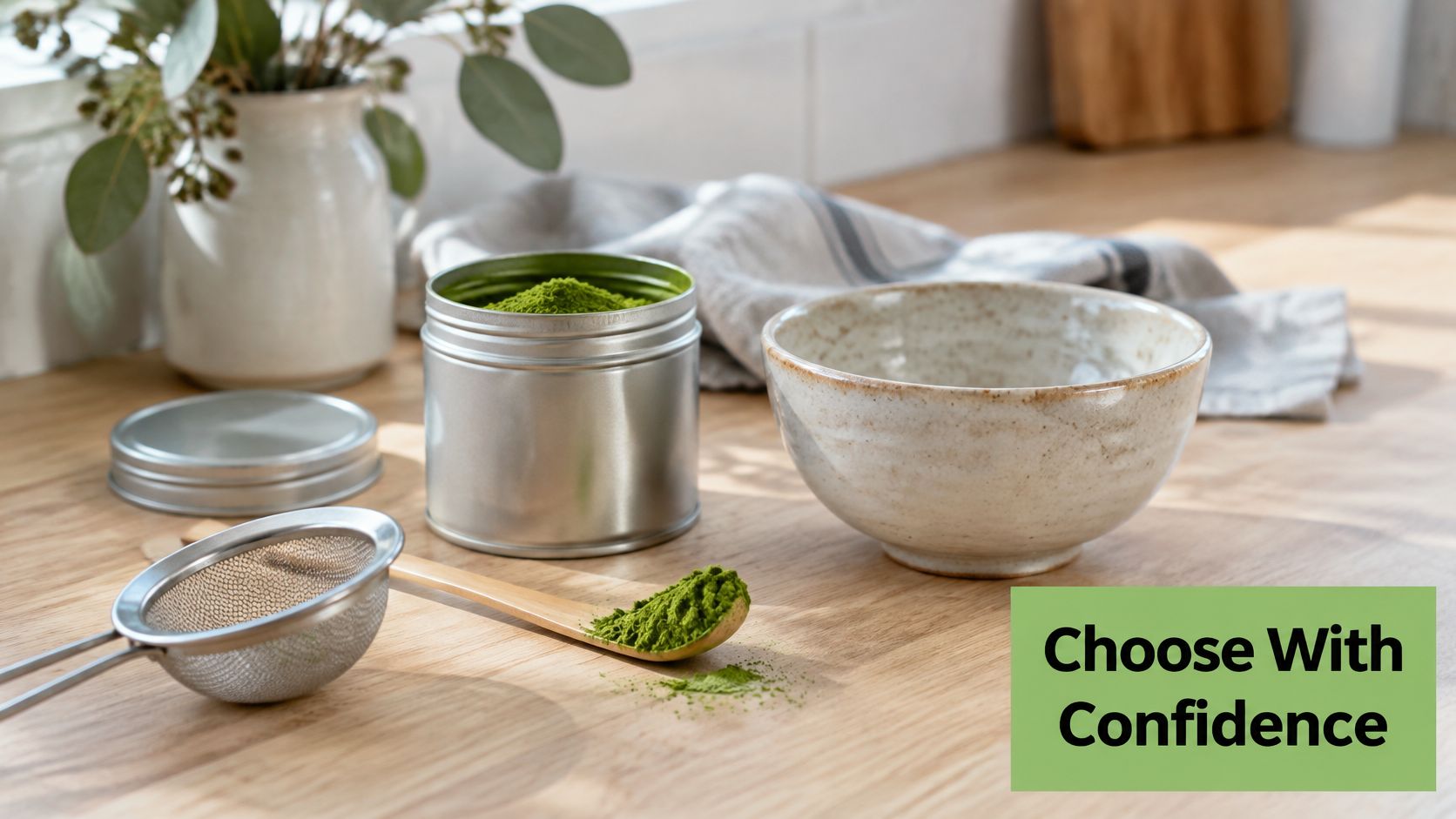
- Check growing details. Ask where the plants grew, how long they were shaded and whether the harvest was first flush.
- Confirm certification and harvest information. Our Japanese supply plantations are independently inspected, and our organic matcha carries Japanese Ministry of Agriculture certification.
- Match the grade to the use. Choose ceremonial grade for drinking straight and culinary grade for lattes, smoothies or baking.
- Choose protective packaging. A secure closure matters once the pack is open.
Our Imperial organic matcha is ceremonial grade, first and second flush, and stone ground, suited to daily drinking. Our 100g and 1kg packs are foil-lined, resealable stand-up pouches, with serving ideas on the front and an explanation of matcha versus traditional green tea on the back.
Keep your preparation area dry and close the container after measuring.
Protect what the grower developed
A NSW Japanese-style green-tea storage study found constituent losses during storage delays and generally better preservation under cooler conditions; material held at 25°C for 24 hours received the highest commercial assessment among tested conditions despite looking more semi-fermented.
That was post-harvest material, not a household matcha shelf-life test. Store finished powder cool, sealed and protected from light, use it promptly, and follow our matcha storage guide for everyday handling.
Buyer's check: Compare a shading claim with the treatment table's distinction between available light and light reduction. Ask for an actual duration, not simply a shade-grown label.
We offer Japanese organic matcha for straight drinking, lattes and cooking, with grades suited to different ways of enjoying shade-grown tea. Visit Pep Tea to explore our organic matcha range and try stone-ground Imperial matcha for your everyday bowl.