
Kombucha from Scoby

Your first jar of kombucha from a SCOBY may look lively: a pale layer is forming on top, bubbles cling to the glass, and the tea smells sharper than it did when you brewed it. But is it ready, or just getting sour? For a careful home brewer, success isn't a taste test alone. It's a fermentation process you can observe, measure and repeat.
Kombucha can be rewarding to make, but a living culture doesn't follow an exact timetable. Cooling, acidity, oxygen, cleanliness and fermentation conditions all shape the result. Here's how to work with those variables, recognise what you can't confirm by sight, and make safer decisions about each batch.
Why SCOBY Kombucha Needs Careful Control
A jar can be busy on day three and still be early: bubbles rise, the aroma turns sharper, and a pale film spreads across the surface. Useful signs, all of them. They show fermentation is active; they do not prove the tea has cooled safely, acidified enough, or stayed below an alcohol level that suits your household.
Treat the brew as a controlled process rather than a recipe that finishes itself. A SCOBY is a symbiotic culture of bacteria and yeast. The yeast portion converts sucrose into glucose and fructose, then makes ethanol and carbon dioxide. Acetic-acid bacteria need oxygen to turn that ethanol through acetaldehyde into acetic acid, which is why airflow through a tight cloth, temperature and time all change the same batch.
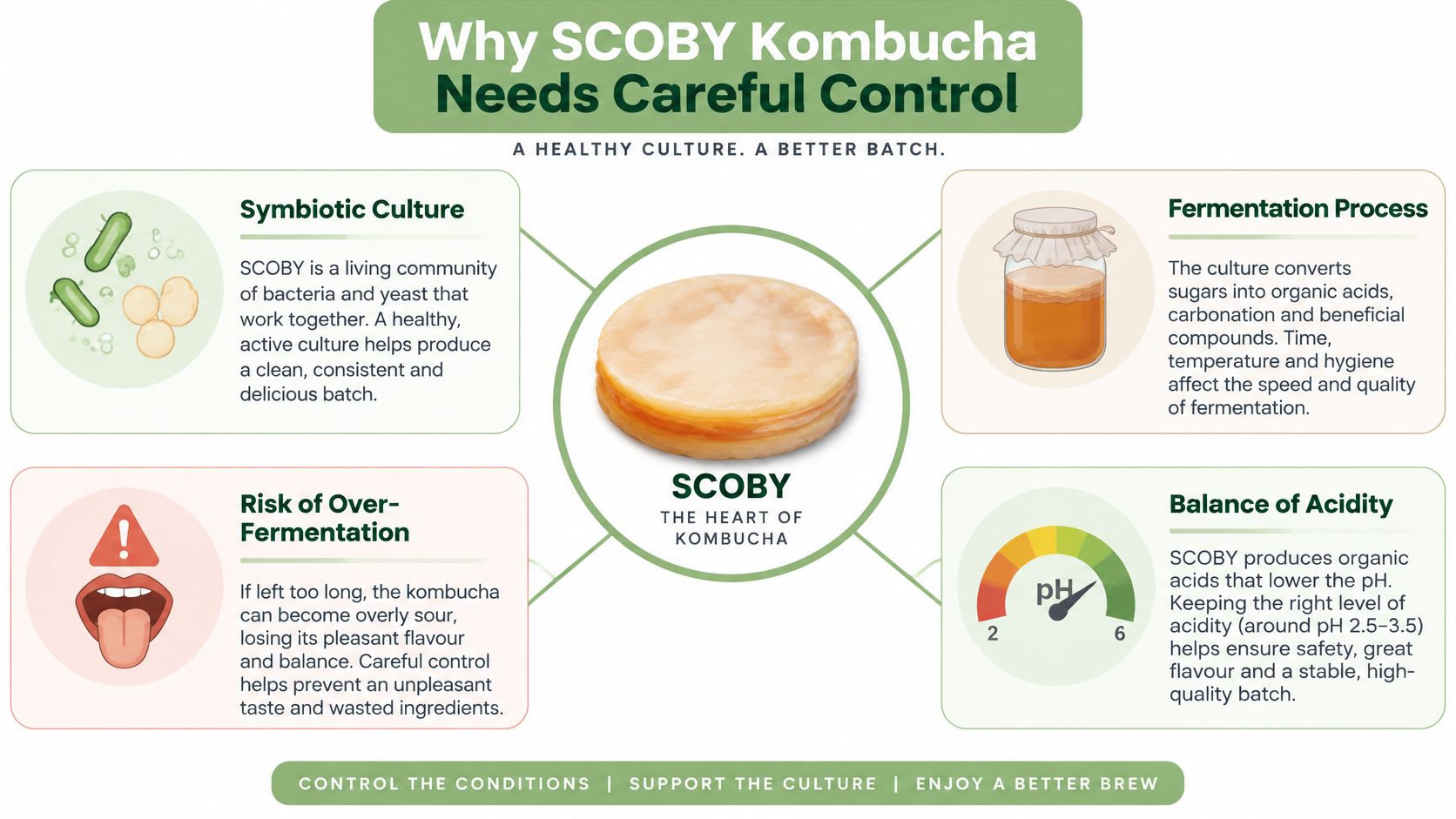
Treat sensory signs as clues, then measure
Australian food-safety guidance puts numbers around those stages, from fresh tea around pH 5 before the culture brings it down, to hot tea cooling from 60°C to 20°C within two hours before inoculation, to pH 4.2 or below during fermentation as an acidity checkpoint for limiting pathogen growth and toxin production, with a typical finished kombucha described as pH of at least 2.5 and a common final alcohol target less than 1% while some state rules are stricter: Australian fermented-beverages food-safety guidance
Those figures work like gauges on a dashboard. Sweetness, fizz and a pleasant tang are the warning lights that tell you something is happening; pH, cooling time and an alcohol-aware endpoint tell you whether the batch is moving in the right direction. If alcohol content matters for children, pregnancy, driving or medication in your home, decide that limit before bottling rather than after the flavour seems right.
This guide is educational and cannot make a home batch commercially validated or automatically safe. A written cooling time, a clean routine and recorded pH give you a firmer basis for each decision than bubbles, smell or a brave sip.
Prepare Your SCOBY Brew
Before brewing, set up a clean workspace and gather the equipment you'll use to make and monitor the batch. You don't need a complicated laboratory, but you do need a consistent routine.
Choose a culture from a batch that has fermented normally and smells clean and pleasantly tart. The culture is present in the liquid as well as in the familiar rubbery surface layer, so keep some fermented starter liquid with the SCOBY. A new surface layer may form during brewing, but its shape or thickness isn't a reliable test of safety.
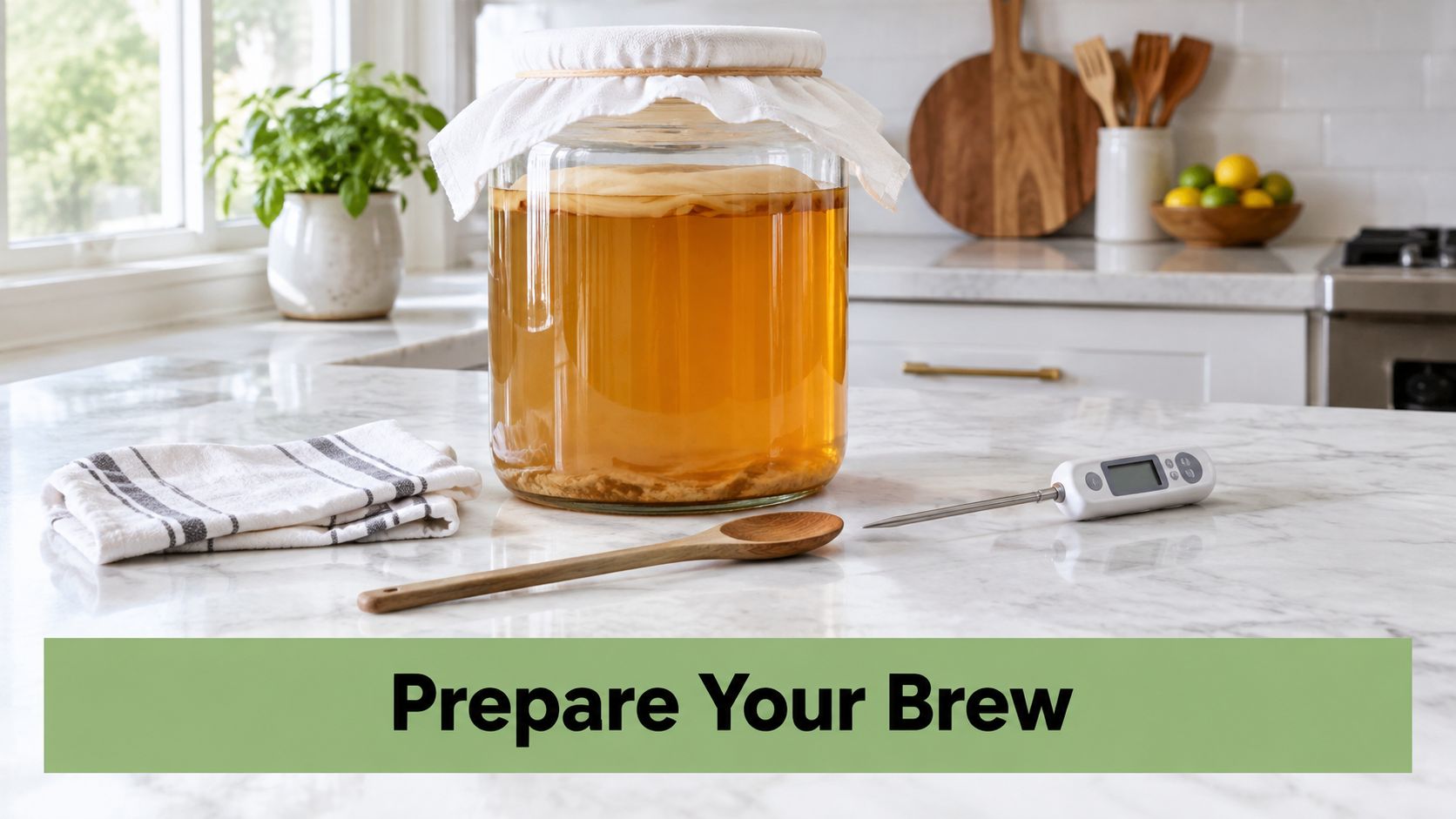
Gather a practical setup
- A clean fermentation vessel: Choose a food-safe vessel that's easy to inspect. A wide opening makes it simpler to add the culture and take samples.
- A breathable cover: Use a clean, tightly secured cloth to keep out insects and debris while allowing air to reach the brew.
- A strainer and clean utensils: These help you handle tea leaves and culture without introducing unwanted residue.
- A way to test pH: Use a calibrated meter or validated pH strips, following the product instructions. Keep testing equipment clean and suitable for food use.
- A batch log: Record ingredients, cooling and inoculation times, temperature observations and pH readings.
For a base formula, use clean water, tea, sugar, a SCOBY and fermented starter liquid from a reliable batch. There isn't one ratio that suits every culture or tea; a recipe that works in one kitchen may behave differently with another tea, a different amount of starter or changed room conditions. Treat the sugar as food for fermentation, not as a sweetener you can remove without changing the process.
Black and green tea are common choices, and other suitable teas may be used if they support a healthy culture. Choose clean, food-grade ingredients, and opt for organic tea and sugar if that fits your preferences. Most of all, don't add the culture to hot tea. Build a routine around measured cooling and clean handling rather than improvising when the kettle is already on.
Brew Kombucha With a SCOBY
Brew the sweet tea and dissolve the sugar fully while the liquid is still hot, then strain out the leaves. Undissolved sugar sinks to the bottom of the vessel and gives the culture an uneven starting point, which makes the batch harder to interpret later on.
Cool the infusion promptly. Australian home-brewing pH and temperature guidance recommends moving the liquid from 60°C to 20°C within two hours, the same cooling logic a commercial kitchen applies to cooked food: a warm, sweet, unacidified liquid gives contaminants time to multiply before fermentation can protect it. Once the tea has cooled, add the SCOBY and starter liquid straight away rather than letting the vessel stand.
The starter liquid earns its place here. It carries acid from a finished batch into the fresh tea, so the pH begins falling immediately instead of drifting in the vulnerable range while the culture wakes up.
Pour everything into the fermentation vessel and leave headspace at the top. Secure a breathable cloth over the opening so insects stay out but air still reaches the surface. Oxygen matters at this stage because the acetic-acid bacteria need it to convert the alcohol the yeast produce into acetic acid. A sealed lid would stall the very reaction that makes the brew acidic and safe.
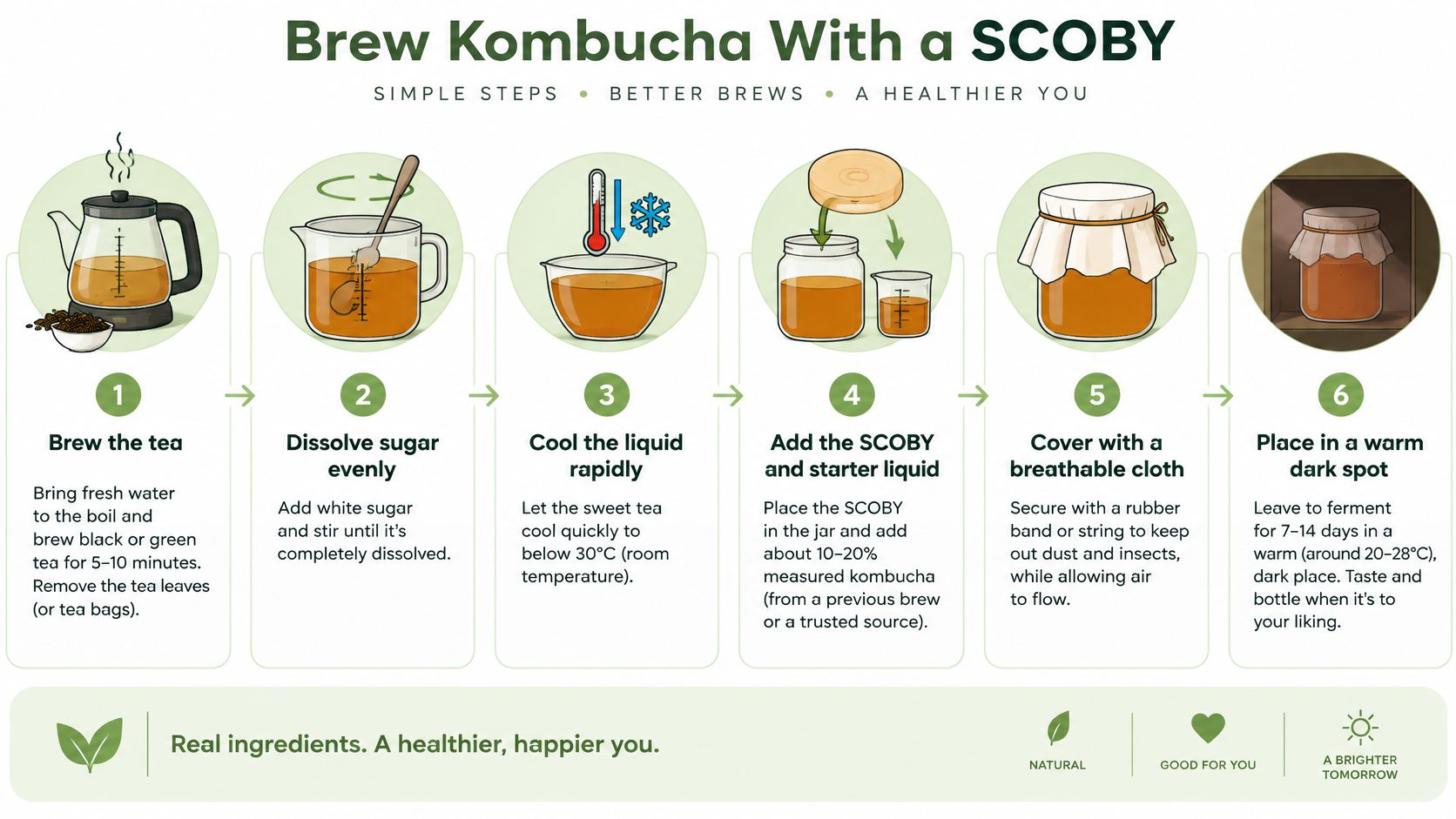
Label the vessel and write down the ingredients, when the tea was brewed, when it finished cooling and when the culture went in. That start time is your reference point for every reading that follows.
Keep the record with the jar. A taste note can describe the flavour, but a process log can help explain why this batch behaved differently from the last one.
A video can help you visualise the handling sequence before your first batch.
For another perspective on fermented and other digestive drinks, see AloeCure's guide to gut drinks. Use any general drink ideas as inspiration only, not as a replacement for monitoring a live fermentation.
Guide Fermentation With pH and Time
During primary fermentation, the yeast and bacteria steadily transform the sweet tea. You may see bubbles, a surface film or shifts in colour, and the smell may turn sharper. These signs tell you the culture is alive, but they can't tell you how acidic the liquid has become or how much alcohol it holds. Treat them the way a teacher treats a student's raised hand: a signal to look closer, not proof of understanding.
The reliable check is a measured one. Take pH readings with a clean, sample-safe method and log each result beside your temperature observations, working from the start time you recorded when the culture went in. The acidity checkpoints described earlier still apply: fresh sweet tea sits in a range where contaminants can grow, so your job is to confirm the brew acidifies promptly. For a controlled home process, a practical benchmark is reaching the safe-acidity threshold by about day 7, though this isn't a universal schedule. Culture strength, sugar concentration, temperature, tea type and starter volume all shift the pace. A slow batch isn't automatically unsafe, but a reading that barely moves across a week deserves attention rather than patience.
A calibrated meter gives you a precise number, while validated strips offer a workable alternative when you follow their instructions. Whichever you use, pull the sample cleanly and never return it to the vessel. If you're weighing up equipment, a digital pH meter for kombucha testing removes the guesswork of matching a strip's colour to a chart.
Decide on the endpoint, not just the flavour
Once the primary ferment has cleared the acidity checkpoint, taste becomes a preference question rather than a safety test. As covered earlier, finished kombucha typically sits at pH 2.5 or lower; what matters here is deciding when to stop. Letting the ferment run longer won't make it safer. It pushes the flavour towards vinegar and makes the batch harder to predict.
Secondary fermentation is a separate stage with its own risks. Bottling for flavour or carbonation removes the oxygen the primary vessel allowed, so the acetic-acid bacteria slow down while yeast keeps producing carbon dioxide in a sealed space. Pressure builds. Use bottles rated for carbonation, open them carefully, and treat refrigeration as a brake on fermentation rather than a stop button.
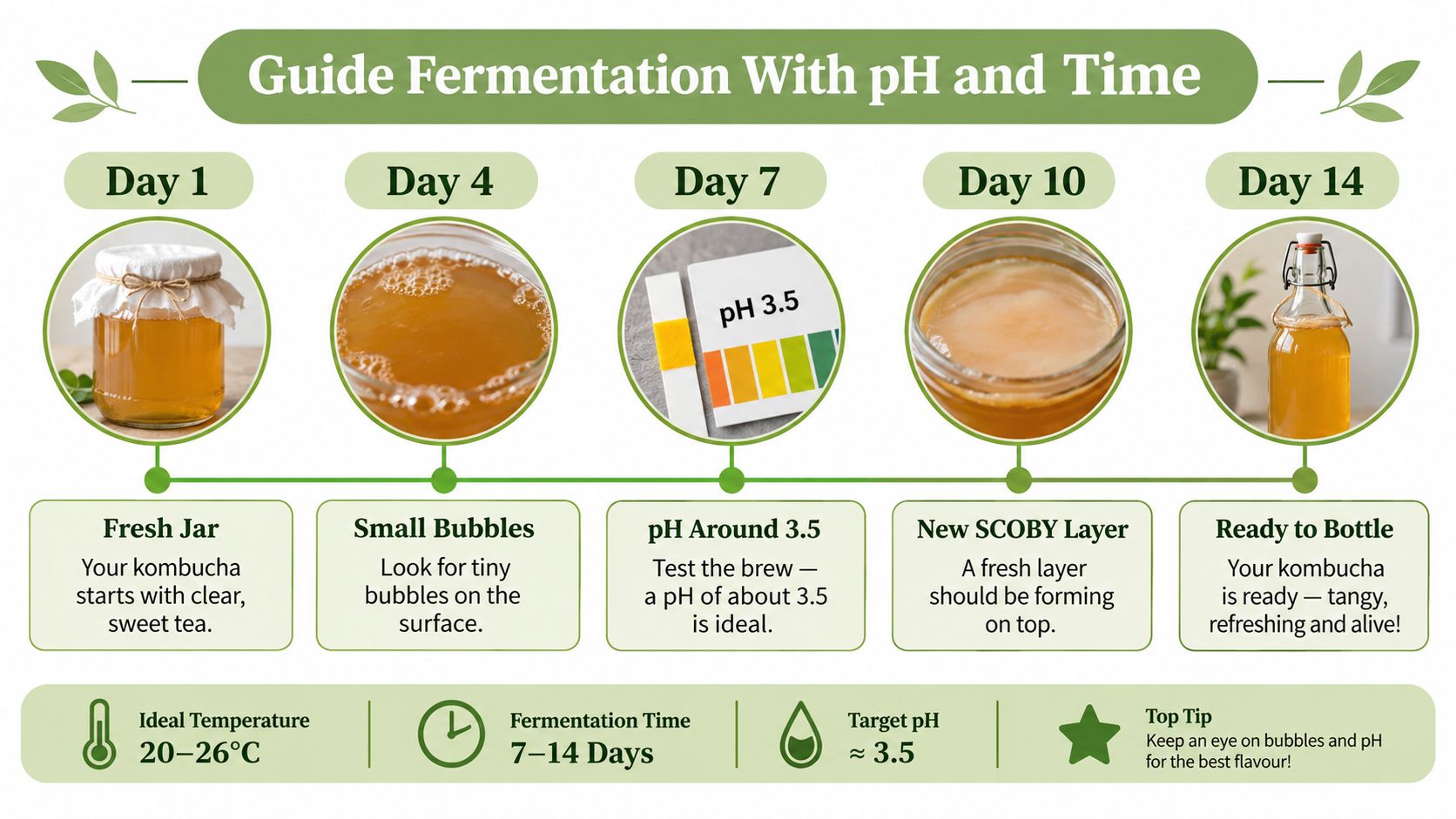
Strain or transfer the drink with clean equipment, then chill it to slow further change. Write down the final pH and what you did next, and keep that record with the batch. The goal isn't an identical number of days every time; it's learning how your culture behaves so each batch improves on the last.
Keep Hygiene Under Control
A clean routine won't turn a home kitchen into a sterile laboratory, and it doesn't need to. Its purpose is to reduce avoidable contamination by making every handling step deliberate.
Before brewing, wash your hands and clean the work surface, vessel, cover, strainer and utensils. Rinse cleaning products away where needed, and let equipment dry or use it as directed. If you use a thermometer or pH meter, keep the parts that touch the sample clean, and don't return a used sample to the vessel.
When moving the SCOBY, use clean hands or a clean utensil. Keep it away from fresh ingredients, used cloths and surfaces where raw food or dirty dishes have been handled. Don't share tools between the fermenting jar and other foods without washing them first. A brewing container with a suitable opening and cover can make handling easier; see this guide to a kombucha brewing container.
Know when not to reuse a culture
A new surface layer may look uneven, folded or thin, and that alone doesn't tell you the batch has failed. By contrast, fuzzy growth, an unusual appearance you can't confidently assess, or a persistent musty or rotten smell should prompt caution. Don't scrape off suspicious growth and keep the liquid. If the batch looks contaminated or otherwise questionable, discard the contents and culture rather than trying to rescue them.
Home fermentation carries risks. If you're immunocompromised or otherwise vulnerable, ask a health professional whether home-fermented drinks are appropriate for you. If alcohol content is a concern, don't rely on home observations or a recipe alone to establish it.
Before each batch, check:
- Hands and surfaces: Wash hands and clean the workspace before handling the culture.
- Equipment: Use clean vessels, covers, strainers and sample tools.
- Culture: Return only a culture from a batch you're comfortable reusing.
- Records: Write down the batch details and keep pH results together.
- Uncertainty: Discard a batch if contamination or its condition is unclear.
Troubleshoot SCOBY Fermentation Problems
Diagnosis starts with your records, not the surface of the jar. A quiet fermenter can still be acidifying, and a lively one can still produce something you shouldn't drink. Before changing anything, pull out the batch log and compare it with your earlier brews.
If no new surface layer has formed, that alone doesn't mean failure. The visible film is only part of the culture; the microbes working through the liquid matter more than what floats on top. Check the pH trend first. If acidity is falling steadily, the batch is fermenting, just without the cosmetic layer some brewers expect.
Weak activity usually traces back to the start of the batch. Revisit the cooling and inoculation notes: tea that went in too hot can damage the culture, a late inoculation delays acidification, and too little starter liquid leaves the sweet tea less acidic at the outset, which widens the window where competing microbes can establish themselves.
For a slow or inconsistent batch, compare temperature observations, starter quantity and pH readings against earlier brews. A different tea, a changed sugar concentration or an older culture can each shift the pace. Records let you separate a batch that is slow from one you can't explain, and unexplained is the category that deserves caution.
For excessive acidity, stop fermenting rather than waiting for the flavour to come back. A very low reading, below the finished range discussed earlier, calls for caution rather than more time on the bench.
For something you can't identify, the useful question here is why it happened rather than what to do with it, since the discard rules are covered above. Look for the route in: airborne spores settling on an uncovered jar, a fruit fly breach through a loose cover, or tools that touched other foods. The oxygen exposure at the surface that kombucha relies on is also what lets mould colonise the top of a poorly acidified brew. Find the cause before brewing again, or the next batch may repeat it.
Alcohol is the last thing to check. An Australian government review reported that 64.8% of surveyed samples in Queensland, Tasmania and Victoria exceeded the 0.5% ABV threshold used there for alcoholic beverages, while in states and territories using the 1.15% ABV threshold, 22.9% exceeded it and 77.1% were below it. Australian fermented-beverages outcomes review Survey figures are not a prediction for your jar. They show why a home brewer can't assume fermentation stopped producing alcohol, so if strength matters to someone drinking it, treat an unusual batch accordingly rather than tasting your way to an answer.
Store Kombucha and Reuse the SCOBY
A finished brew keeps fermenting on the bench, so chilling is the first decision. Cold slows the yeast and bacteria enough to hold flavour close to where you left it, which is why the move to the fridge matters more than the move to a bottle. Transfer the kombucha with clean equipment into clean glass containers filled close to the top, since less headspace means less oxygen and slower change. For a fuller walkthrough of chilling and holding the finished drink, see our guide on how to store kombucha.
If alcohol content matters to someone drinking it, hold the batch to the alcohol target discussed earlier. An unusually warm or long ferment deserves caution, and neither taste nor refrigeration alone confirms where the alcohol level ended up.
Then turn to the culture. A SCOBY hotel works like a pantry for future batches, holding spare cultures until you need them. Keep only cultures from sound, mould-free batches, and store them in a clean glass jar with at least 200 ml of starter liquid per culture, covered with a breathable cloth. Refresh the liquid every few weeks so the culture stays fed and acidic. Discard anything that smells off or shows fuzzy growth, because a questionable culture carries its problems into the next brew.
Before you start again, confirm the vessel and tools are clean, the culture looks healthy, and you are ready to record cooling time and pH. If you would rather skip the next cycle, Pep Tea offers sugar-free organic kombucha brewed in the Hunter Valley, NSW.
Explore Pep Tea's sugar-free organic kombucha range if you'd like a ready-to-drink alternative to a home SCOBY brew. Visit Pep Tea to browse its kombucha and organic tea offerings.