
Best Kombucha for Beginners How to Choose Your First Bottle

You're standing in front of a supermarket fridge, surrounded by bright labels, cloudy bottles and flavour names that sound more like cocktail menus than tea. One says ginger, another promises berries, and a third highlights live cultures in large lettering. You want to try kombucha, but you also want to know what you're buying.
The best kombucha for beginners isn't necessarily the bottle with the boldest wellness claim or the most unusual flavour. A better starting point is a drink with a clear label, modest sweetness, manageable acidity, familiar flavour and transparent alcohol information. Once you know what to check, choosing becomes much less mysterious.
Australia's kombucha category is expanding into more shops and cafés. The market was estimated at USD 218.3 million in 2024 and is projected to reach USD 765.8 million by 2033, with a projected 15.0% CAGR from 2025 to 2033, according to Grand View Research's Australia kombucha market report. That means beginners have more choice than ever, but more choice also makes label literacy useful.
Introduction to Your First Kombucha Experience
A first bottle can feel like a small decision with too many variables. You might be choosing between a sweet drink that resembles soft drink, a sharp fermented tea, or a cloudy bottle with visible strands floating at the bottom. None of those details automatically means the product is good or bad, but they can change whether your first taste feels refreshing or overwhelming.
Start by deciding what you want from the experience. If you're replacing sugary soft drinks, a bright citrus or ginger style may feel familiar. If you usually drink sparkling water, you may prefer a drier, cleaner kombucha with less sweetness. If you enjoy strong iced tea, a more pronounced tea base could be appealing, although tartness may take some getting used to.
The Australian market gives beginners a useful advantage. Conventional, lightly flavoured kombucha products are the largest revenue segment, according to Grand View Research. That suggests a simple first bottle is often easier to find than an experimental one, whether you're shopping at a supermarket, specialty grocer or local café.
This guide follows a practical path. First, you'll learn how sweet tea becomes fizzy fermented tea. Then you'll look at realistic wellness expectations, sugar, acidity, sediment, storage and alcohol by volume. Finally, you'll match flavour and serving style to your own palate.
The aim isn't to turn you into a fermentation scientist before your first sip. It's to give you a calm filter for choosing a bottle that tastes good, fits your preferences and doesn't leave important label questions unanswered.
What Kombucha Is and How It Gets Its Fizz
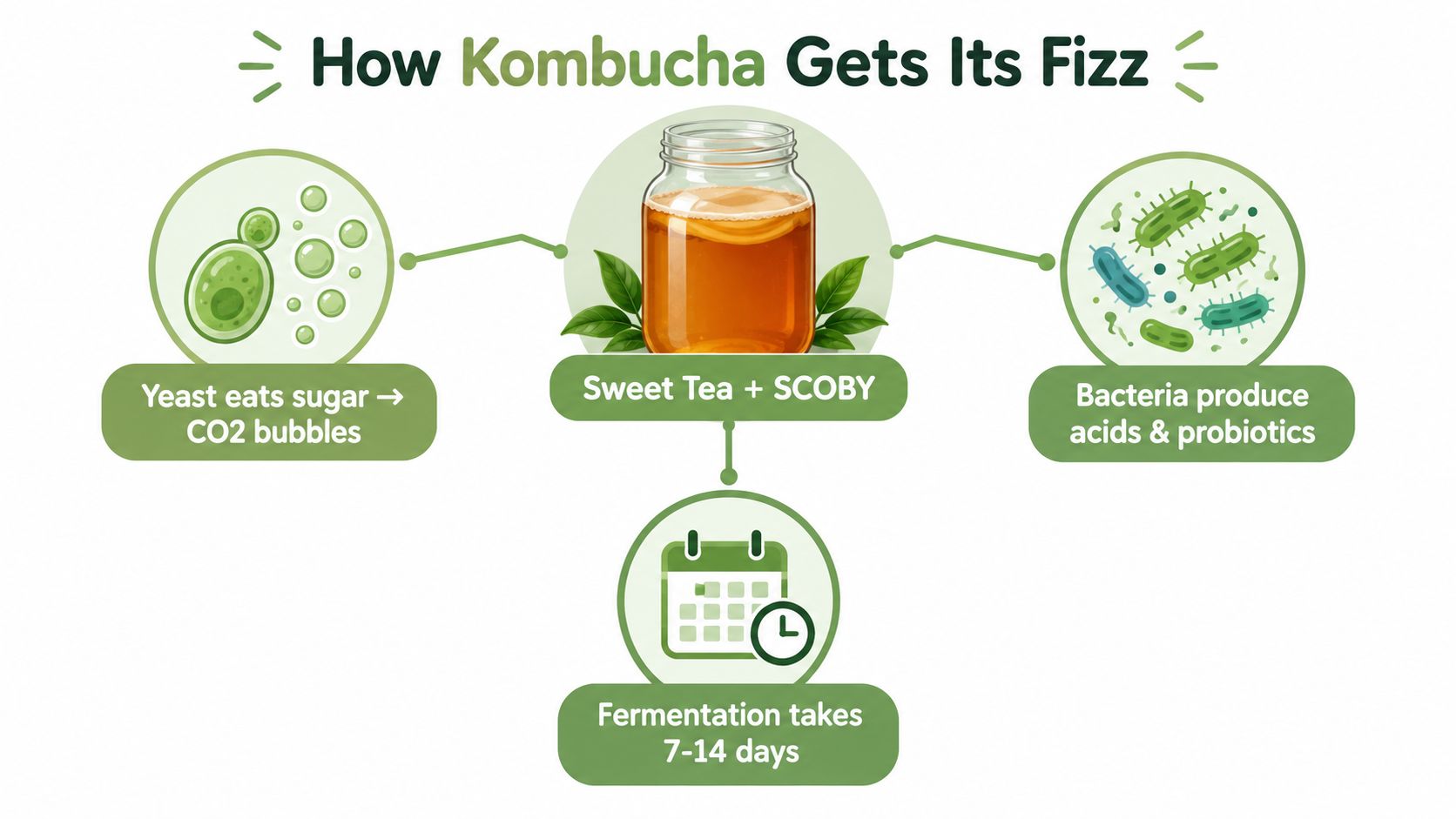
Kombucha begins as sweetened tea, usually made with black tea, green tea or a blend. A SCOBY is added to the cooled tea. SCOBY stands for symbiotic culture of bacteria and yeast, which is a community of microorganisms that transforms the drink during fermentation.
A useful kitchen analogy is yoghurt. Milk starts as a familiar ingredient, then cultures change its flavour and texture. Kombucha follows a different process, but the basic idea is similar. Microorganisms consume some of the available sugar and produce new compounds, including acids and carbon dioxide.
Kombucha is fermented tea. The SCOBY changes sweet tea into a tart, lightly sparkling drink with a flavour shaped by the tea, sugar, fermentation and added ingredients.
Yeast generally helps create carbon dioxide, the gas responsible for natural fizz. Bacteria contribute to the formation of organic acids, which give kombucha its characteristic tang. The finished drink can therefore range from gently sweet and soft to dry, sharp and distinctly vinegary.
Why the same drink can taste so different
Several details influence the final bottle:
- Tea base: Black tea can bring deeper, malty notes, while green tea often tastes lighter and more delicate.
- Fermentation progress: More fermentation can reduce sweetness and increase tartness.
- Flavour additions: Ginger, lime, mango, berries, herbs and citrus can soften, brighten or intensify the fermented character.
- Bottle handling: Continued fermentation can affect carbonation, flavour and alcohol content if the product isn't stored as directed.
Acidity is central to the experience. Published kombucha samples have been measured around pH 3.0, and a low pH helps explain why first-time drinkers may find the drink sharply tart. Some finished samples contained very little residual sugar, including 1.11 g/L sucrose, 1.87 g/L glucose and 0.05 g/L fructose, as reported in CHOICE's kombucha guidance.
Sediment is another normal point of confusion. A small amount of cloudiness or sediment can come from tea particles, flavour ingredients or fermentation material. It doesn't automatically indicate poor quality, but a beginner who wants a smooth drink may find a low-sediment style more approachable.
What Beginners Should Realistically Expect From Kombucha
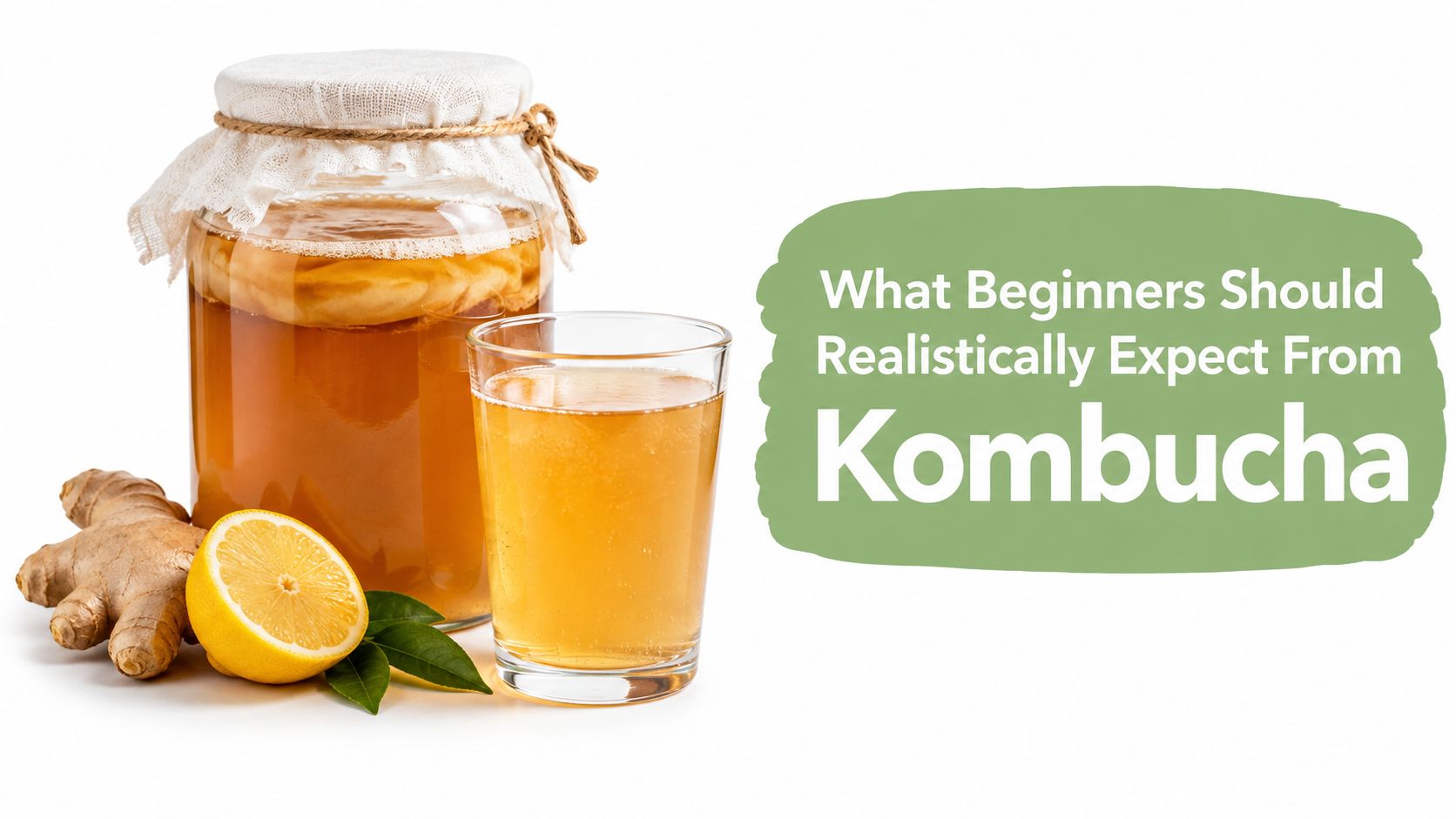
Your first bottle may taste closer to a tart sparkling tea than to soft drink. Kombucha can replace soft drink, juice or an alcoholic beverage, but it is not a guaranteed wellness solution. It may contain live cultures and acids created during fermentation, although the strength and relevance of health claims differ between products and human evidence remains limited. For a fuller look at what the drink can and cannot do, read the benefits of kombucha.
Australian coverage has pointed out that many kombucha health claims come from laboratory or animal research. A review discussed by ABC News found no clear scientific basis for common claims about mental-health benefits. Kombucha can still be an enjoyable drink. Choose your first bottle for its taste, ingredients and label clarity, rather than promises that sound medical.
A better definition of “healthy”
A sensible beginner choice has:
- A sugar level you're comfortable drinking regularly
- An ingredient list you can understand
- A flavour you'll enjoy
- Storage directions that are easy to follow
- Alcohol information that matches your needs
That checklist gives you more useful information than a front label mentioning probiotics. “Live cultures” signals that fermentation has occurred, but it does not tell you whether the drink will be sweet, sharp, cloudy, low in sugar or suitable for your alcohol requirements.
You may also encounter the informal term “cowboy kombucha”, usually describing fermentation with inconsistent control. Homemade kombucha is not automatically unsafe. The practical concern is assessment. Without reliable control of ingredients, acidity, storage and alcohol, a beginner has fewer clear signals about what is in the drink.
The best starter bottle is the one you can understand and enjoy, not the one making the biggest promise.
A low-sugar kombucha can taste more tart when fermentation has progressed further, so less sugar does not necessarily mean a milder drink. If plain kombucha tastes too sharp, try a familiar flavour, chill it thoroughly and pour a small glass to enjoy with food. A low-sediment style can also make the first experience feel more like drinking a clear, flavoured refresher than an unfamiliar fermented mixture.
How to Read the Label and Choose a Beginner Friendly Bottle
The front of a bottle is designed to attract attention. The back label helps you decide whether the drink suits you. Read it in a consistent order, beginning with the nutrition panel and ingredient list rather than the flavour name.
Start with sugar and ingredients
Check the sugar per 100 ml first. Lower sugar can be useful if you're replacing sweet drinks, but it may also come with more noticeable acidity. Compare products within the same category and think about whether you want a daily refresher or an occasional treat.
Next, read the ingredients. Tea, sugar, a fermentation culture, fruit, spices and natural flavour ingredients are easier to assess than a long list of vague additions. Organic certification can also matter if you prefer certified-organic ingredients, although it doesn't remove the need to check sugar, acidity or alcohol information.
Look for clues about texture and taste. A low-sediment style is often easier to drink straight, especially if you're not used to fermentation. Clear storage directions are equally important because kombucha can continue changing when it's handled or stored incorrectly.
Don't assume kombucha is alcohol-free
This is the label check many beginner guides overlook. In a federal survey of fermented soft drinks, 35.2% of samples were below 0.5% ABV, 41.9% were between 0.5% and 1.15% ABV, and sales of kombucha reportedly rose 174% over three years, according to the Australian fermented beverages issues paper.
The same Australian material reported that 64% of tested fermented beverage products were above 0.5% ABV, 25% were above 1.15% ABV, and 15% of alcoholic products had no alcohol warning. Because the figures cover fermented beverages broadly, they shouldn't be treated as the profile of every kombucha bottle. They do show why beginners should verify rather than assume.
NSW Health explains that drinks above 0.5% alcohol by volume must carry an alcohol-content statement under the Australia New Zealand Food Standards Code. In NSW, products above 1.15% ABV are legally considered alcoholic drinks. This matters if you're driving, pregnant, avoiding alcohol for religious reasons or buying drinks for children.
| What to Check | Beginner Friendly Signal | Proceed with Caution |
|---|---|---|
| Sugar | A lower level that suits your normal drinking habits | Very sweet taste or a product that resembles soft drink |
| Ingredients | Clear tea, fermentation and flavour ingredients | Vague or difficult-to-understand descriptions |
| Acidity | A flavour profile described as balanced or gentle | Strong vinegar-like notes if you're new to kombucha |
| Sediment | Smooth or low-sediment appearance | Heavy sediment if texture makes you hesitant |
| Live cultures | Clearly explained fermentation or culture information | Marketing language with no useful product detail |
| ABV | A clearly stated alcohol percentage and storage advice | No clear alcohol statement where you need certainty |
| Storage | Refrigeration instructions that are easy to follow | A bottle stored warm when the label requires chilling |
Before placing a bottle in your basket, use this quick phone checklist:
- Check sugar per 100 ml.
- Scan the ingredient list.
- Look for ABV information.
- Confirm refrigeration and use-by guidance.
- Choose a familiar flavour.
- Pick the smaller commitment if you're uncertain.
The NSW Food Authority's testing also found that 7 products, or 11% of the tested sample, exceeded 1.15% ABV and were non-compliant, and all seven were kombucha, as recorded in its 2022–23 annual food testing report. That finding reinforces a simple rule: label transparency isn't a bonus. It's part of choosing responsibly.
Flavour and Style Guide for First Time Drinkers
Your usual drink preferences can guide your first kombucha choice. Someone who loves lemonade may enjoy citrus or lime. A person who drinks ginger beer might appreciate a warming ginger style. If you normally choose unsweetened sparkling water, a dry, lightly flavoured kombucha may feel closer to home.
Match your palate to a flavour family
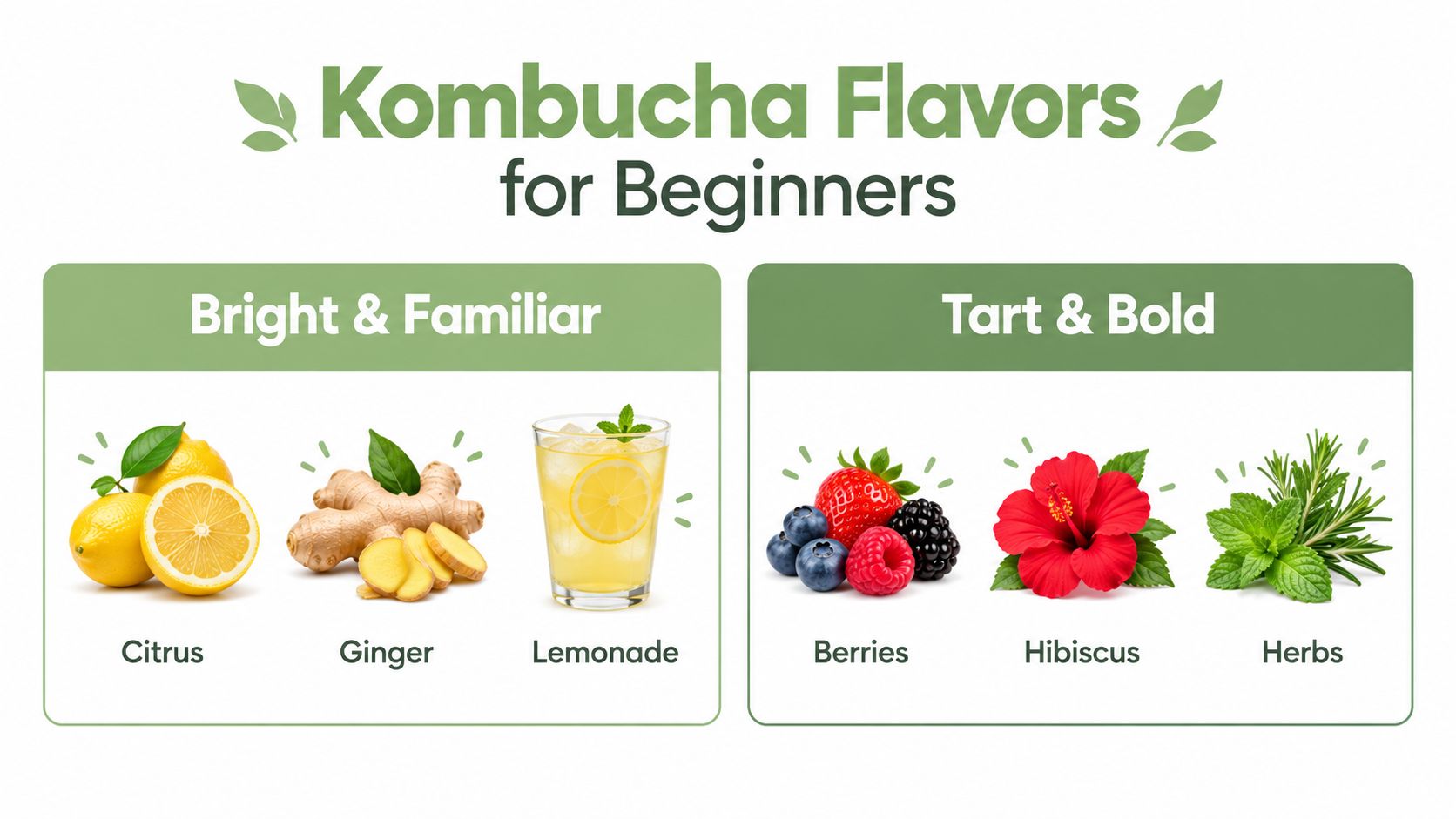
Bright and familiar flavours are often the easiest entry point. Ginger brings warmth and a gentle bite, while lime can add a clean, refreshing edge. A Ginger or Lime & Ginger kombucha may work well for someone who wants character without jumping straight into a strongly tart berry or herbal profile.
Tropical flavours such as mango can feel rounder and more recognisable to people who prefer fruit drinks. Mango may be a comfortable choice for a soft-drink drinker, although you should still check the sugar panel rather than assuming a fruit flavour is low in sugar.
Tart and bold flavours can be rewarding once you know you enjoy kombucha's acidity. Berry, hibiscus and herbal combinations may taste sharper, more aromatic or more complex. They're not inferior choices, but they can hide less of the fermented character for a first-time drinker.
Tea base changes the background flavour. Green tea can give a lighter, fresher impression, while black tea can create deeper tea notes. Neither is automatically more suitable. The better choice depends on whether you prefer delicate or fuller flavours.
Taste it like a café drink
Pour the kombucha into a small glass rather than drinking straight from the bottle. This lets you notice the colour, aroma, bubbles and sediment before the flavour reaches your palate.
Serve it chilled and take a small sip. Wait a moment before deciding. Acidity can feel stronger when you take a large mouthful, while a cold, measured pour often makes the drink seem cleaner and more refreshing.
Try it with food if the first sip feels intense. Salty snacks, a light lunch or a fresh sandwich can make tart flavours feel more balanced. You can also dilute a strongly flavoured kombucha with sparkling water, although that will soften both the flavour and the fizz.
If you're choosing between a familiar flavour and an adventurous one, start familiar. Once you know how your preferred bottle tastes, you can explore bold blends with much more confidence.
Serving Storing and Enjoying Kombucha Every Day
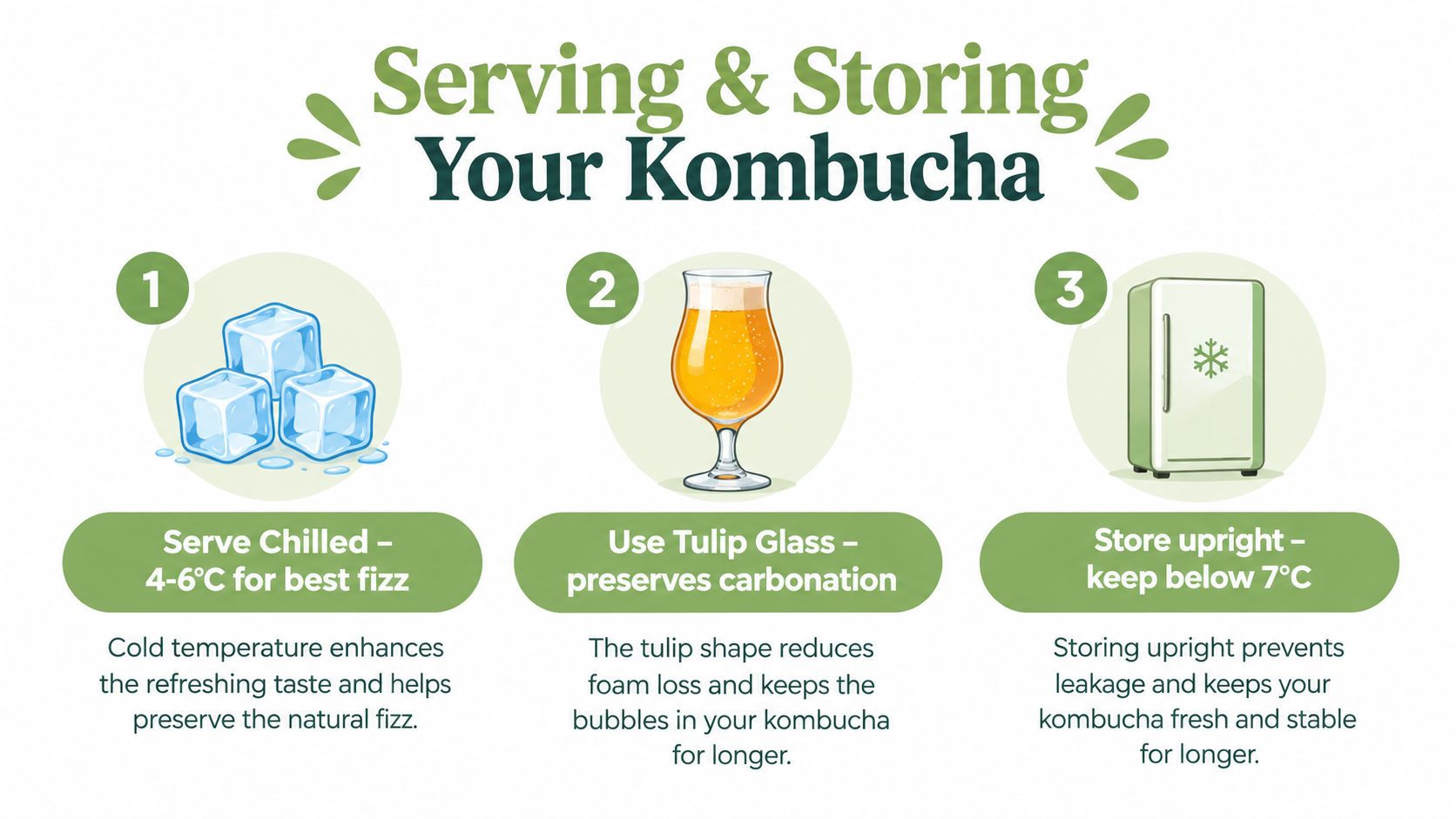
Kombucha is at its easiest when you treat it like a chilled sparkling drink, not a complicated wellness ritual. Refrigerate it as directed, avoid shaking the bottle and pour gently to protect the carbonation.
Serve it cold in a small tulip-shaped glass if you have one. The narrower opening helps hold the aroma and gives the bubbles a little room to rise without immediately disappearing. You don't need special equipment, though. A clean glass and a careful pour make a noticeable difference.
Keep the bottle stable
Fermentation is ongoing biology, so storage affects the drink. Australian kombucha guidance says the tea infusion begins around pH 5, should be cooled quickly from 60°C to 20°C within 2 hours, and should be inoculated with the SCOBY as soon as possible to begin acid production. The guidance identifies pH 4.2 or less as the target for the drink to no longer be potentially hazardous, while a final pH of 2.5 or higher is typical for safe consumption, as outlined in Australian kombucha guidance.
Those production controls aren't something a supermarket customer needs to recreate at home, but they explain why storage instructions matter. Keep commercial kombucha refrigerated when the label says to do so, store it upright where practical and check the bottle before opening.
For more practical guidance, use Pep Tea's kombucha storage guide. If a bottle looks unusually pressurised, smells unpleasant rather than pleasantly tart, or has packaging damage, don't force the issue. Follow the manufacturer's advice or ask the retailer.
Make it part of ordinary occasions
Kombucha can fit into routines without becoming a health assignment:
- Afternoon alternative: Pour it over ice when you want something more interesting than water.
- Soft-drink swap: Choose a lower-sugar style with a flavour you already enjoy.
- Café serve: Offer chilled kombucha in a glass with citrus for a polished non-alcoholic menu option.
- Mixer base: Combine it with sparkling water, herbs or fruit for a simple alcohol-free drink.
- Granita ingredient: Freeze a flavoured kombucha in a shallow tray, scrape it with a fork and serve the ice crystals as a refreshing dessert.
Share the bottle with family or friends if you're still learning what you like. A tasting pour makes it easier to compare ginger, lime, mango or berry styles without committing to a full serving of a flavour that doesn't suit you.
Your Simple Plan to Pick the Best First Bottle
Choosing the best kombucha for beginners comes down to three filters.
First, look for a lower-sugar, low-sediment profile if you want a smooth everyday drink. Lower sugar may mean more tartness, so choose a familiar flavour to keep the first experience approachable.
Second, insist on a clear label. Check ingredients, storage instructions and ABV information. If you need to avoid alcohol completely, don't rely on the word “kombucha” or a general impression that fermented soft drinks are automatically alcohol-free.
Third, pick a flavour that matches something you already enjoy:
- If you like lemonade or sparkling water, try lime or citrus.
- If you like ginger beer, begin with Ginger or Lime & Ginger.
- If you prefer fruit drinks, Mango may feel familiar.
- If you enjoy sour or complex flavours, explore berry, hibiscus or herbal blends.
Start with one chilled bottle, pour a small glass and give your palate time to adjust. The first sip doesn't need to be a verdict on all kombucha. It's information about the balance of tea, sweetness, acidity and fizz you prefer.
For Australian shoppers, Pep Tea's guide to finding organic kombucha is a useful place to explore locally available options. PepTea offers Australian-brewed sugar-free organic kombucha from the Hunter Valley, NSW, including Ginger, Lime & Ginger and Mango styles, so beginners can compare familiar flavours while keeping label transparency and sugar levels in view.
Explore Pep Tea's organic Matcha and Australian-brewed sugar-free organic Kombucha range at Pep Tea, and choose a chilled flavour that suits your palate and everyday routine. If you run a café or hospitality venue, contact the team about practical wholesale options for premium non-alcoholic drinks.