
Immune Booster Drink: Matcha & Kombucha Recipes
Most advice about an immune booster drink starts in the wrong place. It starts with the fantasy that one glass, one powder, or one exotic ingredient can somehow do the heavy lifting for your immune system.
That's not how good drinks work, and it's not how the body works either.
The strongest everyday options are much less glamorous. They hydrate well. They keep sugar in check. They use ingredients with a real nutritional role, such as vitamin C, tea catechins, and live cultures. They also taste good enough that you'll keep drinking them. In my experience as a tea brewer in the Hunter Valley, that last part matters more than people think. A functional drink that's unpleasant, gritty, or overloaded with sharp botanicals usually ends up as a one-off experiment, not a habit.
Rethinking the Immune Booster Drink
Search for an immune booster drink and you'll find a lot of noise. Bright labels, loud promises, and recipes built around whatever ingredient is trending this month.
The better question is simpler. Does the drink support daily wellness in a way that's realistic, low in sugar, and enjoyable enough to become part of your routine?

In Australia, that shift is already happening. By the mid-2020s, immune support had become one of the top functional-beverage purchase drivers in Australia, and immune-health claims accounted for about 61% of new functional beverage introductions globally, according to Beverage Industry's report on immune-support beverages. That helps explain why tea-based wellness drinks now show up as everyday fridge staples rather than winter-only comfort drinks.
Why the old advice falls short
A lot of popular recipes make two mistakes.
- They chase novelty: Turmeric, cayenne, charcoal, herbal blends, syrups, and juices all thrown together doesn't automatically create a better drink.
- They forget the base: If the drink is sugary, poorly balanced, or dehydrating, the “functional” ingredients don't rescue it.
- They ignore consistency: One intense morning shot won't outdo steady habits such as hydration, sleep, balanced meals, and lower sugar intake.
A sensible immune booster drink isn't magic. It's a clean, repeatable drink built on hydration and ingredients that earn their place.
What actually deserves space in your glass
For a practical Australian kitchen or café, two of the most useful bases are matcha and kombucha.
One gives you a tea-based format with naturally occurring compounds people already enjoy drinking hot or cold. The other gives you a fermented base that can fit neatly into a low-sugar, flavour-forward drink when it's brewed and handled properly.
Here's the no-nonsense version:
| Base | What it does well | Common mistake |
|---|---|---|
| Matcha | Easy to pair with citrus, ginger, and water or milk alternatives | Turning it into a dessert with too much sweetener |
| Kombucha | Adds acidity, complexity, and live-culture potential | Choosing overly sweet versions or treating storage casually |
Daily immune support isn't built from hype. It's built from good brewing, sensible formulation, and ingredients that do more than decorate the label.
The Real Heroes Behind Immune Support
The most credible drinks don't “boost” immunity in some dramatic, superhuman way. They support normal function by delivering something your body can use.
That's why I trust drinks built from known components, not vague wellness language.
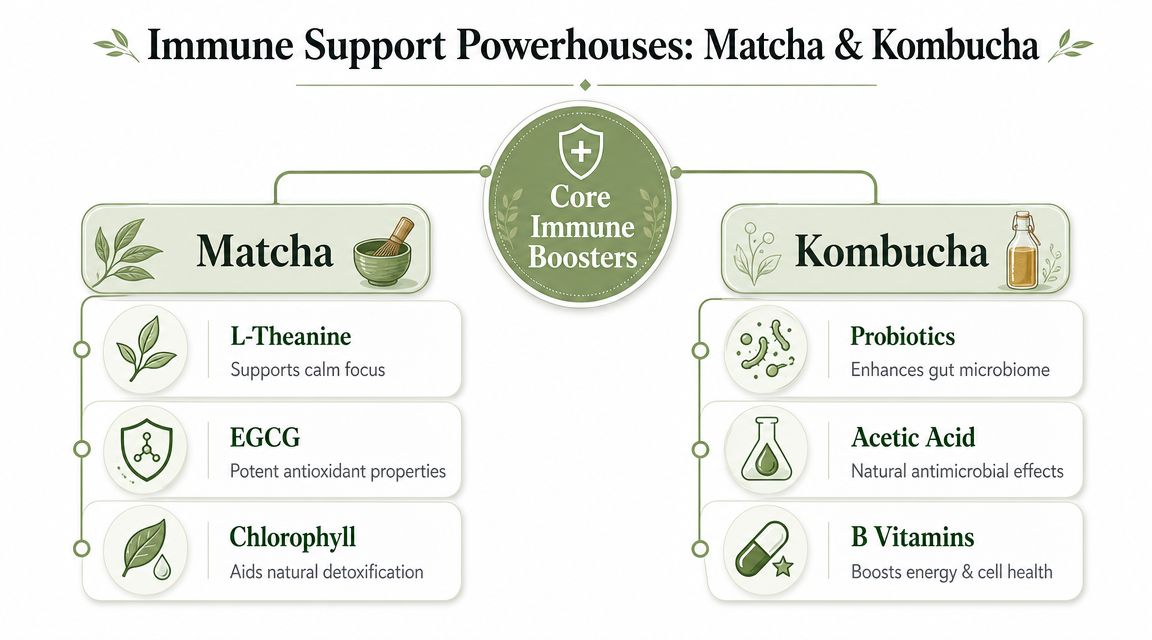
A useful summary comes from Harvard's nutrition and immunity guide, which notes that balanced eating patterns and lifestyle habits matter most, while evidence around functional beverages is strongest when they provide known nutrients. The same source highlights that green tea catechins such as EGCG may improve immunological function, and that probiotic-rich foods can enhance mucosal and systemic immunity.
What matcha brings to the table
Matcha works because it's more than green-coloured powder. A well-made matcha drink gives you tea compounds in a concentrated, drinkable format.
Three components matter most in practice:
- EGCG: This is the green tea catechin most often discussed in relation to matcha's functional value.
- L-theanine: It's one reason matcha tends to feel smoother and more composed than a standard high-caffeine drink.
- Chlorophyll and whole-leaf intake: Because matcha is whisked into the drink rather than steeped and discarded, you consume the leaf material itself.
For home drinkers, that means quality matters. Dull, stale matcha tastes bitter and grassy in the wrong way. Bright, fresh matcha is cleaner, softer, and much easier to build into a low-sugar drink.
What kombucha contributes
Kombucha's value is different. It's not there to mimic tea. It brings fermentation character, acidity, and in properly made versions, live cultures.
That matters because gut health and immune function are closely connected in everyday wellness discussions. A kombucha-based drink can be a smart format when you want something cold, savoury-sharp, and less heavy than a smoothie or juice.
The best kombucha recipes don't bury the brew. They use kombucha as the backbone, then add fresh elements around it.
Known actives beat vague promises
People often ask whether a drink needs a long list of ingredients to count as functional. Usually, no.
A shorter ingredient list often works better if each part has a clear purpose:
- A water-based or tea-based foundation for hydration.
- A vitamin C source, such as lemon or orange.
- A meaningful functional layer, such as matcha or a well-made kombucha.
- Low sugar, so the drink still fits a health-oriented routine.
Here's a simple way to understand it:
| Ingredient type | Why it belongs |
|---|---|
| Tea catechins | Give tea-based drinks a functional role beyond flavour |
| Probiotic foods or drinks | Support gut-focused wellness when handled properly |
| Citrus | Adds brightness and a familiar vitamin C source |
| Fresh ginger or mint | Improve flavour and make low-sugar drinks more satisfying |
If a drink can't explain why each ingredient is there, it usually isn't well designed.
Recipe The Energising Matcha Immunity Elixir
A good matcha-based immune booster drink should wake you up without tasting like a punishment. It needs brightness, a little warmth, and a finish clean enough that you'd happily make it again tomorrow.
This is the version I reach for when I want something warming but not heavy.
Ingredients that pull their weight
You don't need a crowded recipe. You need one with purpose.
For one serve:
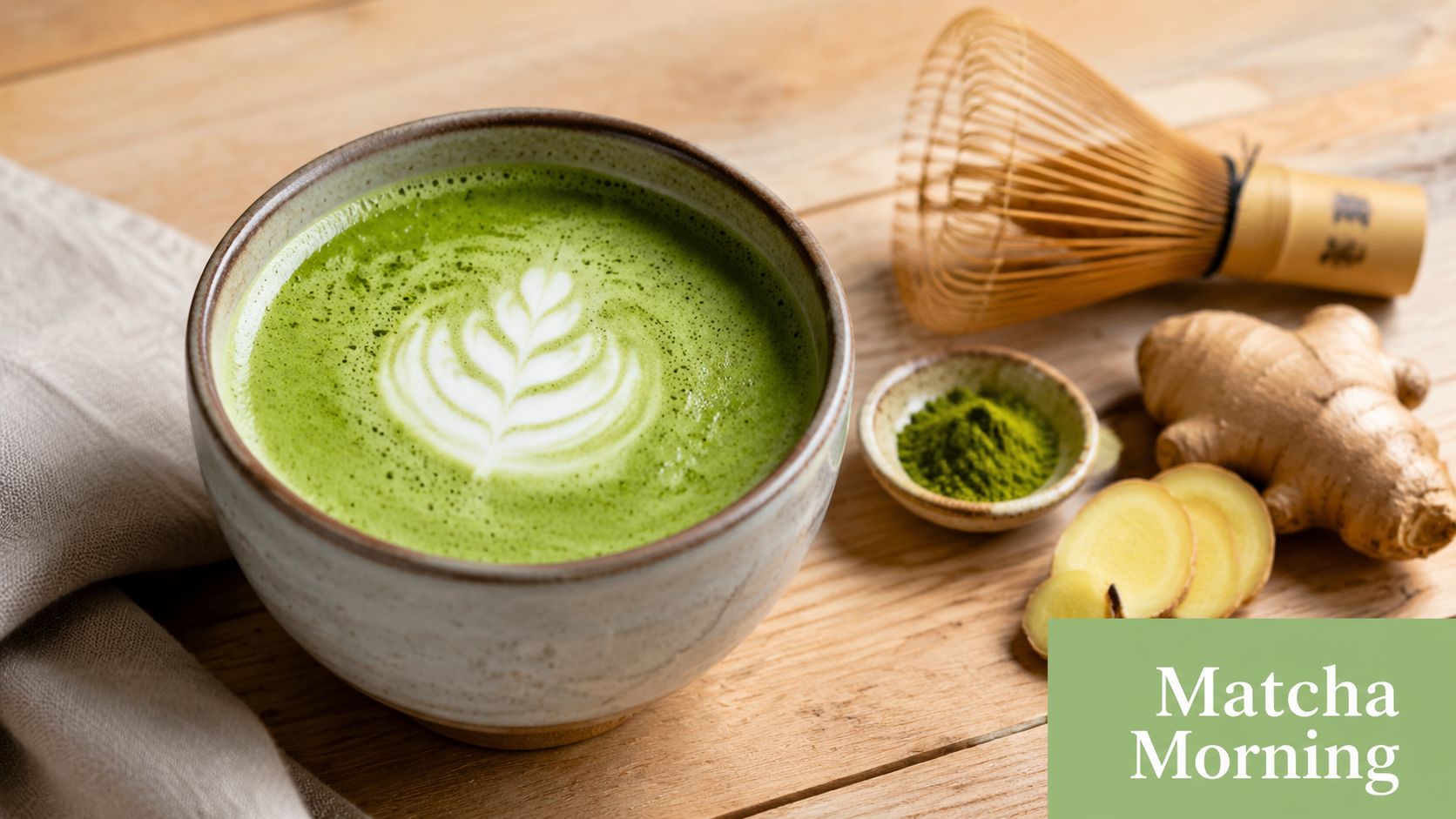
- Matcha powder
- Warm water
- Fresh lemon juice
- Freshly grated ginger
- Optional milk or plant milk if you want a softer latte-style finish
- Optional small amount of honey if you need it sweeter
The logic is straightforward. Matcha gives the drink its tea-based functional backbone. Lemon adds brightness and vitamin C. Ginger rounds out the flavour and brings warmth, which makes the whole drink feel more satisfying without relying on sugar.
How to make it properly
- Sift the matcha into a bowl or cup. This prevents clumps and gives you a smoother texture.
- Add a small amount of warm water. Not boiling. Too much heat can roughen the flavour.
- Whisk until glossy and foamy. A bamboo whisk is ideal, but a small handheld frother works.
- Stir in lemon juice and a little fresh ginger. Add gradually so the citrus sharpness doesn't dominate.
- Top with more warm water for a lighter drink, or warm milk for a creamier version.
- Taste before sweetening. Often the ginger and lemon make it lively enough without much else.
Where most recipes go wrong
The biggest mistake is overbuilding. Too many spices, too much syrup, or a huge pour of fruit juice can flatten matcha's fresh, green character.
Another common problem is sugar. A useful warning from this PMC review on functional beverages is that wellness drinks often rely on “fairy dust” levels of botanicals while also carrying high sugar loads that undermine health goals. That's exactly why I prefer a low-sugar format with a tea base and a few fresh additions.
Practical rule: If your “healthy” matcha drink tastes like melted dessert, rebuild it from scratch.
A few smart variations
If you make this often, keep the structure the same and change the edges.
- For hot mornings: Use just water, lemon, ginger, and matcha for a clean finish.
- For a café-style cup: Add textured milk and keep the lemon very light so the drink stays balanced.
- For warmer weather: Shake it cold over ice instead of serving it hot.
If you want a chilled version with better texture, this iced matcha tea recipe is a useful starting point. The same low-sugar thinking still applies.
A short visual guide helps if you're still dialling in whisking technique:
Flavour notes worth noticing
This drink should taste lively, not aggressive.
You want:
- Fresh grassy sweetness from the matcha
- Citrus lift rather than sourness
- Ginger warmth without a harsh burn
- A dry, clean finish that leaves you ready for another sip
When those pieces line up, the drink feels functional because it's well made, not because the label shouts at you.
Recipe The Probiotic Kombucha Zing
A kombucha-based immune booster drink should feel crisp and alive. Not sticky, not flat, and not overloaded with juice.
The best versions build on the kombucha's own acidity and fizz instead of fighting it.
Build around the base, not around sugar
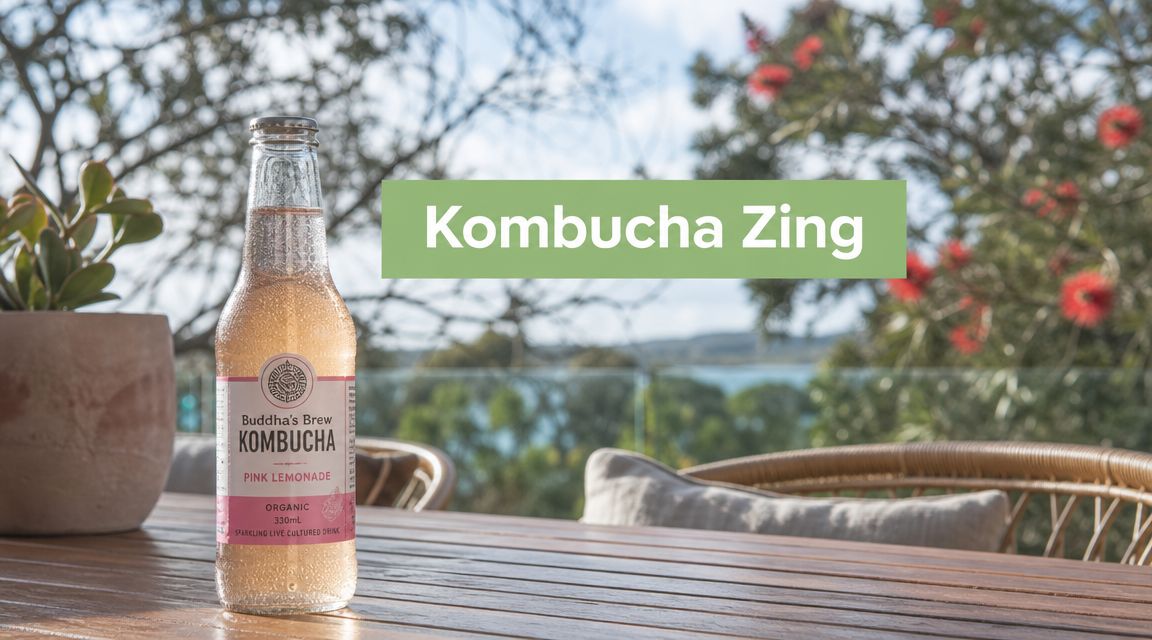
Start with a plain, ginger, or lime-leaning kombucha that isn't trying to pass as soft drink. From there, add small fresh elements that lift the drink without burying the fermentation.
For one glass:
- Chilled kombucha
- A few muddled berries
- Fresh mint leaves
- A squeeze of lemon or lime
- Ice
- Optional slice of cucumber for a cleaner finish
This works well because the berries add depth and freshness without requiring much quantity. Mint cools the palate. Citrus sharpens the edges.
Method that keeps the drink bright
Use a tall glass and work gently. Kombucha loses its charm fast if you beat the bubbles out of it.
- Muddle lightly: Press the berries and mint just enough to release flavour.
- Add ice next: This protects the carbonation when you pour.
- Pour the kombucha slowly: Let it run down the inside of the glass.
- Finish with citrus: Add just enough to lift the aroma.
You should still taste the tea and fermentation underneath the fruit.
What to avoid
Kombucha drinks become clumsy when people treat them like smoothies or mocktails loaded with syrup.
Skip these habits:
- Large juice pours that swamp the base
- Heavy sweeteners that make the finish sticky
- Too many herbs competing for attention
- Warm storage after opening, which dulls flavour and can affect the drink's behaviour
Keep kombucha recipes sharp and restrained. The brew should still taste like kombucha when you're done.
For a broader look at what makes kombucha appealing in the first place, this overview of the benefits of kombucha is a handy read.
Two useful serving styles
Not every kombucha drink needs the same shape. For home use and café service, these two styles tend to work best.
| Style | Best for | Flavour profile |
|---|---|---|
| Berry and mint spritz | Afternoon refreshment | Bright, tart, slightly herbal |
| Ginger citrus highball | Cooler weather or food pairing | Zesty, warming, more savoury |
The ginger citrus version is especially good with a drier kombucha. You get a pleasant bite without needing extra sugar.
Why this recipe earns the “functional” label
This drink makes sense because every part has a job. The kombucha gives the structure. The citrus freshens it. The herbs and fruit make it easier to enjoy regularly.
That's the standard I use for any immune booster drink. If it hydrates reasonably well, keeps sugar under control, and starts with a quality fermented base, it's already doing more than most flashy wellness blends.
Menu Ideas for Australian Cafés and Retailers
Cafés don't need another syrup-heavy “wellness” special. They need drinks that staff can make consistently, customers can understand quickly, and fridges can hold safely.
That's where matcha and kombucha stand out. Both already have flavour identity. Both fit non-alcoholic menus naturally. Both can be positioned as everyday wellness drinks without drifting into claims you can't support.
Build a menu around repeatability
For cafés, the winning move is restraint. Keep the menu language clean and the prep simple.
A practical line-up might include:
- Hot matcha ginger cup: Matcha, warm water, fresh ginger, light citrus
- Iced matcha citrus spritz: Matcha over ice with lemon and sparkling water
- Kombucha berry cooler: Kombucha, muddled berries, mint
- Ginger kombucha highball: Kombucha with fresh lime and lots of ice
The commercial advantage is that these drinks share ingredients. Ginger, mint, lemon, lime, and berries can move across multiple menu items, which helps reduce waste and keeps service organised.
Say less on the menu, but say it better
In Australia, kombucha and other fermented drinks need disciplined handling in commercial settings. As noted by guidance referenced for fermented beverage controls, fermented beverages like kombucha must be managed with validated HACCP controls, including cold-chain integrity and microbiological verification, because ambient distribution can alter sugar, carbonation, and alcohol levels.
That matters for menu wording too. Don't promise disease prevention. Don't imply a single drink can “fix” immunity. Describe the drink for what it is.
Good menu phrasing sounds like this:
- Low-sugar matcha drink with citrus and ginger
- Live-culture kombucha served chilled with fresh mint and berries
- Tea-based wellness drink with a clean, bright finish
Poor menu phrasing usually overreaches.
Customers trust cafés that explain drinks clearly. They don't trust menus that read like supplement ads.
Batch prep without wrecking quality
For café service, batch what's stable and finish what's fresh.
Batch these:
- matcha concentrate for same-day service
- pre-washed mint
- sliced citrus
- ginger infusion
Finish to order:
- whisked hot matcha
- sparkling or carbonated elements
- opened kombucha
- muddled fruit
This keeps flavour lively and reduces the chance of flat, tired drinks during the lunch rush.
Retail fridges and social promotion
Retailers should merchandise these drinks as part of a better daily-drinks habit, not a panic purchase for cold season. Place them near lunch items, grab-and-go snacks, or non-alcoholic alternatives.
For cafés posting short-form drink content, visual consistency matters almost as much as flavour. If you're filming pours, foam, and garnish shots for Instagram, this guide to SleekPost for Reels success is a useful resource for making the drinks look polished without overcomplicating the shoot.
A clean menu, cold storage discipline, and simple visual storytelling go a long way.
Sourcing Storing and Important Safety Notes
A well-made immune booster drink starts before the first pour. It starts with what you buy, how you store it, and how properly you use it.
Choose ingredients that show their quality
With matcha, colour tells you a lot. Look for a vibrant green powder with a fresh aroma and a smooth finish when whisked. Stale matcha tends to look dull and taste flat or bitter.
With kombucha, read for live cultures, a sensible ingredient list, and a lower-sugar profile. If the bottle tastes more like soft drink than fermented tea, it probably won't behave like a functional drink base either.
Store for flavour and function
Matcha is delicate. Heat, air, moisture, and light all work against it. Keep it sealed and cool, and don't leave the packet open while you fuss around making breakfast.
Kombucha needs proper refrigeration and sensible handling after opening. If you're checking acidity or refining your own brewing process at home, a reliable digital pH meter for beverage testing is one of the most useful tools you can keep in the kitchen.
Safety matters more than hype
A few grounded reminders are worth keeping in mind:
- Caffeine counts: Matcha contains caffeine, so some people will want smaller serves or earlier timing in the day.
- Fermented drinks need care: Home-brewed or poorly stored kombucha can be unpredictable.
- More isn't always better: Loading a drink with extra powders and extracts doesn't automatically make it smarter.
- General support is the right frame: These drinks can fit a wellness routine, but they aren't a substitute for medical care, sleep, balanced eating, or hydration.
Buy fewer ingredients, but buy better ones. Quality is easier to taste in simple drinks.
If you're making these at home, keep them enjoyable. If you're serving them professionally, keep them consistent. That's the difference between a functional drink people trust and a trend that disappears after one season.
If you'd like to put these ideas into practice, explore Pep Tea for premium organic matcha, Australian-brewed sugar-free kombucha, and practical tea gear that makes everyday wellness drinks easier to get right.