
Tag: raw kombucha storage
Does Kombucha Need to Be Refrigerated? the Complete Guide

Yes, raw and live kombucha needs refrigeration, ideally at 4°C or colder, to slow ongoing fermentation, stabilise flavour, and limit alcohol build-up. Pasteurised kombucha can generally remain on a shelf until opened, but always follow the product label.
You've bought a bottle, carried it home, and then noticed it sitting on the kitchen bench. Or perhaps you're a café owner deciding whether a new kombucha belongs in the drinks fridge or on a shelf. The answer depends less on the word “kombucha” and more on whether the drink is raw and living or pasteurised and shelf-stable.
That distinction matters because fermentation doesn't necessarily finish when a bottle is sealed. Live yeast and other microbes can remain active, especially when the drink warms up. Australian food-safety guidance therefore treats refrigeration as a practical control for most unpasteurised kombucha, while shelf-stable products follow a different production and labelling pathway.
The Quick Answer on Kombucha Refrigeration
A bottle of raw kombucha left out briefly isn't automatically ruined, but leaving it warm for an extended period can change the drink. The fermentation culture may continue working, producing more carbon dioxide, increasing acidity, altering flavour, and allowing alcohol levels to rise. Chilling the bottle slows those changes and helps preserve the balance created during brewing.
In Australia, CHOICE's kombucha guidance recommends refrigeration because cold temperatures slow further fermentation. CHOICE also advises refrigerating unpasteurised kombucha before and after opening and consuming it within a month. That advice is particularly relevant to raw or live products, where residual yeast and other microbes can remain active at warmer temperatures.
Check the label before deciding
Look for practical wording such as:
- “Keep refrigerated”, which means the product relies on cold storage.
- “Raw”, “live” or “unpasteurised”, which usually indicates ongoing microbial activity.
- “Refrigerate after opening”, which is commonly used for a shelf-stable product.
- A chilled retail location, which is a useful clue but not a substitute for reading the label.
Pasteurised kombucha has been heat-treated to make it more stable at room temperature. It may suit a pantry or café shelf before opening, while raw kombucha belongs in a functioning refrigerator from purchase through service.
For home drinkers, the simplest rule is straightforward: if the bottle is raw or live, keep it cold. For cafés and retailers, the same principle extends to receiving, storage, transport, and display. The cold chain protects more than freshness. It helps manage a fermented product whose chemistry can continue to change after bottling.
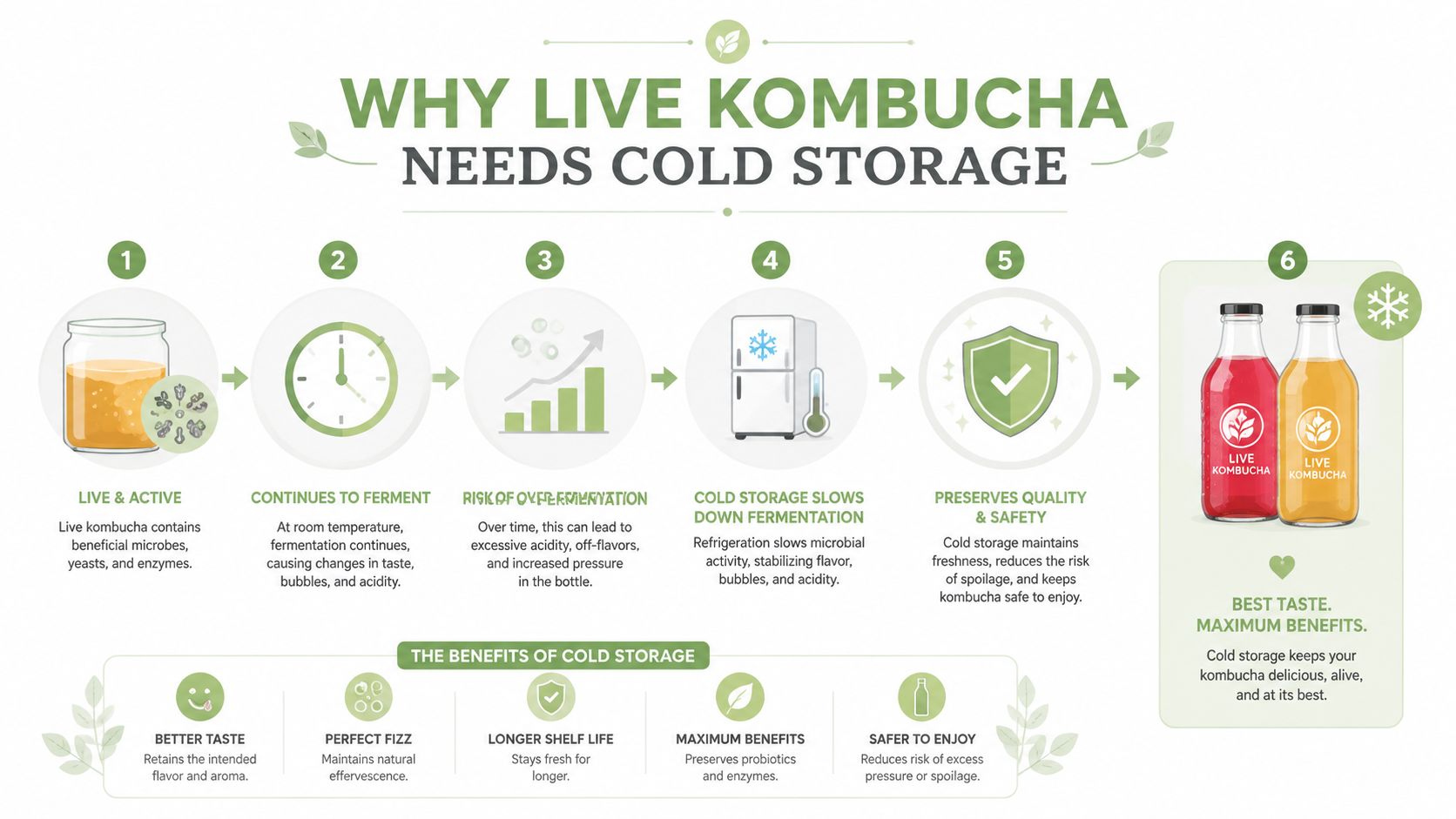
Why Live Kombucha Needs Cold Storage
Kombucha contains a living fermentation culture. During brewing, yeast and bacteria transform ingredients in the sweetened tea, creating the drink's acidity, aroma, and natural carbonation. Some of that microbial activity can continue after packaging, particularly if residual fermentable material remains and the bottle is stored warm.
At room temperature, yeast can keep converting available sugars into alcohol and carbon dioxide. Other microbes can continue changing the drink's acidity and flavour. Refrigeration doesn't destroy the culture or stop fermentation permanently. Instead, it slows microbial activity and helps move the product into a more stable state.
The Australian temperature framework
Western Australian food-safety guidance states that once kombucha reaches a safe acidity, the final product needs refrigeration at 4°C. The same guidance cites the Kombucha Brewers International recommendation for cold storage between 1.1°C and 4.4°C throughout the supply chain to help prevent continued fermentation and increases in alcohol content. These figures appear in the Western Australian fermented-food guideline.
A national fermented-beverages issues paper explains that kombucha is refrigerated at less than 4°C after 1 to 3 days of fermentation, which significantly slows the process. The same paper describes the microbes entering a dormant state rather than being eliminated. Small amounts of alcohol can still accumulate, so cold storage is a control measure, not a promise that all fermentation has stopped. You can read this context in the Australian fermented-beverages issues paper.
Practical rule: Cold storage turns active fermentation into slow fermentation. It doesn't make a live drink inert.
This explains why a finished bottle needs careful handling. Warm storage gives the culture more opportunity to keep working. Chilled storage helps hold the intended flavour, carbonation, and alcohol profile closer to the brewer's finished product.
For a café, that means a display fridge isn't merely a merchandising choice. For a home drinker, it means the refrigerator is part of the product's storage system, just as it is for other chilled fermented foods and beverages.
Raw Versus Pasteurised Kombucha Compared
Raw and pasteurised kombucha can look similar in the bottle, but they behave differently after production. Raw kombucha retains living cultures and needs temperature control. Pasteurisation uses heat to reduce or neutralise microbial activity, creating a product that can be stored on a shelf according to the producer's instructions.
That doesn't make one category universally right for everyone. Raw kombucha suits people who specifically want a living fermented drink and are happy to maintain the cold chain. Pasteurised kombucha may be more convenient for a pantry, mobile event, or café with limited refrigerated space.
| Attribute | Raw / Live Kombucha | Pasteurised Kombucha |
|---|---|---|
| Microbial activity | Living yeast and other microbes remain present and can continue changing the drink | Heat treatment reduces or neutralises the active culture |
| Storage | Usually kept refrigerated before and after opening | May remain on a shelf before opening, if the label permits |
| Flavour | Can continue developing if stored warm | More stable because fermentation activity has been reduced |
| Carbonation | Can build up as fermentation continues | More controlled after stabilisation |
| Best suited to | Drinkers seeking a raw fermented product | People prioritising portability and shelf convenience |
Read the product story, not just the front label
A bottle marked “organic” or “sugar-free” doesn't automatically tell you whether it needs refrigeration. Those terms describe ingredients or formulation, not necessarily the status of the fermentation culture. The storage instruction and processing information matter more.
Raw products also need a producer with disciplined brewing and bottling practices. If you're exploring home fermentation, PepTea's home-brew kombucha guide can help you understand the relationship between culture activity, acidity, flavour, and storage.
For a café, the choice affects operations. A raw product requires reliable chilled receiving, refrigerated display, and staff who understand why bottles shouldn't sit beside a warm coffee machine. A pasteurised product offers simpler logistics, but it no longer delivers the same living-culture proposition.
The most useful question isn't “Which type is healthier?” It's “Which type matches the customer expectation, storage capacity, and product label?” Once that's clear, refrigeration becomes a practical decision rather than a marketing mystery.
How Refrigeration Affects Probiotics and Carbonation
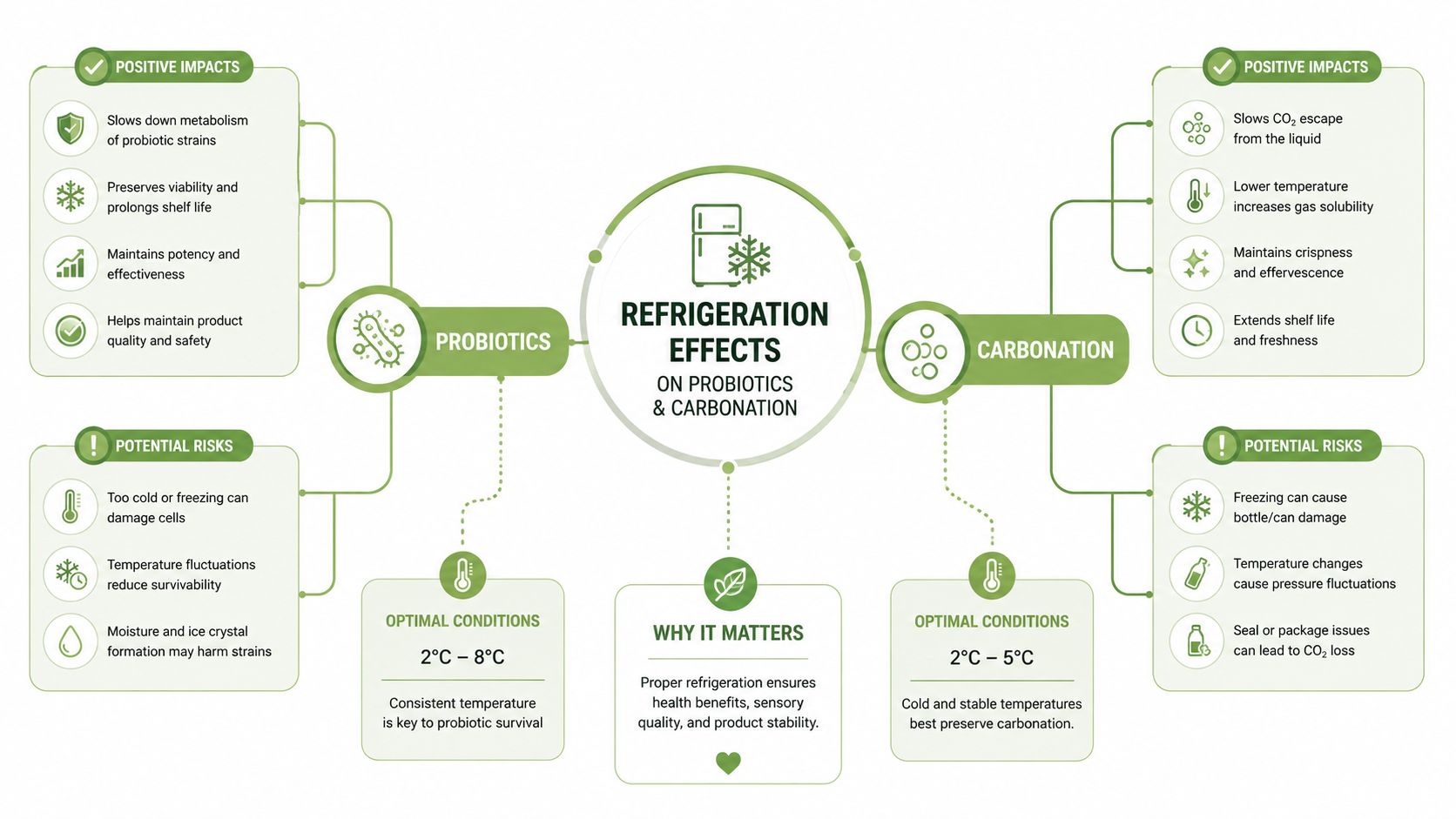
Cold storage can sound counterintuitive when you're buying kombucha for its living culture. Many people worry that refrigeration kills the probiotics. In practice, chilling slows microbial metabolism, helping preserve the drink in the condition the brewer intended. It doesn't turn a raw product into a pasteurised one.
Carbonation follows the same logic. A live culture can continue producing carbon dioxide when the bottle warms, particularly if fermentable material remains. Refrigeration reduces that activity and helps keep the fizz more controlled.
What changes when a bottle warms
A temperature change doesn't instantly transform kombucha, but repeated or prolonged warming gives the culture more opportunity to ferment. You may notice:
- More pressure: Carbon dioxide can accumulate inside a sealed bottle.
- A sharper taste: Continued fermentation may shift the balance towards greater acidity.
- A bigger pour: A warm, highly carbonated bottle may foam or gush when opened.
- A changing alcohol profile: Ongoing fermentation can allow small amounts of alcohol to accumulate.
Open a chilled bottle slowly over a sink if it has travelled, warmed up, or appears unusually pressurised. Don't shake it first. Keep your hands away from the cap as you release the pressure gradually.
Why pH checks matter to producers
Brewers use acidity as one part of fermentation control. A tool such as PepTea's digital pH meter can help a producer monitor the brew's acidity during production, but pH alone doesn't replace safe handling, validated processes, or correct refrigeration.
Refrigeration protects the drinking experience and supports control of the living process. It isn't a substitute for good brewing hygiene.
For consumers, the practical lesson is simple. Keep raw kombucha consistently cold, avoid leaving it in a hot car or sunny window, and expect the drink to behave differently if it has spent substantial time warm.
Storage and Transport Best Practices for Every Setting
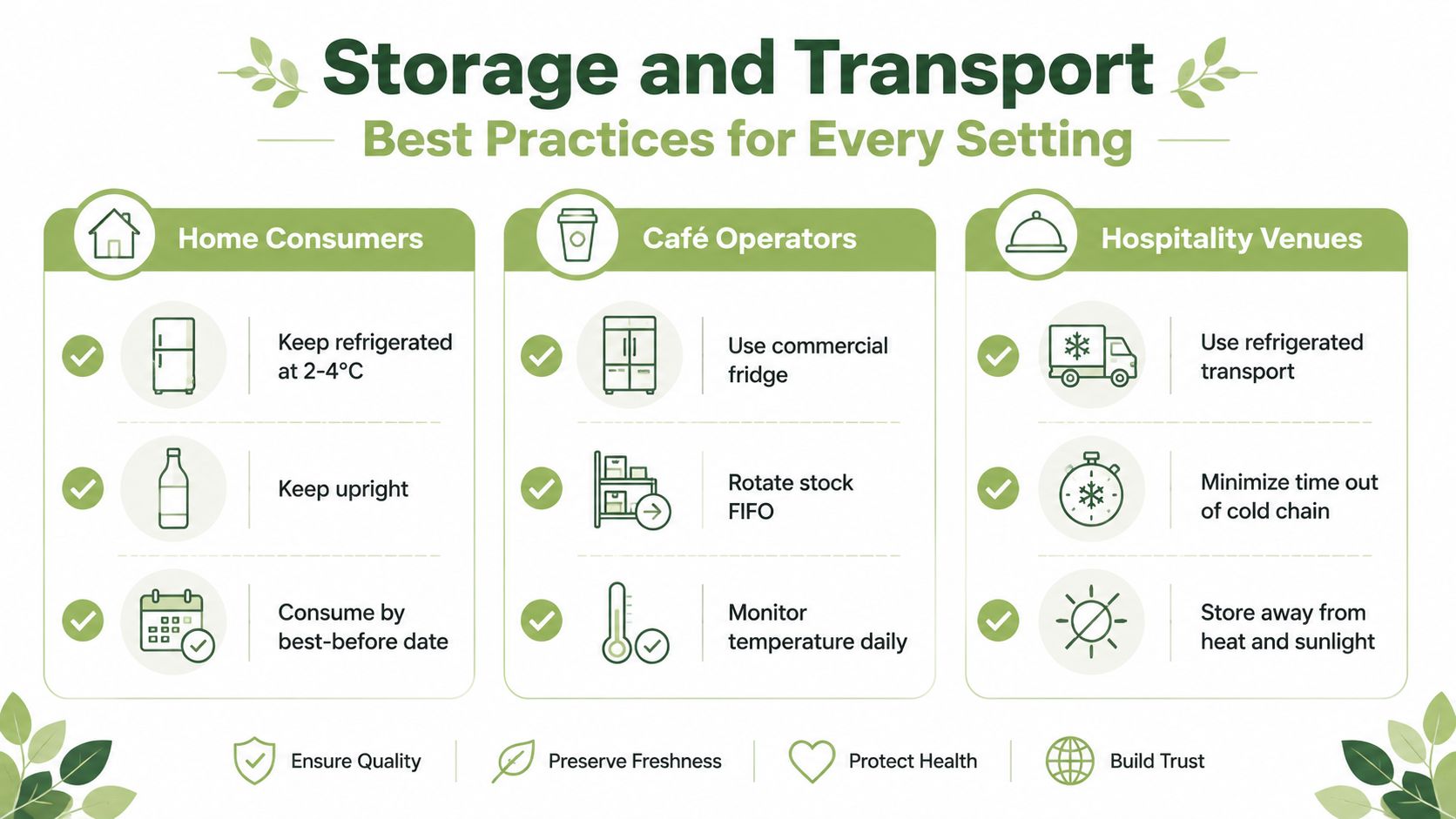
A good storage routine starts before the bottle reaches the fridge. At home, place raw kombucha in the refrigerator as soon as you unpack it. Keep bottles upright, avoid the warmest areas of the fridge door, and leave enough space around them for cold air to circulate.
CHOICE's storage advice says unpasteurised kombucha should be refrigerated before and after opening and consumed within a month. Treat that as a useful guide, while giving the product's own best-before date and label instructions priority.
At home
- Keep it upright: This reduces the chance of liquid sitting against the cap and makes opening more manageable.
- Open gently: Twist the cap slowly, particularly if the bottle has been moved or warmed.
- Use clean glasses: Don't drink directly from a shared bottle if you plan to store the remainder.
- Follow the label: Use the producer's opening instructions and best-before guidance.
If a raw bottle has been left on the bench, move it back to the fridge and inspect it before opening. A change in smell, unusual appearance, damaged packaging, or excessive pressure is a reason to avoid drinking it and contact the producer for advice.
In a café or restaurant
Receiving staff should check whether the product is labelled for refrigeration and move raw kombucha into a functioning commercial fridge promptly. Keep stock away from ovens, direct sunlight, hot pass areas, and equipment that releases heat.
Use a simple rotation system so older stock is offered first. Staff should know the difference between a raw bottle and a shelf-stable pasteurised product, because displaying them together can create confusion for customers and inconsistent service.
A daily temperature check gives managers a practical record that the cold storage system is working. If the fridge runs warm, isolate affected stock and follow the supplier's advice rather than guessing.
During transport
Use an insulated esky or refrigerated vehicle for raw kombucha, especially when travelling to a market, event, or outdoor service. Pack the bottles securely, keep the container shaded, and return unused stock to refrigeration as soon as possible.
For cafés ordering from an Australian supplier, ask how the product is packed, transported, and labelled. A clear cold-chain process protects flavour and helps the venue serve the drink as the brewer intended. PepTea's kombucha storage guide is another practical reference for handling bottles at home or in hospitality settings.
Common Kombucha Storage Myths and Mistakes
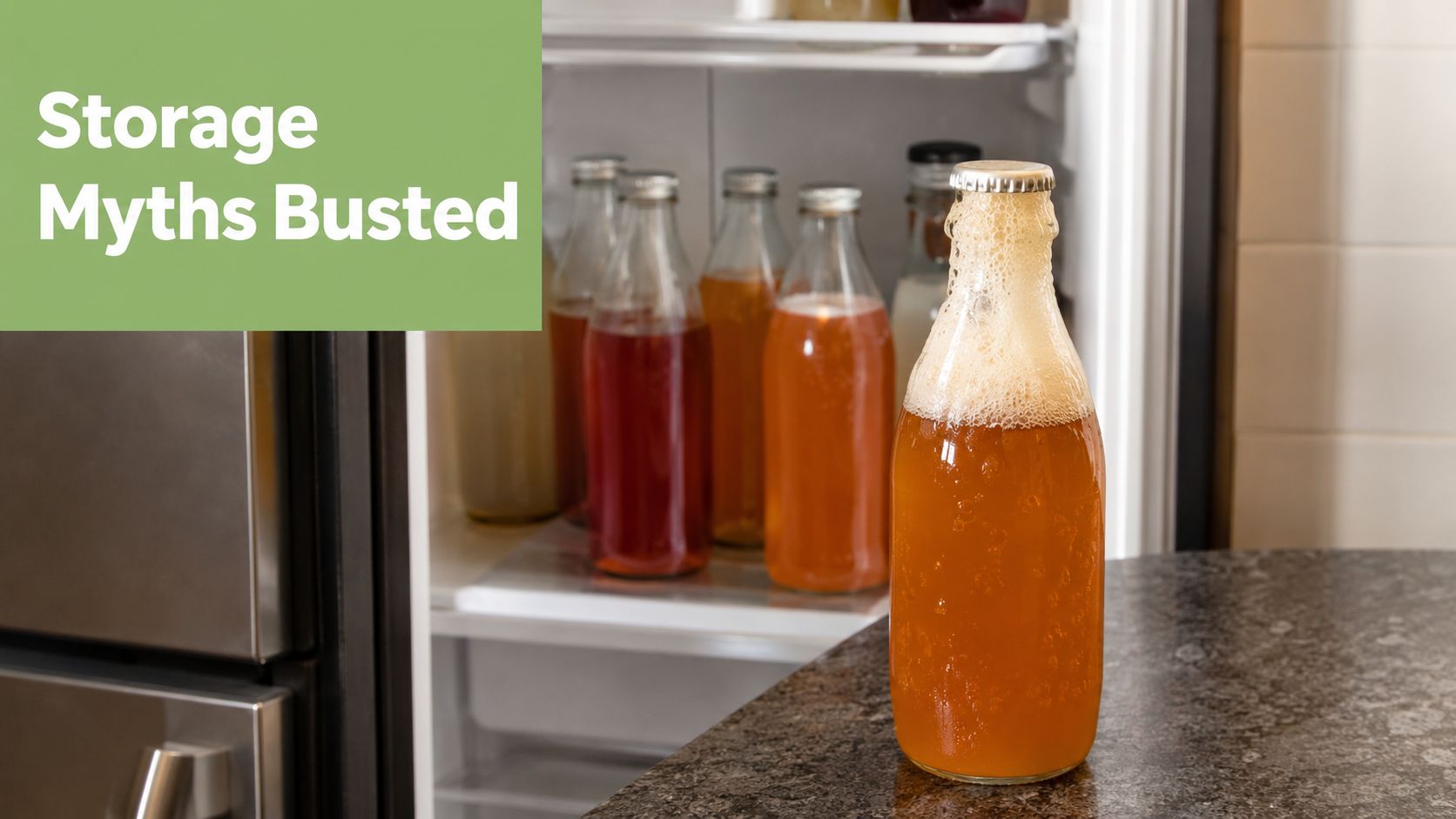
Myth one, all kombucha is shelf-stable. Some bottles can sit on a shelf because they've been pasteurised or otherwise stabilised. Raw kombucha is different. A chilled display is often a direct signal that the product remains biologically active and depends on cold storage.
Myth two, refrigeration kills the good bacteria. Refrigeration slows microbial activity. That's why it helps preserve a live drink rather than replacing it with a heat-treated one. Warm storage is usually the bigger concern for a raw product because it allows fermentation to continue more quickly.
The alcohol question in Australia
Kombucha's alcohol content can change as fermentation continues. NSW Health notes that drinks over 0.5% ABV require alcohol-content labelling under the Food Standards Code, as outlined in the national fermented-beverages issues paper.
The thresholds applied to kombucha also vary by state in the Kombucha Brewers International code of practice. New South Wales, Victoria and Queensland use 0.5% ABV, while Western Australia, South Australia and Tasmania use 1.15% ABV, according to the Kombucha Brewers International code. That variation makes temperature control important for producers and hospitality businesses selling across state borders.
Myth three, one warm night never matters. A short period outside the fridge doesn't provide enough information to make a universal safety decision. The product's formulation, processing, packaging, temperature exposure, and label all matter. If a raw bottle has been warm for an extended time, contact the producer rather than relying on smell alone.
Finally, don't confuse “sugar-free” with “doesn't need refrigeration”. Storage depends on the entire product and process, not one front-label claim.
Choosing Quality Australian Kombucha and Storing It Right
Good storage starts with choosing a product whose handling requirements are clear. In Australia, FSANZ treats kombucha as a traditional food, so it doesn't require pre-approval as a specific product category. It remains covered by the general Food Act requirement that food is safe and suitable, which places practical importance on responsible production, storage, and handling. CHOICE explains this regulatory context.
Keep these rules close:
- Raw or live kombucha: Refrigerate it before and after opening.
- Temperature control: Follow the label and maintain cold storage around the recommended 4°C-class range.
- Transport: Use an insulated or refrigerated method and limit warm exposure.
- Cafés: Check receiving, display, rotation, and daily fridge practices.
- Shelf-stable products: Follow the producer's unopened and opened storage instructions.
Pep Tea makes Australian-brewed, sugar-free organic kombucha in the Hunter Valley, NSW, alongside its organic Japanese Matcha range. If you're looking for a chilled fermented drink for home or a non-alcoholic café menu, explore the product details and store each bottle according to its label.
Visit Pep Tea to explore sugar-free organic kombucha brewed in Australia and premium organic Matcha for everyday wellness routines. Choose the format that suits your fridge, café menu, or transport needs, then keep live kombucha properly chilled from purchase to pour.