
Tag: pregnancy safe tea
Matcha in Pregnancy: 2026 Guide & Safety
Pregnancy has a way of turning ordinary habits into big questions.
A drink you barely thought about before can suddenly feel complicated. Your usual morning matcha latte, the one that helped you ease into the day, now comes with a mental checklist. Is the caffeine too high? Does quality matter more now? Should you stop completely, or is there a safe middle ground?
If that sounds familiar, you are not overthinking it. You are doing what many pregnant women do, trying to sort through mixed advice and make a calm, sensible choice.
Matcha in pregnancy does not need to be approached with fear. It does need a bit of context. The key questions are usually about caffeine, timing, quality, and how matcha fits into the wider picture of your diet and supplements.
Australian readers also face a slightly different problem. A lot of online advice is broad, overseas-focused, or vague on practical details. It may say “limit caffeine” without helping you work out what that means in a real kitchen, a real café, or a real workday.
That is where clear guidance helps. If you want a quick grounding in what matcha is before deciding whether it belongs in your pregnancy routine, this primer on what matcha powder is is a helpful place to start.
Your Daily Ritual and a Big Question
One woman might be standing in her kitchen, hand on the kettle, wondering whether to make her usual bowl of matcha or switch to plain hot water and lemon. Another might be ordering at a café, suddenly aware that she has no idea how much powder goes into a matcha latte. Someone else may already have stopped drinking coffee and is hoping matcha could be the gentler option.
These moments are small, but they carry a lot of emotion. Pregnancy can make you feel protective, tired, cautious, and overwhelmed, sometimes all before breakfast.
That is why matcha in pregnancy is rarely just about tea. It is about confidence. You want to know whether you can keep a comforting ritual without second-guessing yourself later.
Why this question comes up so often
Matcha sits in an unusual spot. It is tea, but it often feels stronger and more functional than a standard cup of green tea. People reach for it for calm focus, a steadier lift, or because they enjoy the taste and ritual.
Pregnancy changes the way you think about all of that. The same drink can suddenly raise questions like:
- How much caffeine is in one serve
- Whether “organic” or “ceremonial grade” matters
- If matcha affects iron or folate
- Whether a café-made matcha is different from one made at home
Those are all reasonable concerns.
A good pregnancy nutrition decision is not always “never”. Often, it is “how much, how often, and what kind”.
The reassuring part
For many women, the answer is not a blanket ban. It is usually about staying within caffeine guidance, choosing a high-quality product, and being smart about when you drink it.
That matters because fear-based advice often pushes people into all-or-nothing thinking. In practice, many individuals do better with clear boundaries they can use.
A safe choice might look like one small morning matcha made with a measured amount of powder. It might also look like deciding matcha is not worth the mental load right now and choosing a caffeine-free ritual instead. Both are valid.
The goal is not perfection. It is an informed choice that fits your body, your pregnancy, and your day.
Decoding Caffeine and Pregnancy The Australian Guidelines
The biggest reason people ask about matcha in pregnancy is caffeine. That is the right place to start.
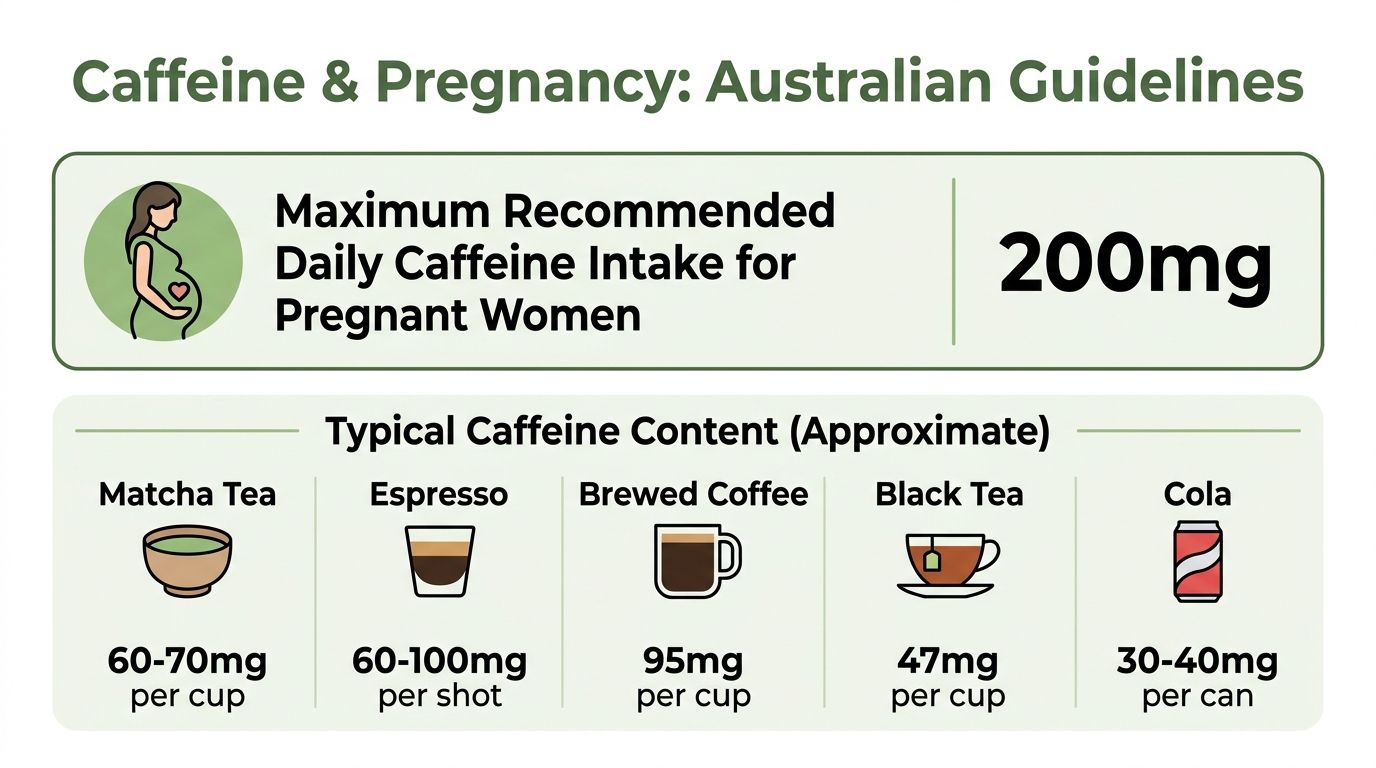
In Australia, the Royal Australian and New Zealand College of Obstetricians and Gynaecologists aligns with guidance recommending pregnant women keep caffeine intake under 200 mg per day. A standard 1 gram serving of matcha contains 30 to 35 mg of caffeine, and Australian research found women consuming over 200 mg of caffeine had 1.5 times higher odds of preterm birth (RANZCOG-aligned guidance and Australian research summary).
That daily limit is easiest to think of as a caffeine budget. Matcha can fit within that budget. The important part is knowing what else is in your day.
What those numbers mean in real life
A lot of confusion comes from serving sizes.
At home, one person’s “small scoop” may be another person’s heaped teaspoon. In cafés, drinks vary even more. Some are delicate and tea-forward. Others use enough powder to deliver a much stronger caffeine hit.
Here is a simple way to approach it:
| Drink situation | What to keep in mind |
|---|---|
| Small home serve | A measured amount of powder gives you more control |
| Large café latte | The caffeine can be higher if extra powder is used |
| Matcha plus coffee day | Your total daily intake matters more than one drink alone |
| Late afternoon matcha | Pregnancy can make caffeine feel stronger and linger longer |
The headline is reassuring. A modest serve of matcha is not automatically excessive. The issue is accidental stacking.
Why pregnancy changes the caffeine conversation
Pregnancy slows caffeine metabolism, especially later on. In plain language, your body clears caffeine more slowly than usual.
That is one reason some women notice they feel more alert, more fluttery, or more wakeful at night from a drink they used to tolerate easily. It also explains why a morning matcha generally makes more sense than a late-day one.
A practical way to use the 200 mg limit
Rather than asking, “Is matcha allowed?”, ask these questions:
- How much powder is in this drink?
- Have I had coffee, black tea, cola, chocolate, or kombucha today?
- Am I drinking it early enough that it will not affect sleep?
That turns general advice into something usable.
If you want matcha in pregnancy, the safest approach is to measure it, count it, and treat it as part of your full day’s caffeine intake.
Where readers often get tripped up
Many people hear two different figures for matcha caffeine and assume one must be wrong. Usually, they are just describing different serving sizes.
The lower figure relates to a smaller measured amount of powder. The higher figure often reflects a prepared cup, especially when more powder is used. That is why “one matcha” is not a precise unit.
A careful home-made serve gives you the most confidence. A café order may still fit just fine, but it is harder to estimate unless the venue can tell you how much powder they use.
The takeaway from the Australian guidelines
The Australian message is not “avoid all caffeine at all costs”. It is stay under the recommended daily limit and be deliberate.
For many women, that makes matcha a manageable option rather than an automatic no. True skill involves not guessing. It is measuring, moderating, and keeping the rest of the day in view.
The Good and the Cautious Benefits Versus Risks
A lot of pregnant women notice that matcha feels different from coffee. The lift can feel smoother, more like a steady lamp than a flicked-on spotlight. That difference is real for some people, but it does not cancel out the need for care.

What some women appreciate about matcha
Part of matcha’s appeal is its natural mix of caffeine and L-theanine. In simple terms, caffeine is the accelerator. L-theanine acts more like a steadying hand. That combination is why some women describe matcha as calmer or less jittery than coffee.
That can sound especially appealing in pregnancy, when energy is often low and sleep may already be patchy.
Matcha also contains catechins, including EGCg, which are antioxidant plant compounds found in green tea. This is one reason matcha is often seen as a more nutrient-dense tea choice than standard brewed green tea, because you are consuming the whole powdered leaf rather than just an infusion.
Why the upside still has limits
The helpful way to look at matcha is as a drink with both positives and trade-offs.
It may feel gentler than coffee for some women. It also still contains caffeine. It may offer antioxidant compounds. Those same compounds can become less helpful if they interfere with nutrient absorption at the wrong time.
That last point matters in pregnancy because iron and folate are not side issues. They are part of the daily foundation.
The nutrient timing issue
Catechins in tea can reduce the absorption of iron and may also affect folate uptake. A simple way to picture it is traffic at a narrow merge point. Your supplement and your tea are both trying to pass through at once, and the nutrients do not always get clear priority.
If you take a prenatal vitamin or you are already keeping an eye on iron, timing matters just as much as portion size.
A practical approach looks like this:
- Take your prenatal supplement with a meal.
- Leave a gap before having matcha.
- If your doctor or midwife has flagged low iron, be extra careful about having tea close to iron-rich meals or supplements.
The goal is not perfection. It is giving your body a fair chance to absorb what you are taking.
If matcha stays in your routine during pregnancy, keep it well separated from prenatal supplements and iron-focused meals.
Quality matters more in pregnancy
Pregnancy changes the question from “Do I like this tea?” to “How confident am I in this product?”
Tea plants can absorb substances from soil, so product quality matters. In Australia, that means looking past pretty packaging and asking better questions. Is it certified organic? Is the supplier transparent about origin? Do they provide testing information for contaminants such as lead? Brands positioned as premium should be ready to answer those questions clearly.
That is especially relevant for Australian readers comparing ceremonial matcha, café powders, and lower-cost online options. Quality markers are not marketing fluff here. They are part of sensible risk reduction.
A practical way to weigh benefits against risks
It helps to sort the issue into three buckets: dose, timing, and quality.
| Question | Why it matters |
|---|---|
| How much am I having? | A smaller serve keeps caffeine and catechin intake more moderate |
| When am I having it? | Good timing helps protect iron and folate intake |
| What quality is it? | Better sourcing and testing reduce concern about contaminants. Australia-specific advice becomes useful here. |
General wellness articles often stop at “drink less caffeine.” Australian guidance sits better in real life. Keep caffeine intake within the limit advised by local bodies such as RANZCOG, choose a product you can trust, and do not let your tea crowd out key nutrients.
For one woman, that may mean a small morning matcha made at home with a tested organic powder. For another, especially if iron is low or nausea makes meals difficult, pressing pause may feel simpler. Both choices can be thoughtful and well-informed.
How to Safely Enjoy Matcha When You Are Expecting
You are standing in your kitchen, half awake, reaching for the tin you use every morning. Then the pregnancy question arrives again: can this still be part of my routine, or is it safer to stop completely?
For many women, the middle ground works well. A small, measured serve of good-quality matcha, taken at the right time of day, is often the simplest way to enjoy it without turning your cup into a source of stress. In Australia, that practical approach matters because advice is not only about caffeine. It is also about product quality, clear labelling, and whether the powder comes from a supplier willing to talk openly about origin, organic certification, and contaminant testing.
Start with a measured serve
A measured serve gives you something pregnancy often takes away: predictability.
Matcha is powdered whole tea leaf, so strength can creep up quickly if you are free-pouring. A level ½ teaspoon, about 1 gram, is a sensible place to start for home preparation. If you want extra context on everyday portions, this guide on how many cups of matcha tea powder are safe per day explains serving sizes in a simple way.
Café drinks are where confusion often starts. One venue may use a light scoop. Another may use two heaped scoops in a large latte. If you are ordering out, it is reasonable to ask how much powder goes into the cup. That is not being fussy. It is the tea version of checking a recipe before you eat it.
Time it so it works with your body
Morning usually makes life easier.
Caffeine can linger longer in pregnancy, and matcha can feel stronger than expected if you drink it late or on an empty stomach. There is also the nutrient timing issue. Tea compounds can get in the way of iron absorption, which matters more in pregnancy than it did before.
A practical routine often looks like this:
- Have matcha earlier in the day
- Drink it with food if nausea is a problem
- Leave a gap before iron supplements or prenatal vitamins
- Keep later drinks caffeine free
That spacing works like giving each job its own lane. Your matcha stays in one lane. Your nutrition and supplements stay in another.
Keep the recipe plain and easy to read
Pregnancy is a good time to become a careful label reader.
Pure matcha powder is straightforward. Flavoured blends, café premixes, and sweetened sachets can be less clear because they may add sugar, extra caffeine sources, or ingredients that do not sit well when you are already dealing with nausea, reflux, or food aversions.
A simpler recipe is usually easier to tolerate:
- Pure matcha powder
- Hot water
- Milk if you want a latte
- Little or no sweetener
If you still want the taste but not the full strength, reduce the powder rather than making the cup larger. A weaker matcha often feels gentler without losing the ritual.
Choose quality the same way you would choose produce
During pregnancy, powder quality matters more than fancy branding.
Tea plants can absorb substances from the environment, so this is the stage of life to ask direct questions. Is it certified organic? Is the country of origin clear? Does the supplier provide batch or independent testing information, including screening for heavy metals such as lead? Premium brands in Australia should be ready to answer those questions plainly.
That point is especially useful if you are comparing online imports with established local sellers. A bright green colour and elegant packaging can look reassuring, but transparency is the better sign.
A simple home routine
If it helps to see the steps laid out, keep it very plain:
- Measure ½ teaspoon or about 1 gram of matcha
- Whisk with hot, not boiling, water
- Add milk if you like, keeping the serve modest
- Drink it with breakfast or a snack if your stomach is sensitive
- Wait before taking prenatal vitamins or iron
That routine keeps the drink familiar while reducing the common points of friction.
Here is a quick visual if you like seeing the prep in action before trying a lighter serve at home.
If nausea changes everything
Pregnancy can change taste fast. A drink you loved a month ago can suddenly taste grassy, metallic, or far too rich.
If that happens, try one small adjustment at a time:
- Use less powder
- Try an iced version
- Blend it into a mild smoothie
- Choose a latte instead of straight matcha
You do not need to force a wellness habit that no longer feels good. Pausing is also a reasonable choice.
Safe matcha in pregnancy usually looks very simple: a small serve, a trustworthy powder, an earlier cup, and good spacing from supplements.
A quick check before you make your cup
| Quick check | Yes or no |
|---|---|
| Did I measure the powder? | |
| Do I know how much other caffeine I am having today? | |
| Am I drinking this early enough to protect sleep? | |
| Have I left space around iron or prenatal supplements? | |
| Can I clearly verify the product's sourcing and testing? |
If you can answer yes to most of those, you are handling matcha in a calm, informed way.
What About Kombucha and Other Teas in Pregnancy
Once people start reviewing matcha, another question usually follows. What about kombucha, herbal teas, or the rest of the tea shelf?
The answer depends on what matters most to you. With matcha, the key issue is caffeine. With kombucha, the questions usually shift toward fermentation, trace alcohol, and whether the product is professionally made.
Kombucha compared with matcha
Matcha is easier to understand because it is a direct caffeine question.
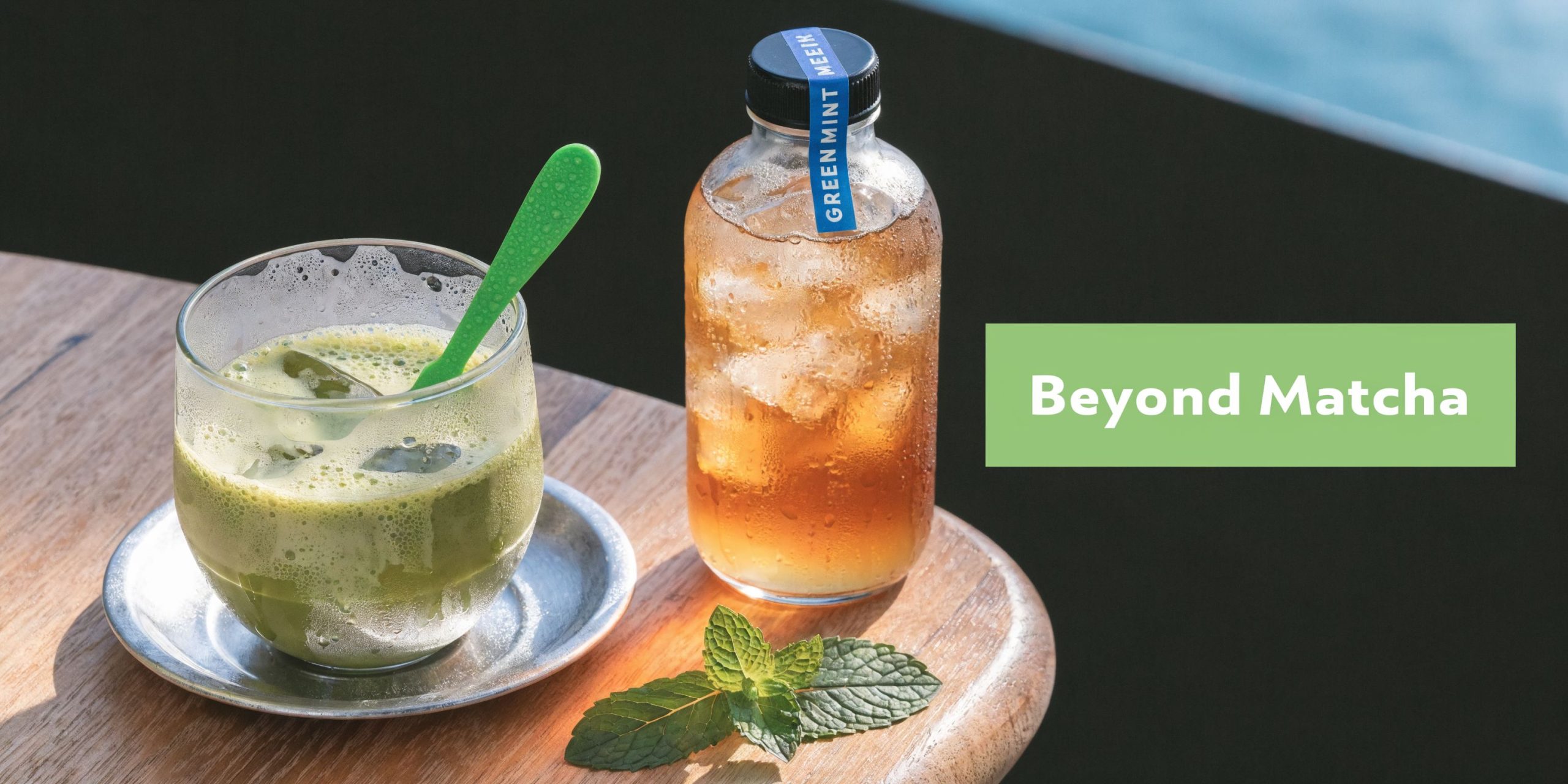
Kombucha is a bit murkier for pregnant readers because fermentation can raise concerns about alcohol and microbial safety. That is why many women are more comfortable with professionally brewed products than homemade versions, especially during pregnancy.
If you are trying to compare your options, it helps to separate the questions:
| Drink | Main question in pregnancy |
|---|---|
| Matcha | How much caffeine is in my serve? |
| Kombucha | How was it brewed and is it a professionally made product? |
| Peppermint or ginger tea | Does it suit me and has my clinician suggested any limits? |
| Black tea | How much total caffeine am I adding? |
If you are also wondering about the caffeine side of kombucha, this guide on whether kombucha has caffeine can help clarify the basics.
Herbal teas are not one category
A lot of people say “herbal tea” as if that automatically means pregnancy-safe. It does not.
Some herbal teas are widely used as gentle options. Others are less straightforward and are better discussed with your midwife, GP, or obstetric care team. That is especially true if you are drinking them often, using concentrated blends, or choosing products marketed for detox, energy, or hormone balance.
A few practical habits help:
- Read the ingredients list, not just the front label
- Be cautious with multi-herb blends
- Favour simple teas over products with long wellness claims
- Ask your care provider if a specific herb keeps coming up in your routine
When kombucha feels less clear-cut
Some pregnant women decide kombucha is not worth the uncertainty. Others stick to professionally brewed options or avoid it unless their healthcare provider is comfortable with it.
That is a reasonable decision either way. The main thing is to avoid treating kombucha as interchangeable with tea just because both sit in the wellness drinks category.
The easiest decision framework
If you are choosing among drinks during pregnancy, use this order:
- Caffeine question
- Ingredient simplicity
- How the product was made
- How your own body is responding
That framework often leads people to a pretty sensible routine. A measured morning matcha if it suits them. Plenty of water. Simple caffeine-free teas later in the day. More caution around kombucha if they are unsure.
A Note for Our Australian Café Partners
If you run a café, this question will come up. A pregnant customer will ask whether your matcha is safe, whether it is strong, or whether you can make it lighter.
How you answer matters.
Australian consumers face a genuine information gap here. Many articles do not explain whether suppliers meet FSANZ expectations for contaminants such as lead, and they rarely help cafés talk clearly about sourcing, organic certification, or third-party testing. Cafés that can speak transparently about those quality markers give pregnant customers an extra level of confidence.
Trust starts with clear answers
Customers do not expect baristas to give medical advice. They do appreciate honest, informed answers.
Good examples include:
- “Our matcha contains caffeine, so if you’re pregnant it may help to check how it fits into your daily intake.”
- “We can make that half-strength if you’d prefer a lighter serve.”
- “We use pure matcha powder rather than a sugary premix.”
- “If you want a caffeine-free option, we can suggest one.”
That kind of language is calm and useful.
Small menu choices make a big difference
A café does not need a special pregnancy menu. It does need thoughtful options.
Consider these practical changes:
- List caffeine clearly on matcha drinks
- Offer half-strength matcha lattes
- Train staff to explain the difference between pure powder and sweetened blends
- Keep a caffeine-free alternative ready so the customer does not feel stuck
This is good hospitality, but it is also good business. Health-conscious customers remember venues that make them feel safe rather than awkward.
Pregnant customers are often not looking for certainty from a café. They are looking for clarity, honesty, and options.
Supplier transparency matters
For cafés, sourcing is not just a back-end issue. It shapes customer trust.
When your supplier can explain product quality, contaminant awareness, and compliance clearly, your staff can answer questions without fumbling through vague wellness language. That is especially valuable with matcha, where many customers assume all powders are roughly the same.
They are not.
A better customer experience
The venues that handle this well usually do three things:
- They know what they serve
- They share information without making claims
- They offer alternatives gracefully
That creates confidence for pregnant customers, new parents, and anyone trying to make a careful choice.
Your Pregnancy Matcha Questions Answered
Some questions keep coming up, especially once you move beyond the simple caffeine limit and start thinking about real-life situations.
Is matcha in pregnancy different in the third trimester
It can feel different because caffeine metabolism slows as pregnancy progresses. That means a drink you tolerated well earlier may feel stronger later.
If you are in the third trimester, be extra mindful about timing, portion size, and whether it affects sleep. A morning serve is generally easier to manage than an afternoon one.
Is ceremonial grade safer than culinary grade
People often use these terms loosely, so it helps to be careful.
“Ceremonial” and “culinary” mainly describe style and intended use, not a medical safety ranking. In pregnancy, the more useful question is whether the product is high quality, well sourced, and transparent about standards. Better-quality powders generally inspire more confidence than cheap bulk products with little sourcing information.
Can I drink matcha if I am taking prenatal vitamins
Possibly, but timing matters.
Sources commonly mention interference with iron and folate absorption, yet there is still a gap in Australian-specific clinical guidance. Australian prenatal formulations can differ from overseas products, so there is no one perfect universal schedule for everyone.
The practical takeaway is clear. Keep space between matcha and your prenatal supplement, and ask your own clinician if iron or folate is a particular focus in your pregnancy.
What if I have low iron
That is a good reason to be more cautious.
Because matcha can interfere with iron absorption, many women with low iron choose to separate it carefully from meals and supplements, reduce how often they drink it, or pause it altogether while they are actively treating iron deficiency. Your GP, midwife, or obstetric team can help you decide what makes sense for your situation.
Is one café matcha the same as one home matcha
Not always. This catches people out.
At home, you can measure the powder. In a café, the amount may vary depending on cup size, recipe, and the person making it. If you are trying to stay comfortably within your caffeine budget, a home-made serve is easier to track.
If you order out, it is fine to ask for a lighter serve.
What if matcha suddenly makes me feel nauseous
That can happen. Pregnancy changes taste, smell, and tolerance in very individual ways.
You do not need to push through just because matcha used to be part of your routine. Try a weaker drink, a cooler version, or stop for a while. If your body is saying no, listen.
What are some caffeine-free alternatives if I want the ritual
Sometimes the ritual is what you miss most, not the caffeine itself.
A few gentle replacements can help:
- Warm lemon water in your favourite mug
- Simple peppermint or ginger tea if they suit you
- Steamed milk with cinnamon
- A plain warm water ritual with a slow morning pause
The goal is to keep the comfort, even if the drink changes.
Should I ask my healthcare provider before drinking matcha
Yes, especially if:
- you have been advised to watch caffeine closely
- you have low iron
- you are taking prenatal supplements on a strict schedule
- you have pregnancy complications or a high-risk pregnancy
- you want advice suited to your trimester and symptoms
That is not a brush-off. It is the most sensible final step. Matcha in pregnancy can be straightforward, but your own care team knows your full picture in a way no general article can.
If you are looking for premium organic matcha and thoughtfully made wellness drinks from an Australian brand, explore Pep Tea. We share practical education on matcha, kombucha, and everyday tea rituals, and our range is designed for people who care about quality, clarity, and clean flavour.