
Tag: organic green rooibos tea
Organic Green Rooibos Tea: A Complete Wellness Guide
Have you ever noticed that "rooibos" often refers to the familiar red version, as if that's the whole story? That's the gap. Organic Green Rooibos Tea is the lesser-known sibling, and once you understand how it's made, why it tastes different, and how to brew it properly, it starts to make a lot more sense as an everyday wellness tea.
It comes from the same South African plant, Aspalathus linearis, but it isn't processed the same way as red rooibos. That single difference changes the colour, the flavour, and the antioxidant profile. For anyone who wants a naturally caffeine-free drink that still feels purposeful, green rooibos is worth a serious look.
It also fits modern Australian habits beautifully. If you want a late-night cup without caffeine, a gentle herbal base for iced tea, or a functional ingredient for café-style drinks at home, green rooibos is surprisingly versatile. It sits in an interesting space between herbal tea, wellness ritual, and culinary ingredient.
An Introduction to Green Rooibos Tea
Green rooibos tea often surprises people because it sounds like a variation of green tea, but it isn't. It's not from the tea plant used for matcha or sencha. It's rooibos, just in its unfermented form, which gives it a lighter character and a fresher, more delicate flavour than the red version many people already know.
That unfermented character matters. It helps preserve more of the plant's natural compounds, especially aspalathin, a standout antioxidant associated with rooibos. If red rooibos is soft, sweet and cosy, green rooibos feels brighter, cleaner and more herbaceous.
Why people get confused
The word “green” sends readers in two directions at once. Some assume it means standard green tea. Others think it's red rooibos picked earlier. Neither is quite right.
A simpler way to think about it is this:
- Same plant: Green rooibos and red rooibos both come from Aspalathus linearis.
- Different processing: Green rooibos is kept unfermented, while red rooibos is oxidised.
- Different experience: Green rooibos tastes lighter and keeps more of its original plant profile.
Green rooibos is best understood as rooibos in a fresher, less altered state.
Why it suits a wellness routine
For people trying to reduce caffeine, green rooibos is easy to slot into daily life. You can drink it in the afternoon, in the evening, or use it as a base for iced drinks without worrying about the buzz that can come from traditional tea or coffee.
It's also one of those ingredients that rewards curiosity. Brew it plainly and it's refreshing. Brew it carefully and it becomes much more expressive. Use it in the kitchen and it can add a gentle botanical note to smoothies, syrups, mocktails and desserts.
What Makes Green Rooibos Different
The simplest explanation is processing. Organic Green Rooibos Tea is rooibos that hasn't been fermented. Red rooibos goes through oxidation, which deepens the colour and brings out the sweeter, earthier notes people usually associate with rooibos. Green rooibos skips that step.
Consider the difference between a fresh green apple and a baked apple. They come from the same fruit, but the flavour, aroma and feel are completely different because of what happens after harvest. Green rooibos stays closer to the plant's original state.

The unfermented process
When producers halt oxidation, they preserve more of the natural polyphenols in the leaf and stem material. That's why green rooibos is often discussed in wellness circles with a bit more excitement than its red counterpart.
You can usually notice the difference in the cup straight away:
- Colour: paler, more golden-green
- Aroma: lighter and greener
- Taste: less honeyed, more fresh and grassy
- Finish: cleaner and less rounded than red rooibos
Why this version stands out
Green rooibos isn't a novelty product. It has a real place in the category. In the global rooibos tea market, unfermented green rooibos accounted for 23% of total volume in 2024, while fermented red rooibos held 52%, which shows green rooibos is a meaningful niche rather than a fringe curiosity (rooibos market data).
That share makes sense when you consider what buyers are looking for. Red rooibos remains the classic choice. Green rooibos appeals to people who want a lighter flavour and are specifically interested in the higher antioxidant profile linked to the unfermented process.
Practical way to choose: If you want comfort and sweetness, start with red rooibos. If you want freshness and a more functional feel, green rooibos is often the better fit.
Organic quality matters
With green rooibos, quality is easy to taste. Lower-quality material can come across as flat, dusty or vaguely woody. Better organic lots usually look cleaner, smell brighter, and brew into a cup with more lift.
If you're buying loose leaf, look for a fresh green-gold appearance rather than dull brownish material. That won't tell you everything, but it's a useful first clue.
Green Rooibos vs Red Rooibos and Green Tea
These three drinks often get lumped together because they all appeal to health-conscious tea drinkers. But they come from different traditions, different plants, and different drinking needs. Once you compare them side by side, the choice becomes much easier.
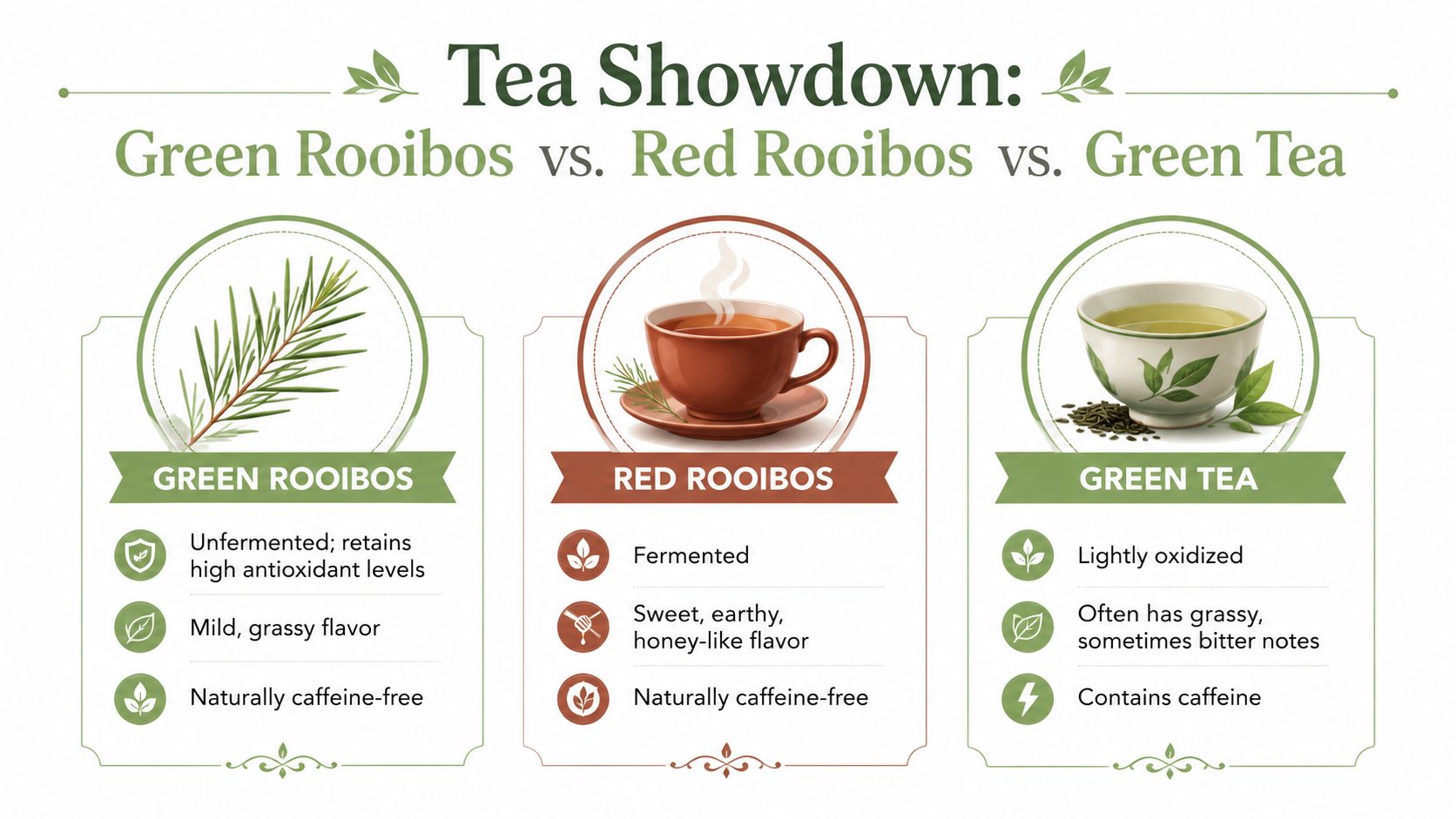
The quick comparison
| Drink | Plant | Processing | Caffeine | Key antioxidant focus | General flavour |
|---|---|---|---|---|---|
| Green rooibos | Aspalathus linearis | Unfermented | Naturally caffeine-free | Aspalathin | Light, grassy, gentle |
| Red rooibos | Aspalathus linearis | Fermented | Naturally caffeine-free | Different oxidised polyphenol profile | Sweet, earthy, honey-like |
| Green tea | Camellia sinensis | Lightly oxidised or minimally processed | Contains caffeine | Catechins such as EGCg | Fresh, vegetal, sometimes bitter |
Green rooibos vs red rooibos
This is the most important comparison because the two come from the same plant. If you already enjoy red rooibos, green rooibos won't feel alien. It will just feel less deep and less sweet.
Red rooibos is often the easier starting point for people who like naturally mellow herbal teas. Green rooibos asks for a little more attention. It has a cleaner edge and a fresher finish, which some people immediately love and others need a few cups to appreciate.
Good times to choose green rooibos include:
- Late afternoon drinking when you want something calm but not heavy
- Iced tea because the flavour stays light and refreshing
- Blends and mocktails where a fresher herbal base works better than a sweet earthy one
Green rooibos vs green tea
Confusion peaks with this distinction. Green tea comes from Camellia sinensis. Green rooibos does not. While both can taste “green” in a broad sense, they are distinct beverages.
One of the clearest differences is the antioxidant profile. In Australian organic green tea, especially matcha, EGCg makes up about 60% of all catechins, while green rooibos is naturally caffeine-free and known for aspalathin instead of EGCg (matcha catechin profile).
That matters in practical terms:
- Choose green tea or matcha if you want caffeinated focus and the classic Camellia sinensis profile.
- Choose green rooibos if you want a caffeine-free drink with a lighter herbal style and a different antioxidant story.
If normal green tea feels too stimulating at night, green rooibos gives you a similar “clean cup” feeling without the caffeine.
Which one suits which person
Some choices come down to simple lifestyle fit.
If you're building a morning ritual and enjoy a gentle lift, green tea or matcha often makes sense. If you're trying to reduce stimulants, support a wind-down routine, or offer a family-friendly option, green rooibos is often easier to live with day after day.
Red rooibos sits in another spot again. It's cosy. It's rounder. It's the one many people reach for with milk or as a comforting evening mug.
The Science-Backed Wellness Benefits
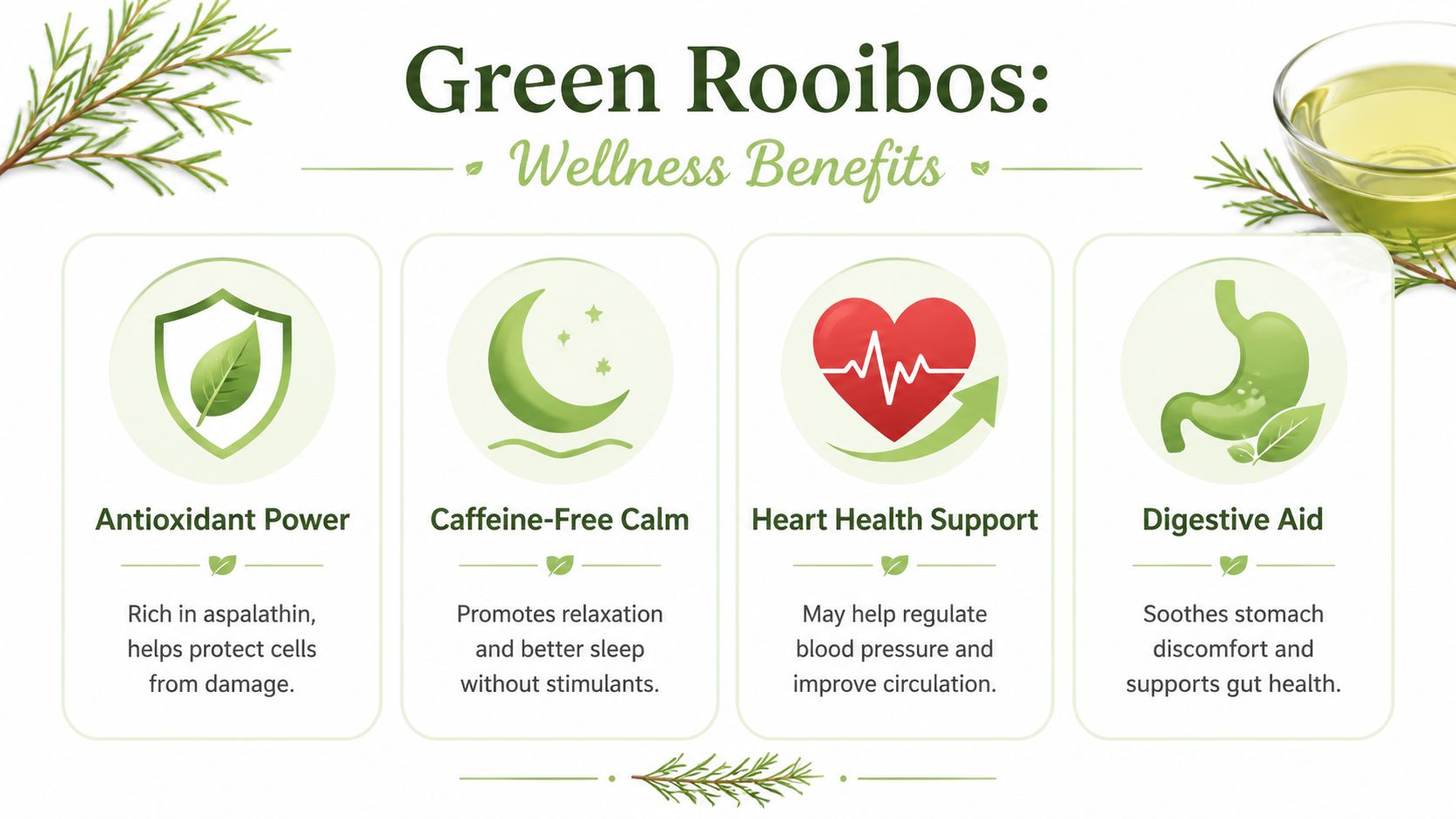
Green rooibos gets attention for one main reason. Its unfermented processing helps preserve more of the compounds people care about from a wellness perspective, especially polyphenols such as aspalathin and quercetin.
One review noted that green rooibos contains approximately three times higher levels of total phenolic compounds than fermented red rooibos, and that higher phenolic density helps explain its stronger antioxidant activity (green rooibos phenolic profile).
Antioxidant support in plain language
Antioxidants can sound abstract, but the everyday idea is simple. Your body deals with stress from normal metabolism, intense exercise, poor sleep, environmental exposure and general wear and tear. Polyphenol-rich drinks may help support the body's response to that oxidative stress.
Green rooibos stands out because it delivers that support without caffeine. For people who want a functional hot drink in the evening, that's a genuine advantage.
Heart and metabolic support
The most concrete human data linked to rooibos is encouraging, though it's important to keep it in proportion. Controlled trials show that drinking six cups of rooibos daily for six weeks led to a 27 mg/dL reduction in LDL cholesterol and a significant decrease in oxidative damage markers, with aspalathin also linked to blood glucose regulation (controlled trial summary).
That doesn't mean a single mug will transform your health. It does mean rooibos has more behind it than vague wellness language.
For readers who enjoy leaf-based brewing and want a broader primer on why whole-leaf formats matter, this guide to loose leaf tea benefits gives useful context on flavour, freshness and extraction. We also explored related ideas in our own overview of antioxidant tea benefits.
Here's a short explainer if you'd like to hear more about rooibos and its health profile:
Calm, flexibility and everyday use
Green rooibos also works well for people who want a “wellness tea” that doesn't compete with sleep. You can drink it at night, offer it to guests who avoid caffeine, or use it as a clean base for lemon, mint, ginger or fruit infusions.
A good wellness tea is one you'll actually drink consistently. Green rooibos is easy to revisit because it's gentle, versatile and doesn't depend on stimulation to feel satisfying.
That's part of its appeal. It's not trying to mimic coffee. It's not trying to replace matcha. It offers a different kind of support, one built around calm, steadiness and a strong antioxidant profile.
Brewing and Storing for Peak Flavour and Potency
Green rooibos is often brewed the way any herbal tea is brewed. That works, but it doesn't always get the best out of the leaf. The most useful tip is surprisingly simple. Simmering rooibos needles can extract more than standard steeping.
Research discussed in a brewing explainer found that simmering rooibos needles, rather than only steeping for 5 minutes, can yield twice the antioxidant activity by pulling out more compounds such as aspalathin (rooibos simmering insight).
Two ways to brew it well
Everyday cup
Use this when you want something quick and clean.
- Heat fresh water until it's hot but not aggressively boiling.
- Add loose green rooibos to a teapot, infuser or small jug.
- Steep for a few minutes, then taste.
- If it feels too light, extend the brew slightly rather than adding sweetener straight away.
This method gives you a delicate, fresh cup with minimal fuss.
Stronger extraction method
Use this when you want a more functional brew or a concentrated base for iced drinks.
- Start gently: Add the rooibos to water in a small saucepan.
- Bring to a light simmer: Keep it controlled rather than rapidly boiling.
- Let it simmer briefly: This helps release more from the needles.
- Strain and cool if needed: You can drink it hot or chill it for later.
Best habit: Brew one batch as a concentrate, then keep it in the fridge for quick iced tea, mocktails or a caffeine-free afternoon drink.
Common brewing mistakes
A few habits can flatten the flavour:
- Using stale leaf: Old tea loses brightness fast.
- Under-dosing: Too little leaf creates a thin, forgettable cup.
- Overcomplicating it: Green rooibos shines with simple additions like mint, lemon peel or sliced ginger.
How to store it properly
Store organic green rooibos tea the same way you'd treat any premium tea ingredient. Keep it in an airtight container, away from heat, light and moisture. Don't leave it near the stove, and don't keep opening a large bag every day if you can portion some into a smaller tin.
If you care about freshness and shelf stability, our guide on how tea storage affects shelf life is useful reading even though it focuses on matcha. The same core idea applies. Heat, air and light rob tea of its best qualities.
Sourcing Quality Tea and Creative Culinary Uses
How do you tell whether green rooibos is worth buying before you even brew it?
Start with the same instinct you would use for herbs at a market. Fresh ingredients look lively, smell clean, and give you a clear sense that they still have something to offer. Green rooibos should do the same. The leaf should appear clean and fairly vibrant, with a green to olive tone rather than a tired brown cast. The aroma should be softly herbal and slightly sweet, not stale or dusty.
Sourcing matters because green rooibos often plays two roles at once. At home, it needs to make an enjoyable daily cup. In cafés, wellness venues, and bars, it also needs to perform as an ingredient. A good lot should taste balanced on its own, then hold its character in iced tea, spritzers, syrups, desserts, and zero-proof cocktails.
What to look for when buying
A reliable supplier makes quality easier to judge. Look for a seller that tells you where the tea comes from, how it is packed, and what organic claim is being made. If you want a practical reference point, this guide to organic certification standards explains what clear, credible organic sourcing should look like.
Loose leaf is often the better choice for green rooibos because you can inspect it directly. You are not guessing what is inside a paper sachet. For hospitality buyers, that visibility helps with consistency too. If one batch suddenly looks dull or overly broken, it is easier to catch before it reaches the menu.
A quick buying checklist helps:
- Colour: Look for leaf with a fresh green or olive appearance.
- Cut size: A fairly even cut brews more predictably than a mix of powder and long fragments.
- Aroma: Expect a clean, grassy, lightly sweet scent.
- Packaging: Choose airtight, light-protective packaging, especially if turnover is slow.
- Supplier detail: Prefer sellers who explain origin, handling, and storage guidance.
Smart ways to use it at home
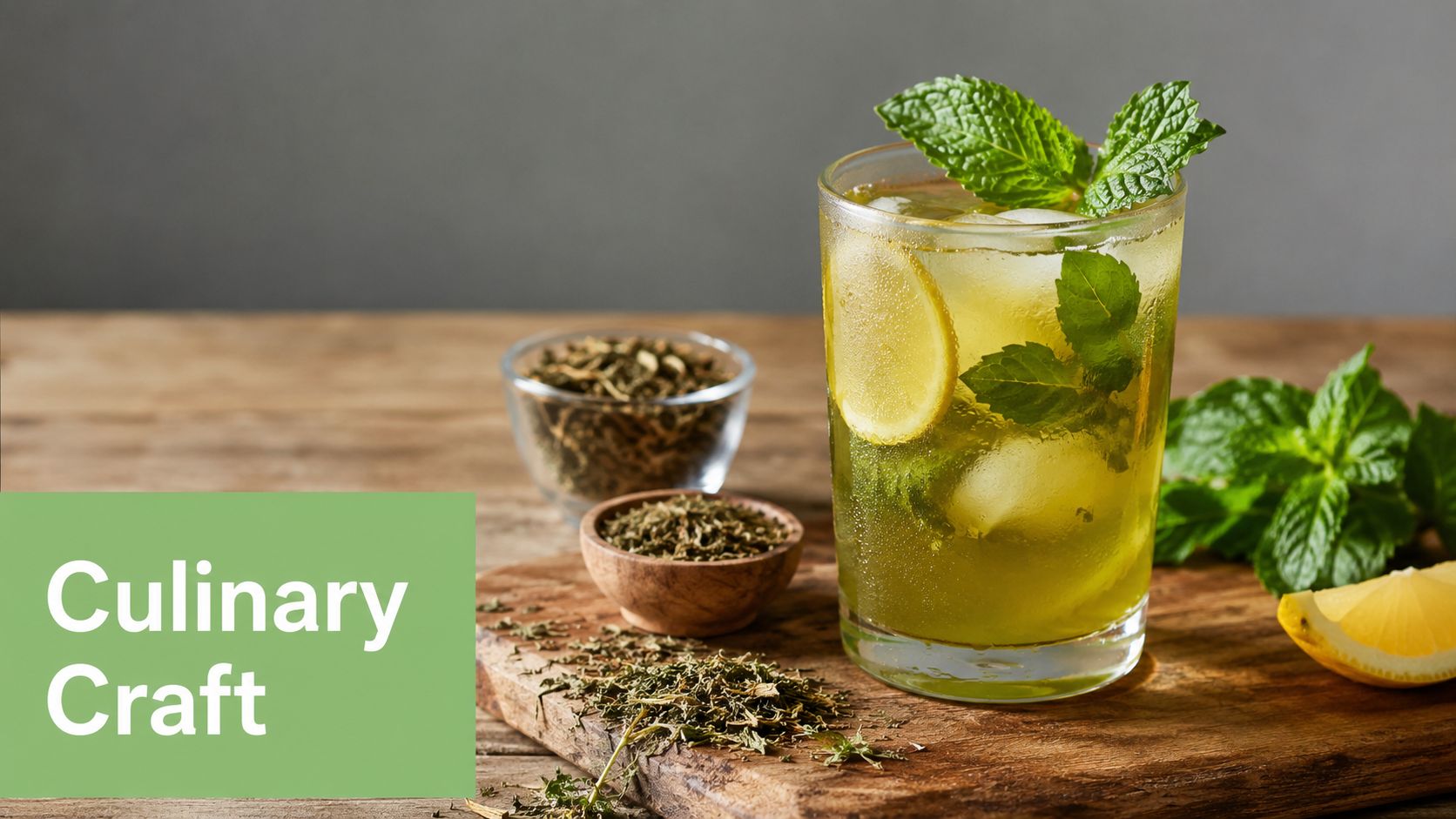
Green rooibos has a cleaner, brighter profile than red rooibos, so it behaves more like a versatile kitchen infusion than a single-purpose tea. It works especially well anywhere you want gentle herbal notes without caffeine or heavy tannin.
Try using it in a few practical ways:
- Iced tea: Brew it as a concentrate, chill it, then add lemon peel, mint, or cucumber.
- Smoothies: Replace water with cooled green rooibos for a softer, more layered base.
- Poached fruit: Simmer pear, peach, or apricot in a light brew with a little citrus zest.
- Granita or jelly: Its delicate flavour suits desserts that are lightly sweetened.
- Ice cubes: Freeze brewed tea with herbs or zest, then add the cubes to sparkling water.
One of my favourite uses is in breakfast prep. Brew a small batch, chill it, and soak chia or oats in it overnight. The tea adds flavour without making the bowl feel sugary or perfumed.
Why cafés and bars should care
Green rooibos gives hospitality teams something many menus still lack. It is caffeine-free, easy to batch, and refined enough to feel special rather than like a fallback for guests avoiding coffee or alcohol.
That makes it useful for several service styles. A café can pour it hot as a gentle afternoon option. A wellness venue can batch it for low-sugar iced drinks. A bar can use it as the backbone of alcohol-free serves because it brings structure without bitterness.
A few menu ideas:
- Botanical spritzer: Green rooibos concentrate, soda water, cucumber, and lime.
- House iced tea: Green rooibos with mint, lemon myrtle, or orange peel.
- Zero-proof cocktail base: Green rooibos, verjus or citrus, and a savoury herb syrup.
- Dessert pairing: Tea-poached fruit, panna cotta, or a rooibos gel alongside yoghurt.
Green rooibos works particularly well in menus built around matcha, kombucha, or functional café drinks. It fills a different niche. Matcha brings intensity. Kombucha brings acidity and fizz. Green rooibos brings calm freshness and flexibility, which is exactly what many guests want later in the day.
If you're exploring better everyday tea rituals, Pep Tea is a great place to continue. We're an Australian specialist in organic functional drinks, from premium Japanese matcha to sugar-free organic kombucha brewed in the Hunter Valley, NSW. If you enjoy thoughtful ingredients, clean flavour and practical wellness, explore our range and discover a few new favourites for home or your café menu.