
Tag: natural face wash
Organic Green Tea Face Wash: Your Complete 2026 Guide
You're probably here because you've stood in front of a bathroom shelf, or scrolled through a page of cleansers, wondering why so many products promise to “purify”, “balance”, and “calm” your skin, yet still leave it feeling tight or fussy.
That's exactly why organic green tea face wash has become such a talking point. It sounds clean, plant-based, and gentle. But there's a big difference between a cleanser that uses green tea as a functional ingredient and one that only borrows the idea for the label.
As tea people, we love when wellness ingredients make sense beyond trend cycles. Green tea is one of those rare examples. It has a long cultural history, clear cosmetic appeal, and substantive skincare research behind it. The skill lies in learning how to tell the good formulas from the pretty marketing.
Why Green Tea Is Taking Over Your Skincare Shelf
You buy a face wash because your skin feels oily by dinner, a bit tight after cleansing, or touchy whenever the weather swings. Then you notice how many bottles now spotlight green tea. The appeal is easy to understand. It suggests a cleanser that can do the practical job of washing away the day without leaving your skin feeling over-scrubbed or unsettled.
That matters because plenty of cleansers are good at removal and poor at restraint. They clear away sunscreen, sweat, and excess oil, then also take too much from the skin's surface. Green tea entered this category as part of a gentler philosophy. Clean the skin, yes, but support it at the same time.
Why this ingredient feels different
Green tea already carries meaning before it ever reaches a skincare label. People associate it with plant compounds, daily rituals, and a calmer kind of wellness. In skincare, that existing trust gives it a head start.
There is also a practical reason it keeps showing up in cleansers. A face wash is on your skin for a short time, so every ingredient has to earn its place. Green tea suits formulas designed for regular use because shoppers often want the same few things from a cleanser:
- Daily cleansing that feels comfortable, not harsh
- Support for skin that looks shiny or congested without aggressive stripping
- A calmer cleanse for skin that easily looks red or feels fussy
- A plant-based ingredient story that still sounds credible
For Australian routines, that balance makes sense. Heat, sun, wind, indoor cooling, and active days can leave skin wanting a proper cleanse and a bit more kindness at the same time.
One reason green tea stands out is that it sits neatly between tradition and formulation logic. It does not only sound wholesome. It also fits the modern expectation that an ingredient should have a clear role in the product, not just a pretty name on the front.
Ancient ingredient, modern label reading
That shift in consumer habits is a big part of why green tea is taking over skincare shelves. Shoppers are reading beyond the packaging now. They want to know whether "organic green tea face wash" means the formula contains a meaningful green tea ingredient, or whether the brand is borrowing the language of tea to make a standard cleanser sound more natural.
A good comparison is cooking. If a soup is labelled pumpkin, you expect pumpkin to be one of the main ingredients, not a dusting of powder added at the end. Skincare works the same way. If green tea is meant to be a working ingredient, the ingredient list should support that claim.
Why shoppers still get confused
The confusion starts with words that sound reassuring. "Organic", "botanical", and "green tea infused" can all appear on the front of the bottle, even if the formula is still built around harsh surfactants, strong fragrance, or only a trace amount of tea extract.
That is why the key skill is not spotting green tea on the label. It is learning how to read the INCI list and judge its role in the formula. Is green tea high enough on the list to matter? Is it listed as leaf extract, powder, or Matcha? Is the cleanser built to support sensitive skin, or does the tea sit inside a formula that is likely to overwhelm it?
Those are the questions that separate a thoughtful organic green tea face wash from marketing fluff.
The Science of Green Tea Skin Benefits
Green tea earns its skincare reputation because of its polyphenols, especially catechins such as EGCg. If that sounds technical, think of these compounds as part of the plant's protective toolkit. In skincare, they're valued because they help defend skin from everyday environmental stress and support a calmer-looking complexion.
That matters in Australia, where skin often juggles UV exposure, heat, wind, and dry indoor environments. A cleanser won't solve everything on its own, but ingredients that support the skin while cleansing are far more useful than formulas that strip and rinse.
What green tea is actually doing on skin
A good way to think about antioxidants is as bodyguards. They don't make your skin invincible, but they help reduce the pressure created by environmental wear and tear.
Green tea also has a strong reputation for being soothing. For people whose skin flares up easily, gets red after cleansing, or reacts badly to aggressive products, that's a big reason it keeps showing up in face washes, masks, and serums.

If you'd like a broader primer on ingredient types and how green tea is used in beauty products, Skin Perfection has a useful resource on understanding green tea for natural skincare.
What the clinical research suggests
The most helpful studies are the ones that move beyond vague “radiance” language and measure real skin outcomes. A 2025 scoping review reported that topical green tea extract studies included a human clinical trial showing 36.3% wrinkle improvement with normal green tea extract and 63.6% wrinkle improvement with tannase-converted green tea extract. The same review also discussed another randomised trial in which topical green tea polyphenol use reduced transepidermal water loss from 9 g/m²/hr to 7 g/m²/hr, pointing to improved moisture barrier function (clinical review of green tea in skincare).
Those results don't mean every organic green tea face wash will deliver the same effect. A rinse-off cleanser behaves differently from a leave-on treatment. But the research does show why green tea is more than a fashionable plant extract. It has measurable relevance to wrinkle appearance and barrier support when formulated well.
Practical rule: An ingredient becomes more trustworthy when you can explain what it does, not just how it sounds.
Why oily and acne-prone skin often responds well
Green tea is especially interesting for people who battle shine, congestion, or frequent breakouts. Topical green tea polyphenols are described as helping reduce sebum secretion and disrupting bacterial membranes, which gives them a logical role in routines for oily or acne-prone skin (green tea and acne-prone skin overview).
That doesn't mean harsher is better. In fact, the opposite is usually true. If a cleanser strips too much oil, the skin can end up irritated and harder to manage.
Here's the sweet spot many people miss:
- Green tea works best in a gentle cleanser
- A calm barrier usually handles breakouts better than an angry one
- Daily cleansing should remove excess oil without leaving skin tight
For tea lovers, there's an extra layer of interest here. The same green tea family prized in drinks for antioxidant content also shapes skincare conversations. If you're curious about why catechins like EGCg are so valued in tea itself, this guide to matcha tea powder and antioxidants gives useful context from the tea side.
How to Choose an Effective Organic Green Tea Face Wash
Here's how to shop smartly. A beautiful bottle, leafy branding, and the word “organic” don't tell you whether a cleanser is worth paying for.
The answer sits on the ingredient list. Many guides skip this part, but it's the most important one. The key is to check the INCI list to see whether green tea extract is acting as a primary functional ingredient or whether it's just there for label appeal, especially in a market crowded with natural claims (why the INCI list matters in green tea face wash shopping).
Start with the INCI list
If you turn the bottle around and see Camellia Sinensis Leaf Extract or a similar green tea listing, that's your first clue. The next question is placement.
Ingredients are generally listed in descending order by concentration, at least for the larger components of the formula. So if green tea appears near the top, it's more likely to be there in a meaningful amount. If it's buried near the end after fragrance, colourants, and a long list of fillers, it may be doing very little.
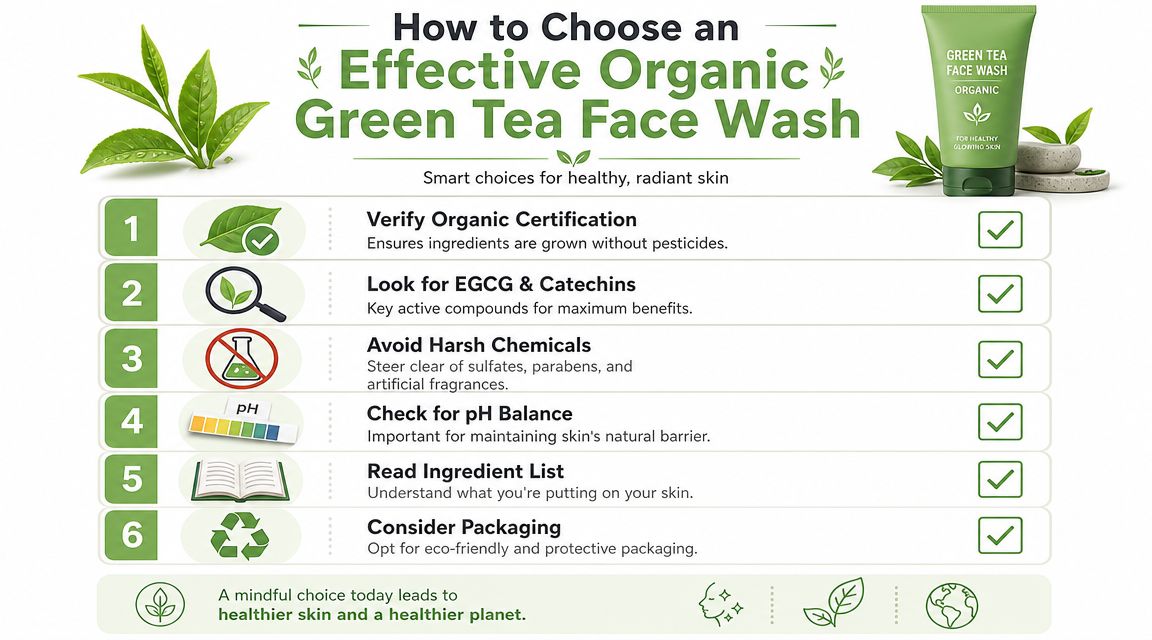
A useful way to assess a cleanser is to think in layers:
| What to check | Why it matters |
|---|---|
| Green tea placement | Higher placement usually suggests a more central role |
| Surfactant system | A gentle cleanse supports the barrier better |
| Fragrance load | Heavy scent can be a problem for reactive skin |
| Organic claim | Look for clarity, not just green packaging |
| Packaging | Better packaging can help protect botanical ingredients |
Red flags that cancel out the green tea story
A cleanser can feature organic green tea and still be poorly suited to sensitive skin. The biggest issue is often the base formula, not the hero ingredient.
Watch for these warning signs:
- Harsh sulphates: If the cleanser leaves your face feeling squeaky, that's not a badge of honour. It can be a sign the surfactant system is too aggressive.
- Strong synthetic fragrance: This often matters more than people realise, especially if your skin stings, flushes, or becomes patchy after washing.
- Confusing organic language: “Made with organic ingredients” isn't the same as a fully organic formulation.
- Tea as an afterthought: If green tea appears to be a token addition, don't pay a premium just for the label.
A simple buyer's checklist
You don't need to become a cosmetic chemist. You just need a repeatable way to compare products.
Check the exact green tea name
Look for Camellia Sinensis on the label rather than vague “tea complex” wording.Read the first chunk of ingredients
This tells you more than the front of the pack ever will.Think about your skin type
Oily skin still needs gentleness. Dry skin usually needs even more.Look at the whole formula, not one star ingredient
A lovely botanical can't rescue a poorly balanced cleanser.Consider what else your skin already likes
If your skin does well with soothing ingredients such as aloe, comparing formulas can help. For example, this guide to a farm-fresh aloe vera face wash is handy for understanding how calming cleanser ingredients are often paired.
If a product asks for premium pricing, it should show premium formulation choices on the label.
One more tea-world lesson applies here too. Quality matters at the source. That's true for skincare ingredients and it's true for tea itself. If you want a simple explanation of how grade and sourcing affect tea quality, this overview of matcha grade and quality is a helpful parallel.
Your Daily Green Tea Cleansing Ritual
A good cleanser does more than remove the day. It sets the tone for everything that follows. Used well, an organic green tea face wash can feel less like a rushed step and more like a reset for your skin.

How to wash without overdoing it
Start with lukewarm water. Hot water can feel satisfying, but it often leaves skin drier and more reactive.
Massage the cleanser in with your fingertips using light circular motions. You don't need to scrub. A face wash isn't more effective because it feels harsher.
Then rinse thoroughly and pat dry with a clean towel. Patting matters. Rubbing creates unnecessary friction, especially if your skin is already sensitive.
Where it fits in a routine
The best routine depends on what your skin is dealing with that day.
- Morning cleanse: Great if you wake up oily or sweaty
- Evening cleanse: Essential for removing sunscreen, city grime, and makeup residue
- Second cleanse: Useful after an oil cleanser or balm if you wear makeup or heavy SPF
If your skin tends to feel tight after washing, apply the next step while your face is still slightly damp. That usually helps everything feel more comfortable.
Less force, less heat, less friction. Skin often responds well when you stop trying to overpower it.
A small ritual that's worth keeping
One of the underrated pleasures of tea-based skincare is the sensory side. Green tea has an earthy, clean profile that feels grounded rather than perfumed. That can make your cleansing step feel calmer and more intentional.
For many people, that emotional side matters. You're more likely to stay consistent with a routine that feels good, not just one that sounds impressive on paper.
A Simple DIY Matcha Face Wash for a Natural Glow
You open the pantry, reach for a tin of matcha, and realise something useful. A DIY wash lets you feel exactly what the tea is doing on your skin, without a long ingredient list getting in the way. That makes it a helpful experiment if you want to understand whether green tea is acting like a real ingredient or just sounding good on the label.

A fresh matcha cleanser also teaches an important skincare lesson. Ingredient quality changes the experience. Matcha is finely milled whole green tea leaf, so you are not just getting green tea water. You are using the leaf itself in powder form, which is one reason it feels richer and more present than a token splash of tea tucked low on an ingredient label.
A gentle matcha and honey version
Use this as a small-batch cleansing mask for one application:
- 1 teaspoon organic culinary matcha
- 1 teaspoon raw honey
- A small splash of lukewarm water, enough to loosen it into a spreadable paste
Mix in a clean bowl until smooth. Apply to damp skin with clean fingertips, massage lightly, then rinse well. If your skin feels comfortable, you can leave it on for a minute first.
The texture is different from a standard foaming cleanser. It behaves more like a soft paste that lifts away residue while keeping the routine gentle. Honey gives slip, and matcha brings that earthy, tea-rich feel people often look for in green tea skincare.
If you want another easy at-home option, this matcha tea face mask guide shows a similar way to use matcha as a fresh treatment.
How to adjust it without turning it into a science project
Small changes are enough.
- For skin that feels dry: add a tiny drop of jojoba oil
- For a thinner paste: add a little more water
- For a quicker cleanse: rinse straight after massaging it in
DIY skincare works best when you make only what you need and use it straight away. Once water enters the mix, freshness matters. Without preservatives, a homemade cleanser is more like cut fruit than a bottled product. It does best when used promptly, not stored on the bathroom shelf.
This short video is a good visual companion if you enjoy seeing the texture and mixing process in action.
Why quality matters even in DIY
DIY transforms beyond a mere weekend ritual. It helps train your eye.
If a simple bowl of matcha, honey, and water feels distinctly green, smooth, and tea-forward, you start to notice how little some commercial products deliver by comparison. A face wash can say "green tea" on the front and still rely on fragrance, colour, or tiny amounts of extract for the effect. By using matcha on its own, you get a clearer sense of what a meaningful tea ingredient contributes.
Better-quality matcha usually mixes more smoothly, smells fresher, and feels nicer on the skin. Ceremonial grade is not necessary for this job. A clean, well-sourced organic culinary matcha is usually the practical choice. The same rule applies when reading a cleanser label. The closer the formula stays to a genuine, well-sourced tea ingredient, the more likely the green tea is there for a reason, not just for marketing.
Common Questions About Green Tea Skincare
Is an organic green tea face wash suitable for sensitive or dry skin
It can be, but the full formula matters more than the name on the front. Green tea is often chosen for its soothing profile, yet a cleanser can still irritate if it contains harsh surfactants or strong fragrance. If your skin is sensitive or dry, look for a gentle base and patch test first.
How often should I use it
Users typically apply a green tea cleanser once or twice daily, depending on skin type and what else they use in their routine. If your skin feels tight, flaky, or stings after cleansing, scale back and reassess the formula rather than pushing through.
Can green tea help oily or acne-prone skin
It may suit oily or breakout-prone skin particularly well when paired with a non-stripping cleanser base. As covered earlier, green tea is often valued in skincare for helping support calmer, more balanced skin. The key is daily consistency and a formula that doesn't leave the barrier irritated.
Can you react to green tea skincare
Yes, it's possible to react to any skincare product, even one with gentle or natural ingredients. Sometimes the issue isn't the green tea itself, but fragrance, essential oils, or other supporting ingredients in the formula. Patch testing is always sensible.
If your skin is persistently inflamed, painful, or breaking out in a way that doesn't settle, it's worth speaking with a GP or dermatologist rather than relying on cleanser changes alone.
Is DIY matcha face wash safe to store
Fresh DIY mixtures are best used immediately. Once water is involved, shelf life becomes the weak point. If you want a product to keep in the bathroom, choose a properly preserved cleanser instead.
If you love the idea of bringing tea-based wellness into more of your daily routine, explore Pep Tea for premium organic matcha and educational guides that help you understand what quality really looks like, from the source ingredient right through to how you use it.