
Tag: matcha set
Japanese Tea Sets: Find Your Perfect Ritual
Somewhere between the morning rush and the evening wind-down, a lot of us start wanting more from tea than a mug and a teabag. Maybe you've been whisking matcha in a cereal bowl. Maybe you've bought a lovely green tea, then realised your everyday teapot doesn't quite suit it. Or maybe you've seen beautiful Japanese tea sets online and wondered whether they belong in a real Australian home or only in a formal tea room.
They absolutely can belong at home.
The trick is to stop thinking of Japanese teaware as something distant or intimidating. It helps to think of it as a set of tools for a better daily ritual. A bowl that makes whisking easier. A teapot that pours cleanly. Cups that slow you down just enough to notice aroma, warmth, and flavour. That's where the beauty lives.
If you've ever felt drawn to tea because it brings a pocket of calm to the day, you're already close to the heart of it. The history is rich, but the experience can be very simple. A thoughtful matcha in the morning. A small pot of sencha in the afternoon. A quiet cup before bed instead of reaching for something sugary or overstimulating.
For many readers, the journey starts with curiosity and a few basic questions. What counts as a Japanese tea set. Which pieces matter. What's ceremonial, what's practical, and what's just nice to have. If you'd like a broader look at tea's long cultural journey, The Story of Tea is a lovely companion read.
An Invitation to the Japanese Tea Ritual
A Japanese tea ritual doesn't have to mean strict rules, formal clothing, or memorising a sequence of movements. In a modern home, it can be as simple as choosing one cup, one bowl, or one teapot that makes the act of preparing tea feel intentional.
That matters more than people realise. When your tools fit the tea, the process gets easier. You whisk more smoothly. You pour more accurately. You pay attention without forcing yourself to “be mindful”.
A good tea set doesn't add complexity. It removes friction from a ritual you want to keep.
For Australians, that often means blending tradition with everyday life. You might prepare matcha before work, brew green tea after lunch, or serve tea to a friend on the verandah rather than in a formal tea room. Japanese tea sets work beautifully in that setting because they were shaped by use, not just display.
Ritual is different from ceremony
A common sticking point for many people is the assumption that Japanese teaware only makes sense if they're trying to recreate a traditional tea ceremony. That's not necessary.
A personal ritual can look like this:
- Morning focus: whisking matcha in a chawan instead of shaking it in a bottle
- Afternoon reset: brewing leaf tea in a small kyusu rather than a large western pot
- Shared pause: pouring two small cups for a partner or guest instead of making tea as an afterthought
Each one is practical. Each one also carries a quiet sense of care.
Why the set matters
A tea set isn't just decoration. It shapes movement, temperature, and feel. A wide bowl invites whisking. A side-handled teapot changes the way your wrist pours. A cup without a handle encourages slower sipping because you notice the warmth in your hands.
That's why Japanese tea sets continue to appeal far beyond formal tradition. They make ordinary tea feel considered. Not fussy. Considered.
Understanding the Two Worlds of Japanese Tea
The easiest way to understand Japanese tea sets is to separate them into two worlds. Once you see that split, the pieces stop feeling random.
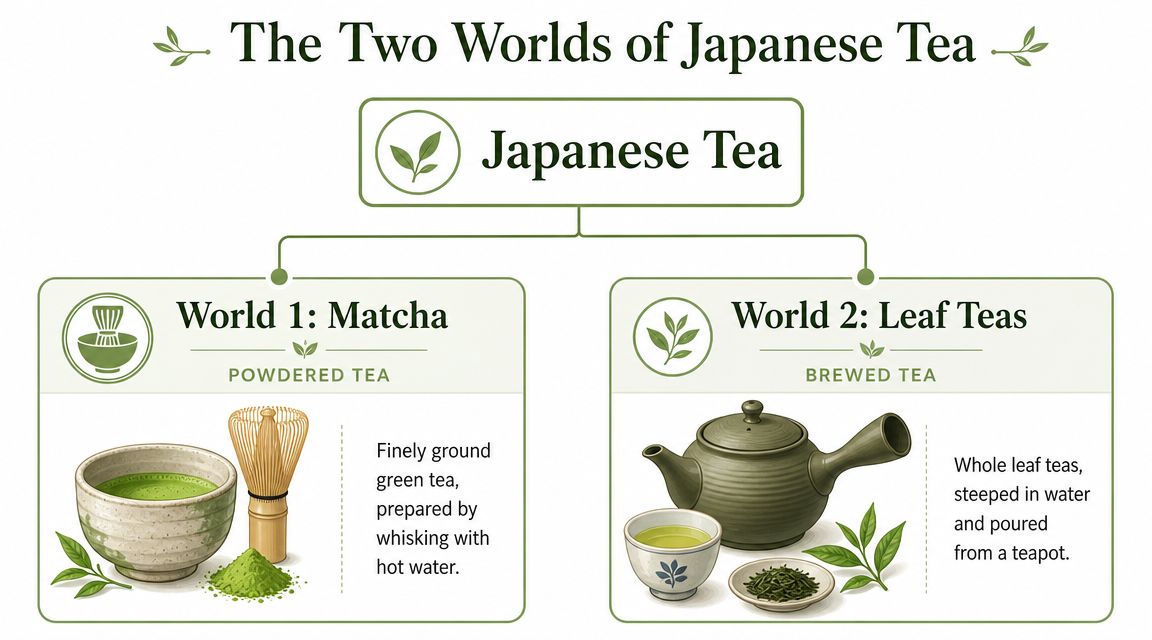
The first world is matcha, which is powdered tea whisked directly into water. The second is leaf tea, where whole leaves are steeped and then poured. Those are very different actions, so they need different tools.
The historical background helps this make sense. The Japanese tea tradition can be traced to the 9th century, when Buddhist monk Eichū brought tea from China. By the 16th century, Sen no Rikyū had codified the art form and defined utensils and procedures that shaped later tea sets, including the distinction between formal and casual tea use still recognised today, as outlined in the history of the Japanese tea ceremony.
World one is matcha
Matcha is finely ground green tea powder. You don't infuse it and remove leaves. You whisk the powder into water and drink the whole preparation.
That's why a matcha set usually centres on tools like these:
- Chawan: a bowl wide enough for whisking
- Chasen: a bamboo whisk that helps create a smooth texture
- Chashaku: a scoop used to portion powder
If you've tried to make matcha in a narrow mug, you've probably felt the problem straight away. There isn't enough room to whisk properly, and clumps stick around.
World two is leaf tea
Leaf teas include styles such as sencha, gyokuro, hojicha, and bancha. Here, the leaves need space to open in water, and the liquor needs to be poured out cleanly.
That's where pieces like these come in:
- Kyusu: a teapot, often with a side handle
- Yunomi: everyday drinking cups
- Houhin or shiboridashi: specialised vessels for delicate teas
The cups and pot work together because brewing isn't only about holding hot liquid. It's about controlling extraction, temperature, and the pace of serving.
If you remember one thing, remember this. Matcha is whisked. Leaf tea is steeped and poured.
Why this confuses so many buyers
A lot of product listings lump everything together under “Japanese tea set”. That can make it sound as though one bundle will suit every tea. Usually, it won't.
If you mainly drink matcha, a teapot set won't solve your real need. If you mostly brew loose leaf sencha, a bowl and whisk won't be the right starting point. The best choice begins with the tea you drink on a normal week, not the tea you imagine yourself serving on special occasions.
The Essentials for the Perfect Bowl of Matcha
When people first buy matcha tools, they often focus on appearance. The bowl's glaze is beautiful, the whisk looks traditional, the scoop seems optional. In practice, each piece has a very clear job.
The heart of a matcha setup is function. If the tools work well, the tea tastes better and the process feels calm instead of messy.
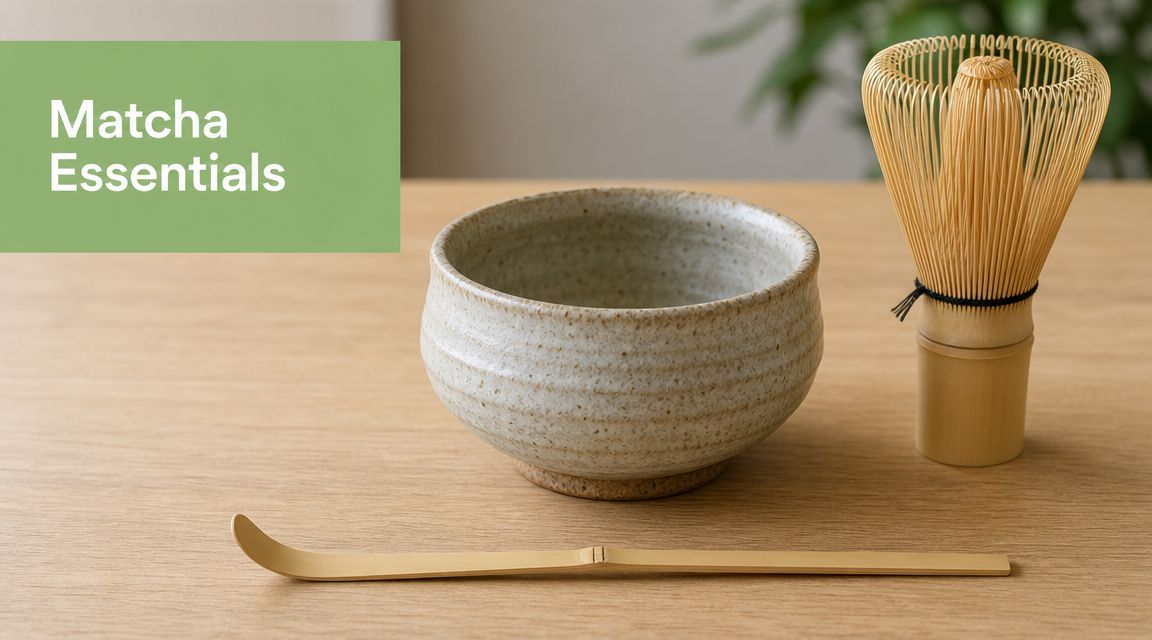
If you want to see the classic preparation tools together, a matcha whisk and bowl set gives you a useful visual reference for what a simple starter kit includes.
The chawan does more than hold tea
A chawan is a matcha bowl, but that definition is too basic to be useful. What matters is the shape. A good bowl gives your whisk room to move, which makes it easier to blend powder and water into a smooth, frothy drink.
A bowl that's too narrow causes common problems:
- Clumping happens faster: the whisk can't move freely
- Spills become more likely: your hand has less room to work
- Texture stays uneven: you end up stirring rather than whisking
This is one reason ceremonial-style matcha feels so different in the right vessel. The bowl supports the method.
The chasen creates the texture
A chasen is the bamboo whisk. New matcha drinkers sometimes wonder if a small kitchen whisk or milk frother can do the same job. You can improvise, but the result is different.
The bamboo tines are designed to break up powder gently and aerate the liquid. That gives matcha its light foam and smoother mouthfeel. It's one of those tools that looks delicate but changes the whole experience.
Practical rule: if you want matcha that feels silky rather than grainy, the whisk matters as much as the tea.
The chashaku keeps the ritual simple
A chashaku is a bamboo scoop used for measuring matcha. It doesn't look dramatic, but it helps create consistency. That's valuable when you're trying to learn what strength and balance you enjoy.
Could you use a teaspoon instead? Of course. But the chashaku makes the act more precise and more pleasant. It also encourages a slower rhythm, which is part of why people fall in love with matcha in the first place.
A simple flow that works
Once you have the tools, the routine becomes straightforward:
- Warm the bowl with hot water, then empty it.
- Add matcha with the scoop.
- Pour in hot water suited to your tea.
- Whisk briskly until smooth and lightly frothy.
- Drink from the bowl while the aroma is still lifted.
For a visual guide to hand movement and bowl angle, this short demonstration is helpful.
What beginners often get wrong
The biggest mistake isn't buying the “wrong” bowl. It's assuming the ritual has to be perfect from day one. It doesn't.
Start with tools that invite use. A bowl you enjoy holding. A whisk you rinse and dry properly. A scoop that turns preparation into a small pause rather than a rush job. That's how matcha becomes part of life rather than a weekend novelty.
Exploring Teapots for Brewing Leaf Teas
Leaf tea asks a different question from matcha. It isn't “How do I whisk this well?” It's “How do I extract flavour cleanly and pour at the right pace?”
That's why Japanese leaf-tea brewing centres so strongly on the pot. Shape, material, handle style, and filter design all affect the experience.
Kyusu for everyday green tea
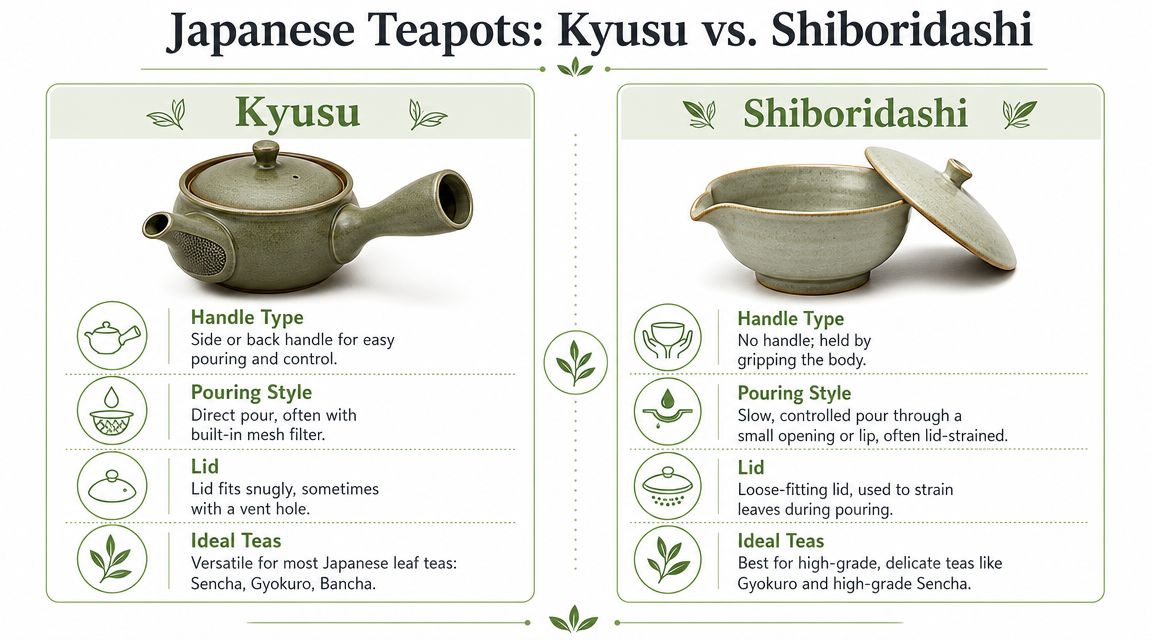
The kyusu is the classic Japanese teapot many people picture first. It's often ceramic and often side-handled, which gives excellent control when pouring.
A useful practical detail is size. Japanese ceramic teapots are commonly in the 150–266 mL (5–9 oz) range, and unglazed clay is mildly porous. Over time, that clay can absorb aromas, which is why a dedicated pot can develop a tea-specific seasoning and reduce flavour carryover between different teas, as explained in this guide to Japanese teapots and clay seasoning.
That leads to a very sensible home-brewing habit. If you use one unglazed kyusu mainly for sencha, and a different vessel for roasted teas, you're less likely to muddy the flavour.
You can also pair a kyusu with a modern setup. An electric tea kettle with temperature control makes everyday brewing easier because Japanese green teas often reward more careful water handling than a full rolling boil.
Shiboridashi and houhin for delicate teas
Some Japanese teapots are flatter and more specialised. The houhin and shiboridashi are designed for high-grade teas such as gyokuro and competition sencha. Their flatter, handleless forms increase surface area, which helps hot water cool faster. That matters for low-temperature extraction, and the geometry also supports short infusions and precise decanting, as described in this overview of Japanese teapot types and brewing geometry.
For many home drinkers, the practical takeaway is simple:
- Choose kyusu if you want an easy, versatile daily pot
- Choose shiboridashi or houhin if you love delicate, premium green teas and enjoy slower brewing
- Choose porcelain or glazed ceramic if you switch between tea styles often
Where tetsubin fits in
People often mix up a tetsubin with a standard brewing teapot. Historically, the cast iron vessel is strongly associated with heating or holding hot water, and in modern homes it's also appreciated for warmth retention and presence on the table.
That doesn't make it the default choice for every Japanese green tea. For many leaf teas, a ceramic pot gives more nuance and easier pouring. A tetsubin can still be beautiful and practical, but it serves a different style of tea moment.
| Vessel | Best suited to | Why people choose it |
|---|---|---|
| Kyusu | Everyday Japanese leaf teas | Easy control, clean pour, compact size |
| Shiboridashi | Delicate high-grade teas | Low-temperature brewing and precision |
| Tetsubin | Water preparation or heat retention | Strong presence and steady warmth |
How to Choose the Right Japanese Tea Set for You
The best Japanese tea set usually isn't the most formal one. It's the one that fits your real habits.
That might sound obvious, but shoppers often get pulled toward whatever looks most traditional. Then the set ends up on a shelf because it doesn't suit weekday life. In an Australian household, usefulness matters. You want teaware that works on a busy morning, a quiet weekend, or a catch-up with friends.
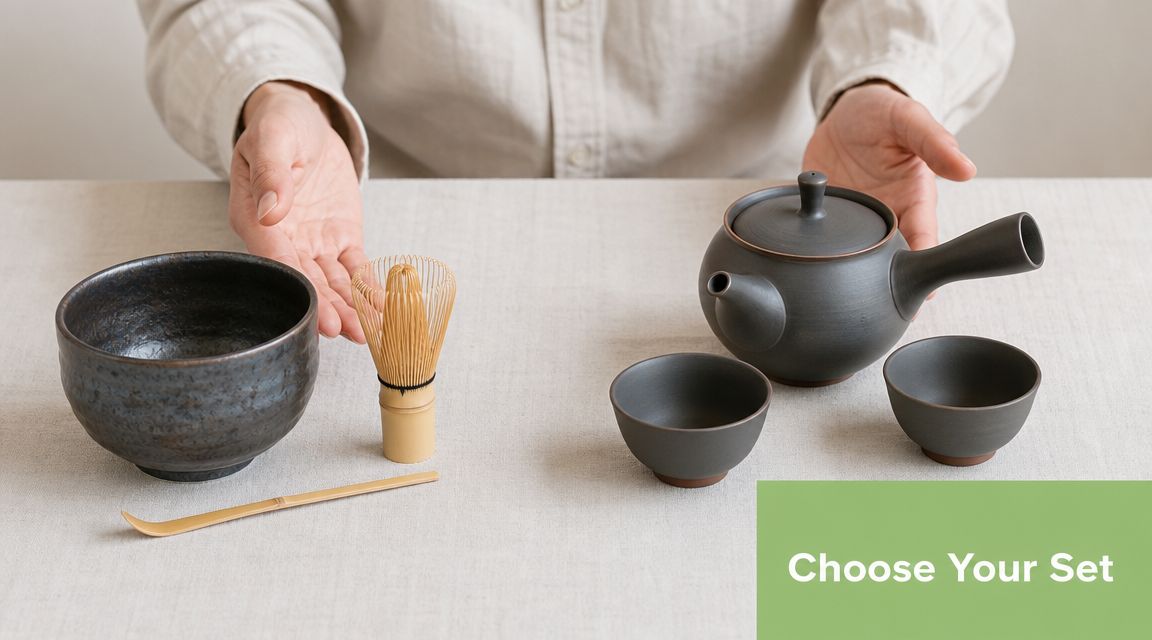
Start with the tea you actually drink
If you only remember one buying principle, make it this one. Buy for your tea first, and your aesthetic second.
From a practical perspective, here's how to approach it:
- If you drink matcha most days, build around a chawan, chasen, and chashaku
- If you brew loose leaf green tea, prioritise a kyusu and comfortable cups
- If you enjoy both, don't force one hybrid set to do everything. Build two small rituals instead
This sounds less romantic than buying a boxed “ceremony set”, but it's far more satisfying in daily use.
Choose by lifestyle, not fantasy
A set for one person looks different from a set for regular entertaining. So does a set for a small apartment kitchen versus a café service area.
Ask yourself:
How many people am I usually serving
A compact setup often feels better than a large one. Small vessels encourage fresh brewing and more attention to each pour.
Do I want a daily workhorse or a special-occasion piece
Some handmade ceramics invite frequent use. Others feel precious. There's no wrong answer, but it's better to know which camp you're in.
How much care am I willing to give
Porcelain and glazed ceramics are usually easier for mixed use. Unglazed clay rewards dedication. Bamboo tools need gentle drying and storage.
The right set should make you want to use it on an ordinary Tuesday.
Understand the beauty of wabi
Part of the charm of Japanese tea sets comes from the wabi aesthetic. This style became influential in the mid-1500s and favours rustic, simple, imperfect vessels over ornate luxury. That shift helped shape ceramic traditions such as Raku, Shino, and Oribe, and those forms still influence authentic teaware from places like Arita, Kyoto, and Tokoname, as noted by the Metropolitan Museum of Art's essay on the Japanese tea ceremony.
While many first-time buyers think a “good” tea set should look flawless and symmetrical, in Japanese teaware, slight irregularity is often part of the appeal. A soft rim. An uneven glaze. A bowl that feels handmade rather than factory-perfect.
Material choices for real homes
Different materials suit different personalities and routines.
Porcelain
Porcelain is a strong choice for beginners. It feels clean, neutral, and versatile. If your household drinks different teas, porcelain keeps things simple because it doesn't push you toward one dedicated tea style.
Stoneware and clay
Stoneware can feel warmer and more grounded in the hand. Unglazed clay has a devoted following because of the way it interacts with tea over time. It's especially appealing if you're the kind of person who likes one favourite tea and a vessel that becomes part of that habit.
Cast iron
Cast iron has presence. It can suit homes where keeping warmth at the table matters, or where the tea set is part of the room's atmosphere as much as the brew itself. It also tends to appeal to gift buyers because it feels substantial.
A quick buyer guide
| You value most | A smart direction |
|---|---|
| Easy everyday use | Porcelain or glazed ceramic set |
| Traditional feel | Handmade clay kyusu or matcha bowl |
| Matcha ritual | Bowl, whisk, scoop rather than a teapot bundle |
| Serving guests | Coordinated cups with a compact teapot |
| Visual texture and craft | Wabi-inspired stoneware, Raku-like or Shino-like forms |
For cafés and gifting
Café owners and hospitality teams usually need a different balance from home buyers. Durability, stackability, and pouring ease matter more than owning the most ceremonial-looking pieces. A clean, practical set can still feel Japanese without creating stress during service.
For gifts, think about how the recipient drinks tea now. A dedicated matcha lover will appreciate proper matcha tools more than a decorative teapot. A green-tea drinker may get more use from a kyusu and two yunomi than from a large assorted set.
In other words, the “best” Japanese tea set is often the simplest one that matches the person's real rhythm.
Caring For Your Teaware to Ensure It Lasts
Beautiful teaware lasts longer when you treat it according to material, not just appearance. Ignoring material care often causes people to accidentally shorten the life of a favourite piece. They wash everything the same way, stack it too tightly, or put damp tools away too quickly.
The good news is that care is usually straightforward.
Caring for matcha tools
A bamboo chasen needs gentle handling. Rinse it with water after use, shake off excess moisture, and let it dry fully in an airy spot. Don't leave it sitting wet in a closed cupboard.
For the chawan and chashaku:
- Rinse the bowl promptly: matcha residue is easier to remove before it dries
- Avoid harsh scrubbing on delicate glazes: a soft cloth or sponge is usually enough
- Keep the scoop dry: bamboo stays happier when it isn't left in standing water
Caring for clay and ceramic teapots
Unglazed clay teapots deserve a simpler approach than many people expect. Rinse with water and let them dry thoroughly. Soap can linger in porous material and interfere with flavour over time.
For everyday maintenance:
- Empty leaves soon after brewing: don't let damp leaves sit in the pot for hours
- Dry with the lid off at first: air circulation helps prevent stale odours
- Store carefully: avoid knocking lids against rims, since that's where chips often happen
Let the pot dry completely before you tuck it away. Most musty teaware problems begin with trapped moisture.
Caring for cast iron and storage pieces
If you use cast iron, dry it well after contact with water. Moisture left behind is what causes trouble. With any tea set, thoughtful storage matters as much as washing.
A few habits make a real difference:
- Give delicate items space: crowded shelves lead to chips
- Use shelves or trays with grip: slipping is more common than people think
- Store by routine: keep the pieces you use often where they're easy to reach
When care becomes part of the ritual, the set feels less fragile and more like a trusted part of daily life.
Making Every Cup a Mindful Moment
The true appeal of Japanese tea sets isn't perfection. It's attention.
A bowl asks you to whisk with care. A kyusu asks you to pour deliberately. Even a small cup changes the pace of drinking because you stop gulping and start noticing. That's why these pieces remain so compelling in modern homes. They turn tea from a background habit into a small act of presence.
That doesn't mean every cup needs to feel ceremonial. Some days it's a quick matcha before work. Some days it's a quiet pot of green tea while the house settles down. The value is in the repeatable ritual, not the performance of expertise.
If you enjoy pairing tea with other calming habits, these Aroma Warehouse meditation insights offer a thoughtful read on how sensory cues can support a more grounded routine at home.
The nicest part is that you don't need a large collection to begin. One good bowl, one useful teapot, or one set of cups can be enough to change how tea feels in your day. Start with the tea you love. Choose tools that invite you back. Let the ritual grow naturally from there.
If you're ready to bring that ritual into your own kitchen, explore Pep Tea for premium organic matcha and wellness-focused tea options that pair beautifully with thoughtful Japanese teaware.