
Tag: matcha powder dosage
How to Use Matcha Powder in Smoothies for Creamy Energy

You've blended a bright green smoothie, taken the first sip, and found a stubborn pocket of bitter matcha at the bottom. Or perhaps you've added honey, flavoured milk and extra fruit to hide the bitterness, only to end up with something closer to a dessert than a clean morning drink. Learning how to use matcha powder in smoothies is mostly about three decisions: choosing a suitable grade, hydrating the powder before blending, and matching the serving to your taste and caffeine preferences.
The good news is that matcha works beautifully with banana, berries, yoghurt, milk and dairy-free bases. With the right method, you'll get a creamy drink with vibrant colour, gentle tea character and no powdery clumps.
Why Matcha Works So Well in Smoothies
The first time many people use matcha in a smoothie, they expect it to behave like a mild green tea. It doesn't. Because you consume the finely ground tea leaf rather than an infusion, matcha brings a more concentrated flavour, a green colour and naturally occurring tea compounds to the glass. Fruit and creamy ingredients soften its earthy edge, making a smoothie a more approachable format than drinking the powder with water alone.
A practical Australian benchmark is a 4 g matcha serving, labelled by one Australian product at 48 kJ, or 11 kcal, 1.1 g protein, 0.2 g fat, 1.5 g carbohydrates and 0.4 g dietary fibre per serve. The Australian smoothie recipe and product data show why this amount can work as a functional add-in without substantially changing the smoothie's overall calorie load.
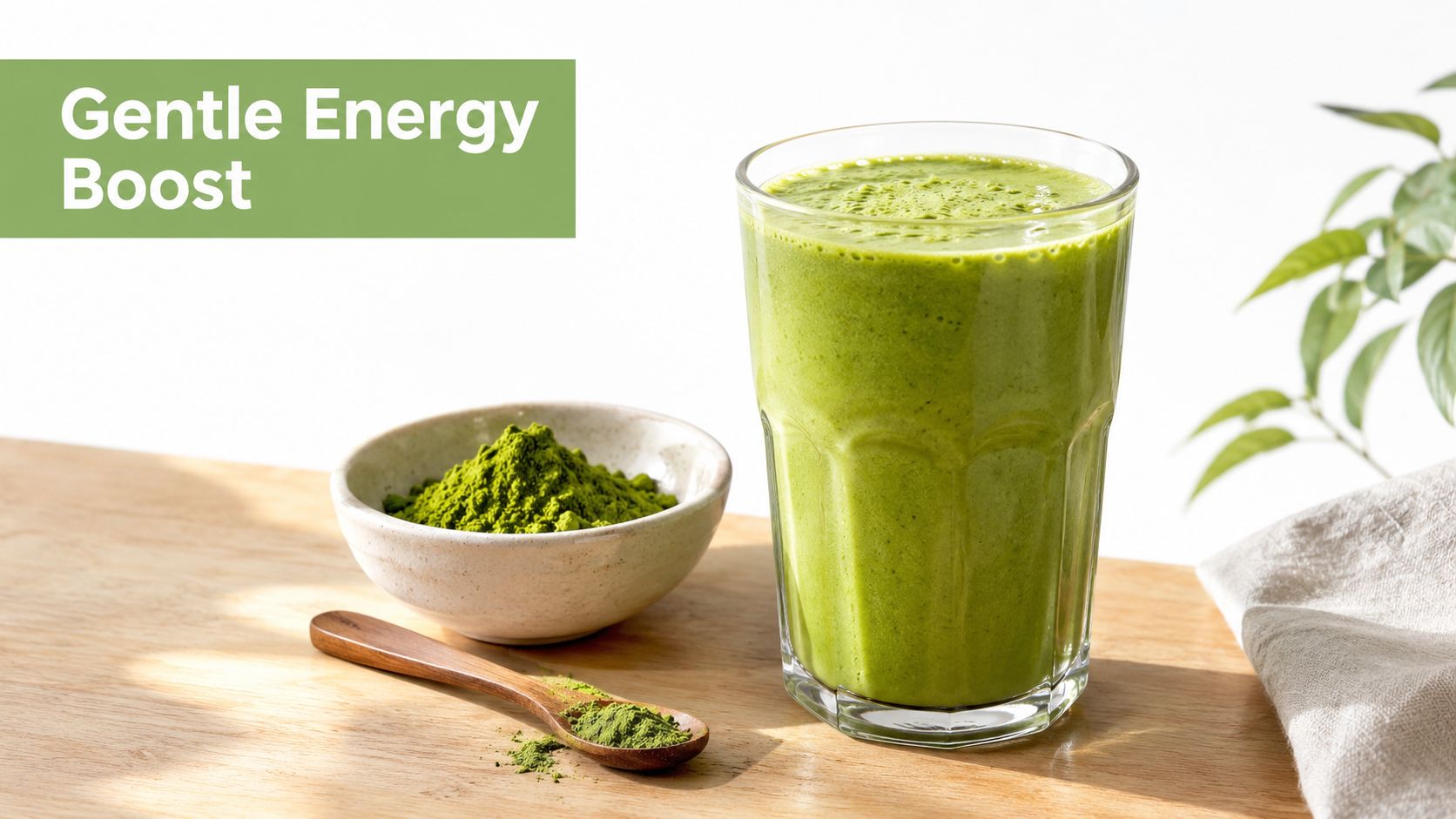
What matcha contributes to the glass
Matcha contains caffeine alongside L-theanine, an amino acid naturally found in tea. That combination is why many people describe matcha as a smoother, calmer alternative to a strongly coffee-led morning routine, although individual responses vary. You can learn more about the role of matcha, green tea and L-theanine if you want to understand the tea beyond its colour.
Australian lab testing reported 21.3 mg/g theanine, 33.3 mg/g caffeine and 65,200 µg/g total catechins in one matcha sample. If a product matched those assay values, a 4 g smoothie serve could contribute roughly 85 mg theanine, 133 mg caffeine and 261 mg total catechins. Those figures describe that tested sample, not every matcha powder, so treat them as a guide rather than a guarantee. The Australian matcha laboratory results provide the full context.
Why the smoothie format helps
Banana contributes body and natural sweetness. Yoghurt adds tang and creaminess, while oat, soy, almond or dairy milk can soften the tea's grassy notes. Frozen fruit and ice also help create a thicker texture, so the drink feels rounded rather than watery.
Matcha can taste fresh, vegetal and slightly bitter. That isn't a fault, but the flavour needs a partner. A ripe banana, creamy base and a little acidity from berries or citrus can make the tea taste balanced without relying on a large amount of added sugar.
Choosing the Right Matcha and How Much to Use
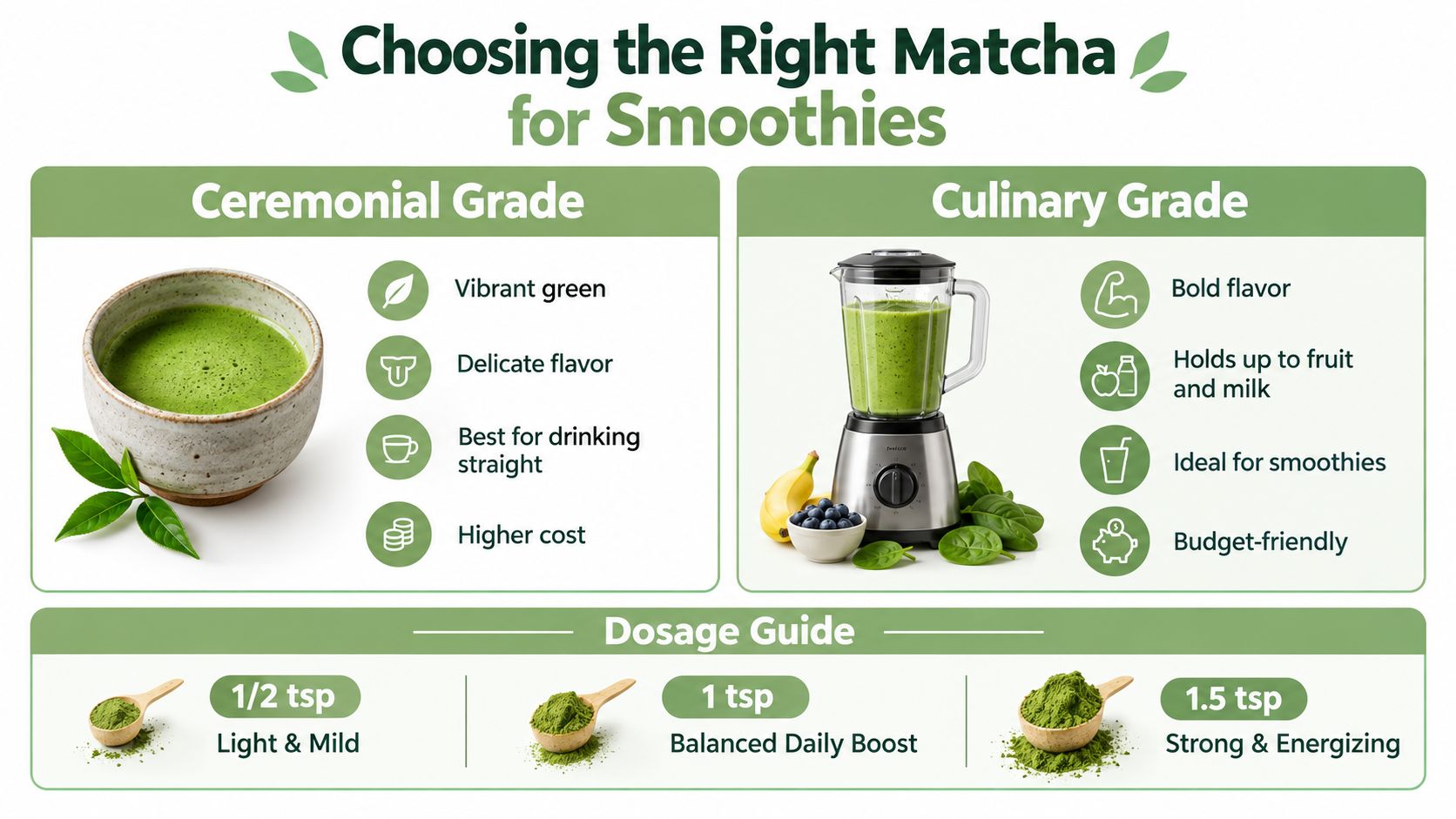
The word “matcha” covers powders intended for different uses. Ceremonial-grade matcha is generally selected for drinking on its own, where its colour, aroma and delicate flavour are fully exposed. Culinary-grade matcha has a bolder profile that can stand up to fruit, milk, yoghurt and other ingredients, which makes it a practical choice for smoothies.
That doesn't mean culinary matcha is automatically poor quality, or that ceremonial matcha is the only suitable option. If you enjoy a refined, gentle tea flavour, ceremonial grade can be lovely in a simple smoothie. If you're blending banana, berries, greens or protein ingredients, a culinary grade may offer better flavour definition and sensible value. Pep Tea also explains the distinction in its guide to different grades of matcha.
Start with the amount that suits the drink
For a single smoothie, use the texture and flavour of the rest of the recipe as your guide:
- A light, mild serve: Start with 1–2 g, especially if you're new to matcha or using delicate fruit. This gives the smoothie a subtle tea note.
- A balanced daily serve: A practical starting point is around 2 g, which is often enough to make the matcha noticeable without dominating banana, berries or yoghurt.
- A stronger serve: Move towards 4 g when the smoothie contains bold flavours, a larger liquid base or ingredients that can handle more bitterness.
Australian preparation guidance commonly recommends 1–2 g for a serve, while Australian consumer reporting places a typical matcha serve around 60–75 mg of caffeine. ABC News' Australian comparison of matcha and coffee also describes standard matcha as roughly 60–70 mg per 2 g serving, or around 35–70 mg per teaspoon, depending on the product and measure.
Match the dose to the ingredients
A banana smoothie can carry more matcha than a lightly flavoured berry blend because banana's sweetness and thickness soften the tea. A yoghurt smoothie has its own tang, so use enough matcha to remain visible without allowing bitterness to take over. Unsweetened plant milks are usually gentler than flavoured versions, which may already contribute sweetness.
Measuring by teaspoon isn't perfectly consistent because powders settle differently. A level teaspoon is a useful kitchen starting point, but a small digital scale gives you more control when you're adjusting caffeine or creating a café recipe. If you're sensitive to caffeine, begin at the lower end and avoid increasing the amount to make the colour brighter.
For readers comparing plain matcha with blended functional products, it can also help to compare matcha mushroom supplements before choosing an ingredient. Check the full label, including the matcha amount, added ingredients and caffeine information, rather than assuming every green powder will behave the same way.
How to Blend Matcha Smoothly Without Clumps
A blender can break down fruit and ice, but it doesn't always disperse dry matcha evenly. Powder dropped straight onto a cold smoothie base may float, stick to the jug or gather into bitter green pockets. The café solution is simple: sift and pre-hydrate the matcha before it meets the rest of the ingredients.
Prepare the matcha first
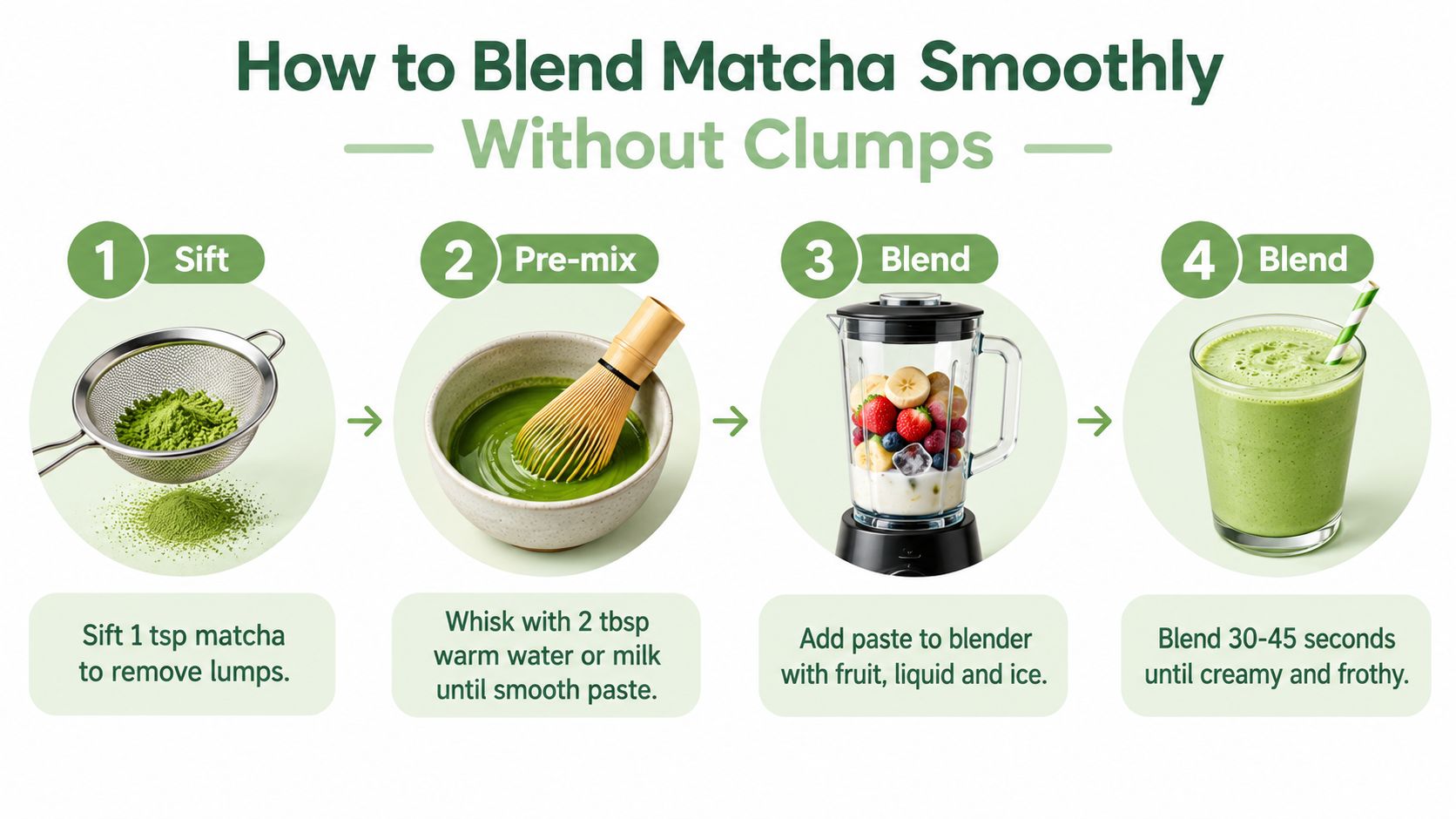
- Sift the powder. Pass the matcha through a fine tea sifter or small kitchen sieve. This breaks up compacted particles before liquid is added. Pep Tea's matcha tea sifter is designed for this type of preparation.
- Add a small amount of liquid. Use warm water or milk, rather than tipping the dry powder into a full blender jug.
- Whisk until smooth. Work the liquid into the powder until you have a thin paste or smooth suspension with no visible dry patches.
- Add the mixture to the blender. Once hydrated, the matcha disperses much more evenly through the fruit, liquid and ice.
An Australian preparation guide recommends sifting 1–2 g of matcha, combining it with 30–80 mL of water at about 70–80°C, and whisking until smooth and frothy. Health Emporium's matcha preparation guidance provides that temperature and liquid range. Water that's too hot can make the tea taste harsher, so don't use freshly boiling water.
Load the blender in a sensible order
Put liquid into the blender first, followed by yoghurt or soft ingredients, fruit, hydrated matcha and ice. This gives the blades room to move and helps prevent thick ingredients from forming a dry cap around the blade assembly.
Start at a lower speed if your blender allows it, then increase until the mixture circulates. Stop to scrape the sides if the fruit is frozen or the smoothie is particularly thick. Add a little more liquid only when needed, because too much can turn a creamy smoothie thin.
The supplied café guidance also recommends keeping prepared matcha batches refrigerated or in an ice bath, away from sunlight, and using them within the day. Australian café matcha storage advice notes that oxidation can dull the colour and taste, so blending close to serving time is the better habit.
Practical rule: Dry matcha belongs in the sifter, not directly on top of a cold smoothie. A short pre-whisk gives the powder somewhere to disperse before the blender does the heavy work.
For a visual demonstration of the preparation sequence, watch this short matcha blending guide:
Four Easy Matcha Smoothie Variations to Try
Once the powder is hydrated, the recipe can stay remarkably simple. The best combination depends on whether you want a bright fruit flavour, a substantial breakfast, a creamy post-workout drink or a lighter iced blend.
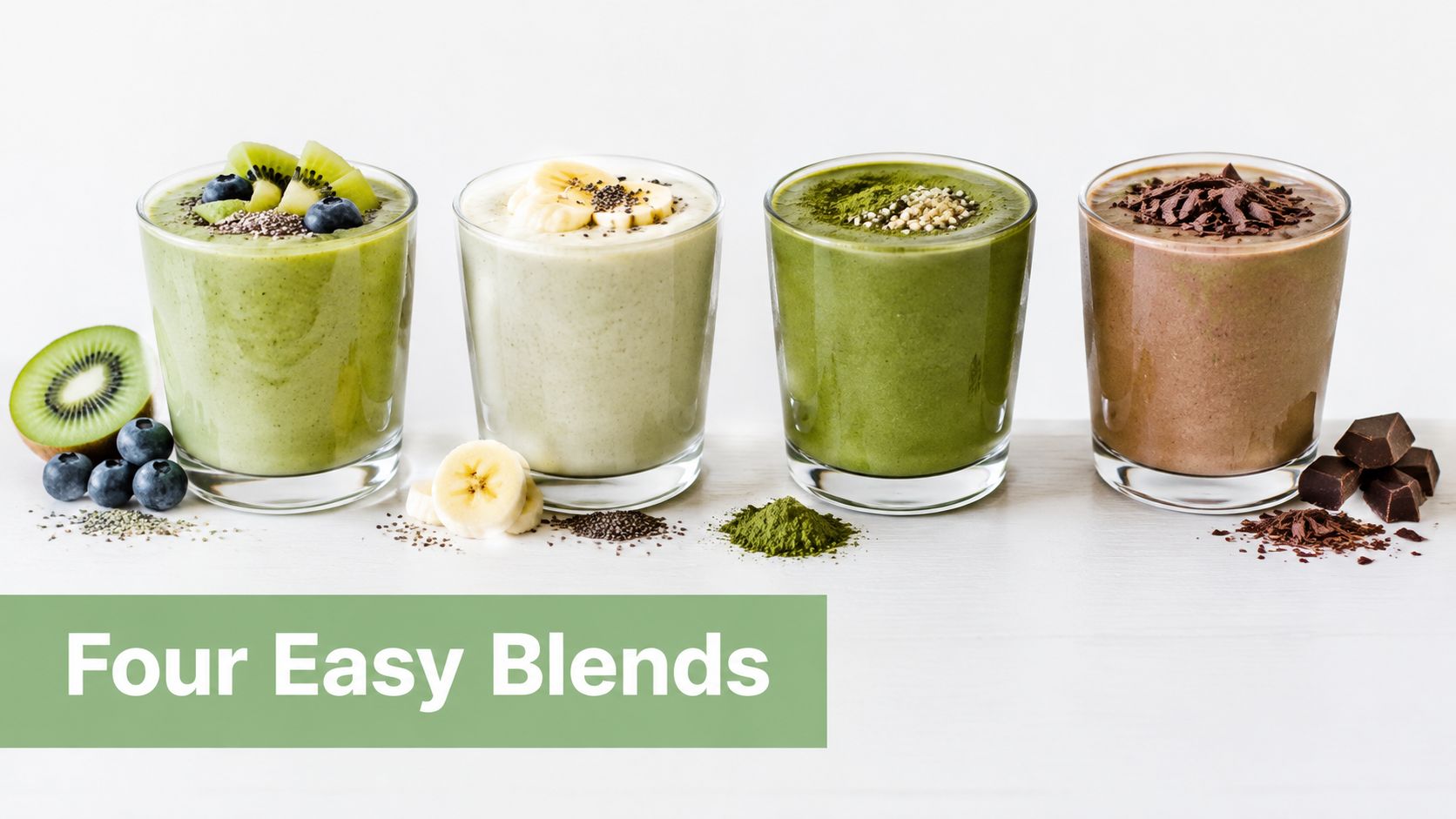
1. Bright banana and berry matcha
Use:
- Fruit: Frozen banana and a handful of berries
- Liquid: Unsweetened almond milk or dairy milk
- Matcha: Your preferred light or balanced serve, sifted and pre-whisked
- Optional finish: A squeeze of lemon if the berries are very sweet
Banana brings body and sweetness, while berries add acidity that cuts through matcha's earthy character. This is a good starting point if you want the tea to remain present but not dominate.
For a café menu, list the fruit, milk choice and matcha grade clearly. A digital menu tool such as TopFoodApp's menu maker can help a venue present those options neatly, particularly when customers want dairy-free or lower-sugar substitutions.
2. Creamy protein-style breakfast blend
Try:
- Base: Unsweetened soy milk or yoghurt
- Texture: Frozen banana or avocado
- Add-in: Plain protein powder, hemp seeds or another familiar breakfast ingredient
- Matcha: A balanced serve, pre-hydrated before blending
- Flavour support: Vanilla or cinnamon without added syrup
Soy milk and yoghurt give this version more savoury depth than a fruit-only smoothie. Vanilla can soften the green notes, but check whether a protein powder or flavoured milk already contains sweeteners before adding anything else.
3. Green breakfast smoothie
Combine:
- Greens: Baby spinach or another mild leafy green
- Fruit: Banana, pear or mango
- Liquid: Coconut water or unsweetened plant milk
- Matcha: A light serve at first
- Optional texture: Chia or hemp seeds
Mild greens increase the fresh, vegetal character, so keep the matcha restrained until you know how the combination tastes. Pear offers a softer sweetness, while mango creates a fuller, more tropical profile. If the result tastes too green, add creaminess before adding sweetener.
4. Refreshing iced matcha smoothie
For a lighter style, use:
- Liquid: Cold coconut water or unsweetened almond milk
- Fruit: Frozen pineapple, berries or a small amount of banana
- Matcha: Pre-whisked with warm water, then cooled briefly
- Ice: Enough to chill and thicken the drink
- Acidity: Lime juice to taste
This version suits warmer Australian mornings and café service because the flavour stays crisp. Pineapple and lime can make matcha taste sharper and brighter, while banana makes the drink rounder and more filling.
Blend each recipe only after the matcha paste is smooth. If you're testing a menu, prepare one variation at a time and write down the matcha grade, liquid, fruit and sweetener so staff can reproduce the same flavour.
Getting the Taste Caffeine and Sweetness Balance Right
A good matcha smoothie shouldn't need to taste like a sugary café frappe. Matcha brings bitterness and depth, so balance it with natural sweetness, creaminess and acidity rather than adding every sweet ingredient at once.
Start with the fruit. Ripe banana, mango and pear can soften the tea naturally, while berries and citrus add brightness. If the smoothie still tastes sharp, add yoghurt or a little more unsweetened milk before reaching for honey, maple syrup or flavoured creamer. Those ingredients can quickly shift a low-sugar drink into a sweet treat.
Use a simple adjustment order
- Too bitter: Add creaminess or sweeter fruit, then taste again.
- Too sweet: Add a sharper element such as berries or lime, or increase the unsweetened liquid.
- Too weak: Increase the matcha gradually, particularly if the smoothie contains strong fruit flavours.
- Too grassy: Use less matcha next time, or pair it with banana, vanilla or yoghurt.
- Too stimulating: Reduce the serving and avoid combining the smoothie with other caffeinated drinks at the same time.
Australian lab data illustrates why small quantities can still matter. In the tested sample described earlier, 33.3 mg/g caffeine and 21.3 mg/g theanine were reported, but products vary, so the package information remains important. Australian food standards also state that retail foods must not contain caffeine at concentrations of 1% or more for liquid products, or 5% or more for powders and other non-liquid products. Food Standards Australia New Zealand's caffeine information is useful context for home formulators and cafés.
| Matcha Amount | Approx Caffeine | Best For | Flavour Tip |
|---|---|---|---|
| 1–2 g | Product-dependent, with Australian guidance commonly describing a typical serve around 60–75 mg | New users or caffeine-sensitive drinkers | Pair with banana, yoghurt or mild plant milk |
| Around 2 g | Australian consumer guidance describes roughly 60–70 mg per 2 g serving, depending on the product | A balanced smoothie with noticeable tea flavour | Use berries or pear for freshness |
| Up to 4 g | A tested sample could contribute roughly 133 mg at 4 g, if it matched the cited assay values | Strong fruit, larger or more robust smoothie recipes | Add enough creamy texture to prevent bitterness |
The table is a practical guide, not a promise of exact caffeine content. Matcha variety, growing conditions, processing and serving size all influence the final drink, so start modestly and adjust according to your own response.
A smoothie can look virtuous and still be sugar-forward. Check the fruit, milk, yoghurt and sweetener together, not one ingredient at a time.
Bringing It All Together for Your Perfect Matcha Smoothie
The reliable method is easy to remember. Choose a grade that suits the recipe, sift the powder, pre-whisk it with warm liquid, then blend it with your base. Culinary grade usually makes practical sense for bold fruit and milk combinations, while ceremonial grade can suit a simpler smoothie where the tea flavour takes centre stage.
Start with a modest serve and let the other ingredients do some of the balancing. Banana and yoghurt soften bitterness, berries and lime add lift, and unsweetened milk lets you control the final sweetness. If the drink tastes gritty, the first correction should be better hydration, not more liquid or more sweetener.
Make one change at a time. Try the same smoothie with a different fruit, then compare a dairy-free base, then adjust the matcha amount. That approach helps you learn what your palate and routine prefer.
Pep Tea's Australian range includes organic Japanese matcha for home preparation, café recipes and blended drinks. The brand also makes Australian-brewed organic kombucha in the Hunter Valley, NSW, for people building a broader low-sugar, functional beverage routine.
Explore the organic matcha options and recipe inspiration available from Pep Tea, then choose a ceremonial or culinary powder that suits your smoothie style. With the right dose and pre-whisking habit, you can make a smooth, vibrant matcha drink at home without relying on excess sugar.