
Caffeine Free Matcha Tea: An Honest Guide for Australians
A 100% caffeine free matcha tea made from the tea plant doesn't exist. Standard matcha contains 19 to 44.4 mg of caffeine per gram, and even decaffeinated matcha sold in Australia still retains about 6 mg per serving, with some products described as low-caffeine at around 4 to 8 mg per 2 g serving.
That surprises a lot of people because the label language in this category can be confusing. If you've been searching for a matcha that gives you the ritual, colour, and wellness appeal without the stimulant hit, the better question isn't “Where can I find real caffeine-free matcha?” It's “Which low-caffeine matcha or caffeine-free alternative suits me best?”
For Australians, that distinction matters. It matters if you're sensitive to caffeine, trying to protect sleep, managing anxiety, watching your intake during pregnancy, or choosing products for a café menu where clear labelling builds trust. It also matters because matcha isn't just any green tea. The way it's grown makes it naturally richer in caffeine, which is why the words on the front of the pack don't always tell the full story.
There is good news, though. You still have options. Some are decaffeinated matcha with small residual caffeine. Others are naturally caffeine-free powders and herbal teas that deliver a similar whisk-and-sip ritual without pretending to be tea leaf matcha. Once you know how to read the category properly, it gets much easier to make a smart choice.
The Truth About Caffeine Free Matcha Tea
A tea leaf matcha that is caffeine-free does not exist.
That sounds blunt, but it clears up a lot of label confusion. Matcha is made by grinding whole green tea leaves from Camellia sinensis into a fine powder. Because you consume the leaf itself rather than just an infusion, you are taking in the compounds naturally present in that leaf, including caffeine.
Why the wording causes confusion
The tricky part is marketing language. On Australian shelves, phrases like “decaf matcha”, “low caffeine”, and “caffeine free matcha tea” can look similar at a glance, especially in online listings or café supplier catalogues. They do not mean the same thing.
A useful way to read those labels is to separate the product into two categories. One is real matcha that has had some caffeine removed. The other is a caffeine-free powder or herbal blend that copies the colour, ritual, or flavour direction of matcha but is not true tea leaf matcha.
That distinction matters in real life. If you are choosing for pregnancy, sleep, anxiety, medication interactions, or a late-night café menu, “very low” and “none” are different promises.
Practical rule for Australian buyers: If it is described as matcha and made from tea leaves, assume some caffeine remains unless the pack clearly says it is a non-tea alternative.
Why true matcha always starts with caffeine
Matcha is not made from ordinary green tea leaves. The plants are shaded before harvest, which helps create matcha's deep green colour and savoury, soft umami character. That same growing style also contributes to the chemistry people are trying to avoid.
In other words, asking for caffeine-free matcha is a bit like asking for lactose-free milk that still comes exactly from dairy and tastes exactly the same. Processing can reduce one component, but the original ingredient starts with it for a reason.
For cafés, clear menu wording is helpful. “Low-caffeine matcha” is accurate. “Caffeine-free matcha” is risky unless the drink uses a different base altogether.
What this means for shoppers and café owners
For some people, a small amount of residual caffeine is manageable. For others, even a low-caffeine serve can be enough to affect sleep or trigger jitters.
If you are comparing drinks rather than dry powder labels, our guide to caffeine in a matcha latte gives a more practical sense of what ends up in the cup.
The takeaway is simple:
- True matcha contains caffeine by nature.
- Decaffeinated matcha is reduced-caffeine matcha, not zero-caffeine matcha.
- A genuinely caffeine-free option will usually be a herbal or non-tea substitute, not tea leaf matcha.
Australian consumers are better served by plain language than by wishful wording. Once you know what the label is really saying, it becomes much easier to choose the right product for your pantry, your café menu, or your customers.
The Science of Decaffeinated Matcha
Decaffeinating matcha is a bit like trying to remove one thread from a tightly woven fabric. You can do it, but the surrounding threads may shift as well.
That's why decaf matcha often tastes and feels a little different from standard matcha. The goal is to reduce caffeine while preserving flavour, colour, antioxidants, and the compounds that make matcha distinctive.
How decaffeination works
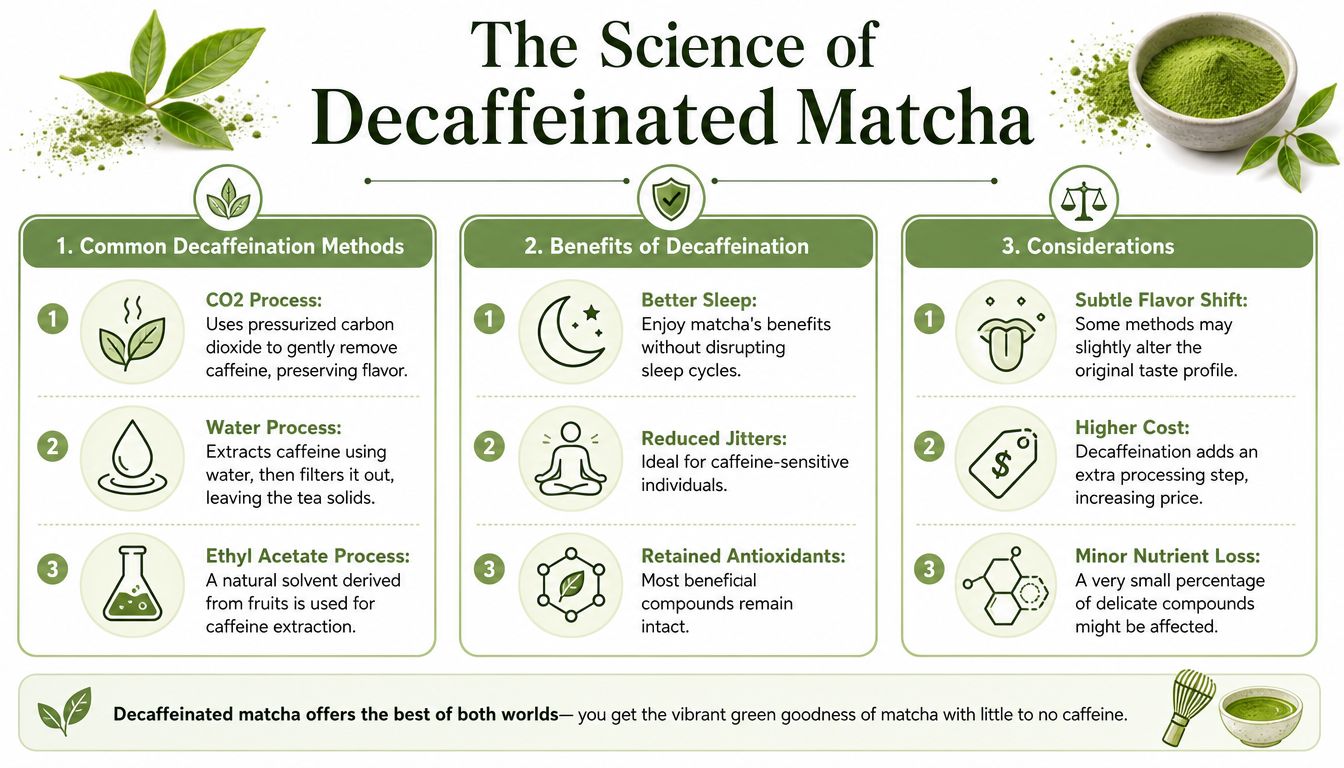
Producers use extraction methods to pull caffeine out of the tea material before the final product reaches your cup. You'll commonly see references to:
- CO2 processing, which uses pressurised carbon dioxide
- Water processing, which separates caffeine through water-based extraction
- Ethyl acetate processing, which uses a solvent approach
The exact method matters because matcha is more than caffeine. It also contains amino acids, catechins, and aromatic compounds that shape the drinking experience.
Why L-theanine matters
One of the most important compounds in matcha is L-theanine, the amino acid associated with matcha's savoury, soft umami character and its calmer feel compared with harsher caffeine sources.
A detailed industry explainer on decaf matcha notes that decaffeination must be carefully calibrated because it can degrade up to 30 to 50% of L-theanine, changing both flavour and the familiar “smooth, sustained energy lift” many matcha drinkers look for (decaf matcha processing and L-theanine trade-offs).
Remove caffeine carelessly, and you don't just change the stimulant level. You change the taste, the texture, and the way the tea feels in the body.
What you're likely to notice in the cup
If you taste regular ceremonial matcha and decaf matcha side by side, a few differences often stand out:
| Feature | Regular matcha | Decaffeinated matcha |
|---|---|---|
| Flavour | More umami, fuller | Often softer, sometimes flatter |
| Mouthfeel | Creamier, richer | Can feel lighter |
| Energy profile | More noticeable lift | Gentler, less stimulating |
| Best use | Straight tea, premium latte | Evening latte, lower-caffeine routine |
That doesn't make decaf matcha inferior. It makes it a different product with a different purpose.
Who should choose it
Decaf matcha makes sense when your priority is lowering stimulation rather than preserving every part of the classic matcha experience.
That may include:
- Evening drinkers who want the ritual without disturbing sleep.
- Caffeine-sensitive people who still enjoy matcha flavour.
- Gradual reducers cutting back from coffee or stronger caffeinated drinks.
A good decaf matcha should still taste pleasant, whisk smoothly, and work well in lattes. It just won't behave exactly like the full-strength version.
The Benefits of Lowering Your Caffeine Intake
Some people don't need less caffeine. Others feel better when they cut back.
That's where lower-caffeine matcha products can be helpful. They offer a middle ground for people who still enjoy matcha's flavour and wellness appeal but don't want the full stimulant load.

When lower caffeine makes sense
For Australian readers, this often comes up in everyday situations rather than extreme ones.
You might be someone who:
- Gets jittery easily after tea or coffee
- Finds caffeine affects sleep even earlier in the day
- Prefers a gentler afternoon drink
- Needs to be cautious because of pregnancy, breastfeeding, or medication conversations with a health professional
- Wants the ritual without the buzz
An Australian-focused source notes that reducing caffeine can be particularly relevant for people following guidance around caffeine sensitivity, while decaffeinated matcha can still retain strong levels of tea compounds such as polyphenols at 1765.1 mg/L and flavonoids at 1968.8 mg/L (overview of catechins and tea compounds in matcha).
It's not only about energy
Lowering caffeine intake can change more than how “wired” you feel.
People often choose low-caffeine options because they want:
- a calmer evening routine
- less chance of overstimulation
- more flexibility with timing
- a tea they can enjoy without second-guessing how they'll feel later
That's especially useful if your day already includes coffee, pre-workout drinks, cola, or dark chocolate. Sometimes the issue isn't one drink. It's the combined load.
Here's a helpful visual guide if you'd like to see matcha preparation in action:
What you still keep
Choosing decaf or low-caffeine matcha isn't about settling for nothing. It's about changing the balance.
Worth remembering: lower caffeine and zero caffeine are not the same thing, but lower caffeine can still be the right choice if your goal is moderation rather than strict avoidance.
You may still get the sensory parts people love about matcha: the whisking ritual, the green colour, the savoury note, and the feeling of choosing something more intentional than a sugary drink. For many drinkers, that's enough reason to make the switch.
Exploring Naturally Caffeine-Free Alternatives
If you want the ritual of matcha without any tea-plant caffeine at all, alternatives get interesting very quickly.
Some don't taste like matcha, and they shouldn't pretend to. What they do offer is a similar preparation style: sift, whisk, froth, sip. That makes them ideal for people who love the ceremony but want a caffeine-free cup.
A better way to think about alternatives
Instead of asking which product “copies” matcha best, ask which one suits the mood you want.
Some alternatives are earthy and comforting. Others are floral or vibrant. Some make a beautiful latte. Others work better iced or blended into smoothies. If you enjoy keeping notes on flavour and texture, this AI tea tasting guide is a handy way to compare what you notice from cup to cup.
Caffeine-Free Matcha Alternatives
| Alternative | Taste Profile | Key Health Benefit | Best For |
|---|---|---|---|
| Rooibos powder | Earthy, mellow, slightly sweet | Naturally caffeine-free everyday option | Lattes, evening drinks |
| Butterfly pea flower powder | Light, floral, visually striking | Colourful ritual and visual appeal | Iced drinks, layered lattes |
| Carob powder blends | Toasted, cocoa-like, comforting | Dessert-style drink without tea caffeine | Winter drinks, kids' drinks |
| Roasted herbal powders | Nutty or toasty depending on blend | Café-style warmth without tea leaf stimulants | After-dinner cups |
Rooibos is often the easiest starting point
Rooibos works especially well for people who want body and warmth without grassy notes. It doesn't taste like Japanese matcha, but it does make a satisfying whisked drink with milk.
If you want to learn more about rooibos as a wellness tea in its own right, our guide to organic green rooibos tea goes deeper into flavour and everyday uses.
Rooibos isn't a substitute in the strict sense. It's a different drink that solves the same problem for many people.
A simple Sunset Rooibos Latte
This is one of the easiest ways to create a comforting, café-style drink at home.
What you'll need
- Rooibos powder or very fine rooibos blend
- Warm milk of choice
- A little honey or maple syrup, if you like
- Pinch of cinnamon or vanilla
How to make it
- Sift the powder into a bowl or mug so it doesn't clump.
- Add a small splash of warm milk and whisk into a smooth paste.
- Pour in more warm milk while whisking or frothing.
- Sweeten lightly if needed.
- Finish with cinnamon for a sunset-coloured top note.
Frothing tips that help
- Use warm, not boiling milk so the drink stays smooth.
- Whisk the paste first before topping up with more liquid.
- Choose a wider bowl or mug if you're using a bamboo whisk.
- Add spices last so they sit on top rather than sinking into lumps.
Other rituals worth trying
A few good ways to enjoy these powders:
- Evening latte with rooibos and oat milk
- Iced blue drink with butterfly pea flower and coconut milk
- Layered mocktail for cafés wanting an alcohol-free hero drink
- Smoothie add-in for colour and texture
For strict caffeine avoidance, these alternatives are often more straightforward than chasing a “caffeine-free” matcha label that still belongs to the tea category.
Smart Choices for Your Cafe Menu or Store Shelf
For cafés and retailers, this topic isn't just about product knowledge. It's about trust.
Customers ask direct questions. “Is this caffeine-free?” “Can I have this at night?” “Is this okay if I'm avoiding caffeine?” If the menu board says one thing and the product reality says another, confidence disappears quickly.
Label the offer honestly
The simplest fix is clear naming.
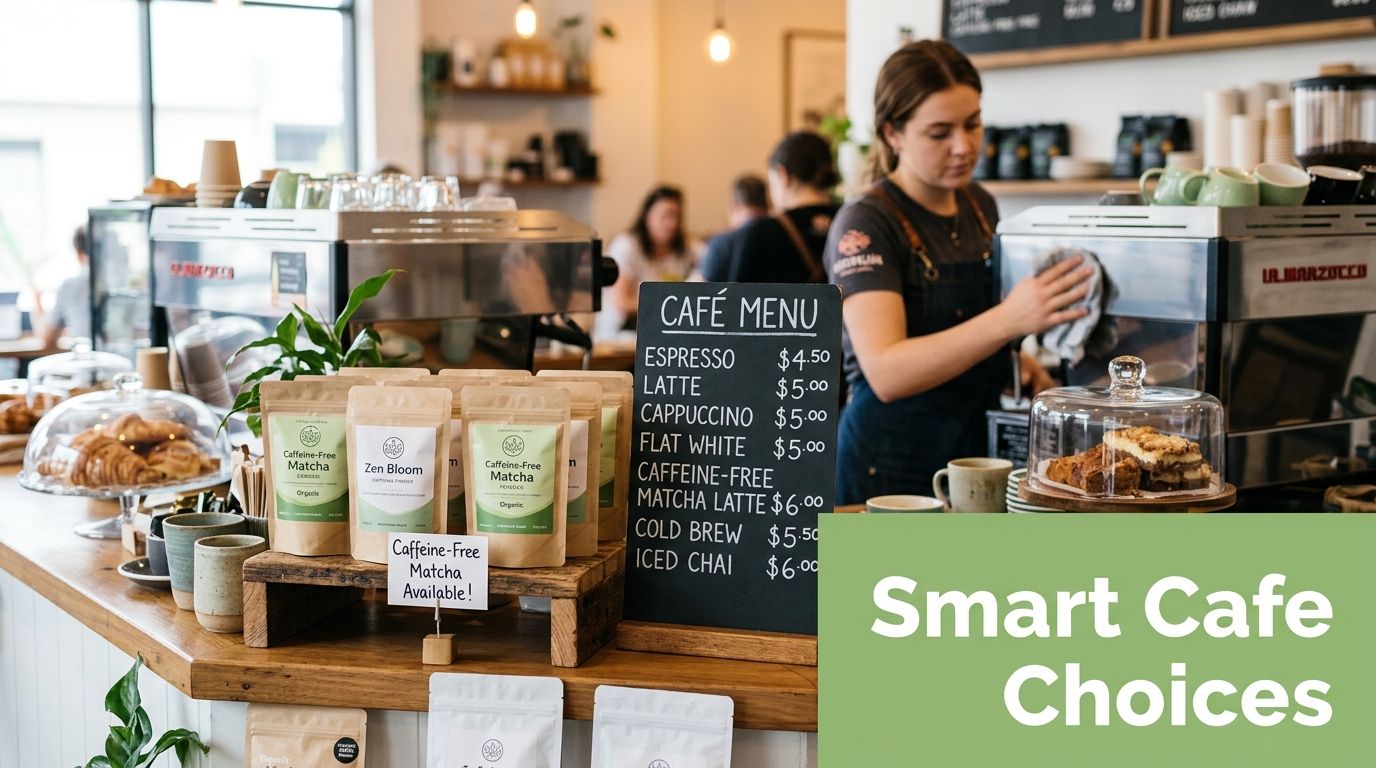
Instead of listing a drink as “Caffeine-Free Matcha Latte”, consider language such as:
- Low-Caffeine Matcha Latte
- Decaf Matcha Latte
- Rooibos Latte
- Blue Butterfly Pea Latte
- Herbal Matcha-Style Latte
Those names do two jobs. They help customers choose quickly, and they reduce awkward conversations at the counter.
Menu advice: Name the ingredient honestly, then train staff to explain the difference in one sentence.
Supply matters as much as wording
Australian venues have also had to deal with supply pressure. A hospitality industry update reported that the Australian sector faced a severe matcha shortage starting in 2024, driven by record-high import costs and strong demand, which directly affected cafés and retailers sourcing premium matcha (Australian matcha shortage and supply chain pressure).
That matters for specialty lines even more than regular ones. If you're offering ceremonial matcha, decaf matcha, and caffeine-free herbal alternatives, stock planning becomes part of customer service.
A practical menu mix
A strong drinks list usually includes a spectrum rather than a single answer.
| Customer need | Best menu fit | Why it works |
|---|---|---|
| Wants classic matcha | Ceremonial matcha latte | Full flavour and traditional profile |
| Wants less stimulation | Decaf or low-caffeine matcha latte | Keeps some matcha character |
| Wants zero tea caffeine | Rooibos or herbal latte | Clear and genuinely caffeine-free |
| Wants visual novelty | Butterfly pea or layered wellness drink | Strong café appeal |
If you're reviewing broader beverage positioning, our article on profitable café menu ideas can help you think through where these drinks fit.
Small details shape perception
Presentation counts too. If you're serving takeaway drinks, cup choice affects heat retention, branding, and the overall feel of a premium non-alcoholic menu. Afida's paper cup guide is a useful reference if you're comparing practical options for café service.
For retailers, the equivalent is shelf clarity. Use signage that separates:
- true matcha,
- decaffeinated matcha,
- naturally caffeine-free alternatives.
That structure makes the category easier to shop and easier to trust.
Your Questions on Caffeine Free Matcha Answered
The biggest point to clear up is simple. “Caffeine-free matcha” and “decaf matcha” are not the same thing, and that distinction matters if you are buying for yourself, your family, or an Australian cafe menu.
Is decaf matcha completely caffeine-free
No. Decaffeination reduces caffeine, but it does not turn matcha into a zero-caffeine product. Matcha is made from whole tea leaves ground into powder, so even after processing, some caffeine usually remains.
That is why Australians who need to avoid caffeine altogether should look beyond decaf matcha and choose a naturally caffeine-free option instead, such as rooibos or an herbal latte blend.
Is decaf matcha safe during pregnancy
This is a question for your doctor or midwife, because pregnancy advice depends on your overall daily caffeine intake, your health history, and how sensitive you are to caffeine.
The useful rule is to treat “decaf” as “lower caffeine,” not “no caffeine.” If you are checking labels in an Australian supermarket, health store, or cafe, that one mindset shift helps prevent a very common mistake.
Does decaf matcha taste the same as regular matcha
Usually, no.
Many drinkers notice less umami, less savoury depth, and a softer finish. A good comparison is coffee beans after decaffeination. The drink can still be enjoyable, but the flavour profile often changes because processing affects more than just caffeine.
In a latte, milk can smooth over some of that difference. In a straight whisked bowl, the gap is easier to notice.
How can I lower caffeine at home if I'm using regular matcha
You cannot remove caffeine from regular matcha in your kitchen, but you can lower how much you drink in a serve.
A few practical changes help:
- Use a smaller amount of powder. Less matcha in the bowl means less caffeine in the cup.
- Make it as a larger latte. More milk and less matcha gives you a gentler drink.
- Drink it earlier in the day. For many people, timing affects sleep as much as dose.
- Keep it to one serve. Refill habits often add more caffeine than people realise.
This is often the most realistic option for Australian households. You keep the flavour and ritual of matcha, but adjust the strength to suit your routine.
What about hojicha
Hojicha is roasted green tea, and it is often chosen by people who want a warmer, toastier, lower-caffeine tea experience.
It is not caffeine-free, and it does not taste like matcha. Still, it can be a smart middle ground for someone who enjoys Japanese tea but wants less intensity. For cafes, hojicha lattes also make sense as a menu option because staff can explain them clearly in one line: roasted green tea, softer flavour, lower caffeine than matcha.
What should I look for on an Australian label
Start with the product name, then check the ingredient list. Those two parts should match.
Clear wording includes:
- decaffeinated matcha
- low-caffeine matcha
- herbal powder
- rooibos latte blend
- butterfly pea powder
Be cautious with vague phrases on the front of the pack if the ingredients still list green tea or matcha. Name the ingredient accurately, then train staff to explain the difference in one sentence. That approach works well in retail and in cafes because it builds trust quickly.
For zero tea caffeine, choose products labelled as herbal or rooibos based, not tea based. Clear and completely caffeine-free is very different from reduced caffeine.
If you'd like help choosing between premium organic matcha and other functional tea options, explore Pep Tea for Australian-focused guidance, organic tea education, and a carefully selected range built around quality, authenticity, and everyday wellness.