
Tag: matcha whisk electric
Perfect Matcha: Your Matcha Whisk Electric Guide

If you're standing in the kitchen with a bowl of matcha, a splash of hot water, and a frother in hand, you're probably after one thing: a smooth, vivid, café-worthy drink without the clumps, sludge, or flat foam.
That's exactly where a matcha whisk electric setup earns its place. Used well, it isn't just the faster option. For lattes, iced drinks, and busy home routines, it can be the better option. The trick is knowing when it outperforms a bamboo chasen, when it doesn't, and how to use it without roughing up a beautiful powder.
Why an Electric Whisk is a Matcha Lover’s Best Friend
You’ve sifted good matcha, added the right water, and still ended up with a gritty latte that settles before you finish the cup. That is the point where tool choice matters.
A bamboo chasen still deserves its place. For usucha or a quiet bowl at home, it gives gentle agitation and a texture many tea drinkers enjoy. But for modern matcha drinking in Australia, especially oat milk lattes, iced matcha, and quick café service, an electric whisk often produces the better result. It disperses powder fast, builds a finer top layer, and does it with less effort and more repeatability.
In Australia, that shift is already showing up in buying habits. The Australian matcha whisk market is projected to be valued at AUD 65 million in 2025, with electric whisks holding 35% market share, according to this Australian market overview. Analysts cited there also expect the category to grow at a 12% CAGR through 2033, which fits what many of us are seeing in cafés, wellness studios, and home kitchens.

Electric whisk versus chasen versus standard frother
These tools do different jobs, and treating them as interchangeable usually leads to disappointing matcha.
| Tool | Best use | Where it struggles |
|---|---|---|
| Electric matcha whisk | Lattes, iced matcha, quick daily prep, consistent blending | Can over-aerate if you run it too long |
| Bamboo chasen | Traditional bowl preparation, slower ritual, gentle mixing | Less practical for milk drinks and busy mornings |
| Standard milk frother | Frothing milk | Often adds air well but does a poor job dispersing matcha evenly |
The key difference is control. A good electric whisk can break up powder quickly and create controlled microfoam in a small volume of liquid. A standard milk frother often pushes too much air too early, which leaves you with foam on top and sediment underneath.
Why it shines for lattes
For lattes, the electric whisk is not only convenient. In the right hands, it is often the superior tool.
That is because a latte needs a concentrated, lump-free matcha base that can stand up to milk without turning chalky. A chasen can do that, but it takes more room, more technique, and more time. An electric whisk gets there quickly, which matters on a busy morning and matters even more in a café where consistency is the whole job.
I see this most clearly with oat milk. Oat milk can mute aroma and expose any clumping in the matcha base. A short whisk in a small amount of water gives you a smoother concentrate before the milk goes in, so the final drink tastes cleaner and looks brighter.
If your daily matcha includes oat, almond, or soy milk, an electric whisk is usually the more reliable choice.
The nutrient question deserves a straight answer
A lot of articles dodge this. They say electric is faster and stop there.
There is no strong evidence that a brief mix with an electric whisk, used properly, strips matcha of its goodness in any meaningful way. What does affect quality is heat, oxidation over time, and rough handling. In practice, nutrient preservation comes down to method more than motor. Use warm water, not boiling. Whisk for seconds, not minutes. Drink it soon after making it.
That is a sensible middle ground for anyone in the Australian wellness crowd who wants both convenience and quality. If you want a traditional reference point for hand preparation, this guide on how to whisk matcha properly is a useful comparison.
What works in real life
An electric whisk is the better fit when you want repeatable results with milk drinks, cold matcha, or a fast morning routine. It is also easier to teach to staff or family members because the technique is less fussy.
A chasen still wins for ceremony, slower preparation, and the tactile pleasure of making a bowl by hand. Both tools have value. But if the goal is a polished matcha latte with fine texture, even colour, and less grit at the bottom of the cup, the electric option earns its place very quickly.
Your Step-by-Step Guide to a Flawless Matcha
You boil the kettle, grab the oat milk, and want a smooth green latte before the train leaves. A tight method is essential. With an electric whisk, the goal is not just speed. It is a cleaner concentrate, finer foam, and a better result in milk than a traditional chasen usually gives in a rushed home routine.
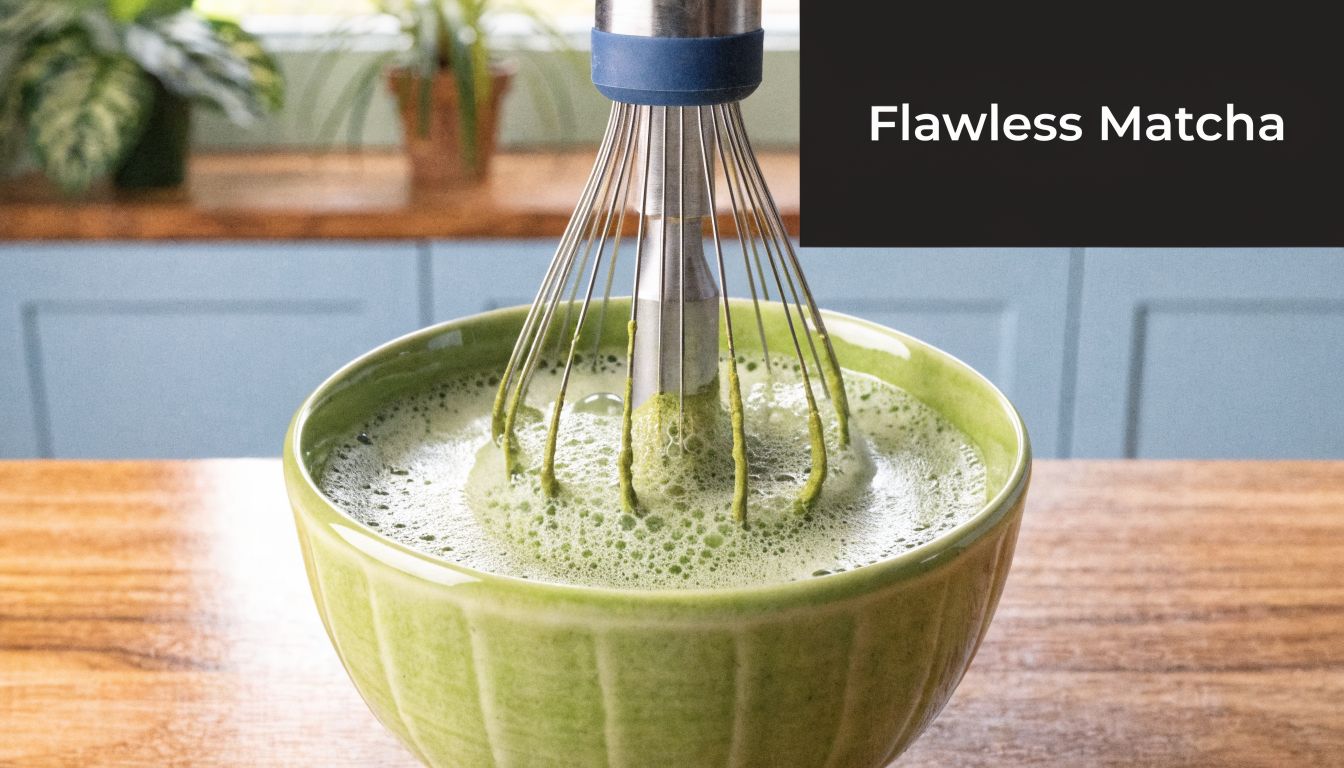
Good matcha starts before the whisk turns on. Water that is too hot pulls out more bitterness and can flatten the sweeter, creamier notes, so keep it warm rather than boiling. For most everyday matcha, 70 to 80°C is a reliable range.
Gather the right tools
You do not need much, but each item has a job.
Use:
- A small bowl or wide mug so the whisk head can move freely
- A fine sieve to break up clumps before they hit the water
- A temperature-aware kettle or thermometer to keep the water gentle
- An electric whisk that mixes quickly without throwing liquid everywhere
- A spoon or scoop for repeatable portions
If you want to compare electric prep with the classic method, Pep Tea’s guide on how to whisk matcha is a useful reference.
Build the base properly
For a hot latte, add 1 to 2g of sifted matcha to your bowl or mug. Pour in a small amount of filtered water at 70 to 80°C. About one-quarter of the final drink volume is enough if milk is coming later.
This concentrated start is what gives lattes better flavour. If you dilute too early, the powder can skate across the surface, leave grit behind, and taste weak once milk goes in.
I use this same approach in café service and at home because it is repeatable.
Skip the sieve once and you will spend the next 20 seconds chasing green lumps instead of making a smooth base.
Use the whisk like a precision tool
Start the whisk with the head low in the liquid. Dissolve the powder first, then introduce a little air once the base looks smooth. Small circles work well. A loose W motion also works if your bowl is wide enough.
Short whisking is usually all you need. Many high-speed matcha whisk and frother brands suggest a brief mix of around 15 to 20 seconds for a smooth, lightly foamed result, depending on bowl size, dose, and motor strength. The exact number matters less than what you see in the cup. Stop when the surface looks even and glossy, with no visible specks hugging the sides.
A few habits make the process easier:
- Keep the whisk head submerged at the start so the powder hydrates fully
- Tilt the bowl slightly if the liquid is too shallow for the whisk head
- Lift only a little near the end if you want a fine top layer for a latte
- Stop early rather than late because overworking can make the texture too airy
If you are building café habits at home, some of the workflow discipline is the same as learning how to become a barista. Small technique changes show up clearly in the cup.
Finish the drink without knocking it flat
Once the concentrate is smooth, add your milk. Oat milk is the standard for many Australian cafés because it rounds out matcha well, but almond and soy can work nicely if you keep the base strong.
Give the drink a short final pulse after the milk goes in. You are combining, not whipping. That is one of the big advantages of an electric whisk for lattes. It can blend the matcha evenly through milk and leave a finer texture than a bamboo whisk usually manages in the same format.
This video gives a useful visual for the motion and pacing:
The three mistakes that cause most bad cups
| Mistake | What happens | Better move |
|---|---|---|
| Water too hot | The cup tastes harsher and less balanced | Let boiled water cool before mixing |
| Skipping the sieve | Clumps survive and settle into the bottom of the cup | Sift first, even for a single serve |
| Whisking too high too soon | You get splashes, uneven mixing, and coarse foam | Start low, then lift slightly only at the end |
A flawless matcha comes from sequence. Sift first, use gentle water, make a proper concentrate, then whisk briefly and with control. That method protects flavour, keeps texture smooth, and gives electric whisk users their best result where it matters most. In a proper latte.
Pro Tips for Café-Quality Matcha Every Time
Home matcha gets better fast once you stop treating every drink the same. A thick hot latte, an iced matcha, and a baking paste each need a slightly different finish.
The common mistake is overworking the drink. A 2025 survey of Australian home baristas found that whisking for more than 30 seconds can cause a 25% collapse in foam structure, while 10 to 15 seconds works best for a paste before a short pulse to incorporate milk, according to this home barista preparation guide.
Match the texture to the drink
For a better result, decide what you're trying to make before the whisk ever turns on.
Hot latte
Aim for a smooth concentrate first, then a light final pulse after milk is added. Dense foam looks nice, but too much air can mute the matcha flavour.Iced matcha
Keep the base slightly stronger than you would for a hot drink. Ice softens flavour quickly, so a properly mixed concentrate matters more than a dramatic foam cap.Baking or dessert base
You're after a glossy paste, not froth. Short whisking is enough. Once the powder is dispersed, stop.
Choose a whisk that suits your routine
Not every electric whisk feels good in the hand or behaves well in a mug. Stainless steel models are usually easier to clean and better suited to frequent use. Dual-head options can be handy if you like one head for matcha and another for milk finishing.
If you're the sort of person who enjoys refining technique, barista training habits help more than people think. This guide on how to become a barista is useful because it trains your eye for texture, temperature, and consistency, which all carry over neatly into matcha prep.
A good matcha routine looks boring from the outside. Same bowl, same water range, same whisking time, same result. That's why it works.
Fine-tuning that café feel
Small adjustments create the polished finish people usually associate with a good café.
Try this checklist:
- Warm the cup first if you're serving hot. It helps the drink hold texture a little more gracefully.
- Sweeten after the matcha base is smooth so you're not trapping dry powder under syrup or honey.
- Pour milk steadily rather than dumping it in. The surface stays neater and the drink tastes more integrated.
- Use better matcha for simpler drinks. The fewer extra ingredients you add, the more obvious the powder quality becomes.
The best home setups aren't complicated. They're repeatable.
Creative Recipes Beyond the Morning Latte
Mid-afternoon is where a matcha whisk electric tool often proves its worth. Morning bowls are one thing, but cold drinks, baking mixes, and thicker wellness blends are where an electric whisk can produce a better result than a traditional chasen. A bamboo whisk is brilliant for a classic usucha. For iced lattes and recipe work, a small motor gives you faster dispersion, fewer dry pockets, and a smoother finish.
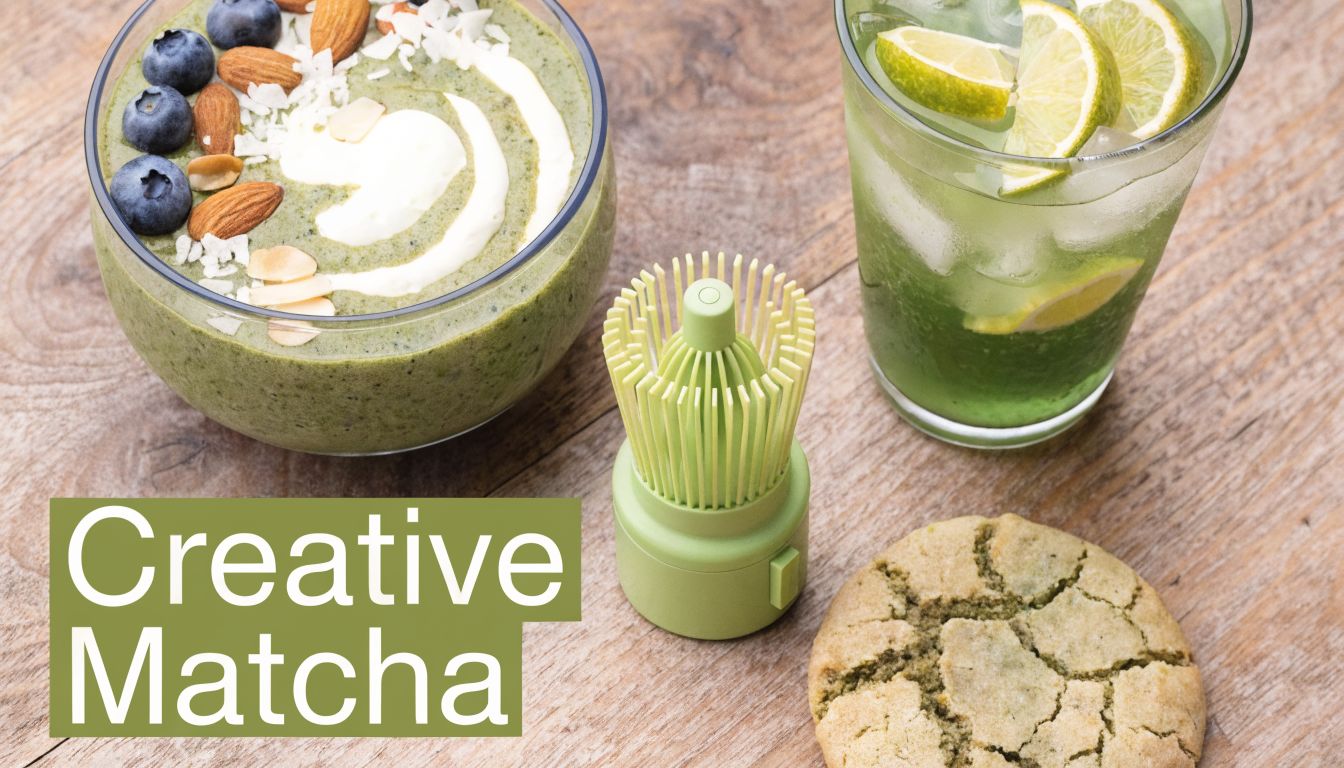
A quick iced matcha for warm afternoons
In much of Australia, iced matcha gets more use than the ceremonial bowl. The best version starts with a concentrate, not with powder dumped straight over milk and ice. That one small change gives you cleaner flavour and a silkier texture, especially in oat milk or high-protein milk that tends to show every little lump.
If you want a fuller method, Pep Tea's how to make iced matcha latte guide is a good reference.
A reliable method looks like this:
- Sift your matcha into a bowl or cup.
- Add a small amount of warm water.
- Whisk for a few seconds until smooth and glossy.
- Pour that concentrate over ice.
- Add cold milk and stir gently.
The result tastes brighter because the matcha hydrates properly before it hits the cold liquid. In cafés, this is also the easiest way to keep each cup consistent during a busy run.
Matcha paste for baking
Baking is where an electric whisk proves its worth. Dry matcha added straight to batter often leaves little bitter spots and uneven colour. A quick paste fixes that.
Use just enough liquid to make a thick, smooth green base, then fold it into cheesecake filling, brownie batter, yoghurt, or overnight oats. The flavour spreads more evenly, and the colour looks cleaner too.
This works especially well for:
- Matcha cheesecake swirls
- Protein balls and raw slices
- Pancake or waffle batter
- Yoghurt bowls with fruit and seeds
For thicker mixes, I prefer the electric whisk over a chasen every time. It cuts through the paste faster and gives a more uniform result.
A cleaner smoothie or wellness blend
Smoothies can mute matcha if you throw everything into the blender and hope for the best. Pre-mixing the powder with a little water gives you a concentrated shot that blends in properly, instead of sticking to the jug walls or leaving green specks through the drink.
That matters if you're using matcha with banana, mango, ginger, mint, or citrus, where balance is easy to lose. Start with a smooth base, then add it to the rest of the blend. You keep more control over flavour, and the drink tastes deliberate rather than messy.
The nutrient question still comes up with electric tools. In practice, the sensible approach is simple. Use warm rather than hot water, whisk only until the powder is fully dispersed, and avoid running the whisk longer than needed. For lattes, smoothies, and recipe bases, that gives you excellent texture without treating the matcha roughly.
Caring For and Troubleshooting Your Electric Whisk
A matcha whisk electric tool lasts longer when you clean it immediately. Matcha dries fast, and once it hardens around the whisk head, performance drops.
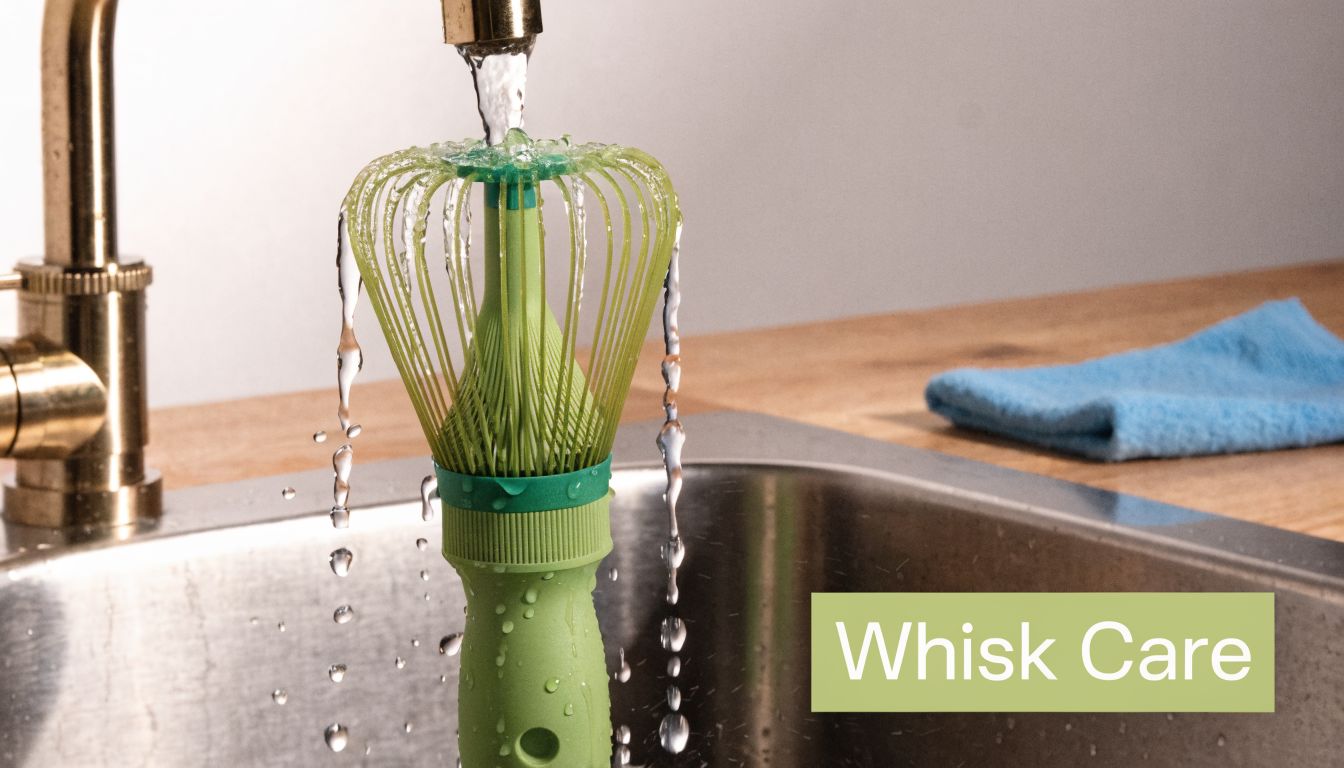
Clean it before residue sets
The simplest routine is the best one:
- Rinse straight after use under warm water
- Add a little mild soap if milk has touched the whisk head
- Spin briefly in clean water to help release any fine powder
- Dry the metal head well before storing
Avoid soaking the handle unless the product is explicitly designed for that. Most problems start when water gets where it shouldn't.
If you're building out a home setup, Pep Tea's matcha tea accessories collection gives a clear sense of the supporting tools that make prep and cleanup easier.
Store it so it keeps its shape
Don't toss it into a crowded drawer where the whisk head can bend. A bent head often leads to wobble, splashing, or weak mixing. Stand it upright if possible, or keep it in a dedicated utensil area away from heavier tools.
What to do if it stops performing properly
A weak or unreliable whisk usually comes down to something simple.
| Problem | Likely cause | What to do |
|---|---|---|
| It spins slowly | Low battery or incomplete charge | Replace batteries or fully recharge |
| It splutters or cuts out | Moisture or residue around the mechanism | Dry it thoroughly and check for build-up |
| It wobbles in use | Bent whisk head | Gently inspect and realign if safe to do so |
| It won't mix matcha cleanly | Old residue on the head | Wash more thoroughly and test in water |
Kitchen habit: Clean the whisk before you drink the matcha. If you leave it until later, later rarely comes.
A reliable whisk doesn't need much attention. It just needs quick care, dry storage, and the occasional check before you blame the matcha.
If you're ready to upgrade your home ritual, Pep Tea is a solid place to explore premium organic matcha, brewing essentials, and Australian-made wellness drinks. Browse the range for ceremonial and culinary matcha, or pick up accessories that make daily preparation simpler and more consistent.