
Tag: how to store scoby between brews
How to Store SCOBY Between Brews Without Losing It

You've finished a batch of kombucha, bottled what you want to drink, and now you're staring at the SCOBY in its jar wondering whether it can wait until the next brew. It can, but how you store a SCOBY between brews matters. A culture left dry, exposed, or sitting in neutral tea is more vulnerable than one kept submerged in mature, acidic starter liquid.
In an Australian kitchen, the safest practical approach is to treat the pause as continued fermentation care. Keep the culture clean, covered, fully submerged and at room temperature, then adjust the routine according to whether you're away for a few days or taking a longer break.
Why Your SCOBY Needs Proper Storage Between Brews
A SCOBY isn't just a rubbery disc you can put aside until you feel like brewing again. It's a living culture of bacteria and yeast, and the liquid around it is part of its protection. The culture continues to acidify its environment, which helps move the brew away from the starting tea conditions where unwanted organisms may grow.
This is why leaving a SCOBY in plain, neutral tea is a poor storage choice. Food Standards Australia New Zealand recommends adding the SCOBY as soon as possible after the tea has cooled, because starting tea is around pH 5 and can allow contaminants to grow. The guidance also says to cool the initial tea infusion from 60°C to 20°C within 2 hours, keep equipment clean and sanitised, and use proven commercial SCOBY starter cultures. You can read the FSANZ guidance on kombucha safety and SCOBY handling.
A short pause is different from a long pause
If you're brewing again within a few days, the simplest option is usually to leave the SCOBY in its original fermentation jar with some mature kombucha. One expert storage guide says a culture can remain in the jar with first-fermentation kombucha at room temperature for up to about a week during a short break (Brew Buch's break-between-batches guidance).
A pause lasting several weeks needs more attention. Evaporation, increasing acidity and surface contamination become more relevant, so a dedicated SCOBY hotel gives you a cleaner way to inspect and feed the culture. Australian guidance doesn't provide a universal maximum shelf-life for a dormant home SCOBY. It focuses instead on acidification, cleanliness, pH control and mould prevention, which is the more useful way to assess risk during a long gap (FSANZ's updated fermented-food guidance).
Practical rule: Store the SCOBY in acidic starter liquid, not dry and not in freshly made neutral tea.
Temperature matters too. Australian kombucha guidance describes primary fermentation at 24°C to 32°C for 7 to 10 days, while refrigeration is used for finished kombucha to stop fermentation and carbonation (CHOICE's Australian kombucha information). That makes the fridge useful for the finished drink, but not the default home for an active SCOBY you want to reuse.
Getting Your Jar and Starter Liquid Ready the Right Way
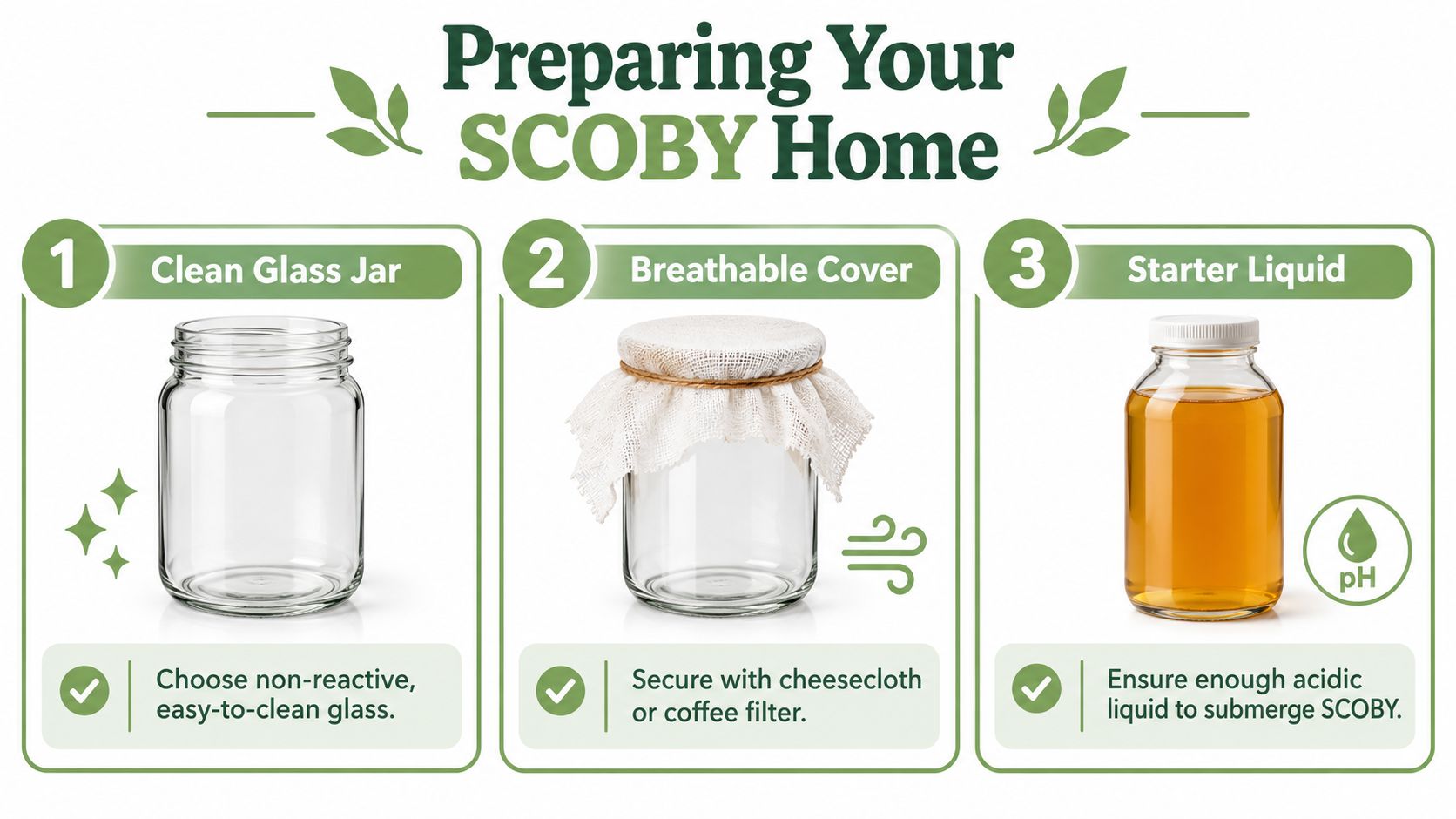
A clean, inspectable jar gives you control over the culture's storage conditions. Glass is non-reactive and lets you check the liquid, submerged SCOBY and surface without opening the vessel repeatedly. Wash the jar, cover, utensils and your hands thoroughly, then rinse away detergent residue before assembling the hotel.
A wide-mouth preserving jar makes removal easier and reduces the chance of folding or tearing the SCOBY. For regular brewing, a purpose-designed kombucha brewing container from PepTea can also keep the fermentation setup organised.
Reserve mature starter liquid
Use strong, mature kombucha from completed primary fermentation. Freshly sweetened tea has not developed the acidity that helps protect a stored culture. Keep the SCOBY fully submerged, with enough liquid to cover its edges and prevent drying.
One storage guide recommends at least 1.5 cups of strong, mature kombucha with a pH of 2.5 to 3.5 for a SCOBY hotel (BrewCrock's SCOBY storage guidance). That range is a practical reference, while a pH meter or suitable test strips provide a clearer check than taste alone. Keep the storage liquid below pH 4.2, so acidity remains part of your contamination control rather than relying on smell or appearance.
If the jar needs more liquid, cool sweet tea before adding it. FSANZ places SCOBY addition in the 22°C to 30°C range, so the tea should be close to normal fermentation temperature. Hot tea can damage the culture and should never be poured directly over it.
Cover it without sealing it
Secure a clean breathable cloth, cheesecloth or coffee filter with a rubber band. The cover permits airflow while blocking dust and fruit flies. Avoid an airtight lid on an actively fermenting hotel unless you have accounted for pressure and ongoing fermentation.
Choose a stable room-temperature position away from direct sun. A dark, dry cupboard can work, but a moist cupboard creates conditions that may encourage mould. Keep the jar away from raw-food preparation, splashes and places where it could be knocked over. A clean vessel, acidic starter liquid and controlled temperature give you a safer starting point between brews.
Three Reliable Ways to Rest Your SCOBY Between Batches
The right method depends less on the jar and more on the length of the pause. A culture waiting for a few days needs minimal handling. A culture held for weeks needs a maintained acidic environment, occasional nourishment and regular inspection.
| Storage Method | Best For | Temperature and Care |
|---|---|---|
| Leave it in the brew jar | A short break of up to about a week | Room temperature, covered, submerged in mature first-fermentation kombucha |
| Use a dedicated SCOBY hotel | Longer pauses between batches | Room temperature, acidic starter liquid, breathable cover and periodic feeding |
| Keep it in active brew conditions | Brewers who want the culture continuously viable | Room temperature, away from direct sun, with enough liquid to prevent drying |
1. Leave the SCOBY in the fermentation jar
For a short break, leave the SCOBY where it is. Keep enough finished kombucha in the jar to cover the culture, replace the breathable cover if it's dirty, and move the vessel to a stable room-temperature location away from sunlight.
This is the lowest-handling option. Every transfer creates another opportunity to introduce contamination, so there's no benefit in moving a healthy SCOBY into a second jar for a brief pause. Check the surface before restarting, but don't keep opening the jar just to look at it.
The trade-off is flavour. The starter liquid will continue fermenting and may become sharper and more acidic while it waits. That isn't automatically a problem, but it means you should taste or test the liquid before using it to start your next batch.
2. Set up a dedicated SCOBY hotel
A SCOBY hotel is a separate clean glass jar containing one or more SCOBYs and enough mature starter liquid to keep them submerged. It's the most practical choice for a longer gap because you can maintain the culture independently of your drinking batch.
Add the culture and mature liquid to the jar, cover it with breathable material, label it with the date and place it somewhere stable. Keep the hotel away from direct sunlight and inspect it periodically for evaporation, surface growth, unusual odours or a change in texture.
For longer storage, one guide recommends adding fresh sweet tea every 4 to 6 weeks and topping up liquid lost to evaporation (Freshly Fermented's long-term SCOBY hotel guide). That isn't a promise of indefinite safety. It's a maintenance rhythm that keeps the culture active while you continue checking its condition.
3. Keep it active rather than refrigerating it
Room-temperature storage is generally preferred for an active SCOBY because the microbes remain in fermentation conditions. A practical care guide describes the preferred range as 65°F to 85°F, with the mid-to-high 70s°F preferred, and advises keeping the culture away from direct sun, moist cupboards and the fridge (You Brew Kombucha's SCOBY care guidance).
Refrigeration can slow or halt fermentation, but that's exactly why it's used for finished kombucha. Cold storage also interrupts the active culture and may leave you with a sluggish restart. For Australian home brewing, the more consistent approach is to keep the SCOBY in acidic starter liquid at room temperature and refrigerate only the finished drink when you want to slow further fermentation and carbonation.
Keeping Your SCOBY Hotel Healthy With Simple Feeding Routines
A SCOBY hotel needs a small, repeatable routine, especially in an Australian kitchen where warm conditions can speed fermentation. Keep the culture submerged, use a clean breathable cover, and monitor the liquid's acidity. Feeding is about keeping the jar full. It controls how much fresh food enters the culture and helps maintain conditions that discourage contamination.
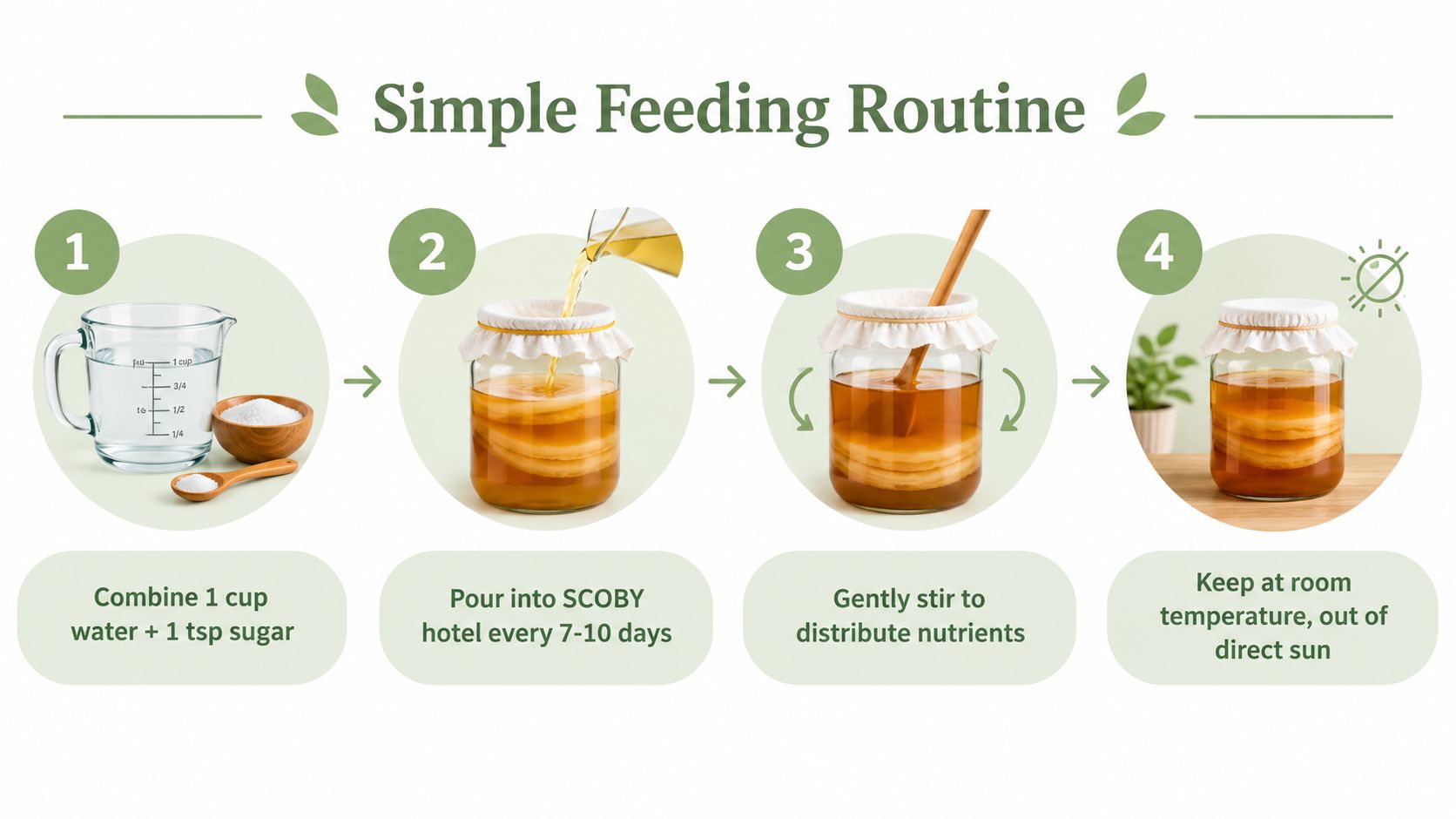
A short pause may require no feeding. During a longer break, add cooled sweet tea in modest amounts instead of hot tea or replacing all the mature starter liquid. The fresh tea feeds the yeast and bacteria, while the established acidic liquid helps protect the addition. See also how to store finished kombucha properly chilled, since finished drink and an active SCOBY hotel need different storage decisions.
A manageable maintenance rhythm
Use this sequence when storage extends beyond your usual brew cycle:
- Inspect the jar. Check the surface, liquid level and exposed SCOBY edges. Avoid stirring unless there is a practical reason.
- Check acidity. Keep the storage liquid below pH 4.2. A pH reading gives you a more useful safety check than appearance alone.
- Feed with cooled sweet tea. Add a modest amount when the hotel needs nourishment. Hot tea can harm the culture and should never go straight into the jar.
- Top up evaporation. Replace lost liquid with suitable starter liquid or cooled sweet tea so the SCOBY does not remain partly exposed.
- Replace the cover if needed. Wash or replace any cover that is stained, damp or loose. Those conditions make contamination easier.
- Keep the jar stable. Store it at room temperature with airflow and away from direct sun.
Don't chase a perfect-looking pellicle
A hotel pellicle can become thicker, uneven, layered or darker as the culture ages. Appearance alone does not determine whether it remains usable. Pay closer attention to a clean, acidic kombucha smell, normal liquid colour and the absence of abnormal surface growth.
Keep the jar somewhere you will remember to inspect, then leave it undisturbed. Constant movement, stirring and handling add contact points for contamination and can damage the surface structure. Feed gently and avoid lifting the SCOBY unless you need to assess it.
Why the fridge creates the wrong trade-off
Finished kombucha is chilled to slow fermentation and carbonation. An active SCOBY hotel needs fermentation conditions, so refrigeration can leave the culture sluggish when you restart it. Western Australian fermented-food guidance recommends cold storage at 1.1°C to 4.4°C throughout the supply chain to prevent continued fermentation and alcohol increase in kombucha (WA fermented-food risk and legislative guidance).
The trade-off is practical. Chilling a finished bottle helps stabilise the drink, while holding a SCOBY hotel warm keeps the starter active. Warm storage can increase acidity and change the next brew, so check pH and feeding rather than relying on the calendar alone.
Troubleshooting Common SCOBY Storage Problems
Storage problems usually come from one of four choices: the culture was left dry, the starter liquid wasn't acidic enough, the jar was contaminated, or the temperature didn't suit the intended outcome. The solution isn't always to rescue the jar. When mould is present, discard the culture and the liquid rather than trying to remove only the visible patch.
Mould means disposal
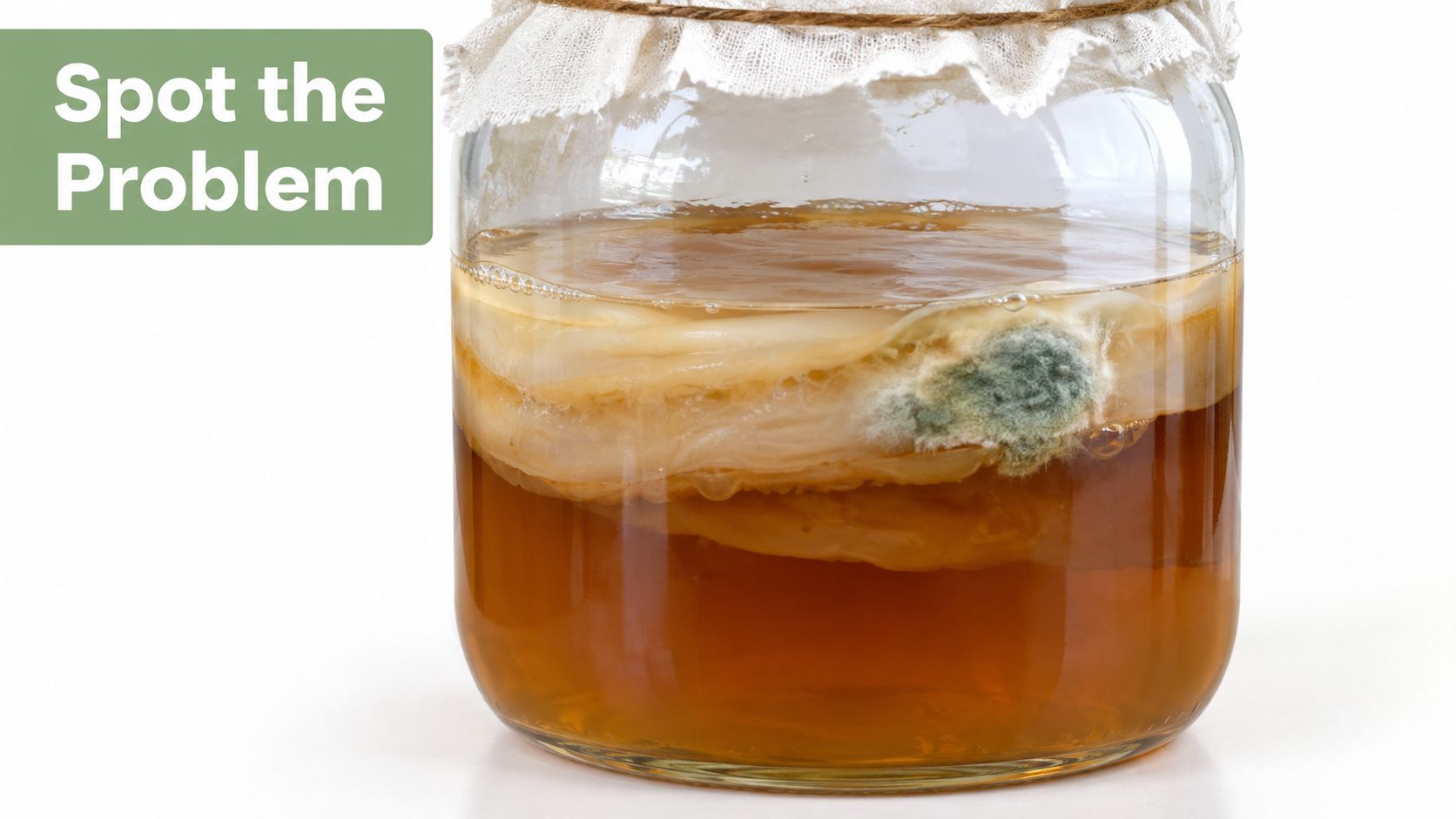
Australian food-safety resources advise inspecting the SCOBY for abnormal colour or odour and discarding it if there's green, white, black or grey discolouration. These colours are not a “scrape it off and continue” situation. Mould can extend beyond the area you can see, so don't use the liquid for a new batch either.
Normal cultures can look uneven, translucent, tan or brown depending on the tea and age. Mould tends to look dry, fuzzy, raised or patchy on the surface, but visual judgement can be difficult. If you're unsure whether the growth is normal, the safer decision is to discard the entire culture and restart with a proven uncontaminated starter.
Discard rule: Green, white, black or grey abnormal growth, or an unpleasant unusual odour, means the SCOBY and storage liquid should not be reused.
The SCOBY has dried out
A dry edge is a storage failure, not a sign that the culture needs more time. Return the culture to acidic starter liquid only if there's no mould or other contamination, and inspect it closely before deciding whether to use it. If the surface has dried substantially or the jar has been exposed for an extended period, restarting with a clean culture is the lower-risk option.
A SCOBY can also look thin or inactive after refrigeration. Don't compensate by adding hot tea or sealing it tightly. Give a clean, room-temperature culture time to re-establish activity in suitable starter liquid before judging its performance.
The liquid is excessively sharp
A hotel can become very sour because fermentation continues during storage. That doesn't automatically make the SCOBY unusable, but it can change the flavour and acidity of the next batch. Use a clean portion of mature starter liquid, measure the new tea carefully and avoid transferring more strongly acidic liquid than your recipe requires.
Storage also affects alcohol control. Australian regulatory material notes that fermented beverages can continue changing through primary fermentation and bottle conditioning. If your finished kombucha is intended for sale, hospitality service or a non-alcoholic menu, treat temperature, fermentation time and pH as process controls rather than relying on taste alone.
This short video provides a visual companion for recognising common kombucha storage issues:
The culture was refrigerated
A refrigerated SCOBY may be slow to restart, especially if you expected an immediate first batch. Bring it back to room-temperature conditions gradually, keep it submerged in suitable starter liquid and avoid adding hot sweet tea. If the culture develops abnormal colour, mould or an unusual odour, dispose of it rather than trying to revive it.
Restarting Your Brew With Confidence After Storage
Before starting again, inspect the SCOBY, check the starter liquid and confirm that the culture has remained submerged. A clean acidic smell is reassuring, while visible mould, abnormal colour or an unpleasant odour calls for disposal and a fresh start.
Prepare your sweet tea and cool it properly. FSANZ guidance recommends cooling the initial infusion from 60°C to 20°C within 2 hours, then adding the SCOBY as soon as possible. Add it when the tea is within the 22°C to 30°C SCOBY-addition range, and carry enough mature starter liquid into the new batch to support rapid acidification.
For a short pause, use the original jar if the culture looks and smells sound. For a longer pause, select a healthy SCOBY from the hotel and leave damaged or questionable layers behind. If the brew seems unusually sluggish after storage, use the troubleshooting approach in PepTea's guide to restarting stuck fermentation, while continuing to monitor acidity and temperature.
The most reliable storage habit is simple: acidic liquid, clean equipment, room-temperature conditions and regular inspection. Refrigerate the finished kombucha when you want to slow its activity, but keep the reusable culture in an active, protected environment between brews.
For a dependable Australian brewing routine, visit Pep Tea to explore organic tea supplies and Australian-brewed sugar-free kombucha made with live cultures. You'll also find matcha and kombucha resources to help you plan the next batch, refine your flavours and keep your fermentation practice organised.