
Tag: homemade granola
Matcha Granola Recipe: Ratios, Methods and Storage
You've got oats in the pantry, a tin of matcha on the bench and plans for a greener breakfast. It's tempting to stir everything together and slide the tray into the oven, but that's how you can end up with toasted oats that taste bitter and look more khaki than green.
This matcha granola recipe takes a different approach: weigh the ingredients, bake the oat mixture until it's dry, then add the matcha after cooling. You'll get better control over sweetness, crunch and tea flavour without trying to rescue a harsh batch with more syrup.
The Ratio That Makes Matcha Granola Work
A spoonful of matcha tossed into whatever is in the pantry is not a repeatable formula. Oats need enough binder to coat them, nuts need room to toast, and matcha needs a measured dose because it is easy to overdo. For this matcha granola recipe, use a digital kitchen scale and treat the percentages as formulation targets for the finished mass. Matcha sits in that finished mass, but it is folded through after baking and cooling so oven heat does not flatten its colour and aroma.
Core ingredient ratios for a 400 g matcha granola batch
| Ingredient | Share of finished mass | Example for 400 g batch |
|---|---|---|
| Rolled oats | 60–70% | 240–280 g |
| Nuts or seeds | 15–25% | 60–100 g |
| Liquid binder (honey, rice malt syrup or maple syrup) | 8–15% | 32–60 g |
| Matcha powder | 1–2% | 4–8 g |
| Light oil | Small amount, outside the ratio | About 1 tablespoon |
Turn the ratios into a starting batch
For a practical trial, use 260 g rolled oats, 80 g nuts or seeds, 48 g syrup and 6 g matcha, plus about 1 tablespoon light oil. Those ingredient weights land near 394 g before baking, then syrup and oats lose moisture in the oven, so the cooled yield will be a little different.
The mid-range proportions are 65% oats, 20% nuts or seeds, 12% binder and 1.5% matcha. They leave a little room for oil, but the ranges are not meant to be pushed to the top of every row at once. If the next batch needs more tea character, move matcha toward 8 g for a 400 g batch before reaching for more syrup; sweetness should come from the binder you measured, not from trying to cover a harsh dose.
Why oats do the heavy lifting
Rolled oats are a useful source of protein and fibre, which is why they carry most of the batch's weight. Plain-oat values stop describing the finished granola once syrup, nuts and oil are added, so use them as a reason for the large oat share rather than as the nutrition profile of the final bowl.
Rolled oats also suit a wholegrain base: FSANZ's wholegrain definition includes the grain's outer layers, bran and germ. Keep the binder as the deliberate source of sweetness, choose a powder suited to food preparation using the guide to ceremonial and culinary matcha, then weigh the cooled batch and write the yield down. That number makes the next adjustment easier: change one variable, check the percentage, and keep the rest steady.
Choosing Between Oven and Stovetop Methods
Choose by batch size first. An oven gives a family-sized tray room to dry, while a frying pan makes more sense for a small experiment with sweetness or seed combinations.
For this recipe, I'd use the oven for batches around 400 g or larger, and reserve the stovetop for trial batches under about 200 g. These are practical kitchen starting points, not hard equipment limits.
Oven and stovetop methods compared
| Method | Heat and time | Texture |
|---|---|---|
| Oven | 150°C fan-forced, approximately 25–30 minutes; best for a full tray | Even, larger clusters |
| Stovetop | Medium-low heat, 8–12 minutes, stir constantly; best for a small test batch | Smaller, looser clumps that dry quickly |
Oven for dependable clusters
A lined baking tray lets you spread the mixture without crowding it. Once you've stirred midway through baking, leave it relatively undisturbed so the binder can set around the oats.
The trade-off is time: the oven needs preheating, and a full tray needs cooling before you can finish it. Still, it's the more forgiving option for home bakers and small cafés because you're not continuously moving the mixture over direct heat.
Stovetop for a quick trial
Use a wide, heavy-based frying pan and a silicone spatula. Keep scraping across the base and folding the mixture inward, especially where syrup collects.
A narrow saucepan is a poor substitute. It traps the mixture in a deep layer, so you can scorch the bottom while the oats above remain damp. Transfer the cooked mixture to a tray immediately rather than leaving it in the hot pan.
Method verdict: Choose the oven for clusters and capacity. Choose the stovetop when the oven's busy or you're testing a small batch.
Whichever method you choose, leave the matcha out of the cooking stage. Add it only when the granola has cooled completely, rather than letting habit decide when the powder goes in.
Choosing Mix-ins and Sweeteners Without Excess Sugar
Put nuts and seeds in before baking so they toast with the oats. Add dried fruit, freeze-dried raspberries or mango, cacao nibs and already-toasted coconut flakes after cooling, protecting them from scorching or becoming leathery.
Sweeteners aren't interchangeable in texture, even when you weigh out the same amount. Keep your chosen syrup within the planned 8–15% binder share, then adjust the drying rather than pouring in extra syrup because the mixture looks modestly coated.
Sweeteners compared by how they behave
| Sweetener | Browning and set | Texture | Flavour note |
|---|---|---|---|
| Honey | Browns fastest, sets firmest | Firm and crisp | Floral, with flavour varying by honey |
| Rice malt syrup | Milder browning | Lighter crunch | Mild |
| Maple syrup | Gradual browning; needs thorough drying | Crisp when fully dried | Rounded |
| Date syrup | Dark colour makes browning harder to judge | Adds moisture | Rich, fruity |
Build flavour before adding sweetness
Cinnamon, vanilla, a pinch of sea salt and properly toasted nuts make a restrained binder taste more satisfying. Date syrup and honey still contribute sugars; swapping their names on the ingredient list doesn't make the recipe sugar-free.
FSANZ's sugar report puts Australian free-sugar intake at 8.2% of total energy in the 2023 National Nutrition and Physical Activity Survey, below the WHO recommendation of less than 10%; it also reports average total sugar intake falling from 105 g daily in 2011–12 to 84 g in 2023. For your tray, the useful response is measured syrup and fewer sweetened extras, not a health claim.
- For nut-free texture: Try pepitas or sunflower seeds, with sesame if it suits the people eating it.
- For a vegan version: Choose maple syrup or rice malt syrup instead of honey.
- For more variety: Use our matcha recipes and baking ideas for flavour inspiration without turning every addition into another sweetener.
For cafés and packaged batches, identify individual nuts rather than using a vague nuts label. Start matcha intensity at 1% of finished mass, taste the cooled, coated granola, and increase only if the tea flavour is too faint.
Bake Matcha Granola Step by Step and Fix Problems
Have a digital scale, large mixing bowl, small saucepan, silicone spatula, lined tray and fine-mesh sieve ready. Keep the matcha separate from the baking ingredients.
The oven method
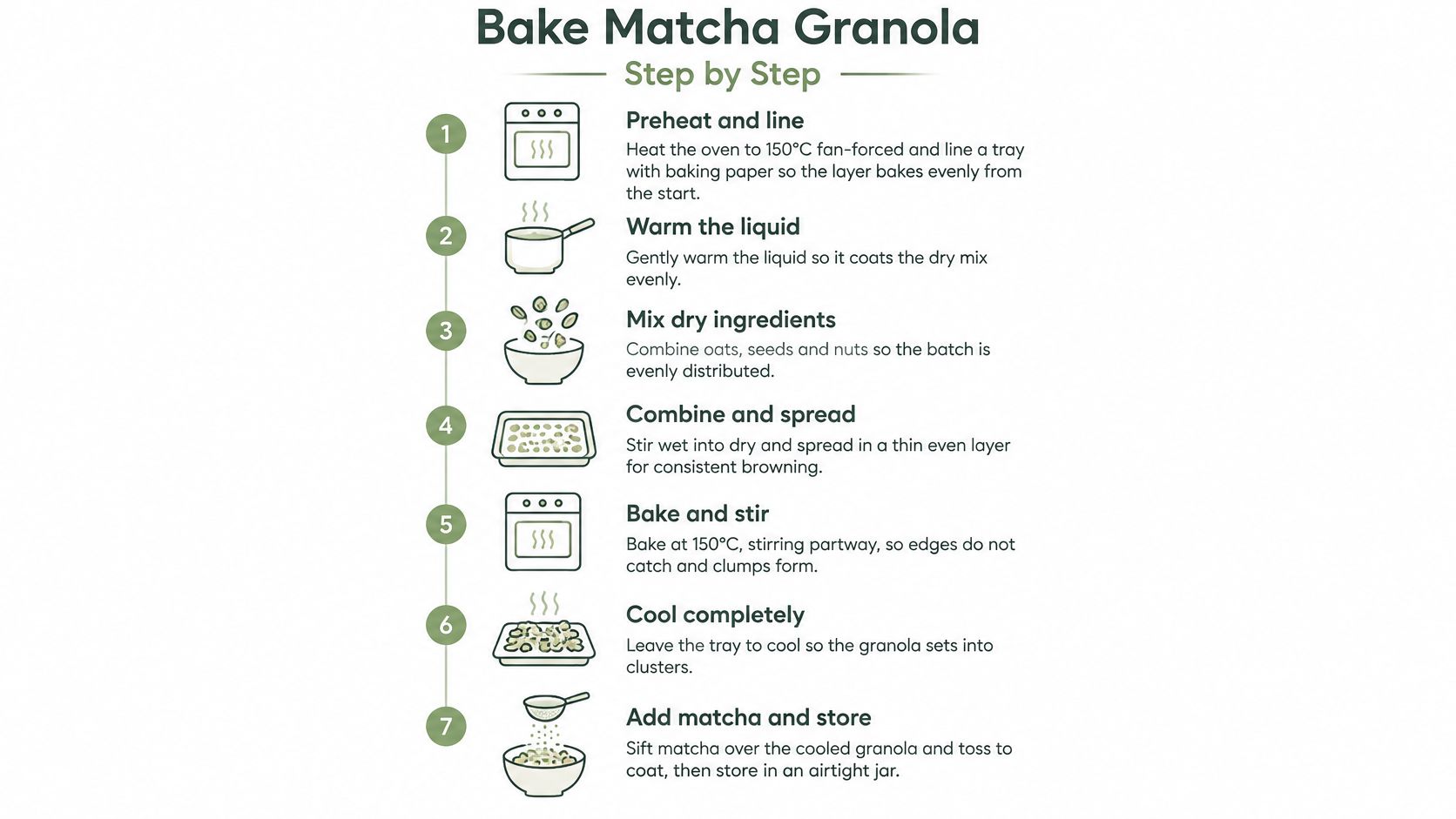
Preheat to 150°C fan-forced and line a tray. Starting with a heated oven helps the mixture dry consistently rather than sitting in slowly warming syrup.
Gently warm your liquid binder, then whisk in the oil and a pinch of salt. Pour it over the combined oats and nuts or seeds, scraping out the saucepan, and mix until every piece looks lightly glossy.
Spread in a single layer approximately 1–1.5 cm thick. Use another tray if necessary. A thick mound can brown outside while staying soft in the centre.
Bake for 25–30 minutes, stirring once halfway through. Bring the edge mixture towards the centre, rotate the tray if your oven has hot spots, then gently press the mixture level.
Check dryness, not just colour. Carefully lift a little mixture with a spatula and let it cool enough to touch: it should feel dry rather than syrupy, with light browning rather than dark edges.
Cool completely on the tray, allowing about an hour as a practical starting point. Don't break it up while it's warm if you want clusters, and wait longer if the underside still feels warm.
Sift about 6 g matcha over a 400 g cooled batch in two additions, tossing gently between them. This spreads the powder more evenly than tipping it into a single spot.
Use this visual guide alongside the method.
Diagnose the batch before changing it
Aim for a fresh green coating, crisp texture, light grassy aroma and no harsh finish. Prolonged heat dulls matcha's colour and aroma, while too much powder can taste astringent.
Matcha granola symptoms, causes and fixes
| Symptom | Likely cause | Fix |
|---|---|---|
| Bitter or grassy aftertaste | Too much matcha, or powder added while granola was hot | Use 1–2% of finished mass and add only after cooling |
| Dull green colour | Prolonged high heat during baking | Add matcha after cooling, never during baking |
| Green pockets or clumps | Unsifted powder dumped into oats | Sift over cooled granola in two additions and toss gently |
| Soft or chewy granola | Moisture left in the mixture | Bake until dry to the touch and cool before storing |
| Burnt edges with a pale centre | Thick layer or oven hot spots | Keep the layer at 1–1.5 cm and rotate at the halfway stir |
| Sticky, overly sweet batch | Excess syrup | Move binder towards 8%; use cinnamon or vanilla for flavour |
If the cooled base is soft, return it briefly to a low oven before adding matcha. You can re-dry an already-coated batch, but you'll sacrifice some fresh tea character.
Australian matcha orders reportedly rose 133% year-on-year to June 2026, according to Yahoo Lifestyle's report on Australian matcha demand, bringing more first-time cooks to the ingredient. Keep the learning process simple: change one variable per batch.
The Australian Dietary Guidelines favour mostly wholegrain or higher-fibre grain foods, but that doesn't make every sweetened granola nutritionally equivalent. Our guide to baking with matcha and beyond offers more ways to handle the powder thoughtfully.
Storing and Serving Matcha Granola Well
Cool first, seal second. A jar traps residual warmth and moisture just as effectively as it keeps outside humidity away, so packing warm granola can undo careful drying.
Keep it in an airtight jar in a cool cupboard, away from the stove and direct sunlight. As a conservative home-kitchen guide, plan to use a well-dried batch within about two weeks, rather than treating that as a guaranteed shelf life.
Keep moisture out until breakfast
For longer keeping, freeze portions in airtight bags for up to three months as a practical quality target. Thaw the portion in its sealed bag so condensation forms outside rather than directly on the granola.
Add wet toppings to the bowl, not the storage jar.
Fresh fruit, yoghurt and even a splash of kombucha soften the coating quickly. Serve them together only when you're ready to eat, and keep any spare granola dry.
- Yoghurt bowl: Spoon over plain or Greek-style yoghurt with berries.
- Smoothie topping: Scatter over a thick smoothie bowl immediately before serving.
- Simple cereal: Add milk or oat milk, keeping some granola aside for a final crunchy topping.
Remember the caffeine
Matcha contributes caffeine, and the amount in a bowl depends on the powder and portion. Don't assume a green breakfast is automatically suitable for children, pregnancy or stimulant sensitivity; seek individual advice where appropriate.
Try a 40 g portion on yoghurt the day after baking. Judge the crunch and tea flavour before changing the recipe, since a warm tray isn't a reliable preview of tomorrow's breakfast.
Is Matcha Granola Gluten-Free and Nut-Free
This rolled-oat recipe shouldn't be presented as gluten-free in Australia. Matcha, plain nuts and seeds contain no gluten by nature, but oats raise questions beyond accidental contact with wheat during growing, transport or milling.
An overseas gluten-free oat label doesn't establish suitability for Australian gluten-free labelling or for someone with coeliac disease. For that person, use an appropriately labelled alternative grain base and obtain dietary guidance rather than assuming certified oats solve the issue.
Nut-free needs more than a substitution
Replace nuts with pepitas, sunflower seeds or sesame only after checking the eater's requirements. Sesame is itself an allergen, and ingredients can have cross-contact risks even when the recipe contains no tree nuts.
For café or packaged food, FSANZ's allergen-labelling guidance requires prescribed allergen names and a separate, bold Contains statement, with oats identified and gluten declared where relevant. Name each tree nut specifically, such as almond or walnut, rather than writing only nuts; unpackaged café food must have allergen information displayed or available on request.
A service checklist
- Suitable grain base: Don't rely on certified oats alone for an Australian gluten-free claim.
- Named allergens: Check the full recipe, including syrup, flavourings and supplier warnings.
- Separate tools: Use dedicated or verified-clean bowls, trays and utensils.
- Documented mixing: Weigh ingredients in a recorded sequence and keep nut-containing batches apart.
- Clear records: Retain supplier specifications and match the label to the actual batch.
Calculate nutrition from the whole finished recipe, not plain oats alone. Syrup, oil and inclusions change the serving values, so an oat nutrition panel can't tell you the granola's sugar content.
Bake Your First Matcha Granola Batch This Week
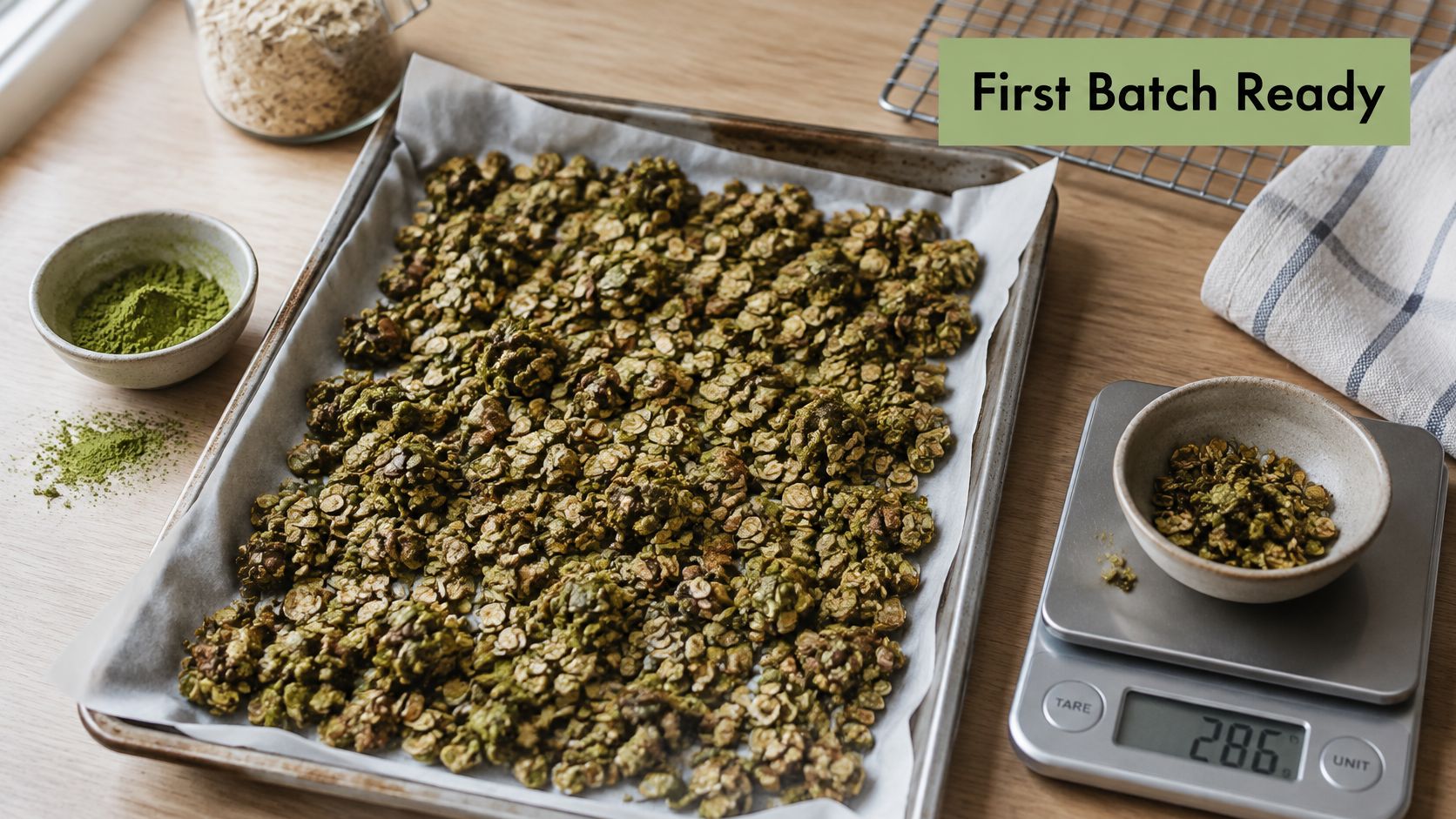
Start with the approximately 400 g trial formula, use the 150°C fan-forced oven method, add matcha after cooling and record the finished weight. Treat the result as your baseline before adjusting sweetness, cluster size or tea intensity.
Look for crisp clusters and an even green coating rather than darkly toasted oats.
Choose matcha for the job
Our Premium 100 g Organic Matcha Green Tea is a culinary-grade blend made from autumn crops, intended for cooking rather than ceremonial whisking. All our matcha powders are certified organic, and our range includes 30 g, 100 g and 1 kg sizes.
Choose the pack size by how often you'll use it, not by the largest quantity available. An occasional baker needs a different amount from a café making regular trays, and keeping the powder fresh matters more than accumulating a large pantry supply.
This video offers another way to explore matcha preparation.
Scale the tray space too
For a larger family or café batch, increase the ingredients by weight and use more trays rather than a deeper layer. Keep a short batch note with the binder used, cooling result and any flavour adjustment you'd make next time.
Your success check: Crisp oats, a grassy and lightly sweet aroma, and a clean finish without bitterness.
Once you have that balance, resist changing everything at once. A small adjustment to the matcha or binder will teach you more than a completely different ingredient list.
At Pep Tea, we offer certified-organic Japanese matcha, including culinary-grade powder for recipes like this granola. Visit Pep Tea to explore the range and choose a pack that suits your home baking or regular café batches.