
Tag: heat resistant glass
Matcha Latte Glass Guide: Size, Material and Care

The most popular advice for choosing a matcha latte glass is also the least useful. Pick the prettiest tall glass, pour in green milk, and you've got a café drink. That works in a photo. It fails when hot milk meets a cold decorative glass, when foam spills on the walk to a table, or when a bigger vessel turns into a bigger caffeine serve.
I'd treat size, material and temperature as one buying decision. A glass that shows layers beautifully over ice may be the wrong vessel for steamed milk. A comfortable double-wall glass may hide how hot the drink inside is. Start with the serve you're making, then choose the vessel that suits it.
Choosing the Right Glass Size for Your Latte
Start with the finished drink. A repeatable serve is to weigh 2 g matcha, sieve it, blend it with approximately 30 mL of 70 to 80°C water, then add 180 to 220 mL steamed milk, which gives roughly 210 to 250 mL before foam settles. Your glass needs room for that volume plus a buffer, and the buffer changes with the serve. Hot milk needs rim clearance for foam. An iced build needs room for cubes that displace liquid as they melt.
Choose a stated capacity that leaves roughly 10 to 15% headspace after the complete drink is assembled. That gap keeps milk foam visible below the rim and gives the surface somewhere to move on the walk from bench to table. Fill to the brim and the first bump sends green milk over your hand.
Matching Capacity to the Serve
| Glass size | Stated capacity | Finished latte volume | Best use |
|---|---|---|---|
| Small | under 250 mL | about 200 mL | Kids' serves, tasting menus and small espresso-style menus |
| Standard | 250 to 300 mL | 210 to 260 mL | Most cafés and home lattes with 10 to 15% headspace |
| Large | 350 to 400 mL | 300 to 350 mL including ice | Iced versions with ice, check dilution and milk volume |
| Extra large | over 400 mL | 350 mL or more including ice | Only where the matcha dose stays the same |
A small glass has a place on a tasting menu, but don't force a full serve into it. You'll lose the foam layer or overfill and create spills. At the other end, a large glass earns its volume on iced drinks because ice takes up real room. Fill that space with ice and milk rather than extra powder to make the colour look stronger. The same large glass is a poor pick for a 210 mL hot serve, where the drink sits low in the vessel and the portion looks short.
If you're following a proven method such as our best matcha latte recipe, measure the finished volume once and size your glass from that result. For an event or takeaway comparison, even 16 oz cups for branded giveaways need the same test, since a printed size tells you nothing about usable room once ice goes in.
Check Usable Volume, Not the Brim Line
Nominal capacity is often brim capacity. That figure isn't the amount you can serve and carry. Verify your final fill by mass or with a calibrated jug, then build the drink in the candidate glass at service temperature. Walk your normal carry distance with it. A glass that feels fine empty can be awkward when it's full and slightly slippery, and an iced candidate tested cold tells you nothing about how the same vessel carries when it holds steamed milk.
Practical rule: Buy for the drink you measured. The printed capacity only describes the brim.
For café procurement, run simulated services with each candidate and record spills, rim damage and how the outside feels in your hand. I'd reject any option that chips, cracks or forces staff to grip it by the rim. A bigger glass doesn't need more matcha. It needs a reason for the extra volume.
Glass Materials Rated for Hot and Iced Serves
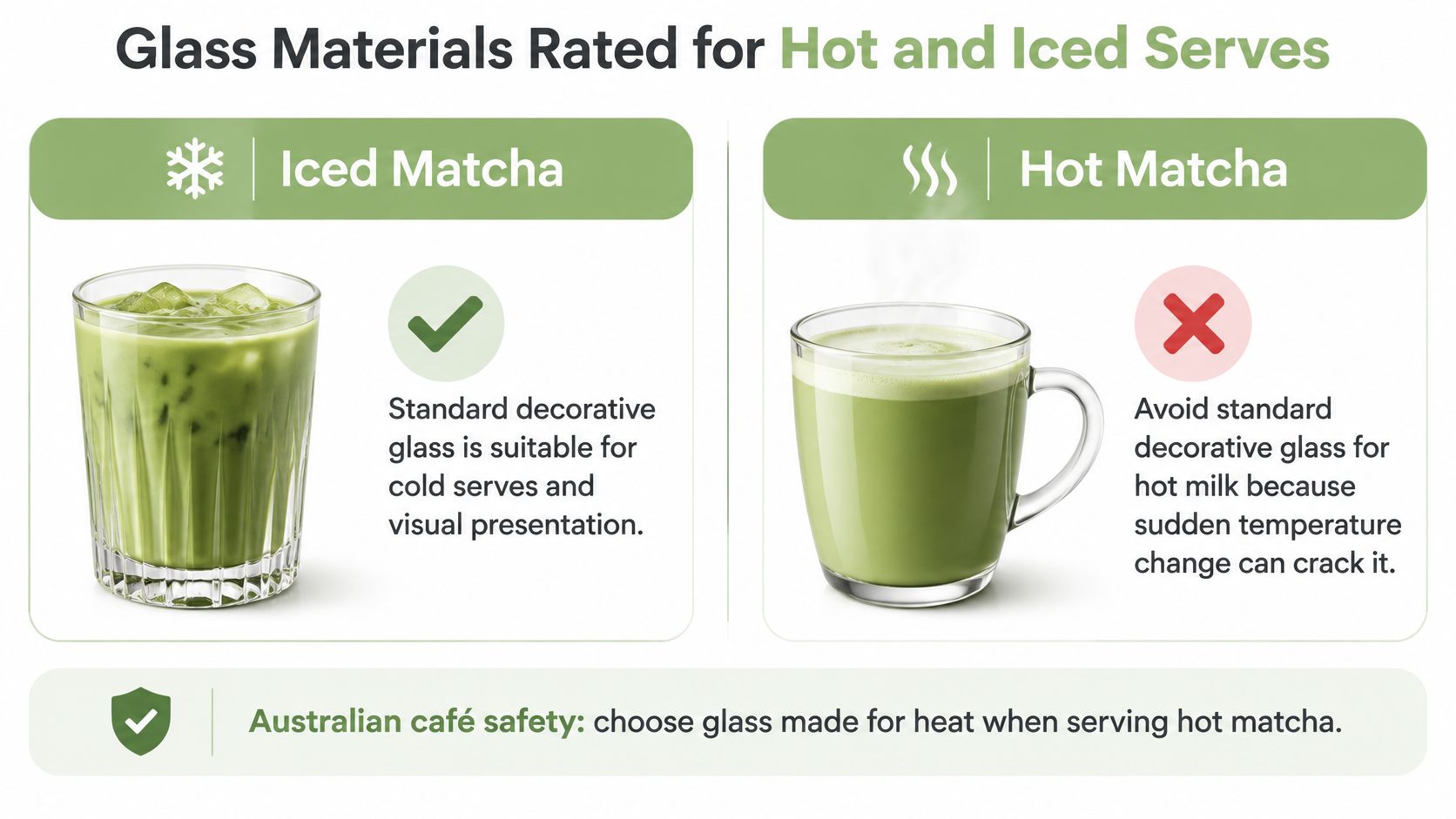
Hot and iced matcha ask different things from the same shape. Standard decorative glass handles a cold serve without trouble. It shouldn't hold hot milk, because a sudden temperature change can crack glass that was never rated for heat. Material choice also feeds back into portion size: a double-wall glass holds less liquid than a single-wall glass of the same outside dimensions, so the material you pick changes the serve you can pour.
Temperature matters in Australian food service because, under Food Standards Australia New Zealand food safety guidance, potentially hazardous food must be received, displayed, transported, or stored at 5°C or colder or 60°C or hotter. That split explains why the vessel changes with the serve. A hot latte needs a rated material. An iced latte mainly needs stability, grip and control of condensation.
This comparison shows where each material belongs.
What Each Material Handles Well
| Material | Hot latte | Iced latte | What to check |
|---|---|---|---|
| Borosilicate glass | Yes, if rated for hot liquid | Yes | Rated temperature range and thermal-shock test report |
| Toughened (tempered) glass | Yes, if commercially rated | Yes | Rated temperature range and dishwasher limit |
| Standard decorative glass | No | Yes | Keep it for iced drinks only, thermal-shock risk with hot milk |
| Double-wall glass | Yes, if rated for hot liquid | Yes | Rated temperature of both walls and how the seal is made |
| Ceramic tableware | Yes, if rated for thermal shock | Not typical | Supplier thermal-shock rating on file |
Borosilicate and toughened glass are my first checks for hot service, provided the supplier states a rated temperature range and can show thermal-shock testing. The phrase "heat resistant" printed on packaging proves nothing on its own. At home, look for an actual rating in the product listing. In a café, ask for the document and file it.
Double-wall glass feels comfortable to hold and reduces condensation on iced serves. It still needs the same rating check for both walls, plus a sound seal. It carries two quiet downsides. Because the outside stays cool, you can't judge the drink's internal temperature by touch, so staff have to trust the pour rather than their hand. And since the inner wall sits well inside the outer one, the usable volume is smaller than the silhouette suggests, so confirm the inner capacity before you commit a recipe to it.
For iced drinks, condensation is the everyday problem. Cold liquid and humid air leave the outside wet, which makes a smooth glass harder to grip and leaves rings on timber. A thicker wall or double-wall design reduces that sweating. A textured or weighted base also helps when the glass is set down and picked up all shift.
Ceramic remains a sensible hot option where colour display isn't essential. You lose the layered look, but you gain a familiar, stable vessel that's made for hot drinks. That's a fair trade in plenty of cafés.
Presentation Features and Iced Builds That Change How a Latte Looks
Iced matcha sells with its colour first. That's not a criticism, it's how the drink works in a clear glass. Separate 2025 survey reporting in Pureprofile's Australian food and drink trends report found that 40% of Australians aged 18 to 24 had ordered matcha in the previous six months and 36% had ordered flavoured iced matcha. When that many orders are cold and layered, the glass is part of the product, not just packaging.
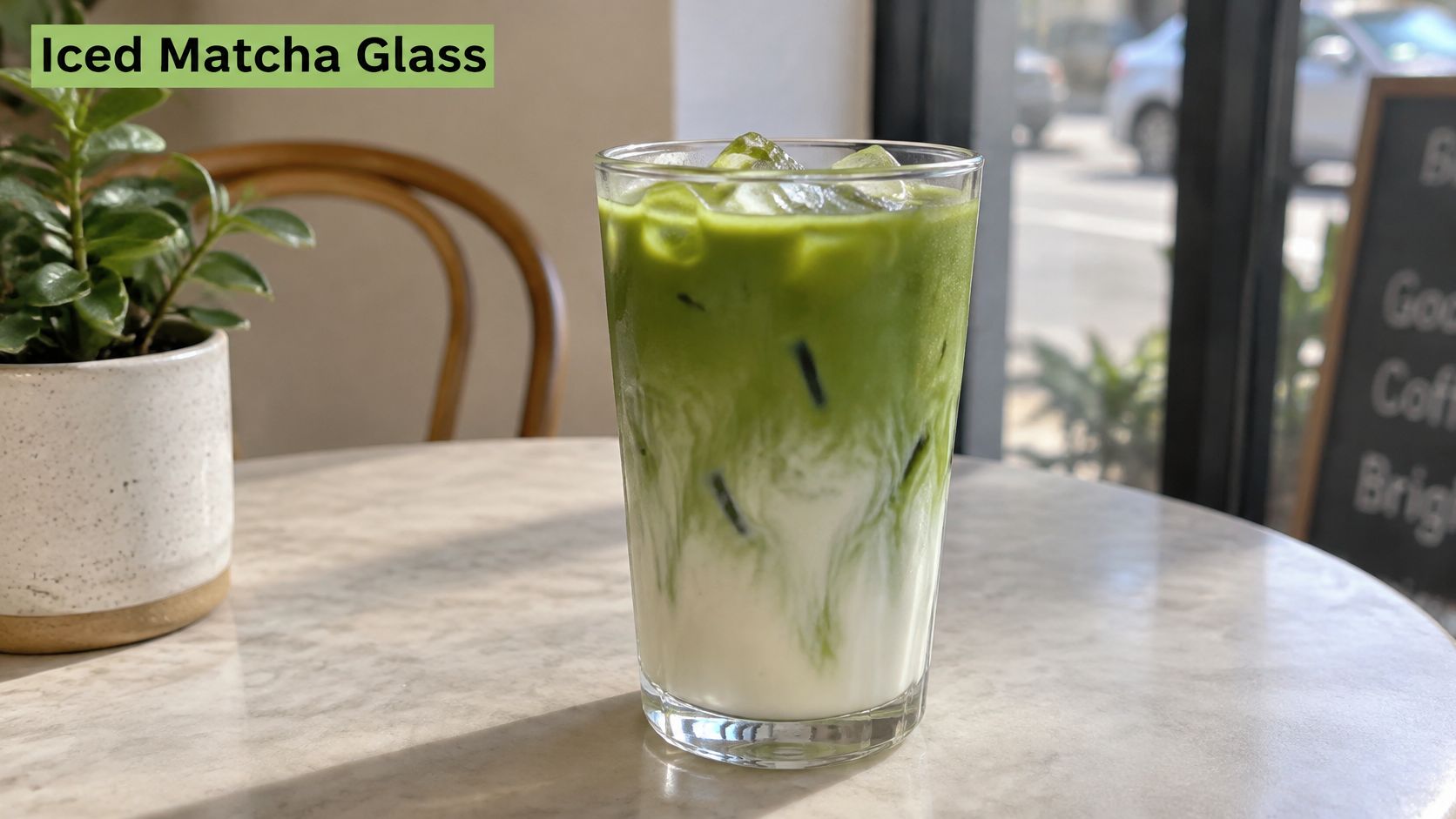
A tall serve shows the gradient at its best.
Build the Layers in Order
- Add ice first: Fill the glass about one third with ice so the milk chills as it goes in.
- Pour cold milk next: Leave room at the top and let the ice settle.
- Float the matcha: Pour whisked matcha slowly over the back of a spoon so it sits as a green top layer.
- Finish for the setting: Add a straw for dine-in sipping or a secure lid where the drink will travel.
If you want a reliable base method, use our guide to making an iced matcha latte and keep your build order consistent. Pouring matcha first and milk second gives you a mixed green drink. There's nothing wrong with that flavour, but you lose the clean band of colour customers expect from a layered serve.
Watch the pouring speed in this short demonstration before you judge a glass by its gradient.
Features That Help or Hurt in Service
Tall, narrow glasses make gradients and foam easy to see. They're also more likely to feel top heavy once ice shifts. Wide tumblers are less elegant, but they're easier to fill, easier to fit a straw into, and faster to clean. In a busy café, that practicality often wins.
Double-wall designs cut condensation, yet the extra layer can soften the colour and make fine layers harder to read. Clear glass shows every band of milk, matcha and ice. Tinted glass hides residue, but it also hides the drink you are trying to sell.
A flat, wide base matters more than most product photos suggest. It resists tipping on crowded tables and sits better in carriers. Handles suit hot serves and older hands, but they take up rack space and can knock against neighbouring glasses. Choose the glass that fails least often in your setting, whether that's dine-in, takeaway or your kitchen bench.
Running a Safe Hot Matcha Service in Your Café
The risky moment is simple. A cold or chipped glass meets hot milk during a rush, someone is moving quickly, and the glass fails over the bar. You prevent that with a routine staff can repeat without thinking too hard.
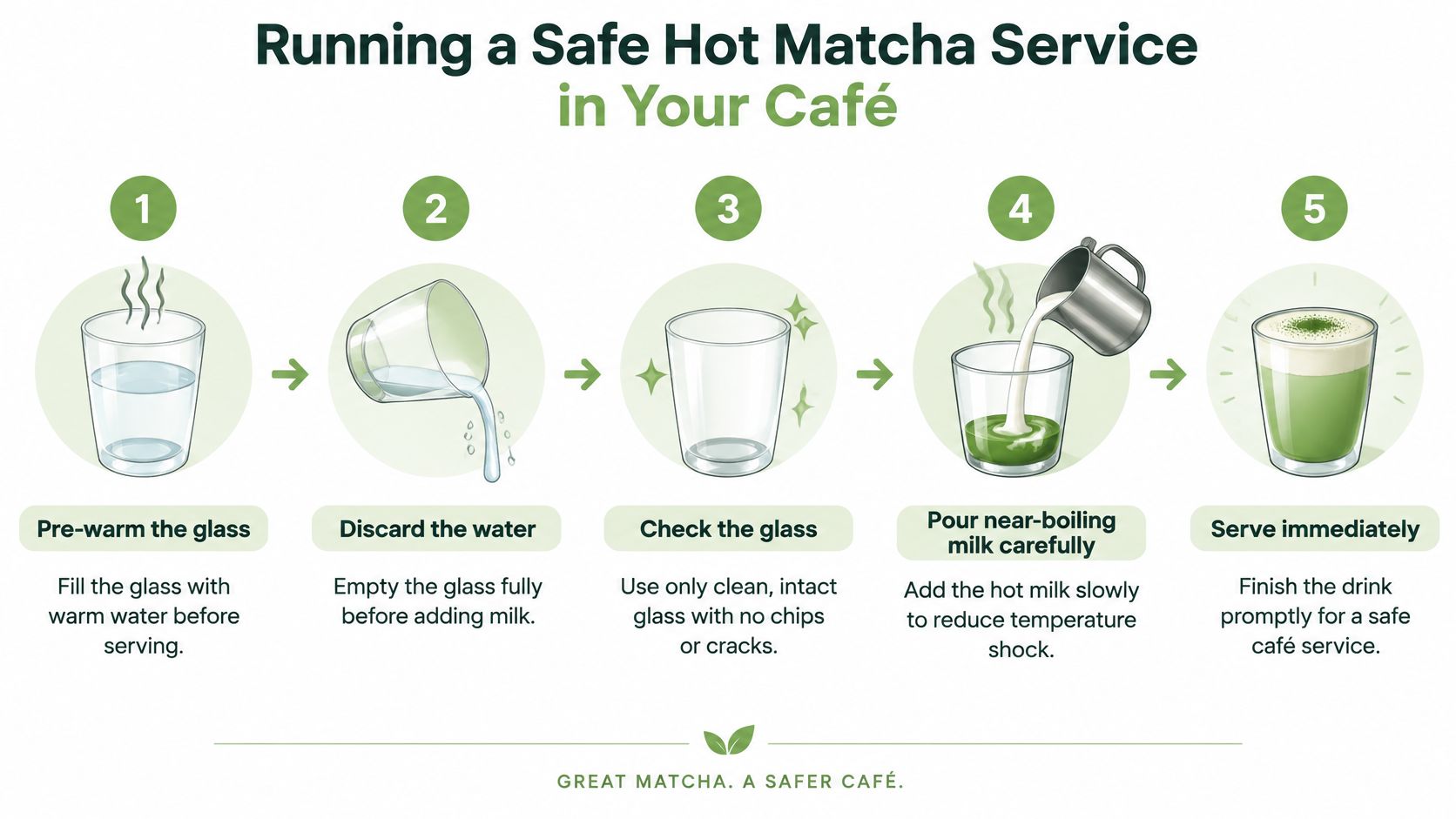
One practical sequence is shown here.
Use the Same Sequence Every Time
- Pre-warm the glass: Fill it with warm water and discard that water fully.
- Prepare the concentrate: Sieve your standard matcha dose and whisk it until smooth.
- Add concentrate first: Put it into the warmed glass before any milk.
- Add steamed milk gradually: Pour slowly rather than sending in one fast stream.
- Check fill and rim: Confirm volume with a calibrated jug or by mass, then inspect the rim before service.
Controlled water heating helps you keep that sequence consistent, which is why a glass kettle with temperature control suits a dedicated matcha station. What matters most is avoiding extremes. Never pour near-boiling liquid into a cold or visibly damaged glass, and don't take a glass from a freezer and fill it with hot milk. That freezer to hot transition is exactly the kind of thermal shock that turns a small flaw into a crack.
A chipped rim is not a cosmetic fault. It's your warning to pull the glass before the next hot pour.
Specify commercially rated, food-contact-safe toughened or borosilicate drinkware and request a supplier test report for thermal-shock performance, as advised in this guide to importing kitchenware to Australia. Keep the rated temperature range, dishwasher limits and rejection process on file with the glass details. A label that says heat resistant isn't evidence if a claim is questioned.
Then measure your own results. Run a 30-day trial and track breakages per 1,000 services before you standardise the glass across the menu. That venue number tells you more than a catalogue promise. It captures your water temperature, your dishwasher, your bench layout, and the way your staff handle glass under pressure.
Cleaning, Storage and Spotting Damage Early
Most stained glasses were left too long. Matcha and milk look harmless while they are wet. Once they dry, protein and powder cling to the base and rim, and staff start scrubbing harder than the glass needs. That matters more when the same cup has to carry hot milk at lunch and an iced build in the afternoon: residue hides the small edge damage you need to catch before temperature or portion size changes the load on the glass.
A Routine That Protects the Glass
- Rinse straight away: Use warm water as soon as the drink is finished.
- Soak milk film: Leave stubborn glasses in warm water for about 10 minutes instead of attacking them with abrasives.
- Wash within limits: Hand wash or use the dishwasher only within the supplier's stated limit.
- Dry upright: Use a rack so air circulates and you do not leave towel lint inside.
- Store with protection: Keep glasses upright or use liners between stacked pieces so rims do not knock together.
Rinse early, avoid harsh scouring, and inspect before reuse. The same logic sits behind any reusable glass program, including advice to safely refill half gallon glass jugs, even though latte glasses face a tighter mix of hot pours, ice shocks and crowded racks. Running cycles hotter than the rating is a quiet way to shorten their life. So is cramming tall latte glasses into a tray where bases strike rims every time it moves.
Diagnose What You Are Seeing
| Symptom | Likely cause | Fix |
|---|---|---|
| Cloudy film after the dishwasher | Hard water or detergent residue | Rinse with warm water, reduce detergent and check the rinse aid |
| Milk film or coating near the rim | Milk left to dry on the glass | Rinse within minutes and soak in warm water |
| Green tinge or matcha stain | Powder and tannins left in grooves or the base | Soak and gently scrub with a baking soda paste |
| Hairline crack or chip on the rim | Thermal shock or knocks in the rack | Retire the glass, do not serve hot liquid in it |
| Fogging or moisture between double walls | Seal failure in a double-wall design | Replace the glass rather than repair it |
A cloudy film is usually a routine problem. Reduce detergent, check rinse aid, and look at whether glasses are sitting dirty before the wash. A green tinge in etched grooves responds to soaking and a gentle baking soda paste. Steel wool and gritty powders leave fine scratches, and scratches give residue more places to grip on the next serve.
Cracks and chips get a harder answer: retire the glass. A damaged rim can cut a lip, shed a fragment, or fail when hot milk goes in, while an iced serve can keep condensation over the flaw until the glass is already in a customer's hand. Fogging between double walls means replacement too, because moisture inside the cavity shows the seal has failed and that space cannot be cleaned.
Make rim checks part of polishing or racking, not a separate job staff skip when the bar is busy. Run a fingertip lightly around clean, dry rims and pull anything rough. Early rejection costs one glass. Late rejection can cost a drink, a tidy bench and a customer's trust.
Confirm Your Glass Before You Buy in Bulk
Size, heat rating and iced fit are one purchase decision, not three. At home, a single rated borosilicate or toughened glass in the standard range covers hot lattes, cleans easily and still works over ice. Buy a second shape only when you serve a genuinely different drink often.
A café usually needs two deliberate choices. Use a rated, taller glass where layered presentation is part of the serve, and a wider, stable glass for faster iced drinks. For takeaway, favour a stable base and a size that fits your standard carriers. That same fit test applies to drinkware planning for catered celebrations, where transport and table space matter as much as appearance.
Keep the Dose Separate From the Vessel
Glass size shouldn't set your caffeine dose. Food Standards Australia New Zealand identifies a recommended maximum chronic intake of 400 mg of caffeine per day for adults and 200 mg per day for pregnant women in its FSANZ dietary intake assessment. Write the matcha quantity into your recipe and count coffee, tea, cola and energy drinks in the daily total. A larger vessel can hold more milk and ice without requiring more powder.
The glass doesn't reduce sugar either. A tall wall shows proportions clearly, but syrup, sweetened plant milk and toppings still add up in a bigger serve. Measure sweetener, choose unsweetened milk where it suits the drinker, and don't let a photogenic build become a dessert by accident.
Before you order: One good service proves a glass can work. A recorded trial proves it belongs on your menu.
Run This Bulk Order Checklist
- Temperature evidence: Rated range and supplier thermal-shock report on file.
- Capacity proof: Finished drink checked by jug or mass, with working headspace.
- Dishwasher fit: Cycle limit, rack fit and spacing confirmed.
- Handling test: Hot outside temperature, grip and carry distance checked.
- Trial result: Breakages, chips and spills recorded over 30 days.
One surviving sample proves nothing.
Test the glass with your milk, your ice, your dishwasher and your busiest service pattern. A glass that handles a quiet Tuesday can still fail a Saturday rush, when racks run hot and staff carry four drinks at once. When it passes all of that, it earns its place as a reliable part of the drink.
Pair the right glass with organically grown matcha made for smooth hot and iced lattes. Explore the range at Pep Tea and choose a grade that suits your home bench or café menu.