
Your Guide to a Perfect Matcha Whisk Stand

You buy a lovely bamboo whisk, open a fresh tin of vibrant matcha, and feel properly organised for your new morning ritual. A week later, the whisk looks tired. The fine tines have started curling in, the centre seems squashed, and after rinsing it, you’re left wondering where on earth to put it so it dries.
That’s where a matcha whisk stand changes everything.
For a small piece of teaware, it solves a surprisingly important problem. It helps your whisk keep its shape, dry more evenly, and stay ready for the next bowl. If you drink matcha most days, that matters. If you run a café serving matcha lattes, it matters even more.
At Pep Tea, we talk a lot about the quality of the tea itself. But good matcha also depends on the tools around it. A bamboo whisk is delicate by design. If you want creamy foam, a smooth texture, and a whisk that lasts, care matters just as much as technique.
The Unsung Hero of Your Matcha Ritual
A lot of people assume the whisk stand is decorative. It looks neat on the bench, matches the bowl, and makes a matcha set feel complete. But its true value becomes apparent after use, when your whisk is wet and vulnerable.
Consider the usual routine. You whisk your matcha, rinse the chasen, then leave it on a saucer, on its side, or standing awkwardly in a cup. It seems harmless. Over time, though, the bamboo prongs start drying unevenly.
Some bend inward. Some stay damp longer than others. The whisk that felt springy and precise when it was new starts feeling clumsy.
A good whisk stand protects the part of your setup that does the hardest work.
That’s why experienced matcha drinkers keep coming back to this simple tool. The stand isn’t there to make your bench look more traditional. It’s there to support the whisk between bowls, when shape and airflow matter most.
For beginners, this is often the missing piece. You can have excellent matcha and still struggle to get the texture right if your whisk has lost its form. For café owners, a worn whisk can affect consistency across drinks.
The nicest part is that using a stand doesn’t add effort. It removes guesswork. Rinse. Place. Dry. Done.
What Exactly Is a Matcha Whisk Stand
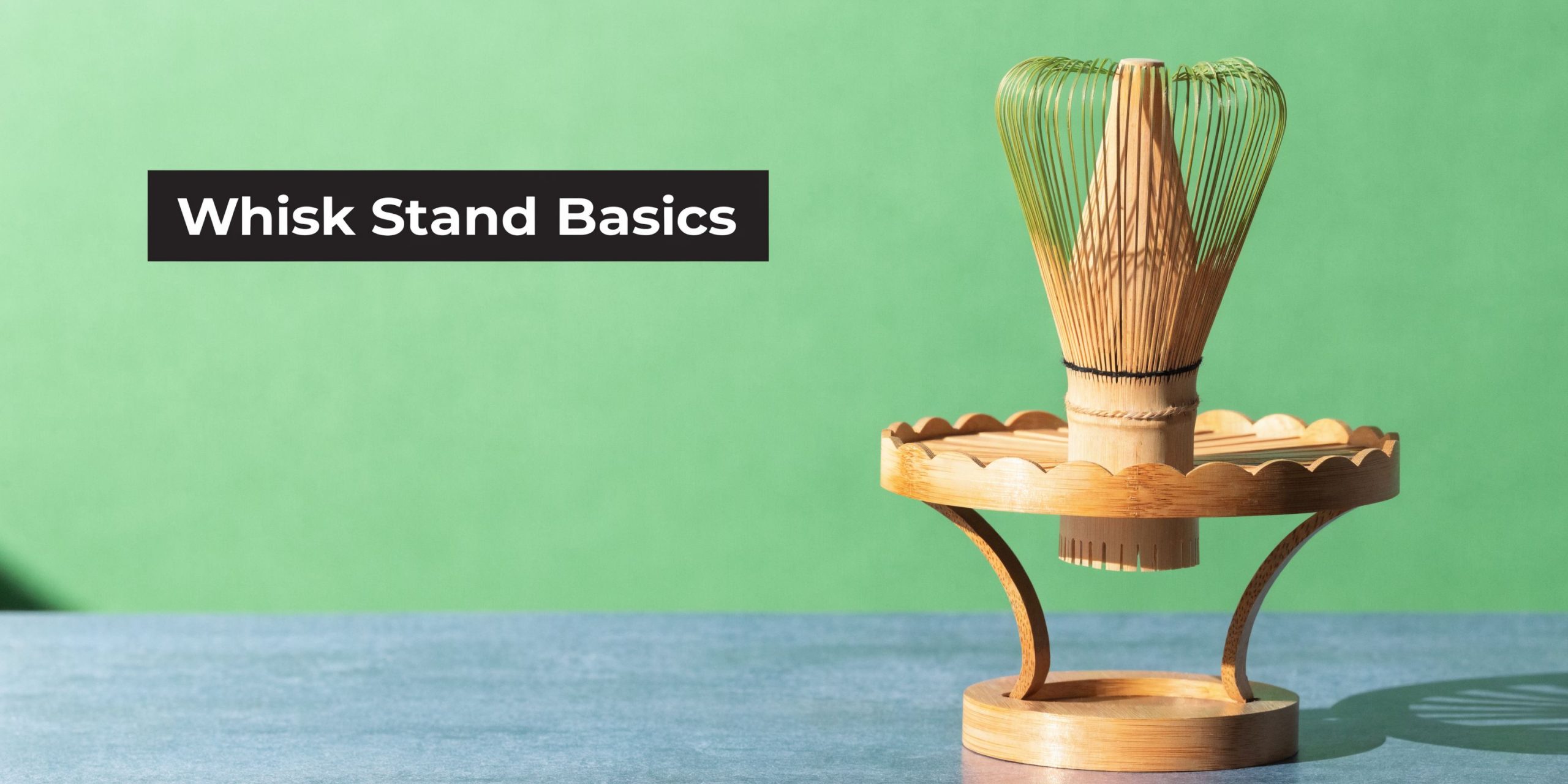
A matcha whisk stand is a small holder designed specifically for a bamboo matcha whisk, also called a chasen. You may also see the stand referred to by its Japanese names chasen-tate or naoshi.
Its job is simple. After rinsing your whisk, you place it over the stand so the prongs rest in a supported, open position while drying.
A small tool with deep roots
The whisk itself has a long history. The chasen originated around 600 years ago in Japan’s Muromachi period (1336–1573), refined by tea master Murata Jukō, and about 90% of authentic chasen are still produced in Takayama, Japan according to this history of the matcha whisk.
That matters because a handcrafted tool deserves proper care. The stand exists for a reason. It’s part of looking after a traditional whisk in the way it was intended to be used.
Why the shape matters
A whisk stand isn’t just a generic holder. It has a tapered form that supports the whisk from the inside, helping the prongs dry in a more natural spread. That’s different from dropping the whisk into a mug or balancing it on a plate.
If you’re building your setup from scratch, a complete Japanese matcha set often includes the core tools that make daily preparation easier.
If you’d like another practical overview of how the whisk and holder work together, this guide to the matcha whisk and holder is a helpful companion read.
Why a Whisk Stand Is Essential for Your Chasen
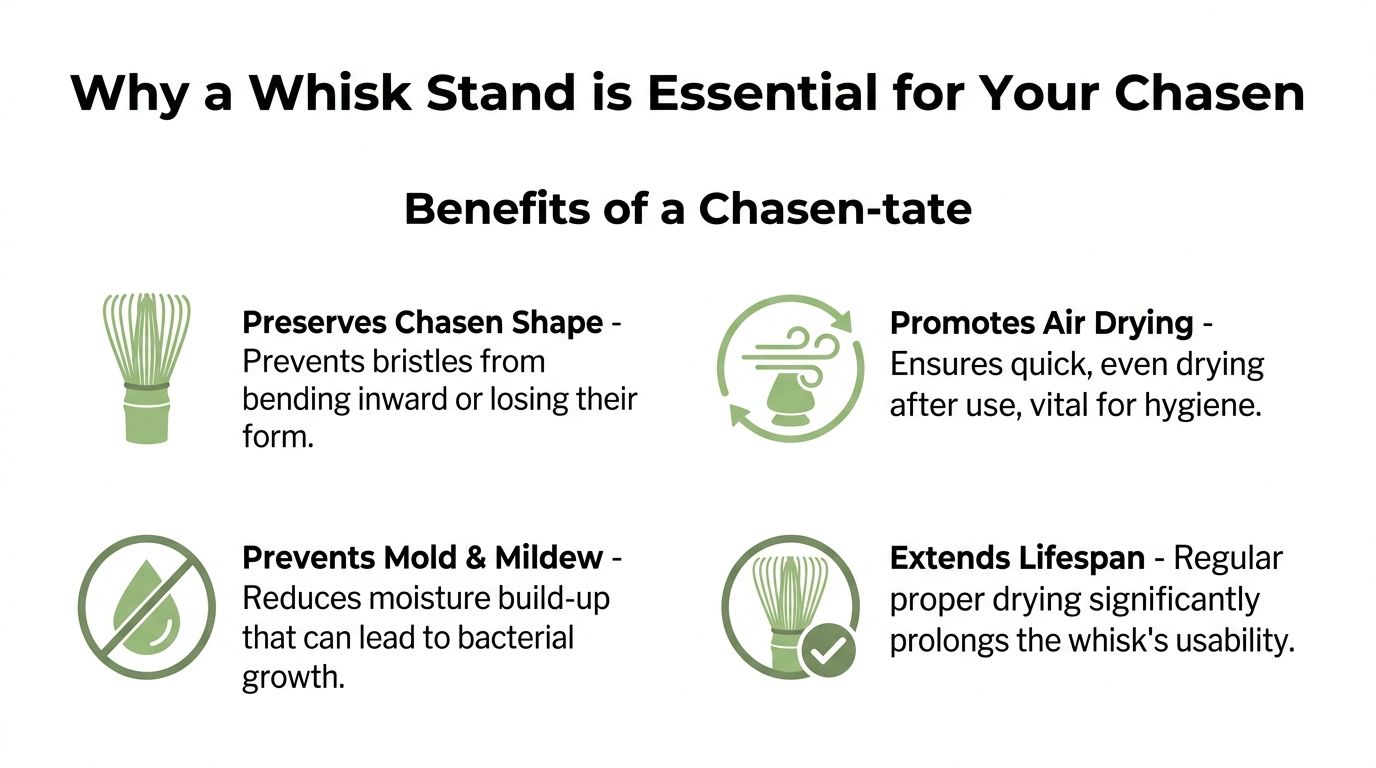
A matcha whisk stand earns its place by improving three things at once. performance, hygiene, and lifespan.
It helps your whisk make better matcha
The bamboo prongs on a chasen aren’t random. Their flare is part of how the whisk works. The flared geometry of a chasen’s tines is critical for creating foam, and a ceramic whisk stand supports these prongs during drying so they keep their shape. Without that support, the tines collapse, whisking performance drops, and trapped moisture can lead to mould and a shorter lifespan, as explained in this demonstration of whisk care and stand use.
When people say their whisk “stopped frothing properly”, the issue often isn’t their wrist movement. It’s the whisk’s shape.
A fresh, well-kept chasen moves through matcha differently. It spreads the liquid, introduces air, and gives you that finer layer of foam many people struggle to achieve at home.
It improves drying after every bowl
Wet bamboo needs airflow. If water sits deep near the base of the prongs, the whisk stays damp longer than it should.
A purpose-built stand helps in two ways:
- It opens the prongs gently so moisture doesn’t get trapped as easily.
- It lifts the whisk upright so air can circulate around more of the bamboo.
That’s especially useful if you make matcha early and leave for work, or if your café tools need to dry neatly between services.
Practical rule: If your whisk dries squashed, it will perform squashed.
It protects your investment
A good bamboo whisk isn’t disposable in spirit, even if it will naturally wear over time. If you’ve chosen a quality chasen for ceremonial matcha, you want it to stay springy and balanced for as long as possible.
Without a stand, the whisk often develops:
- Bent outer tines
- A narrowed centre opening
- Lingering dampness near the base
- More fragile-looking prongs after repeated drying cycles
A stand doesn’t make a whisk last forever. What it does is reduce avoidable wear.
It matters for home users and cafés
At home, the benefit is simple. Your morning bowl is more consistent, and your tools stay in better nick.
In a café, the benefit is operational. Staff can rinse a whisk and place it where it dries properly instead of improvising with cups, cloths, or crowded sink areas. That makes the setup cleaner and more predictable.
Consider these comparisons:
| Situation | Without a stand | With a stand |
|---|---|---|
| Daily home use | Whisk can dry misshapen | Whisk keeps a more usable form |
| Humid kitchen | Moisture may linger | Better airflow around prongs |
| Café service | Tools get stored wherever there’s space | Tools have a consistent resting place |
A matcha whisk stand looks modest, but in practice it protects the tool that determines texture more than anything else in your setup.
Exploring Different Types of Whisk Stands
Not all whisk stands feel the same in use. The biggest difference usually comes down to material, then shape, finish, and weight.
Ceramic and porcelain
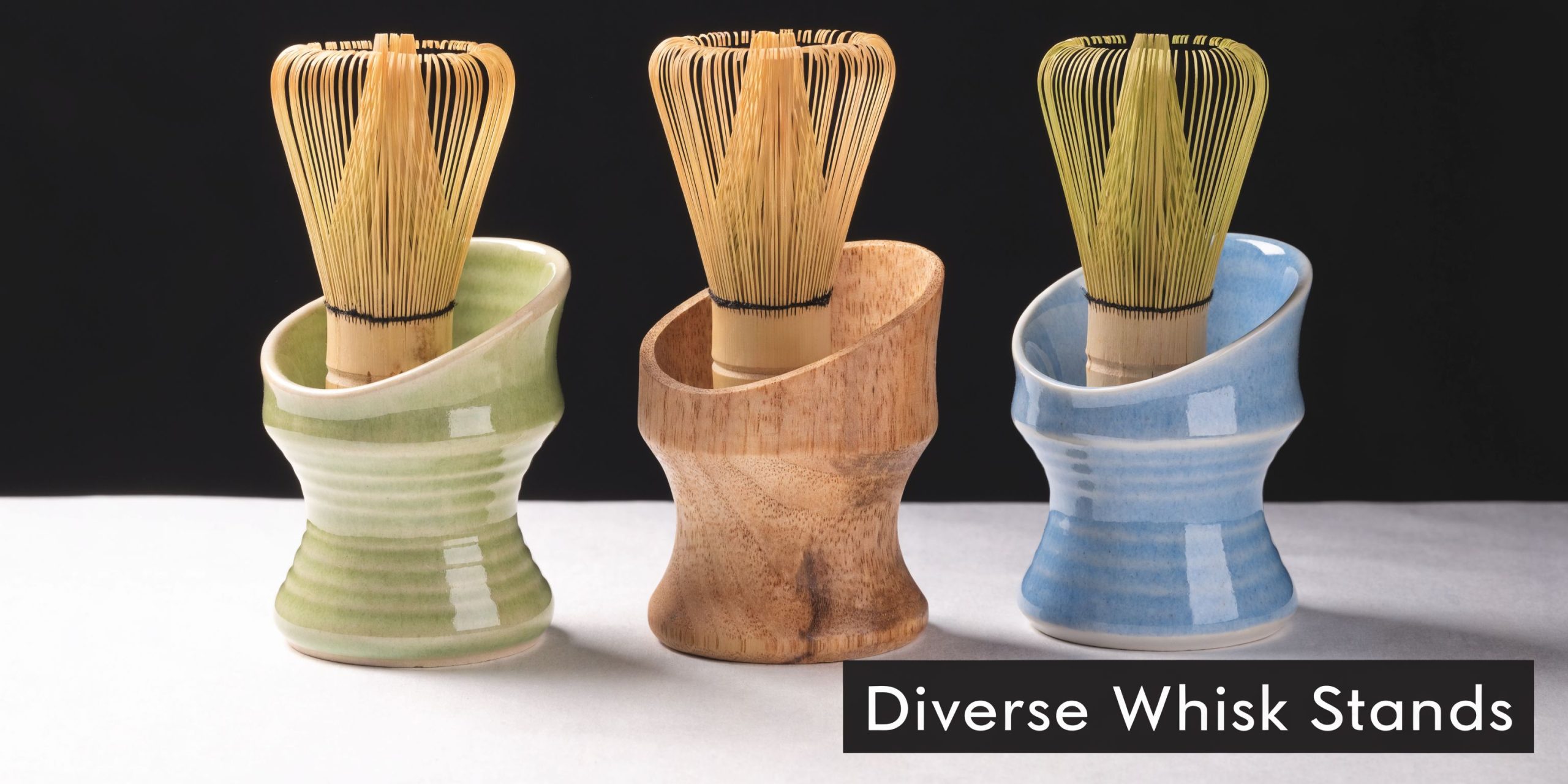
These are the classic choices, and for good reason. They tend to feel stable on the bench, they’re easy to rinse clean, and they suit the traditional look of matcha teaware.
Ceramic also works well visually. A plain white stand feels minimal. A deep green or speckled glaze can tie the whole setup together.
Glass and lighter modern styles
Glass stands can look elegant, especially in a more contemporary kitchen or café. They show off the whisk nicely, but some people find them less forgiving in busy spaces.
Lighter stands can also feel less planted when you’re lifting the whisk off after drying. That may not matter to everyone, but it’s worth noticing if you use your tools often.
Wood or plastic alternatives
You’ll occasionally see stand-like holders made from wood or plastic. They can work as storage pieces, but they don’t always provide the same smooth interior shape or easy-clean surface as glazed ceramic.
Wood can suit a rustic setup, though it’s usually better as an accent material than the part directly supporting a damp whisk every day.
What to compare at a glance
| Material | What it does well | What to watch |
|---|---|---|
| Ceramic | Stable, traditional, easy to clean | Can chip if dropped |
| Porcelain | Smooth finish, refined look | Also breakable |
| Glass | Modern appearance | May feel less practical in busy kitchens |
| Wood or plastic | Budget-friendly or decorative | May be less ideal for long-term whisk care |
If you want to browse different holder styles and forms, Pep Tea’s matcha tea stand collection shows the kinds of designs commonly used with bamboo whisks.
How to Choose the Right Matcha Whisk Stand
Choosing a matcha whisk stand is less about fashion and more about fit. The right one should feel stable, support the whisk properly, and make your routine easier instead of fussier.
Start with size and stability
A standard matcha whisk stand is about 2.5 to 2.75 inches high and weighs around 3.6 ounces. That weight helps provide stability so the stand doesn’t lift with the whisk when you remove it, which protects the delicate bristles according to this product specification for a standard whisk stand.
That detail sounds minor until you use a stand that’s too light. You lift the whisk, the stand comes with it, and suddenly you’re doing a little balancing act over the sink.
For regular home use, a stable stand feels nicer. For cafés, it reduces one more small point of friction during service.
Look closely at the inner shape
The best stands have a gently tapered form. That shape supports the whisk without forcing the prongs too wide or letting them collapse inward.
A poor fit usually shows up fast:
- Too narrow and the whisk sits awkwardly.
- Too wide and the support becomes vague.
- Too sharp inside and the contact points can feel harsher than they need to.
Run your eye over the opening. A smooth, rounded shape is what you want.
Check the finish
A glazed ceramic or porcelain stand is usually the easiest option to live with. It rinses clean, resists staining well, and feels comfortable against the bamboo.
If the finish looks rough or uneven where the whisk rests, skip it. Your chasen is delicate. It doesn’t need abrasion added to its daily routine.
Choose the stand the same way you’d choose a good bowl or scoop. By how it works in the hand, not just how it looks on a shelf.
Match the stand to how you make tea
For home drinkers, appearance might matter a bit more. If your matcha tools live on the bench, you’ll probably enjoy something that suits your bowl and kitchen.
For cafés, practicality should lead. Ask:
- Will it stay put during repeated use?
- Is it easy for staff to rinse quickly?
- Does it hold a standard bamboo whisk neatly between drinks?
If you’re refining your whisking routine as well as your tools, Pep Tea’s guide on how to whisk matcha is a useful reference.
And if you like thinking through small tool purchases more broadly, this guide to choosing kitchen gadgets offers a sensible lens for separating useful gear from clutter.
A simple buying checklist
- Stable base
- Smooth interior
- Shape that suits a standard bamboo chasen
- Easy-to-clean material
- A look you won’t mind seeing every day
Pep Tea offers a matcha whisk holder as part of its starter kit, which gives buyers one practical way to keep the whisk drying in the shape it was made to hold.
Practical Tips for Using and Caring for Your Stand
Daily care is straightforward. The key is doing the small things consistently.
The basic routine
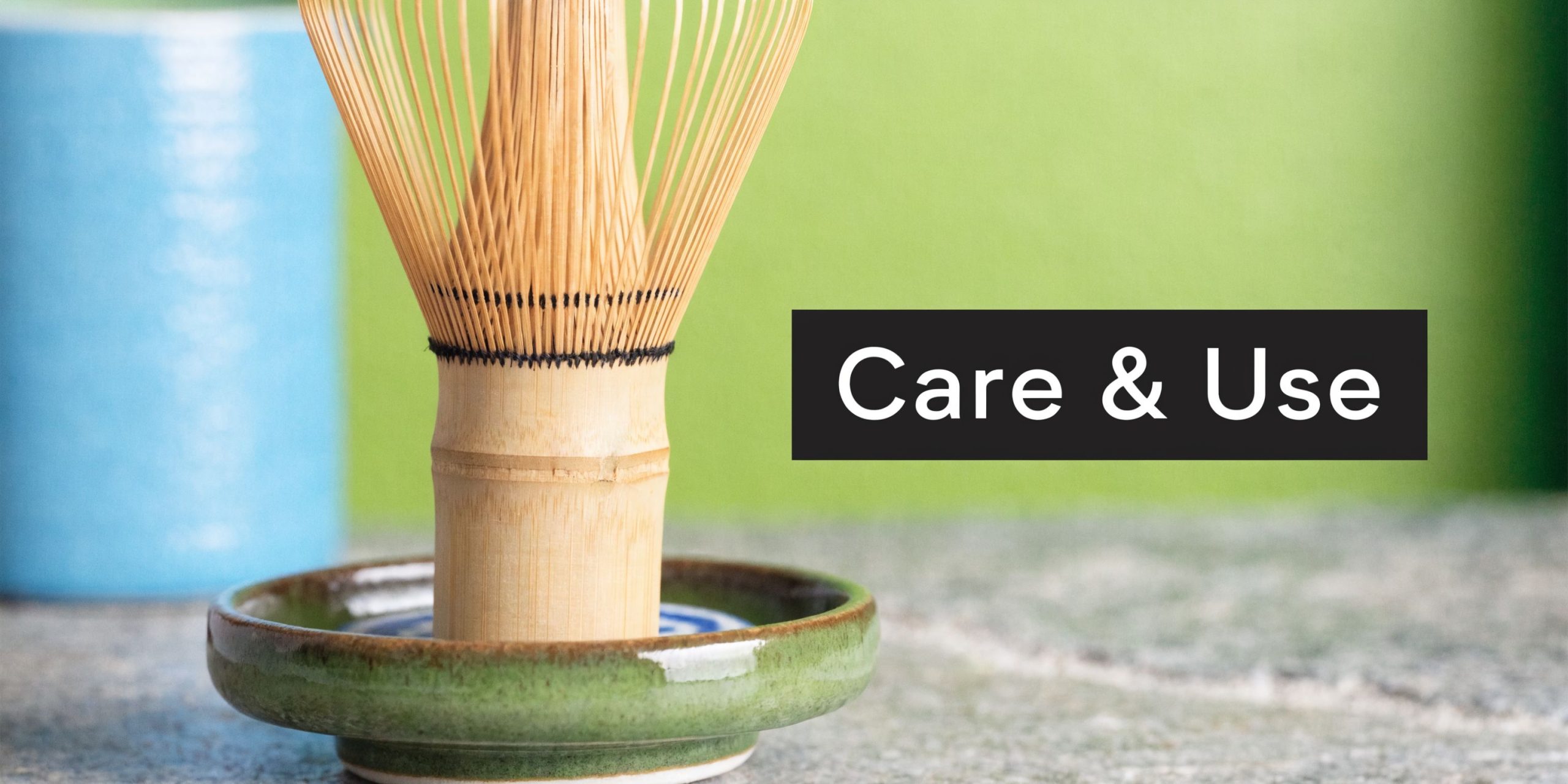
After whisking your matcha, rinse the chasen with warm water. Shake off excess water gently, then place it on the stand with the prongs facing down over the holder.
That’s it. No complicated maintenance schedule. No special products.
A good routine looks like this:
- Rinse promptly so matcha doesn’t dry between the tines.
- Use warm water rather than harsh cleaners.
- Set the whisk onto the stand immediately instead of leaving it flat on the sink or bench.
- Let it air dry fully before storing nearby tools around it.
Why this matters more in humid parts of Australia
Humidity changes the equation. In subtropical parts of NSW and QLD, humidity can reach 70 to 90%, and user data from Australian tea forums shows untreated bamboo can degrade up to 40% faster in these conditions compared with drier climates, according to this Australian humidity discussion around whisk care.
If you live near the coast or your kitchen already tends to hold moisture, airflow matters even more.
In humid weather, the stand stops being a nice extra and starts being part of basic whisk care.
A whisk left damp on a plate in summer won’t thank you for it.
Here’s a helpful visual if you want to see the care process in action:
Cleaning the stand itself
The stand needs a quick rinse too, especially if water gathers around the base. Most glazed stands clean easily with hot water and gentle drying.
A few habits help:
- Don’t let residue build up under the rim or inside the curve.
- Dry the outside if it lives on timber or stone benches to avoid water marks.
- Check for chips if it gets knocked around in a café setting.
The whole point of the stand is to make care easier. Keep it clean, keep the whisk aired, and your setup stays simple.
Creative Alternatives and DIY Solutions
If you don’t have a matcha whisk stand yet, you can improvise for a short while. An egg cup, a small narrow glass, or a similarly shaped holder can sometimes keep the whisk upright after rinsing.
That’s better than laying the whisk flat on the bench.
Still, these substitutes have limits.
Where DIY options fall short
A proper matcha whisk stand is shaped to support the whisk evenly. A random household item usually isn’t. It may hold the handle area awkwardly, press the prongs in the wrong place, or reduce airflow around the base.
An egg cup might seem close enough, but “close enough” is exactly the issue. The whisk needs support in the area where the bamboo opens and dries, not just somewhere to perch.
When a temporary fix is fine
DIY can work if:
- You’re waiting for a proper stand to arrive
- You only need a stopgap while travelling
- You’ve just started making matcha and want to test your routine first
For regular use, though, a purpose-built stand is the better call. It asks very little of you and gives the whisk the support it was designed to have.
A makeshift option can hold a whisk. A real matcha whisk stand helps preserve it.
Enhance Your Matcha Experience with Proper Care
The matcha whisk stand is easy to overlook because it’s small and quiet. Yet it does one of the most important jobs in your setup. It helps the whisk dry properly, hold its shape, and stay ready for the next bowl.
That means better texture in the cup, less frustration in the kitchen, and more respect for a traditional tool that’s meant to be cared for.
For Australian matcha drinkers, that practical side matters. Humidity, busy mornings, and compact kitchens all make simple, effective tool care more valuable. For cafés, a stand adds consistency without adding complexity.
We see matcha as more than a drink. It’s a ritual built from good ingredients, good tools, and good habits. Looking after the whisk is part of looking after the whole experience.
If you’re building a more thoughtful matcha routine, explore Pep Tea for organic matcha and practical teaware that support everyday use in Australian homes and cafés.