
Australia’s Top Tea Business Opportunities for 2026
Most advice about tea business opportunities still assumes the winning move is opening a pretty tea shop and waiting for foot traffic. That's not how the strongest Australian tea businesses are being built.
Here's a simpler question. Is there still room for a new tea brand in Australia if you're not selling commodity tea? Yes, but the opportunity sits in better-for-you beverages, premium positioning, and operational discipline. It's less about “tea” in the old sense and more about creating products people use for energy, routine, social occasions, and wellness.
That shift matters because tea is not a tiny niche. The global tea market was valued at USD 69.51 billion in 2025 and is projected to reach USD 115.19 billion by 2033, with Asia-Pacific holding 67.9% of global share in 2025, according to Grand View Research's tea market analysis. For an Australian founder, that puts you in the same broad region where tea habits, supply chains, and product familiarity are already established.
A new operator still needs discipline. Product quality has to be obvious. Compliance has to be built in early. And if you're planning direct-to-consumer sales, the mechanics matter as much as the blend. If you're sorting through platforms, payments, and fulfilment, this practical guide on how to launch an online store is a useful starting point before you spend money in the wrong places.
An Introduction to Modern Tea Entrepreneurship
The easiest way to misread the market is to think tea entrepreneurship means copying what worked ten years ago. A shelf of loose-leaf blends and a generic “wellness” story won't carry a new business very far now. Buyers have more options, and they're better at spotting the difference between a real product and a dressed-up commodity.
Where new brands still have room
The strongest tea business opportunities in Australia tend to sit in a few clear lanes:
- Functional positioning: Products tied to clean energy, digestion, or mindful drinking occasions attract more attention than generic flavour-led teas.
- Premium quality signals: Organic certification, verified sourcing, and consistent taste give customers a reason to pay more.
- Multi-channel fit: The best products work online, in cafés, and in specialty retail without needing a different identity for each channel.
That's why matcha and kombucha keep appearing in serious conversations about growth. They don't rely only on tradition. They fit modern routines. One suits morning focus and café menus. The other fits low-sugar, non-alcoholic, and foodservice occasions.
Practical rule: If your tea business idea can only compete on flavour variety, you're probably entering the hardest part of the market.
Commodity tea versus value-added tea
Commodity tea is tough for a new founder. Margins get squeezed, comparisons are easy, and customers often default to supermarket convenience. Value-added tea is different. It gives you space to build around preparation quality, ingredient integrity, education, and usage occasions.
That changes the entrepreneur's job. Your role isn't limited to sourcing tea. You're designing a product system people can trust and repeat. That includes packaging, handling, instructions, wholesale specs, and a brand story that holds up under questions from café buyers and health-conscious shoppers.
Australian tea entrepreneurship is still promising. But it rewards founders who act like operators, not hobbyists.
Understanding the Modern Australian Tea Market
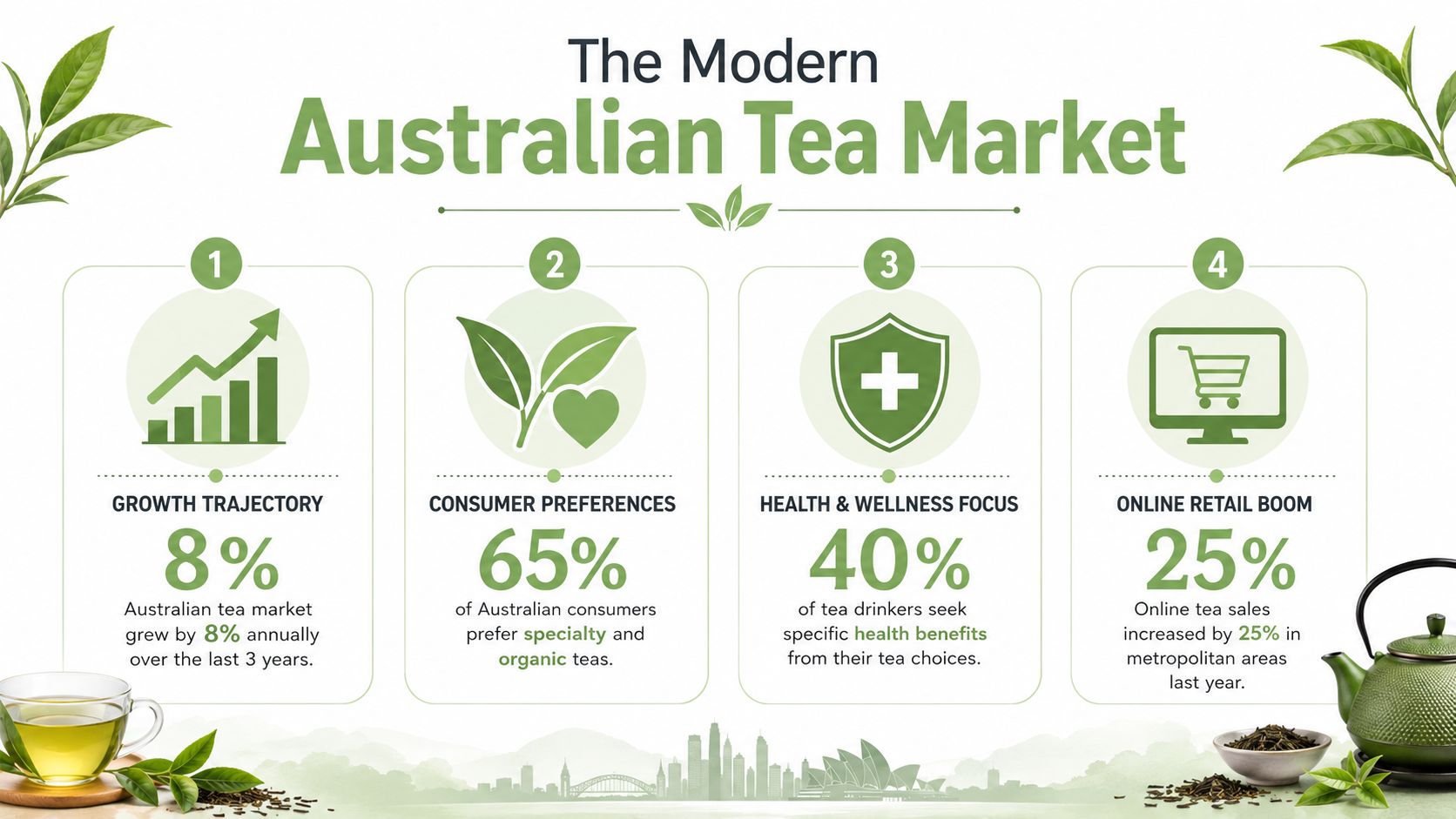
Australian demand has moved beyond the idea of tea as a quiet pantry staple. Buyers increasingly treat tea as part of a broader functional beverage category. That means people aren't only asking what it tastes like. They're also asking when to drink it, what role it plays in their day, and whether it feels like a better choice than coffee, soft drink, or alcohol.
Functional demand is changing what sells
Mintel notes that the momentum for functional tea is strong, with consumers increasingly willing to try brands that feature functional claims such as natural energy or digestive support in its review of global tea consumption and tea market trends. That matters in Australia because the same drinking occasions are growing here. People want products that fit workdays, gym-adjacent routines, afternoon slumps, and alcohol-light social habits.
In practical terms, that favours:
- Matcha for steady energy rituals: It fits hot preparation, iced drinks, smoothies, and café service.
- Kombucha for refreshment with a purpose: It suits fridges, grab-and-go retail, and non-alcoholic menus.
- Premium herbal and specialty formats: These work when the story is clear and the ingredients feel credible.
One useful way to think about it is this. Traditional tea was often sold by type. Modern tea is sold by use case.
The customer mindset is more specific now
Many founders still describe their audience too broadly. “People who like tea” isn't enough. The current market responds better when you know the exact occasion you serve.
A café customer may want a clean-energy latte alternative. A grocery customer may want a low-sugar fridge option. An online customer may want a pantry staple with clear preparation guidance and a stronger quality story than supermarket tea bags.
That's why content and positioning matter. Brands that educate well usually sell more consistently because they reduce hesitation. Explaining grade, origin, preparation, and intended use makes premium products easier to buy. Pep Tea explores this shift in its look at functional beverage trends, and that framing is the right one for new operators too.
Tea is no longer competing only with other tea. It's competing with coffee, energy drinks, soft drinks, alcohol alternatives, and wellness beverages.
What this means for founders
The modern Australian tea market rewards clarity. It's not enough to sell “high quality tea”. You need to answer a sharper question: why should this product exist in someone's daily routine?
If you can answer that with a believable product, good packaging, and reliable delivery, there's still real room in the market.
Top Tea Business Opportunities Analysed
Not all tea business opportunities carry the same risk, complexity, or margin logic. Some are easier to launch but harder to differentiate. Others require more operational control but create stronger wholesale or repeat-purchase potential.
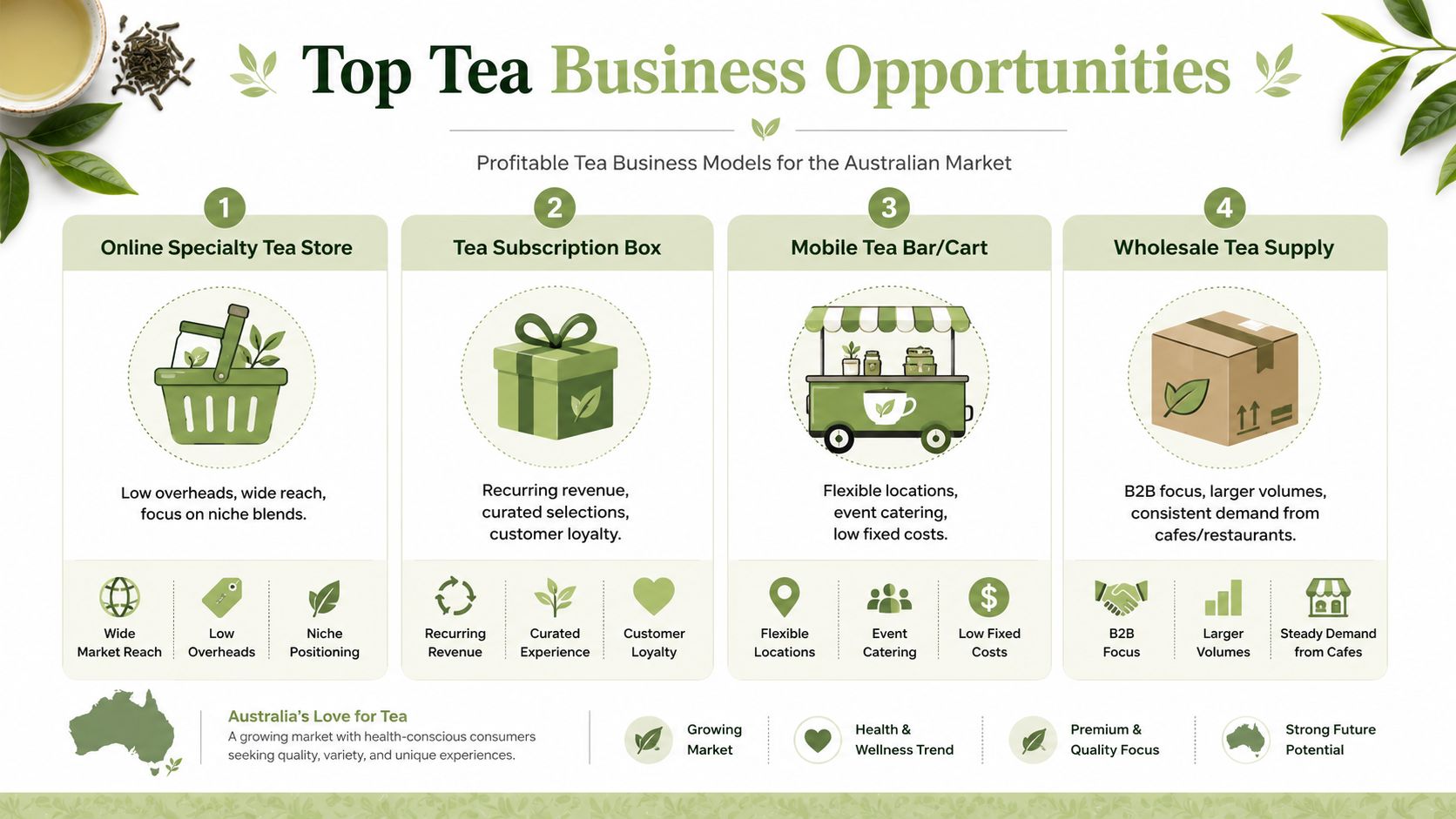
Fortune Business Insights highlights that the biggest opportunity sits in premium, wellness-led differentiation, where buyers are willing to pay more for organic, specialty, and functional teas in its overview of the tea market. That shifts the best business models away from mass-market competition and towards formats where quality, trust, and product education matter.
Organic matcha specialist
This is one of the cleanest entry points for a focused brand. You can build around ceremonial-grade matcha, culinary-grade matcha, starter kits, and education-led content without needing a large physical footprint.
Best fit: Founders who are comfortable with e-commerce, content, and premium sourcing.
What works
- Tight product range rather than a huge catalogue
- Clear explanation of grade differences
- Visual preparation content for lattes, iced drinks, and recipes
- Wholesale packs for cafés that need consistency
What doesn't
- Listing five near-identical matchas with no guidance
- Competing on price with low-grade imports
- Ignoring storage, freshness, and preparation instructions
Artisanal kombucha brewery
Kombucha has strong appeal, but it's operationally heavier. Fermentation control, packaging stability, storage, and distribution all matter. That said, a well-run kombucha business can serve direct customers, hospitality venues, and retail accounts from the same product family if the specs are reliable.
A founder should only choose this lane if they're comfortable treating production like a food business from day one, not a kitchen hobby that scales later.
If you want to sell kombucha professionally, consistency is your product. Flavour comes after that.
Curated online retail and subscriptions
This model suits founders who are better at merchandising, education, and customer experience than manufacturing. You can curate specialty teas, gift packs, or monthly tasting boxes around themes such as energy, evening routines, or caffeine alternatives.
The upside is flexibility. The downside is that curation alone is easy for competitors to copy unless your sourcing and storytelling are noticeably better.
A simple comparison helps:
| Model | Strength | Main challenge | Best channel |
|---|---|---|---|
| Matcha specialist | Strong premium story | Requires sourcing discipline | DTC and wholesale |
| Kombucha brewery | Great repeat use cases | Higher compliance burden | Retail and hospitality |
| Subscription retail | Recurring customer habits | Harder to defend long term | DTC |
| Wholesale tea supply | Larger account value | Longer sales cycle | Cafés and venues |
A quick visual overview helps when you're weighing these options:
Café and hospitality partnerships
This is often underestimated. Many new founders focus on online sales because they feel easier to control, but hospitality can create repeat demand if your product behaves predictably in service.
For matcha, that means solubility, colour stability, and easy dose control. For kombucha, it means predictable acidity, clean pours, and dependable packaging for fridges or taps. Venues don't buy ideals. They buy products their staff can use without constant supervision.
Which model suits you best
Use this filter before deciding:
- Choose matcha specialist if you love education, premium sourcing, and content-led selling.
- Choose kombucha production if you're strong on systems, food safety, and production discipline.
- Choose curated retail if brand building is your strength and you can source distinctive products.
- Choose wholesale supply if you're comfortable with samples, buyer conversations, and slower account wins.
Most successful founders don't try to do all four at once. They pick one primary engine and add the others later.
Startup Costs and Essential Equipment
Startup cost conversations usually go wrong in one of two ways. Founders either underestimate what “professional” requires, or they overspend on equipment before they've proven demand. Both mistakes hurt cash flow early.
If you're launching an online matcha business
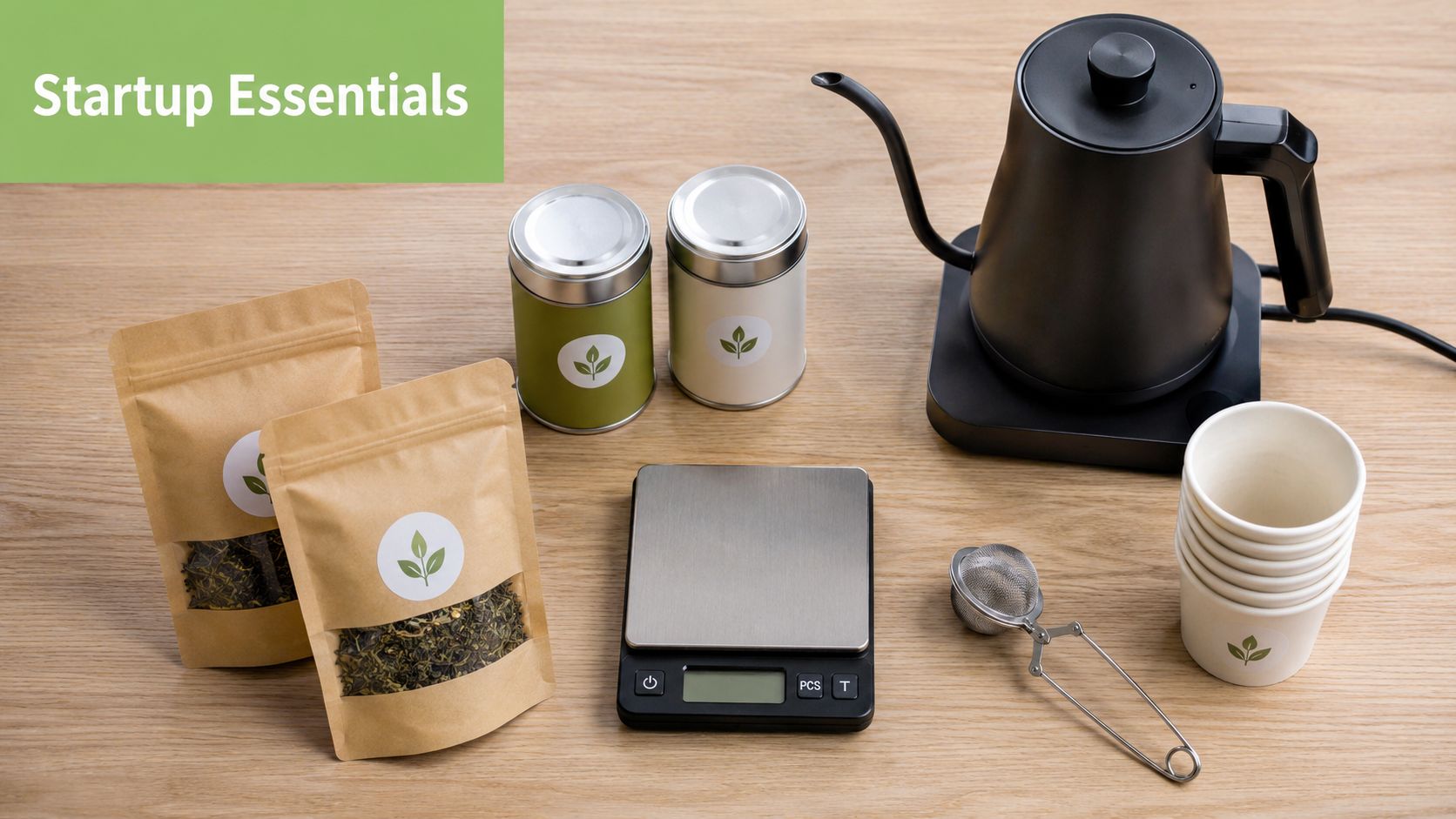
A matcha-led store is operationally lighter, but it still needs discipline. The basics usually include inventory, packaging, labels, a reliable e-commerce platform, product photography, and shipping materials. Add sampling stock if you plan to approach cafés or wellness retailers.
The equipment list is usually simple:
- Precision scales: Useful for repacking, QC checks, and sample consistency.
- Sealing and packaging tools: Clean presentation matters for freshness and trust.
- Photography setup: A lightbox or consistent product-shoot space helps more than founders expect.
- Storage controls: Matcha is sensitive to heat, moisture, light, and air.
What founders often miss is working capital. You'll need room for reorders, packaging revisions, sample drops, and early marketing spend. A broader financial guide for new businesses can help frame those cash planning decisions before you commit to stock.
If you're launching a kombucha operation
Kombucha is more equipment-heavy because you're producing a live beverage, not just selling a dry good. A proper setup often includes fermentation vessels, filling equipment, cold storage, sanitation tools, and testing gear such as pH meters. Once you move beyond tiny batches, workflow matters as much as the equipment itself.
A practical kombucha setup usually needs:
Brewing and fermentation hardware
Fermenters, transfer tools, food-grade hoses, and cleaning systems.Packaging capability
Bottling or kegging depends on your channel. Retail and hospitality often need different pack formats.Cold-chain support
Fridges or cool-room access affect storage, dispatch, and account management.Quality control tools
Testing isn't optional. You need a repeatable way to monitor each batch.
Reality check: Cheap equipment often becomes expensive once it starts causing inconsistency, downtime, or failed batches.
Buy for the model you actually chose
A common startup mistake is buying for the business you hope to have in three years instead of the one you're launching now. A lean, organised setup beats a flashy one that drains your budget.
If you're direct-to-consumer first, invest in packaging, fulfilment flow, and content assets. If you're wholesale first, put more into sampling, storage, and account-ready presentation. Good equipment supports a clear route to market. Random equipment just fills a room.
Sourcing Quality and Navigating Regulations
Many founders assume sourcing and compliance can be tidied up after launch. That's backwards. In tea and beverage businesses, these are the foundations that decide whether your product is trusted, repeatable, and safe to scale.
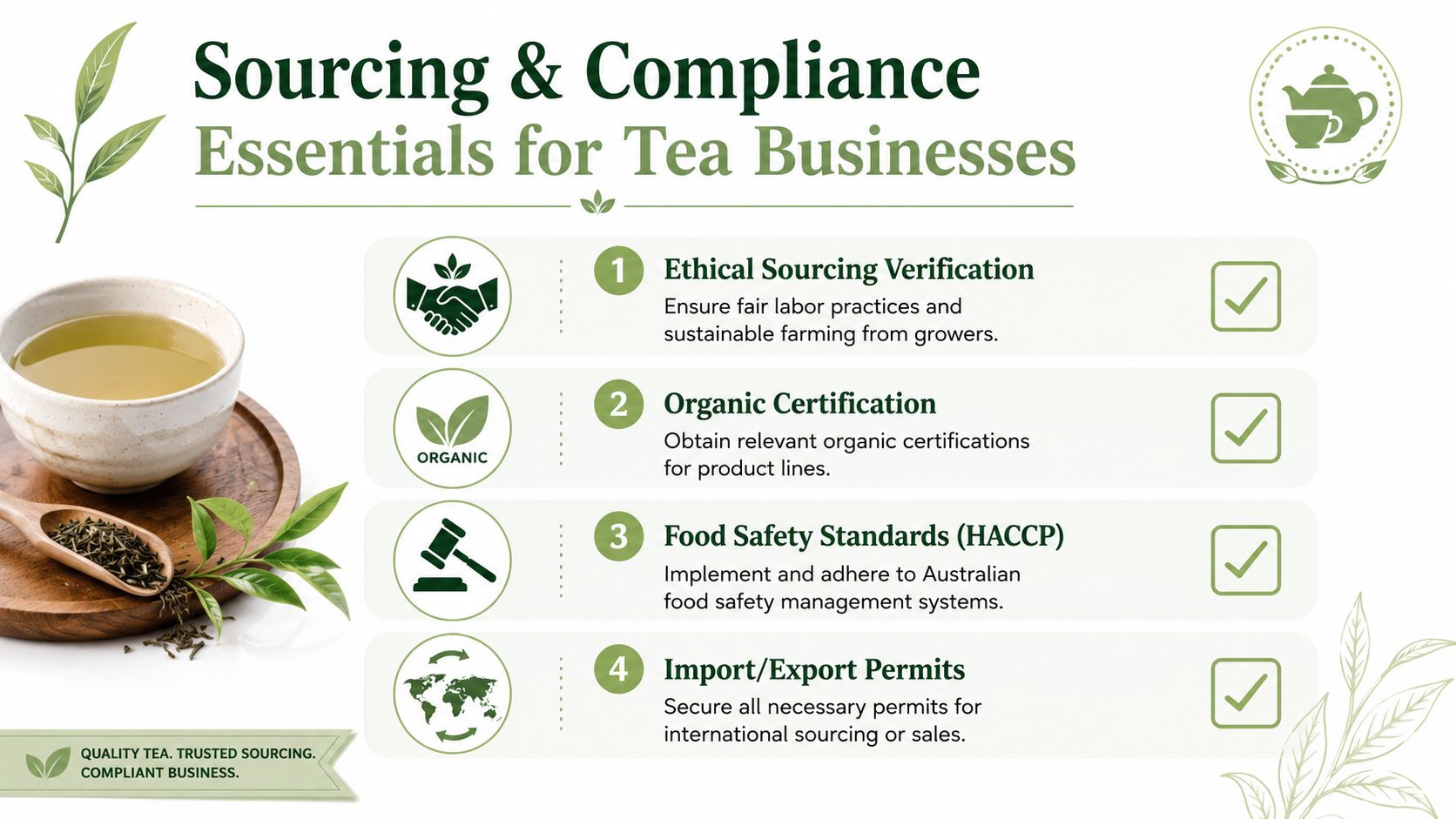
World Tea News points out that one of the most overlooked issues is the regulatory difference between packaged tea and ready-to-drink beverages, especially because fermented drinks such as kombucha bring added food-safety, labelling, storage, and cold-chain complexity in its article on tea business success tips for entrepreneurs. That gap catches a lot of new operators.
What good sourcing looks like for matcha
Not all matcha is interchangeable. A supplier may use premium language loosely, while the actual product performs poorly in a bowl, latte, or recipe application. Founders need to test with the end use in mind.
Here's what to check:
- Grade suitability: Ceremonial and culinary matcha are not the same commercial product.
- Batch consistency: Colour, aroma, texture, and bitterness need to stay dependable.
- Documentation: Organic claims and import details should be easy to verify.
- Storage and transit handling: Quality can slip before the product even reaches your shelves.
If organic positioning is part of your brand, understand the standards before you print anything. This guide to organic certification standards is a useful reference point for thinking about that process properly.
What founders miss with kombucha
Kombucha gets romanticised. People talk about SCOBYs, flavours, and brewing culture. Commercial buyers care about consistency, shelf handling, and service reliability.
That creates a different checklist:
| Area | What to verify | Why it matters |
|---|---|---|
| Fermentation control | Stable process and monitoring | Reduces batch drift |
| Packaging | Seal integrity and storage fit | Protects product quality |
| Labelling | Accurate, compliant information | Builds retail and buyer trust |
| Distribution | Temperature-aware handling | Supports product stability |
Compliance isn't admin
Compliance affects whether your business model is viable. A dry tea product may be relatively straightforward compared with a ready-to-drink beverage that needs tighter controls. Founders who ignore that distinction often discover hidden cost later through relabelling, refrigeration changes, process upgrades, or account rejections.
A café may love your product at tasting. They'll still walk away if your supply, labelling, or handling feels risky.
Build systems before you need them
The businesses that scale cleanly usually do a few unglamorous things early. They keep supplier records organised. They document product specs. They write handling procedures. They test every batch the same way. None of that feels exciting, but it's what lets a premium brand behave like one.
In practice, sourcing and regulation aren't obstacles to creativity. They're what make creative products commercially believable.
Building Your Brand and Go-To-Market Strategy
A strong tea business rarely wins because it has the prettiest logo. It wins because buyers quickly understand what the product is for, why it's credible, and how easy it is to reorder.
Start with a brand customers can repeat
Branding in this category works best when it's specific. A broad wellness message usually sounds interchangeable. A sharper message travels further. “Organic matcha for calm focus” is easier to grasp than “premium tea for modern living”. “Sugar-free kombucha for grown-up refreshment” is easier to place than “naturally brewed goodness”.
That positioning should show up everywhere:
- On-pack language: Clear use case, not vague lifestyle copy.
- Product photography: Show preparation, pour, texture, and serving context.
- Educational content: Brewing guides, recipe ideas, and product comparisons reduce friction.
- Sampling approach: Let cafés and retailers experience how the product performs.
Selling to cafés and hospitality buyers
The café channel is one of the most practical tea business opportunities in Australia when the product is designed for service. Allied Market Research notes that success here depends on foodservice-ready products, such as matcha with good solubility and kombucha with stable carbonation, in its analysis of the tea market. Operators need products that reduce staff error and deliver a repeatable result.
A founder approaching venues should bring more than samples. Bring a simple service proposition.
For matcha, that might include dose guidance, milk pairing notes, and a standard latte workflow. For kombucha, it might mean serve suggestions, glassware ideas, and advice for mocktail use. Hospitality buyers remember suppliers who make service easier.
Sales insight: Venues don't just buy a drink. They buy speed, consistency, and menu confidence.
Build awareness where discovery actually happens
For premium tea, discovery often happens visually and socially. People want to see the whisking, the foam, the pour, the bottle, the ritual. That makes short-form video, recipe content, and founder-led education especially useful.
Offline brand building still matters too. Trade shows, food expos, and buyer events can open doors if you present professionally. If you're planning that route, working with experienced Exhibition Stand Builders can make a real difference to how your brand is perceived on the floor.
Pep Tea's guide to Australian tea brands is also a good reminder that buyers respond to local credibility, not just imported prestige.
Choose channels in the right order
Don't try to be everywhere at once. A better sequence is:
Prove product-market fit online
Learn which products, flavours, and messages convert.Add local wholesale accounts
Start with aligned cafés, grocers, and wellness retailers.Use content to support both
The same education can help consumers and trade buyers.Refine operational support
Menus, serving guides, stock flow, and account communication matter more as you grow.
The best go-to-market strategies are usually boring in a good way. They're consistent, easy to understand, and easy to repeat.
Conclusion Your First Steps to Success
The strongest tea business opportunities in Australia aren't built on novelty alone. They're built on a product that solves a real drinking occasion, a quality standard that holds up under scrutiny, and operations that don't fall apart once demand arrives.
For most new founders, the opportunity is clearest in premium, health-focused formats. Matcha works when you can prove grade, taste, and everyday usability. Kombucha works when you treat it like a serious beverage operation, not a side project. Café and wholesale channels can be powerful, but only if your product performs consistently in service.
If you're starting from scratch, keep your first moves simple and concrete:
Define one clear niche
Pick the product and use case you want to own first.Check the operating requirements early
Especially if you're considering brewed, fermented, or ready-to-drink products.Build a lean launch budget
Leave room for packaging, samples, testing, and reorders.Test your sourcing before your branding
A polished label can't save an inconsistent product.Develop a brand story buyers can repeat
If a customer or café owner can't explain your product in one sentence, the positioning needs work.
There's still room for new tea businesses in Australia. But the market is less forgiving of vague concepts than it used to be. Founders who stay focused, respect compliance, and build around genuine product quality give themselves a far better chance of lasting beyond the launch phase.
If you're exploring premium tea business opportunities and want to see what high-quality execution looks like in practice, Pep Tea is worth a look. You can explore their organic matcha range, Australian-brewed sugar-free kombucha, and educational resources for consumers, cafés, and wholesale buyers.